Colonialism
All countries
Algeria
Australia
Brazil
Canada
Costa Rica
Côte d’Ivoire (Ivory Coast)
Egypt
Estonia
France
Ghana
India
Madagascar
Morocco
Palestine
Peru
Puerto Rico
Rwanda
Senegal
Spain
Sudan
Uganda
United Kingdom
United States
1
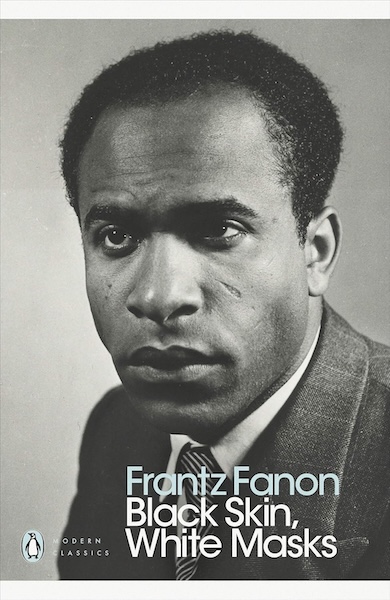
Black Skin, White Masks
What happens when a society teaches you to see yourself through the eyes of those who consider you inferior?
In Black Skin, White Masks, psychiatrist and philosopher Frantz Fanon examines the psychological scars left by racism and colonialism. Drawing on his own experiences as a Black man from Martinique, alongside psychology, philosophy, and cultural analysis, he explores how racial prejudice shapes identity, language, relationships, and self-worth.
Fanon investigates the pressure placed on colonised people to adopt the language, behaviour, and values of the dominant white society in the hope of gaining acceptance. Yet this pursuit of recognition can come at a profound cost: alienation from one’s own culture and an internalised sense of inferiority. He also examines how racism distorts relationships between Black and white people, exposing the power structures hidden beneath seemingly ordinary interactions.
Passionate and intellectually challenging, this landmark work asks what genuine freedom means in a world structured by racial hierarchies. Fanon ultimately calls for a new understanding of humanity—one that refuses to let race determine a person’s identity or possibilities. First published in French as Peau noire, masques blancs, the book remains foundational to anti-colonial thought and postcolonial studies.
France
1952
2
Dying Colonialism
How does a people’s struggle for freedom transform not only a nation, but also the everyday lives of its people?
In A Dying Colonialism, Frantz Fanon examines the Algerian Revolution against French colonial rule, revealing how the fight for independence reshaped Algerian society from within. Through the changing roles of women, the influence of radio, the use of medicine, and transformations in family life, Fanon explores how ordinary cultural practices became intertwined with political resistance.
Practices once dismissed or misunderstood by colonial authorities took on new meanings as Algerians challenged the structures imposed upon them. Clothing, language, technology, and social relationships became part of a wider struggle over identity and power. Fanon shows that decolonisation is not simply a political event: it reaches into the most intimate aspects of how people live, communicate, and understand themselves.
Based on his experience of the Algerian liberation movement, this influential work reveals colonialism as a system that attempts to control both institutions and everyday life. It also shows how resistance can transform a society in unexpected ways.
Algeria
1959
3
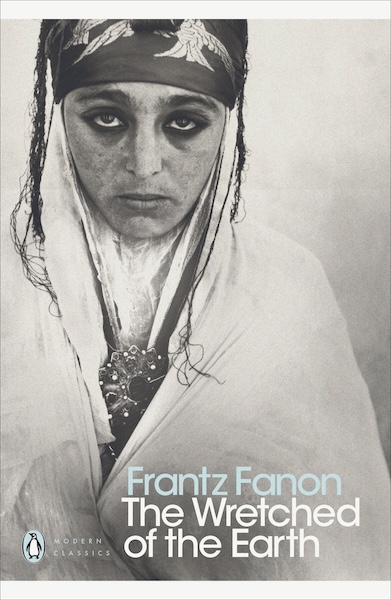
The Wretched of the Earth
What happens to a people when their land, culture, and identity are shaped by colonial rule—and what does it take to become free?
In The Wretched of the Earth, psychiatrist and revolutionary thinker Frantz Fanon examines the psychological, cultural, and political consequences of colonialism. Writing against the backdrop of Algeria’s struggle for independence from France, Fanon explores how colonial systems dehumanise the oppressed, reshape their sense of self, and create conditions for resistance.
Fanon confronts the role of violence in revolutionary movements while also warning that independence alone does not guarantee liberation. New national elites can reproduce the inequalities of colonial rule, leaving ordinary people excluded from the freedom they fought to achieve. He argues for a deeper transformation: one that challenges inherited hierarchies and creates a new society grounded in human dignity.
Passionate, provocative, and influential, The Wretched of the Earth remains a foundational work of anti-colonial thought. It asks readers to consider not only how colonial power is dismantled, but also what kind of world should replace it.
Algeria
1961
4
A Life Full of Holes
Set in Morocco during the mid-twentieth century, A Life Full of Holes follows Ahmed, a poor boy growing up in a society marked by poverty, inequality, and the lingering effects of colonialism. After his father disappears from his life and his mother remarries, Ahmed finds himself unwanted in his own home. Forced to fend for himself from an early age, he moves between jobs as a shepherd, labourer, baker’s assistant, and house servant, struggling to secure food, shelter, and a little dignity.
As Ahmed grows older, his experiences expose him to exploitation, police brutality, betrayal, and the harsh realities of life on the margins of Moroccan society. His journey is not a conventional story of triumph over adversity; instead, it presents survival as a daily struggle in a world where opportunities are scarce and power belongs to those who can exploit others.
The book is particularly distinctive because of its origins. Larbi Layachi dictated his life story in Moroccan Arabic to American writer Paul Bowles, who recorded and translated it into English. First published under the pseudonym Driss ben Hamed Charhadi, the narrative blurs the boundaries between autobiography and fiction, offering an intimate perspective on lives rarely represented in Western literature.
Through Ahmed’s experiences, the book explores childhood hardship, social exclusion, and the struggle to preserve one’s humanity in difficult circumstances. Its direct, unembellished storytelling gives readers a vivid portrait of everyday life in Morocco during a period of profound social and historical change.
Morocco
1964
5
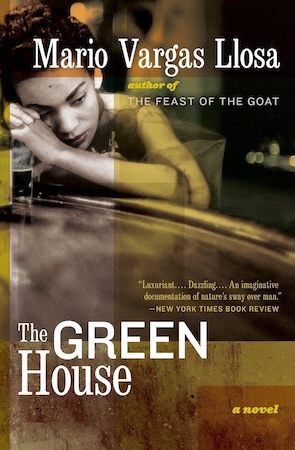
The Green House
In the dusty coastal town of Piura, Peru, a mysterious stranger named Don Anselmo builds a brothel that becomes the centre of a community’s desires, scandals, and conflicts. Known as the Green House, the establishment brings together people from different worlds, setting off a chain of events that will shape their lives for decades. Meanwhile, deep in the Peruvian Amazon, indigenous communities face the encroachment of missionaries, soldiers, and commercial interests that threaten their traditions and way of life.
Among the novel’s central figures is Bonifacia, an indigenous girl taken from her home and raised by nuns, whose attempts to find a place in the outside world lead to devastating consequences. Her story intersects with those of soldiers, smugglers, outcasts, and townspeople, creating a complex portrait of a society divided by class, race, and power.
Moving between the desert coast and the Amazon rainforest, and unfolding across several decades, Vargas Llosa weaves together multiple timelines and overlapping narratives. The result is a challenging, richly layered novel about desire, exploitation, moral ambiguity, and the collision of cultures. Beneath its intricate structure lies a powerful examination of how institutions and social hierarchies shape individual destinies—and how the boundaries between civilisation and brutality are often far less clear than they appear.
Peru
1966
6
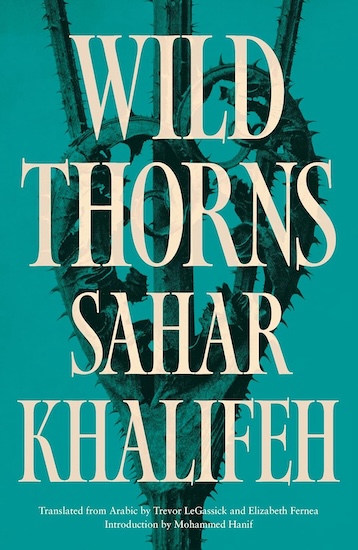
Wild Thorns
After five years working in the Gulf, Usama returns to the occupied West Bank determined to join the Palestinian resistance. He is shocked to discover that life in his hometown of Nablus has changed dramatically. Many Palestinians now work in Israel to support their families, navigating military checkpoints and economic dependence while enduring the daily humiliations of occupation. Frustrated by what he sees as resignation, Usama plans to sabotage buses transporting Palestinian workers into Israel. Yet his encounters with family members, former friends, and fellow Palestinians force him to confront the difficult choices people face between resistance and survival. Through a vivid portrait of ordinary lives under military occupation, Sahar Khalifeh explores political resistance, economic hardship, family loyalty, and the moral complexities of living under oppression. First published in Arabic in 1976, Wild Thorns is a landmark of Palestinian literature that examines the psychological and social consequences of occupation without reducing its characters to simple heroes or victims.
Palestine
1976
7
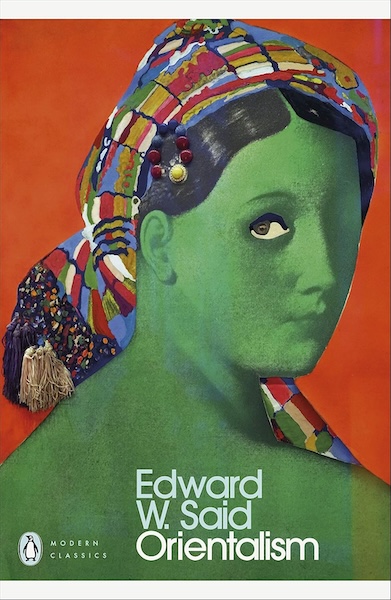
Orientalism
What if the way we see another culture tells us more about ourselves than about the people we are observing?
In Orientalism, literary critic and intellectual Edward W. Said examines how Western writers, scholars, artists, and political authorities constructed an image of the “Orient”—particularly the Arab and Islamic world—as exotic, irrational, backward, and fundamentally different from the West. He argues that these representations were not simply misunderstandings or harmless stereotypes: they became intertwined with imperial power, helping Europe justify its domination of Eastern societies.
Drawing on literature, history, art, and political thought, Said reveals how descriptions of other cultures can shape public opinion and influence the exercise of power. He challenges readers to question who has the authority to represent a people, whose voices are excluded, and how supposedly objective knowledge can reinforce existing hierarchies.
First published in 1978, Orientalism transformed postcolonial studies and continues to influence debates about cultural representation, racism, and the relationship between knowledge and power. It invites us to reconsider not only how the East has been portrayed, but also how these inherited images continue to shape the world today.
Palestine
United States
1978
8
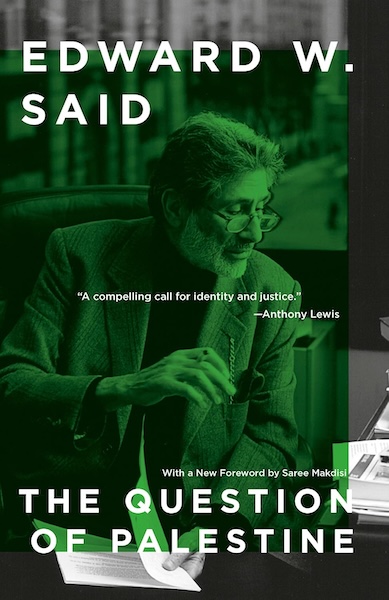
The Question of Palestine
In The Question of Palestine, Edward W. Said examines the history of Palestinian displacement, the development of Zionism, and the struggle for Palestinian national identity and self-determination. Combining historical analysis with personal insight, Said challenges dominant Western narratives that often marginalise Palestinian experiences and perspectives.
First published in 1979, this influential work explores how competing historical claims, political power, and cultural representation have shaped the Palestinian question. Said calls for Palestinians to be recognised not as abstractions in a political conflict, but as a people with their own history, identity, and aspirations.
Palestine
1979
9
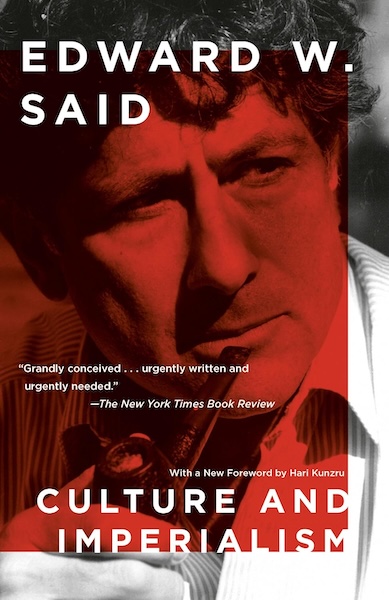
Culture and Imperialism
What if some of the world’s most celebrated literary works also reveal the hidden structures of empire?
In Culture and Imperialism, Edward W. Said examines how novels, music, and other cultural works have reflected—and sometimes reinforced—the expansion of European and American power. Building on the ideas developed in Orientalism, he explores how imperial assumptions appear in literature by writers such as Jane Austen, Joseph Conrad, and Rudyard Kipling.
Said also highlights the voices and resistance of people living under colonial rule, showing how culture can become a space for both domination and opposition. By connecting artistic expression with historical power, he invites readers to reconsider familiar literary classics and recognise the imperial histories that shaped them.
Palestine
United States
1993
10
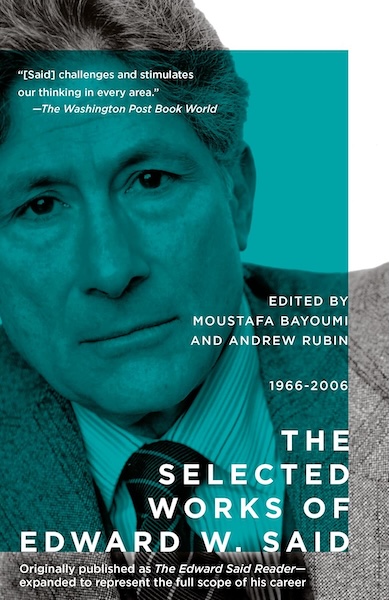
The Selected Works of Edward Said, 1966 - 2006
How do literature, culture, and politics shape the way we understand the world? And whose voices are missing from the stories history tells?
The Selected Works of Edward Said brings together key writings from four decades of one of the most influential intellectuals of the twentieth century. Edited by Moustafa Bayoumi and Andrew Rubin, this expanded collection traces Said’s thinking across subjects ranging from colonialism and Palestinian identity to literature, music, media, and the responsibilities of intellectuals.
Featuring selections from Orientalism, Culture and Imperialism, and Out of Place, alongside important essays and later writings, the collection offers an overview of Said’s evolving ideas about power, representation, and cultural identity.
Essential for understanding Said’s intellectual legacy, this volume reveals how cultural narratives influence political realities—and why questioning dominant perspectives remains vital.
Palestine
United States
2007
11
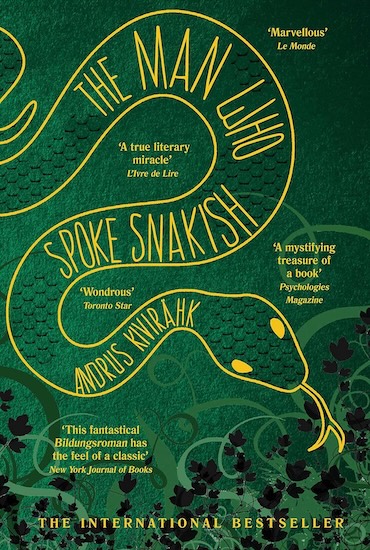
The Man Who Spoke Snakish
Set in a fantastical version of medieval Estonia, The Man Who Spoke Snakish follows Leemet, a boy growing up in the forest among the last people who preserve an ancient way of life. His people speak Snakish, a magical language that allows them to communicate with snakes and command animals. For generations, they have lived in close connection with nature, hunting for food and worshipping their ancestral spirits.
But the forest is gradually emptying. More and more people abandon their traditional lives to settle in villages, embrace Christianity, and adopt the customs introduced by foreign conquerors. As the old language and its knowledge disappear, Leemet finds himself caught between a vanishing world and a new society that regards his people’s traditions as backward and obsolete.
Combining dark humour, folklore, absurdity, and fantasy, Kivirähk creates an allegory about cultural assimilation and the loss of collective identity. The novel explores how conquest transforms not only political structures but also languages, relationships with nature, and people’s understanding of themselves. Through Leemet’s struggle to preserve his heritage, it asks what happens when an entire culture is dismissed as primitive—and whether traditions can survive when even their own people begin to abandon them.
Estonia
2007
12
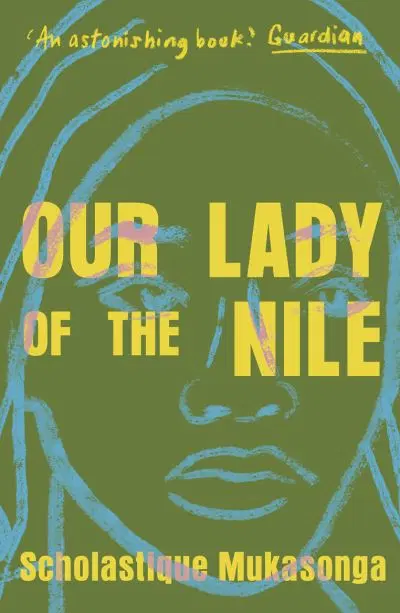
Our Lady of the Nile
High in the mountains of Rwanda, an elite Catholic boarding school for girls stands isolated above the Nile, promising its students education, respectability, and protection from the outside world. But beneath its orderly routines, the school reflects the growing ethnic tensions and prejudices shaping Rwandan society in the years before the 1994 genocide.
Admission quotas restrict the number of Tutsi students, leaving girls such as Veronica and Virginia vulnerable to discrimination and hostility from their Hutu classmates. As Gloriosa, the daughter of a powerful politician, spreads increasingly dangerous nationalist ideas, friendships fracture and everyday rivalries become entangled with political violence. The school, overseen by Belgian nuns, becomes a microcosm of a society moving toward catastrophe. Through the experiences of its teenage students, Scholastique Mukasonga explores how prejudice is taught, how colonial legacies shape identity, and how violence can take root in ordinary life long before it erupts into tragedy.
Rwanda
2012
About this theme
- Books
- 33
- Countries
- 23
Countries with this theme
Algeria
Africa
Australia
Oceania
Brazil
South America
Canada
North America
Costa Rica
North America
Côte d’Ivoire (Ivory Coast)
Africa
Egypt
Africa
Estonia
Europe
France
Europe
Ghana
Africa
India
Asia
Madagascar
Africa
Morocco
Africa
Palestine
Asia
Peru
South America
Puerto Rico
South America
Rwanda
Africa
Senegal
Africa
Spain
Europe
Sudan
Africa
Uganda
Africa
United Kingdom
Europe
United States
North America