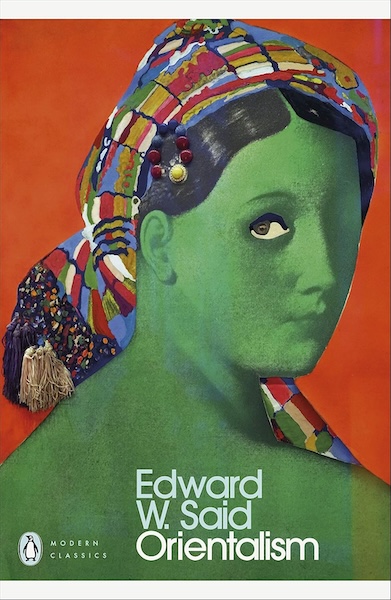
Orientalism
Summary
What if the way we see another culture tells us more about ourselves than about the people we are observing?
In Orientalism, literary critic and intellectual Edward W. Said examines how Western writers, scholars, artists, and political authorities constructed an image of the “Orient”—particularly the Arab and Islamic world—as exotic, irrational, backward, and fundamentally different from the West. He argues that these representations were not simply misunderstandings or harmless stereotypes: they became intertwined with imperial power, helping Europe justify its domination of Eastern societies.
Drawing on literature, history, art, and political thought, Said reveals how descriptions of other cultures can shape public opinion and influence the exercise of power. He challenges readers to question who has the authority to represent a people, whose voices are excluded, and how supposedly objective knowledge can reinforce existing hierarchies.
First published in 1978, Orientalism transformed postcolonial studies and continues to influence debates about cultural representation, racism, and the relationship between knowledge and power. It invites us to reconsider not only how the East has been portrayed, but also how these inherited images continue to shape the world today.
Reviews
Login to leave a review.
No reviews yet. Be the first!
You might also like



- Published
- 1978
- Author
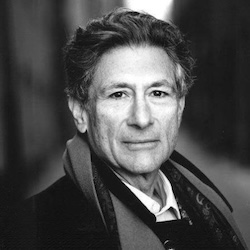
- Edward W. Said