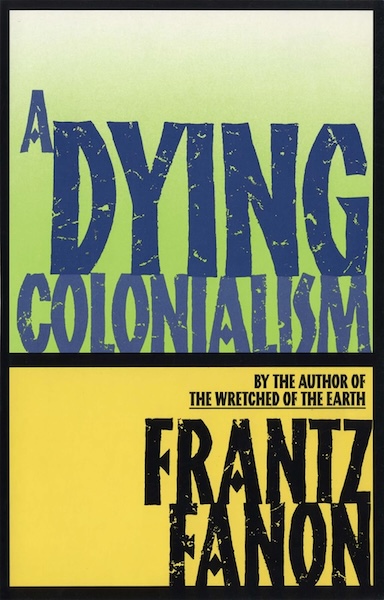
Dying Colonialism
Algeria

Dying Colonialism

by Frantz Fanon

Summary

How does a people’s struggle for freedom transform not only a nation, but also the everyday lives of its people?

In A Dying Colonialism, Frantz Fanon examines the Algerian Revolution against French colonial rule, revealing how the fight for independence reshaped Algerian society from within. Through the changing roles of women, the influence of radio, the use of medicine, and transformations in family life, Fanon explores how ordinary cultural practices became intertwined with political resistance.

Practices once dismissed or misunderstood by colonial authorities took on new meanings as Algerians challenged the structures imposed upon them. Clothing, language, technology, and social relationships became part of a wider struggle over identity and power. Fanon shows that decolonisation is not simply a political event: it reaches into the most intimate aspects of how people live, communicate, and understand themselves.

Based on his experience of the Algerian liberation movement, this influential work reveals colonialism as a system that attempts to control both institutions and everyday life. It also shows how resistance can transform a society in unexpected ways.

Reviews

Login to leave a review.

No reviews yet. Be the first!

You might also like
Frantz Fanon
Frantz Fanon

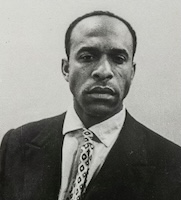
Frantz Fanon (1925–1961) was a Martinican psychiatrist, philosopher, and anti-colonial writer whose work transformed debates about racism, colonialism, and liberation. Born in Fort-de-France, Martinique, then a French colony, he served in the Free French forces during the Second World War before studying medicine and psychiatry in France. His experiences of racism and colonial hierarchy deeply influenced his thinking. In 1953, Fanon began working at a psychiatric hospital in Blida, Algeria, where he witnessed the devastating psychological effects of colonial oppression and the Algerian War of Independence. He resigned in 1956 and joined the Algerian liberation movement, the National Liberation Front (FLN), later working as a journalist and representing the movement internationally. His first major book, Black Skin, White Masks (1952), examines racism and its effects on identity and psychological life. His later works, including A Dying Colonialism (1959) and The Wretched of the Earth (1961), expanded his analysis to revolutionary struggle and the challenges facing newly independent nations. Fanon died of leukaemia in the United States in December 1961, aged 36, shortly after The Wretched of the Earth was published. His ideas continue to influence postcolonial studies, political philosophy, psychology, and movements for racial justice and decolonisation around the world. Martinique

View author page
Published
1959
Author
Frantz Fanon