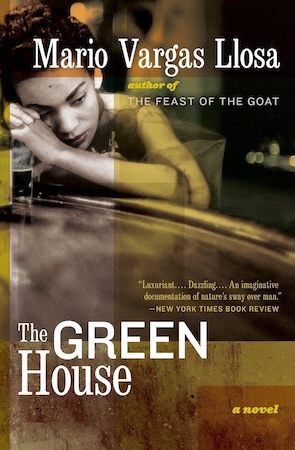
The Green House
Summary
In the dusty coastal town of Piura, Peru, a mysterious stranger named Don Anselmo builds a brothel that becomes the centre of a community’s desires, scandals, and conflicts. Known as the Green House, the establishment brings together people from different worlds, setting off a chain of events that will shape their lives for decades. Meanwhile, deep in the Peruvian Amazon, indigenous communities face the encroachment of missionaries, soldiers, and commercial interests that threaten their traditions and way of life.
Among the novel’s central figures is Bonifacia, an indigenous girl taken from her home and raised by nuns, whose attempts to find a place in the outside world lead to devastating consequences. Her story intersects with those of soldiers, smugglers, outcasts, and townspeople, creating a complex portrait of a society divided by class, race, and power.
Moving between the desert coast and the Amazon rainforest, and unfolding across several decades, Vargas Llosa weaves together multiple timelines and overlapping narratives. The result is a challenging, richly layered novel about desire, exploitation, moral ambiguity, and the collision of cultures. Beneath its intricate structure lies a powerful examination of how institutions and social hierarchies shape individual destinies—and how the boundaries between civilisation and brutality are often far less clear than they appear.
Reviews
Login to leave a review.
No reviews yet. Be the first!
- Published
- 1966
- Author
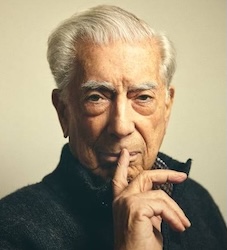
- Mario Vargas Llosa