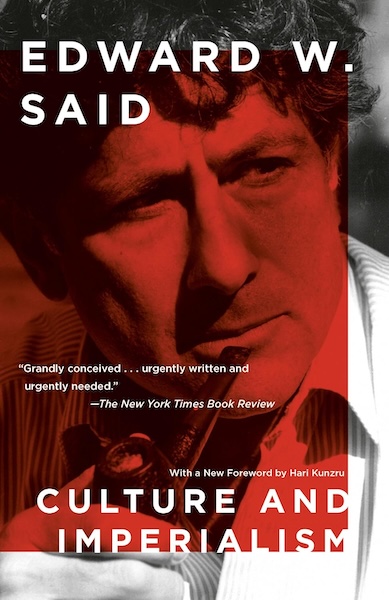
Culture and Imperialism
Palestine United States

Culture and Imperialism

by Edward W. Said

Summary

What if some of the world’s most celebrated literary works also reveal the hidden structures of empire?

In Culture and Imperialism, Edward W. Said examines how novels, music, and other cultural works have reflected—and sometimes reinforced—the expansion of European and American power. Building on the ideas developed in Orientalism, he explores how imperial assumptions appear in literature by writers such as Jane Austen, Joseph Conrad, and Rudyard Kipling.

Said also highlights the voices and resistance of people living under colonial rule, showing how culture can become a space for both domination and opposition. By connecting artistic expression with historical power, he invites readers to reconsider familiar literary classics and recognise the imperial histories that shaped them.

Reviews

Login to leave a review.

No reviews yet. Be the first!

You might also like
Edward W. Said
Edward W. Said

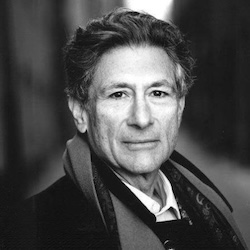
Edward W. Said (1935–2003) was a Palestinian-American literary critic, professor, and public intellectual. Born in Jerusalem and raised between Jerusalem and Cairo, he moved to the United States for his education, studying at Princeton and Harvard. In 1963, he joined Columbia University, where he became a leading scholar of comparative literature. Said became internationally known for examining the relationships between literature, culture, politics, and imperialism. His most influential work, Orientalism (1978), challenged the ways Western scholarship and cultural production represented the Middle East and helped establish postcolonial studies as a major field of academic inquiry. Beyond his academic career, Said was a prominent advocate for Palestinian rights and wrote extensively about Palestine, exile, and the Israeli-Palestinian conflict. His other major works include The Question of Palestine (1979), Covering Islam (1981), Culture and Imperialism (1993), and his memoir, Out of Place (1999). Said died in New York City in 2003. His work continues to influence literary criticism, history, cultural studies, and debates about colonial legacies and the power to represent other societies.

View author page
Published
1993
Author
Edward W. Said