Literary Fiction
All countries
Afghanistan
Algeria
Antigua and Barbuda
Argentina
Australia
Austria
Azerbaijan
Bangladesh
Barbados
Belgium
Benin
Bosnia and Herzegovina
Brazil
Bulgaria
Burkina Faso
Burundi
Cabo Verde
Canada
Central African Republic
Chile
China
Colombia
Congo, Democratic Republic
Costa Rica
Côte d’Ivoire (Ivory Coast)
Croatia
Cyprus
Czech Republic
Denmark
Dominica
Dominican Republic
Egypt
El Salvador
Estonia
Ethiopia
France
Germany
Ghana
Greece
Hungary
Iceland
India
Iran
Iraq
Ireland
Italy
Jamaica
Japan
Jordan
Kazakhstan
Kenya
Kuwait
Latvia
Lebanon
Liberia
Libya
Lithuania
Madagascar
Mali
Mauritania
Mauritius
Mexico
Moldova
Morocco
Mozambique
Myanmar
Namibia
Netherlands
New Zealand
Nigeria
North Korea
North Macedonia
Norway
Oman
Pakistan
Palestine
Philippines
Poland
Portugal
Puerto Rico
Russia
Rwanda
Saint Kitts and Nevis
Saudi Arabia
Senegal
Sierra Leone
Singapore
South Korea
Spain
Sri Lanka
Sudan
Sweden
Switzerland
Syria
Taiwan
Tanzania
Thailand
Tunisia
Türkiye
Uganda
United Arab Emirates
United Kingdom
United States
Uzbekistan
Vietnam
Zambia
1
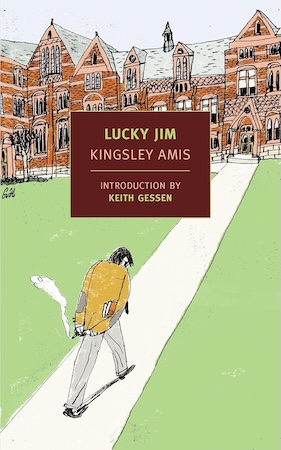
Lucky Jim
Jim Dixon is a young history lecturer at a provincial English university, and he is spectacularly ill-suited to the world of academic pretension surrounding him. Desperate to keep his job, he must endure pompous professors, tedious social gatherings, an exhausting relationship, and the looming disaster of a lecture he can barely bring himself to prepare. When he falls for Christine, the girlfriend of his employer’s son, his already chaotic life becomes even more complicated. Sharp, irreverent, and gloriously funny, Lucky Jim skewers class snobbery, intellectual pretension, and the absurd rituals of professional life. A landmark of postwar British literature, it remains a delightfully rebellious portrait of an ordinary man trying not to lose his mind in a world of fools.
United Kingdom
1954
2
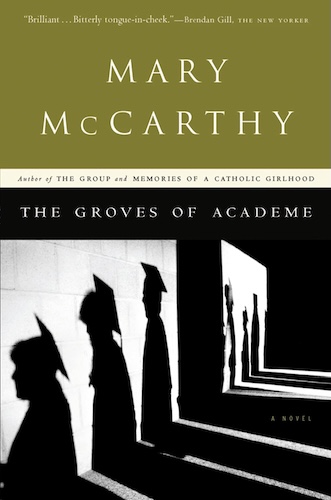
The Groves of Academe
At the progressive Jocelyn College, literature instructor Henry Mulcahy receives devastating news: his contract will not be renewed. Convinced that the college president is conspiring against him, Mulcahy launches a desperate campaign to save his career. As Cold War paranoia and anti-Communist suspicion sweep through America, he discovers that political loyalties and accusations can be powerful weapons in the battle for academic survival. But the more he fights for justice, the more his own dishonesty and ambition come to light. Sharp, witty, and mercilessly observant, The Groves of Academe exposes the rivalries, ideological hypocrisy, and petty power struggles lurking behind the respectable façade of university life.
United States
1952
3
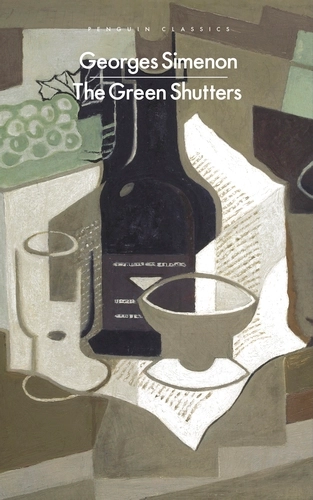
The Green Shutters
What remains of a man when fame, success, and the fearsome reputation he has built can no longer protect him from himself? Émile Maugin is a celebrated French actor who has spent his life commanding attention, intimidating those around him, and escaping his troubles through alcohol. But shortly before his sixtieth birthday, a devastating medical diagnosis forces him to confront his mortality. As memories of his impoverished childhood, failed relationships, and estranged son resurface, Maugin begins to question the life he has constructed. Beneath his arrogance lies a man haunted by a longing for something he has never truly possessed: the security and warmth of an ordinary family home. With Simenon’s characteristic psychological insight, this haunting novel explores the loneliness behind celebrity, the wounds inherited from childhood, and the painful distance between the person we present to the world and the person we really are.
Belgium
1950
4

Near to the Wild Heart
Near to the Wild Heart follows Joana, a young woman whose intense inner life sets her apart from the people around her. From childhood into adulthood, Joana struggles to understand herself and her place in a world shaped by social conventions, marriage, and expectations of femininity. Observant, independent, and often restless, she questions the rules that govern relationships and the assumptions society makes about how women should live.
Rather than following a conventional plot, Clarice Lispector explores Joana’s consciousness through shifting memories, introspection, and poetic reflections. Her thoughts move between childhood experiences, her complicated marriage, and her desire for a freedom that cannot easily be defined. The novel examines the tension between individuality and conformity, exploring how identity emerges through solitude, desire, and self-examination. Celebrated for its experimental style and psychological depth, Lispector’s debut novel marked the arrival of a distinctive voice in Brazilian literature, one deeply concerned with the mysteries and contradictions of human existence.
Brazil
1943
5
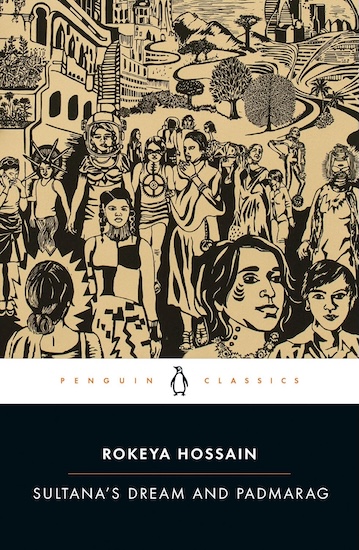
Sultana's Dream and Padmarag
What would the world look like if women held the power and men were confined to the home? In Sultana’s Dream, a pioneering feminist science-fiction story, Sultana discovers Ladyland, a peaceful, technologically advanced society where women lead scientific progress and men observe purdah. In Padmarag, a diverse community of women builds a refuge offering education, shelter, and independence to those constrained by marriage, poverty, and social prejudice. Written nearly a century before many contemporary feminist debates, these visionary works challenge patriarchy, religious and social conventions, and colonial power. Together, they imagine a world where women’s liberation begins not simply with equality, but with the freedom to shape society on their own terms.
Bangladesh
1905
6
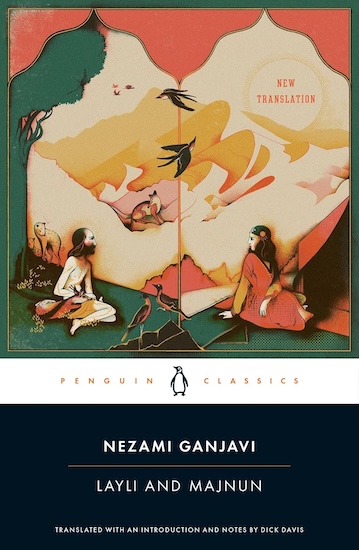
Layli and Majnun
Qays falls passionately in love with Layli, but when their families forbid their union, his devotion drives him beyond the boundaries of reason. Known as Majnun, or “the madman,” he wanders the wilderness, pouring his longing into poetry while Layli is forced into a marriage with another man. Though separated by society, tradition, and circumstance, their love becomes an all-consuming force that transcends earthly possession. Written in the twelfth century, this celebrated Persian romance transforms a tragic love story into a meditation on desire, spiritual devotion, and the painful distance between the heart and the world that seeks to control it.
Azerbaijan
1188