Literary Fiction
All countries
Afghanistan
Algeria
Antigua and Barbuda
Argentina
Australia
Austria
Azerbaijan
Bangladesh
Barbados
Belgium
Benin
Bosnia and Herzegovina
Brazil
Bulgaria
Burkina Faso
Burundi
Cabo Verde
Canada
Central African Republic
Chile
China
Colombia
Congo, Democratic Republic
Costa Rica
Côte d’Ivoire (Ivory Coast)
Croatia
Cyprus
Czech Republic
Denmark
Dominica
Dominican Republic
Egypt
El Salvador
Estonia
Ethiopia
France
Germany
Ghana
Greece
Hungary
Iceland
India
Iran
Iraq
Ireland
Italy
Jamaica
Japan
Jordan
Kazakhstan
Kenya
Kuwait
Latvia
Lebanon
Libya
Lithuania
Madagascar
Mexico
Moldova
Morocco
Myanmar
Netherlands
New Zealand
Nigeria
North Korea
North Macedonia
Norway
Oman
Pakistan
Palestine
Philippines
Poland
Portugal
Puerto Rico
Russia
Rwanda
Saint Kitts and Nevis
Saudi Arabia
Senegal
Singapore
South Korea
Spain
Sri Lanka
Sudan
Sweden
Switzerland
Syria
Taiwan
Tanzania
Thailand
Türkiye
Uganda
United Arab Emirates
United Kingdom
United States
Uzbekistan
Vietnam
Zambia
1
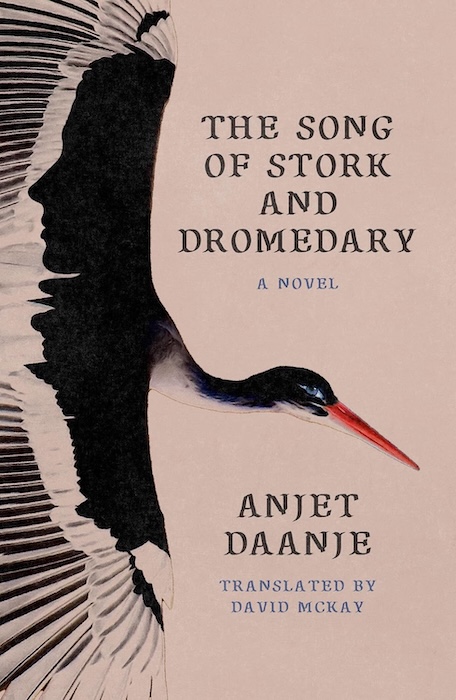
The Song of Stork and Dromedary
Inspired by the lives and literary legacies of the Brontë sisters, The Song of Stork and Dromedary is an intricate literary mystery about an elusive writer whose work continues to fascinate readers long after her death.
In nineteenth-century Yorkshire, Eliza May Drayden and her sisters grow up in relative isolation, finding refuge in their shared passion for literature. When Eliza May finally publishes her only novel, Haeger Mass, it is condemned as disturbing and immoral. Yet, over time, the book acquires a devoted following, and its mysterious author becomes the subject of endless speculation. Who was Eliza May Drayden, and what secrets lie within her strange and unsettling work?
Told across eleven interconnected narratives spanning almost three centuries, the novel unfolds through letters, biographies, personal recollections, mysterious notebooks, and the lives of people touched by Eliza May’s writing. As each perspective reveals new details, conflicting interpretations emerge, making the truth increasingly elusive.
Blending Gothic fiction, historical storytelling, and philosophical mystery, Daanje explores artistic identity, the relationship between an author and her readers, and the human desire to find meaning in stories. Ultimately, the novel reflects on literature’s extraordinary ability to transcend time and mortality.
Denmark
2026
2

Natalja’s Stories
Spanning generations of women and moving between Denmark and Russia, Natalja’s Stories is an inventive, surrealist exploration of family history, migration, and the elusive nature of identity. The story begins with Marie, a young woman living in Copenhagen who leaves her home with a Russian admirer and travels to St. Petersburg. As political upheaval engulfs Russia following the Revolution, Marie dies, and her daughter, Natalja, undertakes the journey back to Denmark carrying her mother’s ashes.
But Natalja’s story refuses to unfold as a conventional tale of exile and loss. Retold through the memories and imaginations of successive generations, it becomes a shifting narrative filled with mysterious encounters, murders, absurd characters, and unexpected connections. A particularly unsettling figure, Viktor Blanke, appears across the lives of three generations of mothers and daughters, blurring the boundaries between past and present, memory and invention. As the stories accumulate, identities overlap and family history becomes increasingly difficult to distinguish from fiction.
Originally published in Danish in 1988 as Nataljas fortællinger, this playful, formally experimental novella challenges familiar narratives about migration and belonging. Christensen combines dark humour, surrealism, and philosophical reflection to suggest that identity is never fixed: we continually reinvent ourselves through the stories we tell about our lives.
Denmark
2025
3
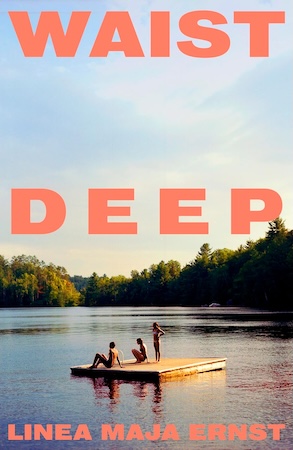
Waist Deep
Five university friends reunite for seven summer days at a lakeside house in the Danish countryside, hoping to recapture the freedom and intimacy of their younger years. Sylvia, who has always dreamed of a more unconventional way of living, finds herself increasingly disillusioned as her friends arrive with careers, children, and established relationships. The situation becomes even more complicated when Esben, the object of Sylvia’s long-standing crush, announces that he intends to marry Karen at the end of the week. Meanwhile, Sylvia’s relationship with her girlfriend, Charlie, forces her to confront the tension between romantic commitment and her desire for something less conventional. As the friends swim, drink, flirt, and argue beneath the midsummer sky, old attractions resurface and carefully maintained boundaries begin to dissolve. Through their conversations and intimate encounters, Linea Maja Ernst explores the contradictions of adulthood, the changing nature of friendship, and the difficulty of reconciling youthful ideals with the realities of everyday life. Sensual, witty, and emotionally perceptive, Waist Deep asks whether growing up necessarily means abandoning the freedom to imagine a different kind of life.
Denmark
2024
4
On the Calculation of Volume (Book I)
Tara Selter, the heroine of On the Calculation of Volume, has involuntarily stepped off the train of in her world, November eighteenth repeats itself endlessly. We meet Tara on her 122nd November 18 she no longer experiences the changes of days, weeks, months, or seasons. She finds herself in a lonely new reality without being able to explain how is it that she wakes every morning into the same day, knowing to the exact second when the blackbird will burst into song and when the rain will begin? Will she ever be able to share her new life with her beloved and now chronically befuddled husband? And on top of her profound isolation and confusion, Tara takes in with pain how slight a difference she makes in the world. (As she puts “That’s how little the activities of one person matter on the eighteenth of November.”)
Balle is hypnotic and masterful in her remixing of the endless recursive day, creating curious little folds of time and her flashbacks light up inside the text like old flash bulbs.
The first volume’s gravitational pull—a force inverse to its constriction—has the effect of a strong tranquilizer, but a drug under which your powers of observation only grow sharper and more acute. Give in to the book's logic (its minute movements, its thrilling shifts, its slant wit, its slowing of time) and its spell is utterly intoxicating.
Solvej Balle’s seven-volume novel wrings enthralling and magical new dimensions from time and its hapless, mortal subjects.
Denmark
2024