Literary Fiction
All countries
Afghanistan
Algeria
Antigua and Barbuda
Argentina
Australia
Austria
Azerbaijan
Bangladesh
Barbados
Belgium
Benin
Bosnia and Herzegovina
Brazil
Bulgaria
Burkina Faso
Burundi
Cabo Verde
Canada
Central African Republic
Chile
China
Colombia
Congo, Democratic Republic
Costa Rica
Côte d’Ivoire (Ivory Coast)
Croatia
Cyprus
Czech Republic
Denmark
Dominica
Dominican Republic
Egypt
El Salvador
Estonia
Ethiopia
France
Germany
Ghana
Greece
Hungary
Iceland
India
Iran
Iraq
Ireland
Italy
Jamaica
Japan
Jordan
Kazakhstan
Kenya
Kuwait
Latvia
Lebanon
Libya
Lithuania
Madagascar
Mexico
Moldova
Morocco
Myanmar
Netherlands
New Zealand
Nigeria
North Korea
North Macedonia
Norway
Oman
Pakistan
Palestine
Philippines
Poland
Portugal
Puerto Rico
Russia
Rwanda
Saint Kitts and Nevis
Saudi Arabia
Senegal
Singapore
South Korea
Spain
Sri Lanka
Sudan
Sweden
Switzerland
Syria
Taiwan
Tanzania
Thailand
Türkiye
Uganda
United Arab Emirates
United Kingdom
United States
Uzbekistan
Vietnam
Zambia
1
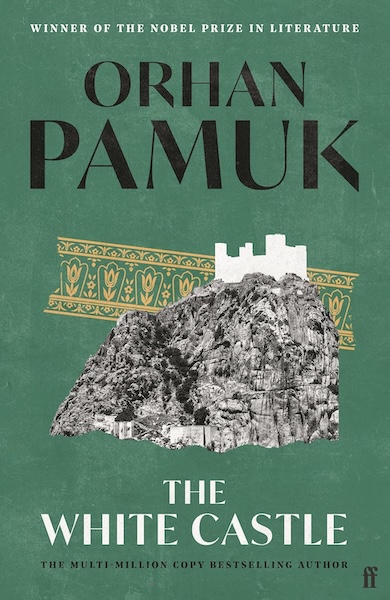
The White Castle
In the seventeenth century, a young Italian scholar travelling from Venice is captured by pirates and taken to Constantinople, where he becomes a slave. His new master, Hoja, is an Ottoman scholar fascinated by Western science and technology. But their relationship becomes increasingly strange when they discover that they look almost exactly alike.
As the Italian teaches Hoja everything he knows about astronomy, medicine, and engineering, their intellectual partnership develops into a psychological struggle. Each man becomes obsessed with understanding the other, probing his memories, fears, and deepest secrets. Gradually, the boundaries between master and slave begin to blur, raising an unsettling question: if two people know everything about each other, can they exchange identities?
Set against the grandeur and brutality of the Ottoman Empire, The White Castle is a philosophical tale about selfhood, cultural differences, and the fragile boundaries separating East from West.
Türkiye
1985
2
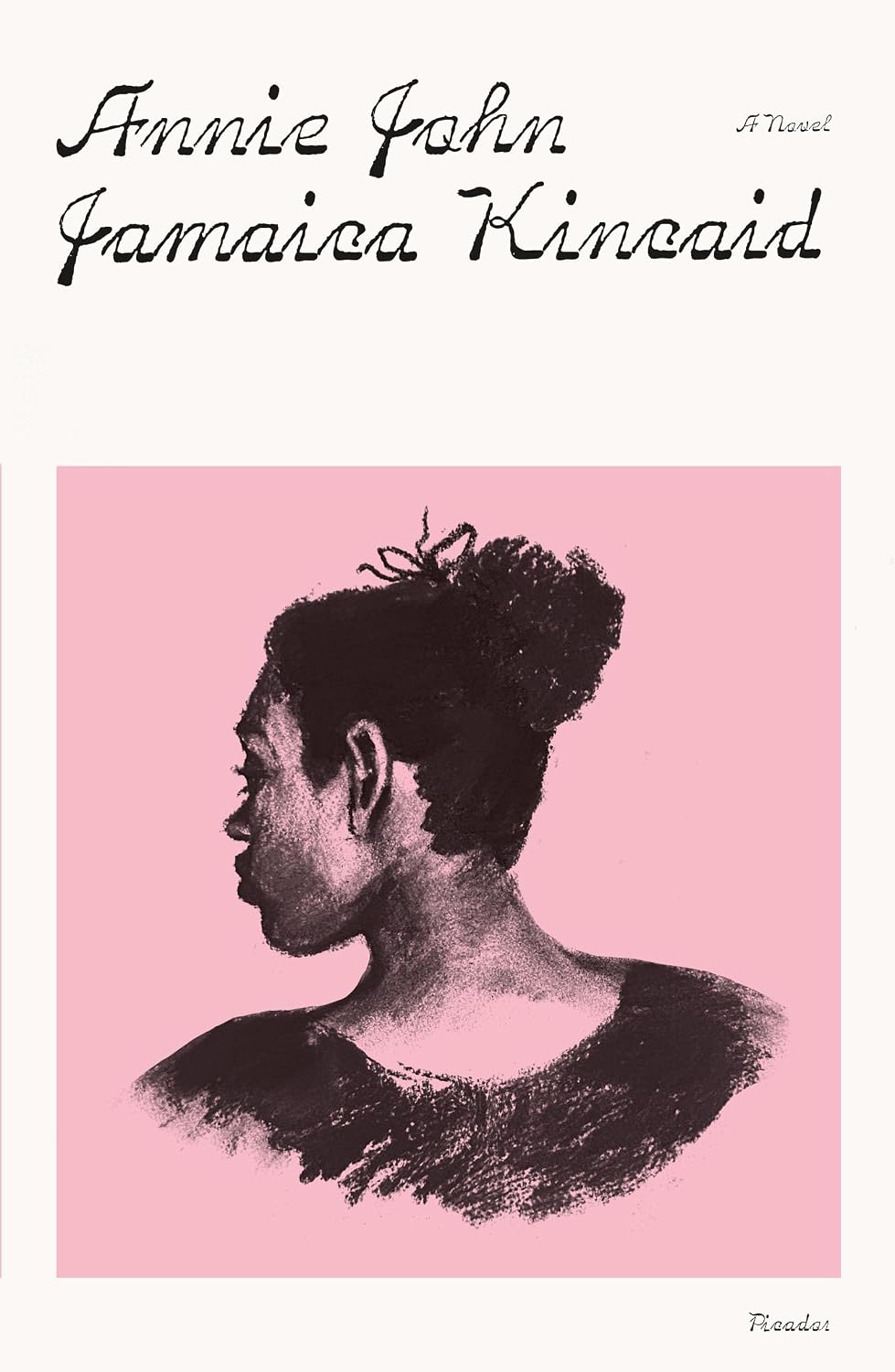
Annie John
Set on the Caribbean island of Antigua, Annie John follows a young girl as she grows from childhood into adolescence. Annie is deeply attached to her mother, whom she initially regards as her closest companion and model for adulthood. As she matures, however, their relationship becomes increasingly strained, and Annie begins to struggle with questions of independence, identity, and belonging. Her experiences at school, friendships, and growing awareness of death and sexuality complicate her understanding of the world. Jamaica Kincaid explores the painful transition from childhood intimacy to adult separation, while also drawing parallels between Annie’s personal rebellion and Antigua’s colonial history. The novel is an intimate portrait of a young woman learning to define herself beyond the expectations of family and society.
Antigua and Barbuda
1985
3
The Unbearable Lightness of Being
Set in Prague during the 1960s and the Soviet-led invasion of Czechoslovakia in 1968, The Unbearable Lightness of Being explores the intertwined lives of four characters struggling with love, freedom, and the meaning of existence. Tomas, a surgeon and womaniser, finds himself torn between his desire for independence and his deep attachment to Tereza, a sensitive photographer who longs for emotional security. Their relationship unfolds alongside the passionate affair between Sabina, an artist who rejects convention, and Franz, a married academic drawn to ideals of political commitment. Against the backdrop of historical upheaval, Milan Kundera examines the tension between personal freedom and responsibility, questioning whether life’s fleeting nature makes our choices meaningless or profoundly significant. Through philosophical reflections, irony, and intimate storytelling, the novel explores betrayal, memory, political oppression, and the contradictions of human desire. It invites readers to consider how the decisions we make shape our identities in a world where nothing can ever be repeated exactly.
Czech Republic
1984
4
Tongue's Blood Does Not Run Dry
Tongue’s Blood Does Not Run Dry is a novel by Algerian writer Assia Djebar that explores women’s lives, resistance, and the struggle for freedom in a society shaped by colonial history and patriarchal traditions. Through interwoven voices and personal testimonies, Djebar portrays women confronting restrictions on their independence, struggling to express their experiences, and seeking to reclaim control over their own stories. The novel reflects the lasting consequences of Algeria’s colonial past and the ways political oppression intersects with the silencing of women. Language becomes a central concern: speaking, remembering, and bearing witness are acts of defiance against forces that seek to erase individual experiences. Combining lyrical writing with a collective perspective, Djebar challenges conventional historical narratives that marginalise women’s contributions and suffering. The work highlights the connection between personal freedom and collective liberation, showing how women’s voices preserve memories that might otherwise disappear from history.
Algeria
1984
5
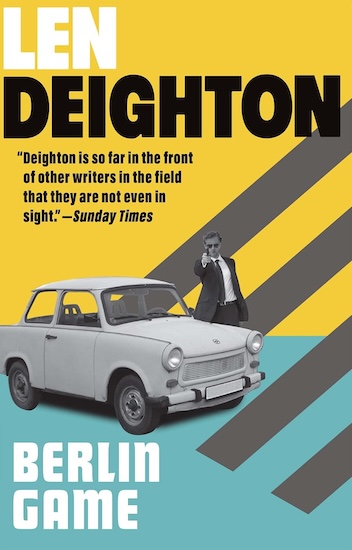
Berlin Game
During the Cold War, British intelligence officer Bernard Samson is accustomed to being overlooked. Now working behind a desk in London after years in the field, he is unexpectedly called back into action when one of Britain’s most valuable agents in East Berlin requests urgent extraction. Known by the codename “Brahms Four,” the agent believes a Soviet mole has infiltrated the highest levels of British intelligence—and that his own life is in immediate danger.
Sent to Berlin, Samson must navigate a labyrinth of double agents, conflicting loyalties, and carefully concealed secrets. His mission is complicated by the suspicion that the betrayal may come from someone within his own professional circle. Meanwhile, his relationship with his ambitious wife, Fiona, who is rising through the intelligence service while his own career stagnates, adds another layer of uncertainty to his already precarious position.
The first novel in Len Deighton’s acclaimed Game, Set and Match trilogy, Berlin Game combines intricate espionage plotting with a sharp portrait of the people behind intelligence operations. Set in a divided Europe where trust is a dangerous luxury, it explores betrayal, professional rivalry, and the personal costs of a life built around secrets.
Germany
United Kingdom
1983
6
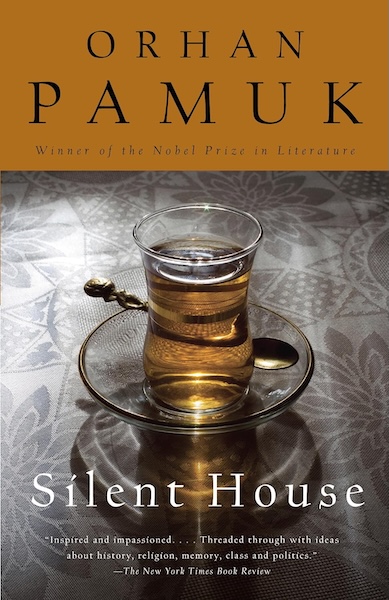
Silent House
Every summer, three siblings travel to a coastal town near Istanbul to visit their elderly grandmother, Fatma, who lives in a house filled with memories of a vanished world. Their grandfather, a doctor and idealist, built the house decades earlier, but his ambitions and radical ideas left painful marks on the family.
During their visit, the siblings reveal contrasting visions of Turkey’s future. Faruk, a disillusioned historian, struggles with his sense of purpose; Nilgün, a politically engaged young woman, dreams of a more egalitarian society; and Metin longs for wealth and the opportunities he associates with the West. Meanwhile, Fatma’s memories return to a past shaped by resentment, regret, and family secrets.
Set against the political polarisation of late-1970s Turkey, Silent House examines the tensions between generations, social classes, and competing ideologies. Through the voices of its deeply different characters, Pamuk reveals how a family’s private conflicts can mirror the divisions of an entire nation.
Türkiye
1983
7
The Book of Disquiet
The Book of Disquiet is a fragmentary, deeply introspective work attributed to Bernardo Soares, an assistant bookkeeper living a quiet, unremarkable life in Lisbon. Through a series of diary-like reflections, philosophical meditations, and poetic observations, Soares examines his inner world, revealing a profound sense of alienation from society and an ongoing struggle to understand his own existence. Ordinary experiences, from walking through Lisbon’s streets to sitting at his desk, become starting points for reflections on dreams, identity, time, and the distance between the self and the world.
Rather than following a conventional narrative, Fernando Pessoa’s work unfolds as an intimate record of consciousness, capturing the contradictions and uncertainties of being human. The narrator finds both refuge and imprisonment in his imagination, often preferring the richness of dreams to the demands of reality. Blurring the boundaries between autobiography, fiction, and philosophy, The Book of Disquiet is a haunting meditation on loneliness, the fragmented nature of identity, and the quiet beauty of an uneventful life.
Note: Although Pessoa began writing the fragments decades earlier, the book was first published posthumously in Portuguese in 1982.
Portugal
1982
8
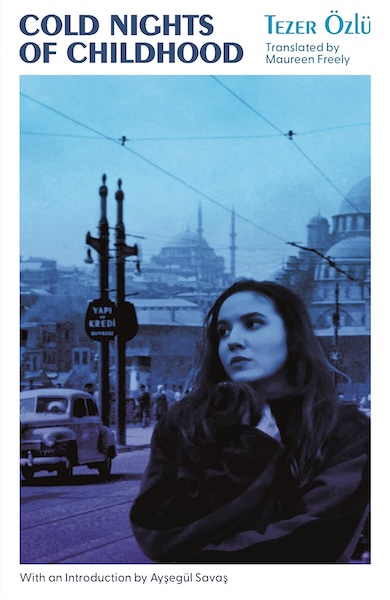
Cold Nights of Childhood
Growing up in 1950s Turkey, a young woman feels increasingly alienated by the conventional world surrounding her. In a society shaped by patriarchal expectations, nationalism, and rigid ideas of respectability, she longs for freedom, sensuality, and a life beyond the boundaries imposed on her. Childhood memories of family life and school follow her into adulthood, becoming inseparable from her search for independence.
As she moves between Istanbul, Berlin, and Paris, she pursues love and escape, yet finds herself struggling with depression and repeated stays in psychiatric institutions. There, she encounters treatments that threaten to suppress the very individuality she is fighting to preserve. Through fragmented memories, intimate reflections, and an unconventional narrative, she confronts the painful distance between the life society expects her to live and the one she desperately wants.
Part autobiographical novel and part intimate psychological portrait, Cold Nights of Childhood is a fearless exploration of female desire, alienation, and resistance. Tezer Özlü transforms personal suffering into a powerful meditation on what it means to remain true to oneself in a world determined to define who one should be.
Türkiye
1980
9
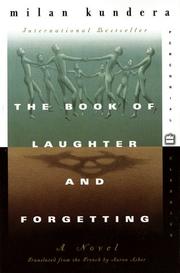
The Book of Laughter and Forgetting
The Book of Laughter and Forgetting is a fragmented, philosophical novel that explores the relationship between personal memory, political power, and the struggle to preserve individual identity. Set primarily in Czechoslovakia after the 1968 Soviet invasion, the book weaves together several interconnected stories about people whose lives are shaped by exile, betrayal, love, and the deliberate manipulation of history. One story follows Tamina, a widow living in exile who desperately tries to recover the letters and memories of her deceased husband, while others examine how political regimes erase inconvenient figures from photographs, public records, and collective consciousness. Kundera moves between fiction, autobiography, historical reflection, and philosophical commentary, using humour and irony to expose the absurdities of authoritarianism and human behaviour. Laughter becomes both a form of resistance and a weapon of conformity, while forgetting emerges as a deeply political act. The novel questions whether individuals can protect their memories and identities when those in power attempt to control the past, revealing the intimate connection between remembering, freedom, and the right to define one’s own life.
Czech Republic
1979
10
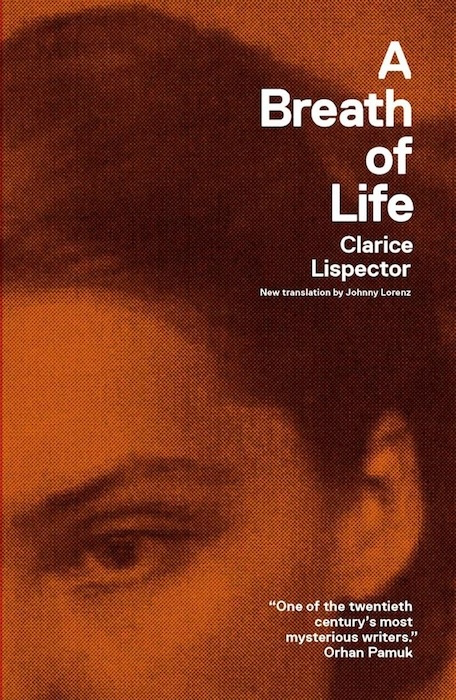
A Breath of Life: Pulsations
A Breath of Life: Pulsations is an experimental, posthumously published novel in which Clarice Lispector explores the mysterious relationship between a creator and the character he brings into existence. The book unfolds as a dialogue between an unnamed male author and Angela Pralini, the fictional woman whose thoughts, desires, and contradictions gradually take shape through his writing. As the two voices interact, the boundaries between author and creation become increasingly uncertain, raising questions about who controls a story and whether a fictional character can exist independently of the person who imagines her.
Moving between philosophical reflections, fragments of narrative, and intimate meditations on existence, the novel examines creativity, consciousness, mortality, and the limitations of language. The author struggles to understand Angela, while she resists being reduced to his interpretation of her. Through this unusual structure, Lispector investigates the tension between identity and invention, revealing the restless search for meaning that lies at the heart of both artistic creation and human life.
Brazil
1978
11
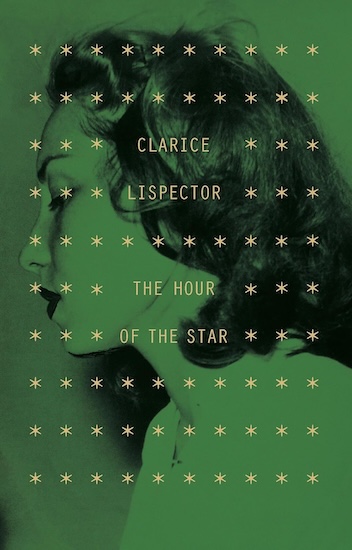
The Hour of the Star
The Hour of the Star follows Macabéa, a poor young woman from northeastern Brazil who moves to Rio de Janeiro in search of a better life. Working as a typist and living in poverty, she leads an almost invisible existence, lacking the education, confidence, and social awareness to understand the world around her. Despite her difficult circumstances, Macabéa possesses a quiet innocence and an unexpected capacity for happiness, finding small pleasures in everyday life.
Her story is narrated by Rodrigo S.M., a writer who struggles to represent her life honestly while confronting his own privilege and the limitations of storytelling. Through this unusual narrative perspective, Clarice Lispector explores poverty, gender, social exclusion, and the difficulty of giving voice to those society overlooks. Both intimate and unsettling, the novel asks profound questions about human dignity, identity, and whether an insignificant life can ever receive its moment of recognition.
Brazil
1977
12
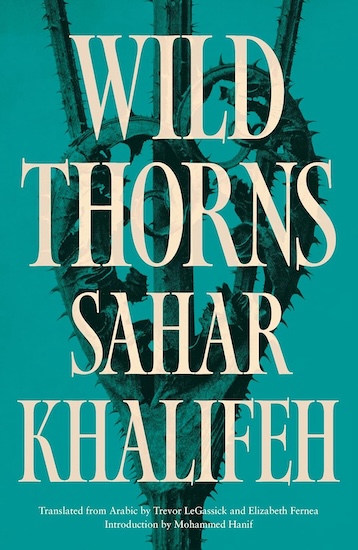
Wild Thorns
After five years working in the Gulf, Usama returns to the occupied West Bank determined to join the Palestinian resistance. He is shocked to discover that life in his hometown of Nablus has changed dramatically. Many Palestinians now work in Israel to support their families, navigating military checkpoints and economic dependence while enduring the daily humiliations of occupation. Frustrated by what he sees as resignation, Usama plans to sabotage buses transporting Palestinian workers into Israel. Yet his encounters with family members, former friends, and fellow Palestinians force him to confront the difficult choices people face between resistance and survival. Through a vivid portrait of ordinary lives under military occupation, Sahar Khalifeh explores political resistance, economic hardship, family loyalty, and the moral complexities of living under oppression. First published in Arabic in 1976, Wild Thorns is a landmark of Palestinian literature that examines the psychological and social consequences of occupation without reducing its characters to simple heroes or victims.
Palestine
1976