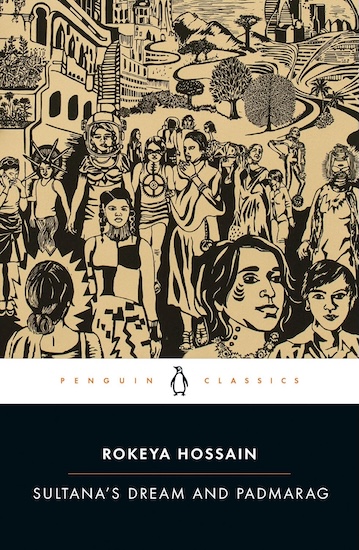
Sultana's Dream and Padmarag
Bangladesh

Sultana's Dream and Padmarag

by Rokeya Hossain

Summary

What would the world look like if women held the power and men were confined to the home? In Sultana’s Dream, a pioneering feminist science-fiction story, Sultana discovers Ladyland, a peaceful, technologically advanced society where women lead scientific progress and men observe purdah. In Padmarag, a diverse community of women builds a refuge offering education, shelter, and independence to those constrained by marriage, poverty, and social prejudice. Written nearly a century before many contemporary feminist debates, these visionary works challenge patriarchy, religious and social conventions, and colonial power. Together, they imagine a world where women’s liberation begins not simply with equality, but with the freedom to shape society on their own terms.

Reviews

Login to leave a review.

No reviews yet. Be the first!

You might also like

Rokeya Hossain
Rokeya Hossain

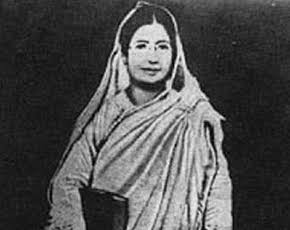
Rokeya Sakhawat Hossain (1880–1932), widely known as Begum Rokeya, was a pioneering Bengali writer, educator, and social reformer whose work helped shape the early feminist movement in South Asia. Born into a conservative Muslim family in what is now Bangladesh, she pursued education at a time when formal learning for girls was strongly restricted. With support from her brother and later her husband, she developed her literary voice in both Bengali and English, using satire, fiction, and essays to challenge gender inequality and advocate for women’s education. In 1916, she founded an organization dedicated to improving women’s lives, and in 1911 she established the Sakhawat Memorial Girls’ School in Kolkata, which continues to operate today. Her influential works, including Sultana’s Dream (1905), Padmarag (1924), and Abarodhbasini (1931), challenged patriarchal traditions while questioning colonial assumptions about South Asian women. Today, she is celebrated in Bangladesh and beyond as a foundational figure in feminist literature, remembered for imagining more equitable futures and turning those visions into practical social action.

View author page
Published
1905
Author
Rokeya Hossain