Literary Fiction
All countries
Afghanistan
Algeria
Antigua and Barbuda
Argentina
Australia
Austria
Azerbaijan
Bangladesh
Barbados
Belgium
Benin
Bosnia and Herzegovina
Brazil
Bulgaria
Burkina Faso
Burundi
Cabo Verde
Canada
Central African Republic
Chile
China
Colombia
Congo, Democratic Republic
Costa Rica
Côte d’Ivoire (Ivory Coast)
Croatia
Cyprus
Czech Republic
Denmark
Dominica
Dominican Republic
Egypt
El Salvador
Estonia
Ethiopia
France
Germany
Ghana
Greece
Hungary
Iceland
India
Iran
Iraq
Ireland
Italy
Jamaica
Japan
Jordan
Kazakhstan
Kenya
Kuwait
Latvia
Lebanon
Libya
Lithuania
Madagascar
Mexico
Moldova
Morocco
Myanmar
Netherlands
New Zealand
Nigeria
North Korea
North Macedonia
Norway
Oman
Pakistan
Palestine
Philippines
Poland
Portugal
Puerto Rico
Russia
Rwanda
Saint Kitts and Nevis
Saudi Arabia
Senegal
Singapore
South Korea
Spain
Sri Lanka
Sudan
Sweden
Switzerland
Syria
Taiwan
Tanzania
Thailand
Türkiye
Uganda
United Arab Emirates
United Kingdom
United States
Uzbekistan
Vietnam
Zambia
1
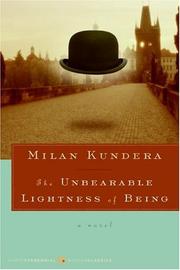
The Unbearable Lightness of Being
Set in Prague during the 1960s and the Soviet-led invasion of Czechoslovakia in 1968, The Unbearable Lightness of Being explores the intertwined lives of four characters struggling with love, freedom, and the meaning of existence. Tomas, a surgeon and womaniser, finds himself torn between his desire for independence and his deep attachment to Tereza, a sensitive photographer who longs for emotional security. Their relationship unfolds alongside the passionate affair between Sabina, an artist who rejects convention, and Franz, a married academic drawn to ideals of political commitment. Against the backdrop of historical upheaval, Milan Kundera examines the tension between personal freedom and responsibility, questioning whether life’s fleeting nature makes our choices meaningless or profoundly significant. Through philosophical reflections, irony, and intimate storytelling, the novel explores betrayal, memory, political oppression, and the contradictions of human desire. It invites readers to consider how the decisions we make shape our identities in a world where nothing can ever be repeated exactly.
Czech Republic
1984
2
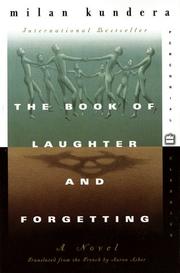
The Book of Laughter and Forgetting
The Book of Laughter and Forgetting is a fragmented, philosophical novel that explores the relationship between personal memory, political power, and the struggle to preserve individual identity. Set primarily in Czechoslovakia after the 1968 Soviet invasion, the book weaves together several interconnected stories about people whose lives are shaped by exile, betrayal, love, and the deliberate manipulation of history. One story follows Tamina, a widow living in exile who desperately tries to recover the letters and memories of her deceased husband, while others examine how political regimes erase inconvenient figures from photographs, public records, and collective consciousness. Kundera moves between fiction, autobiography, historical reflection, and philosophical commentary, using humour and irony to expose the absurdities of authoritarianism and human behaviour. Laughter becomes both a form of resistance and a weapon of conformity, while forgetting emerges as a deeply political act. The novel questions whether individuals can protect their memories and identities when those in power attempt to control the past, revealing the intimate connection between remembering, freedom, and the right to define one’s own life.
Czech Republic
1979