Freedom & Resistance
Voices of resistance, liberation, and the fight for justice.
All countries
Afghanistan
Albania
Algeria
Argentina
Australia
Belgium
Brazil
Burkina Faso
Central African Republic
Czech Republic
Dominican Republic
Egypt
France
Greece
Hungary
Iceland
India
Iran
Ireland
Italy
Japan
Jordan
Kenya
Kuwait
Malta
Morocco
Oman
Pakistan
Palestine
Philippines
Puerto Rico
Romania
Russia
Rwanda
South Africa
South Korea
Spain
Türkiye
Turkmenistan
United Kingdom
United States
Uruguay
Uzbekistan
Yemen
Zambia
1
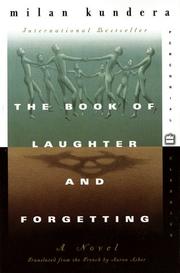
The Book of Laughter and Forgetting
The Book of Laughter and Forgetting is a fragmented, philosophical novel that explores the relationship between personal memory, political power, and the struggle to preserve individual identity. Set primarily in Czechoslovakia after the 1968 Soviet invasion, the book weaves together several interconnected stories about people whose lives are shaped by exile, betrayal, love, and the deliberate manipulation of history. One story follows Tamina, a widow living in exile who desperately tries to recover the letters and memories of her deceased husband, while others examine how political regimes erase inconvenient figures from photographs, public records, and collective consciousness. Kundera moves between fiction, autobiography, historical reflection, and philosophical commentary, using humour and irony to expose the absurdities of authoritarianism and human behaviour. Laughter becomes both a form of resistance and a weapon of conformity, while forgetting emerges as a deeply political act. The novel questions whether individuals can protect their memories and identities when those in power attempt to control the past, revealing the intimate connection between remembering, freedom, and the right to define one’s own life.
Czech Republic
1979
2
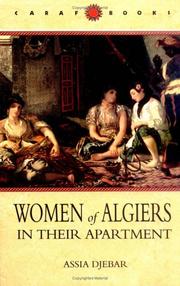
Women of Algiers in Their Apartment
Women of Algiers in Their Apartment is a collection of short stories by Algerian writer Assia Djebar that explores the lives of women navigating the aftermath of colonialism and the Algerian War of Independence. Through interwoven narratives, Djebar portrays women from different generations as they confront the restrictions imposed by patriarchal traditions, the trauma of violence, and the challenges of claiming independence in a changing society. Drawing inspiration from Eugène Delacroix’s painting of the same name, the collection reimagines women traditionally depicted as silent and secluded, giving them voices through which to express their desires, memories, and struggles. Djebar combines personal testimonies, historical reflection, and lyrical prose to examine how women’s experiences have been marginalised in official accounts of national history. Her characters negotiate the tension between tradition and modernity while seeking autonomy and meaningful connection. The collection becomes both an act of remembrance and a literary form of resistance, revealing the complex relationship between women’s liberation, cultural identity, and the unfinished struggle for freedom in postcolonial Algeria.
Algeria
1980
3
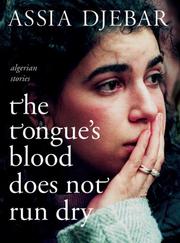
Tongue's Blood Does Not Run Dry
Tongue’s Blood Does Not Run Dry is a novel by Algerian writer Assia Djebar that explores women’s lives, resistance, and the struggle for freedom in a society shaped by colonial history and patriarchal traditions. Through interwoven voices and personal testimonies, Djebar portrays women confronting restrictions on their independence, struggling to express their experiences, and seeking to reclaim control over their own stories. The novel reflects the lasting consequences of Algeria’s colonial past and the ways political oppression intersects with the silencing of women. Language becomes a central concern: speaking, remembering, and bearing witness are acts of defiance against forces that seek to erase individual experiences. Combining lyrical writing with a collective perspective, Djebar challenges conventional historical narratives that marginalise women’s contributions and suffering. The work highlights the connection between personal freedom and collective liberation, showing how women’s voices preserve memories that might otherwise disappear from history.
Algeria
1984
4
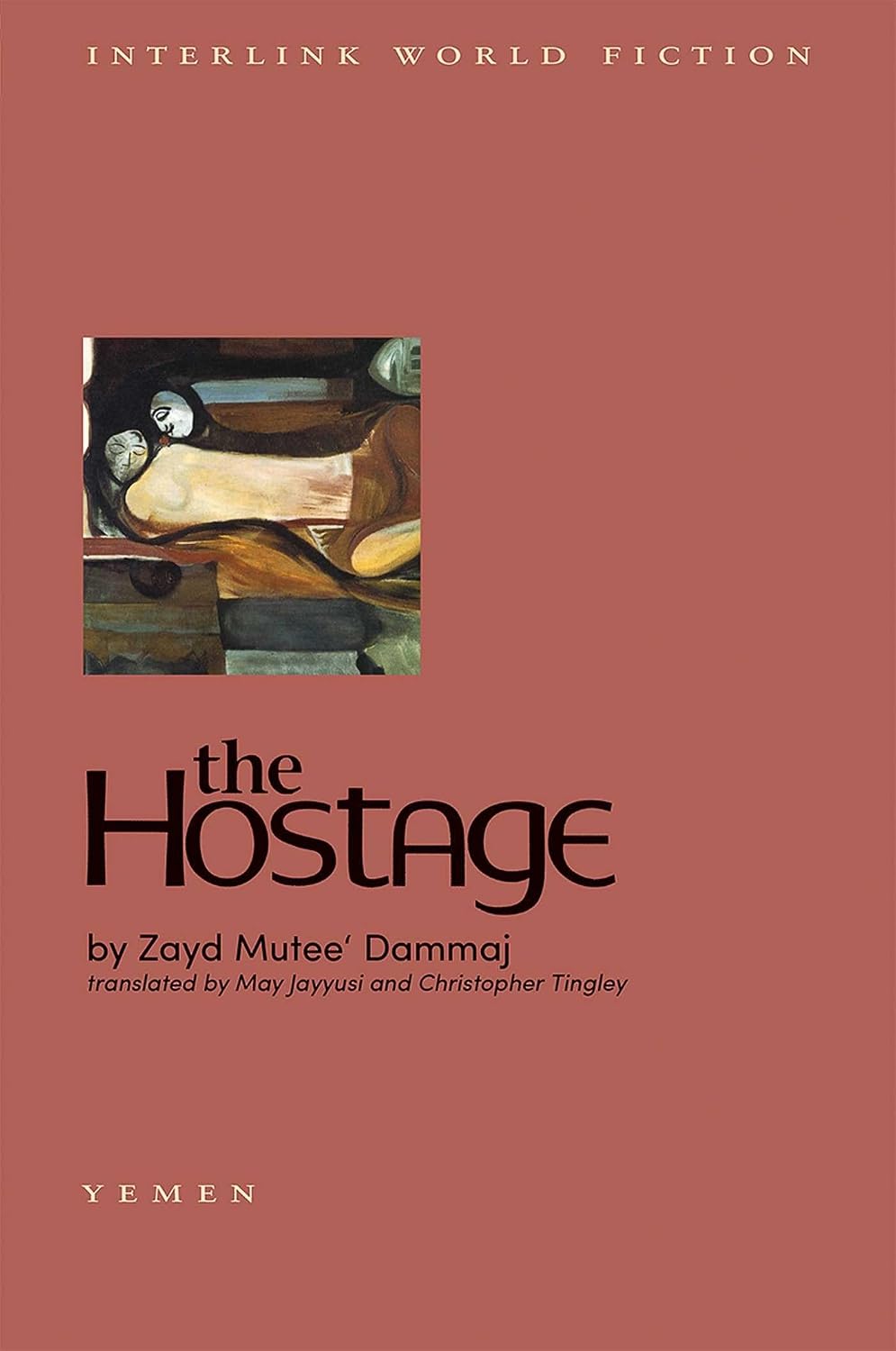
The hostage
Set in Yemen in the 1940s, before the revolution that ended the country’s imamate system, The Hostage follows an unnamed adolescent boy who is taken from his family and held as a hostage to guarantee his father’s political loyalty to the ruling Imam. Transferred to the governor’s palace in Taiz, he becomes a young attendant serving the palace’s inhabitants, gradually discovering the complex relationships, privileges, and abuses that shape their world.
Through the boy’s experiences, Dammaj exposes the cruelty of an authoritarian political system in which ordinary people are denied autonomy and treated as instruments of power. As the protagonist develops emotionally and becomes increasingly aware of his circumstances, his desire for independence grows. Blending personal coming-of-age with political satire, the novel offers a powerful portrait of oppression, social hierarchy, and the human longing for freedom. First published in Arabic as Al-Rahina, it is considered a landmark of modern Yemeni literature.
Yemen
1984
5
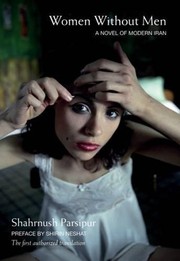
Women Without Men
Set in Iran against the backdrop of the 1953 coup d’état, Women Without Men follows the interconnected lives of five women whose experiences reflect the restrictions placed on women by family, marriage, and society. Among them are Munis, a woman longing to escape her brother’s control; Faizeh, her friend who dreams of marriage; Mahdokht, a woman troubled by conventional expectations of femininity; Farrokhlaqa, a wealthy housewife seeking a different life; and Zarrinkolah, a sex worker who begins to question the world around her.
Their individual journeys eventually lead them to a garden on the outskirts of Tehran, where they attempt to create a life beyond the rules that have governed them. Blending magical realism, mysticism, and historical events, Parsipur explores female autonomy, sexuality, and the search for identity. Through surreal transformations and symbolic storytelling, the novella imagines the possibility of women reclaiming their bodies, choices, and futures.
Iran
1989
6
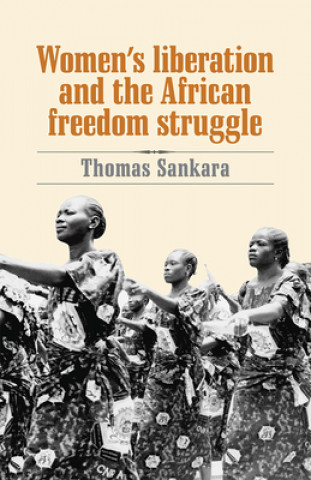
Women’s Liberation and the African Freedom Struggle
Women’s Liberation and the African Freedom Struggle brings together two speeches by Thomas Sankara, the revolutionary leader and president of Burkina Faso from 1983 to 1987. In these speeches, Sankara argues that women’s emancipation is essential to achieving genuine social and political transformation.
Drawing on the experiences of women in Burkina Faso, he examines how traditional gender roles, economic inequality, and social structures have contributed to women’s oppression. He challenges practices such as forced marriage, female genital mutilation, and polygamy, while advocating for women’s access to education, economic independence, and political participation.
Sankara connects the struggle for gender equality with the wider fight against colonialism, imperialism, and economic exploitation. He calls on both women and men to challenge deeply rooted inequalities and take an active role in transforming society. The collection presents a vision of liberation in which women’s rights are inseparable from the broader pursuit of social justice and national independence.
Burkina Faso
1990
7
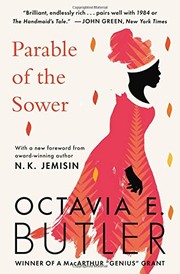
Parable of the Sower
In 2025, with the world descending into madness and anarchy, one woman begins a fateful journey toward a better future.
Lauren Olamina and her family live in one of the only safe neighborhoods remaining on the outskirts of Los Angeles. Behind the walls of their defended enclave, Lauren’s father, a preacher, and a handful of other citizens try to salvage what remains of a culture that has been destroyed by drugs, disease, war, and chronic water shortages. While her father tries to lead people on the righteous path, Lauren struggles with hyperempathy, a condition that makes her extraordinarily sensitive to the pain of others.
When fire destroys their compound, Lauren’s family is killed and she is forced out into a world that is fraught with danger. With a handful of other refugees, Lauren must make her way north to safety, along the way conceiving a revolutionary idea that may mean salvation for all mankind.
United States
1993
8
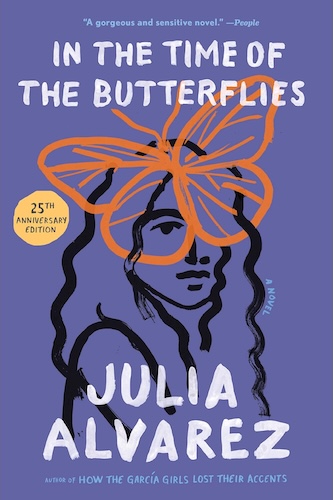
In the Time of the Butterflies
Four sisters. One brutal dictatorship. A courage that would outlive them all.
In the Dominican Republic under Rafael Trujillo’s oppressive regime, the Mirabal sisters lead seemingly ordinary lives until they are drawn into the underground resistance. As Minerva, Patria, and María Teresa risk everything to challenge the dictator, their youngest sister, Dedé, must confront the consequences of their growing defiance. Inspired by the true story of the Mirabal sisters, three of whom were murdered on Trujillo’s orders in 1960, Julia Alvarez brings their lives to the page with tenderness and emotional power. Through love, family bonds, and acts of extraordinary bravery, this moving novel explores the price of resistance and the strength it takes to stand against tyranny. The sisters, remembered as Las Mariposas (the Butterflies), became enduring symbols of freedom and courage.
Dominican Republic
1994
9
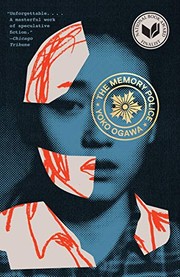
The Memory Police
The Memory Police takes place on an unnamed island where objects, memories, and aspects of everyday life mysteriously disappear. When something vanishes, the inhabitants gradually lose the ability to remember it, and the Memory Police ensure that no one preserves what has been erased. Flowers, birds, photographs, and other familiar things disappear from existence, leaving the island’s residents increasingly disconnected from their past.
The novel follows an unnamed young novelist whose editor, R, retains memories of the things that have vanished. When she learns that the Memory Police may discover his secret, she risks her own safety to hide him in a concealed room beneath her house. As disappearances continue, the world around them becomes smaller, and the struggle to preserve memory turns into an act of resistance.
Through its quiet, unsettling atmosphere, Ogawa explores censorship, surveillance, identity, and the fragility of human memory. The novel asks what remains of a person when the experiences, objects, and words that shape their understanding of the world are systematically taken away.
Japan
1994
10
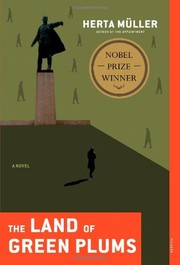
The Land of Green Plums
Set in communist Romania under the dictatorship of Nicolae Ceaușescu, The Land of Green Plums follows a group of young people from minority backgrounds who struggle to survive in a society ruled by fear, surveillance, and political repression. After a young woman from a German-speaking community begins studying in the city, she becomes part of a circle of friends whose lives are increasingly threatened by the secret police. As they face interrogation, betrayal, and the constant possibility of violence, their friendships become both a source of comfort and a test of loyalty. Through fragmented storytelling and haunting imagery, Herta Müller portrays the psychological consequences of authoritarianism and the erosion of trust under constant surveillance. The novel explores the struggle for personal freedom, the fragility of human relationships, and the lasting trauma inflicted by a regime that seeks to control every aspect of life.
Romania
1994
11
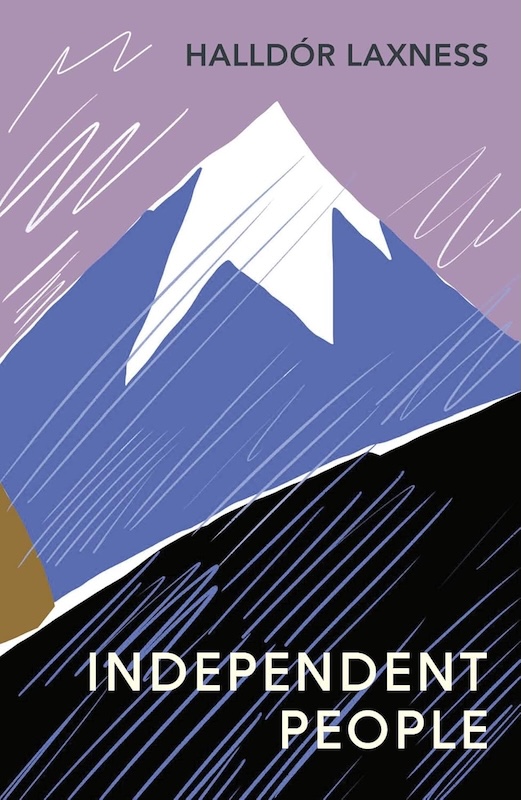
Independent People
Independent People follows Bjartur of Summerhouses, a stubborn Icelandic sheep farmer determined to achieve financial independence after years of working as a tenant. Having finally acquired his own small farm, he dedicates his life to preserving his freedom, believing that self-sufficiency is the highest form of dignity. However, his relentless pursuit of independence comes at a devastating cost to his family, particularly his wife and children, who endure poverty, isolation, and emotional hardship. Set against Iceland’s harsh rural landscape in the early twentieth century, the novel portrays the struggle between individual ambition and human connection. Through Bjartur’s tragic determination, Halldór Laxness explores poverty, pride, social inequality, and the contradictions of freedom, questioning whether a life entirely devoted to independence can ever lead to genuine happiness.
Iceland
1997
12
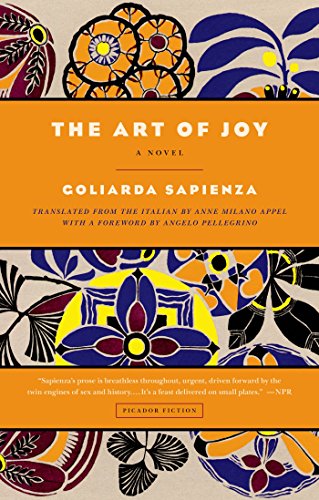
Art of Joy
The Art of Joy follows Modesta, a fiercely independent woman born into poverty in Sicily on New Year’s Day 1900. After a difficult childhood marked by family tragedy, she finds refuge in a convent, but her intelligence, ambition, and refusal to accept the limits imposed on women lead her toward a very different life. Through determination and cunning, Modesta rises into aristocratic society, building relationships and pursuing intellectual, emotional, and sexual freedom on her own terms.
Spanning much of the twentieth century, the novel follows Modesta through personal transformations and the political upheavals of modern Italian history. Goliarda Sapienza challenges conventional ideas about morality, religion, marriage, and femininity, presenting a protagonist who refuses to be defined by society’s expectations. Bold, sensual, and politically provocative, the novel celebrates the pursuit of pleasure and self-determination while examining the contradictions involved in living freely in an unequal world.
Italy
1998
About this theme
- Books
- 107
- Countries
- 45
Countries with this theme
Afghanistan
Asia
Albania
Europe
Algeria
Africa
Argentina
South America
Australia
Oceania
Belgium
Europe
Brazil
South America
Burkina Faso
Africa
Central African Republic
Africa
Czech Republic
Europe
Dominican Republic
North America
Egypt
Africa
France
Europe
Greece
Europe
Hungary
Europe
Iceland
Europe
India
Asia
Iran
Asia
Ireland
Europe
Italy
Europe
Japan
Asia
Jordan
Asia
Kenya
Africa
Kuwait
Asia
Malta
Europe
Morocco
Africa
Oman
Asia
Pakistan
Asia
Palestine
Asia
Philippines
Asia
Puerto Rico
South America
Romania
Europe
Russia
Europe
Rwanda
Africa
South Africa
Africa
South Korea
Asia
Spain
Europe
Türkiye
Asia
Turkmenistan
Asia
United Kingdom
Europe
United States
North America
Uruguay
South America
Uzbekistan
Asia
Yemen
Asia
Zambia
Africa