Women’s Liberation and the African Freedom Struggle
Burkina Faso

Women’s Liberation and the African Freedom Struggle

by Thomas Sankara

Summary

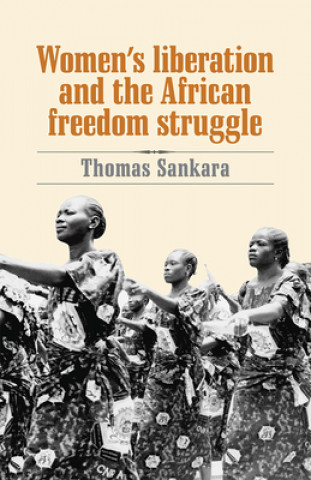
Women’s Liberation and the African Freedom Struggle brings together two speeches by Thomas Sankara, the revolutionary leader and president of Burkina Faso from 1983 to 1987. In these speeches, Sankara argues that women’s emancipation is essential to achieving genuine social and political transformation.

Drawing on the experiences of women in Burkina Faso, he examines how traditional gender roles, economic inequality, and social structures have contributed to women’s oppression. He challenges practices such as forced marriage, female genital mutilation, and polygamy, while advocating for women’s access to education, economic independence, and political participation.

Sankara connects the struggle for gender equality with the wider fight against colonialism, imperialism, and economic exploitation. He calls on both women and men to challenge deeply rooted inequalities and take an active role in transforming society. The collection presents a vision of liberation in which women’s rights are inseparable from the broader pursuit of social justice and national independence.

Reviews

Login to leave a review.

No reviews yet. Be the first!

You might also like

Thomas Sankara
Thomas Sankara

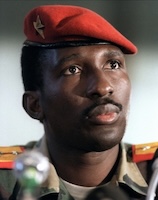
Thomas Sankara (1949–1987) was a Burkinabè military officer, revolutionary, and political leader who served as president of Burkina Faso from 1983 until his assassination in 1987. Born in Yako, in what was then French Upper Volta, he grew up during the final years of French colonial rule and pursued military training before becoming involved in national politics. After taking power in a coup in 1983, Sankara renamed the country Burkina Faso, meaning “Land of Upright People.” His government pursued ambitious reforms focused on self-sufficiency, public health, education, environmental protection, and women’s rights. He opposed neocolonialism and foreign economic dependency, advocating for African autonomy and social transformation. Sankara made women’s emancipation a central part of his political programme. He condemned forced marriage, female genital mutilation, and other forms of gender-based oppression, while promoting women’s participation in public life and economic independence. His speeches and writings, including Women’s Liberation and the African Freedom Struggle, connected gender equality with the broader struggle for African liberation. Assassinated in a coup in October 1987, Sankara remains an influential and debated figure in African political history, remembered for his commitment to social reform, anti-colonialism, and national sovereignty.

View author page
Published
1990
Author
Thomas Sankara