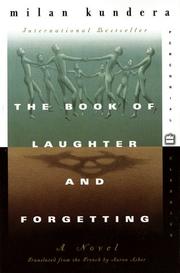
The Book of Laughter and Forgetting
Summary
The Book of Laughter and Forgetting is a fragmented, philosophical novel that explores the relationship between personal memory, political power, and the struggle to preserve individual identity. Set primarily in Czechoslovakia after the 1968 Soviet invasion, the book weaves together several interconnected stories about people whose lives are shaped by exile, betrayal, love, and the deliberate manipulation of history. One story follows Tamina, a widow living in exile who desperately tries to recover the letters and memories of her deceased husband, while others examine how political regimes erase inconvenient figures from photographs, public records, and collective consciousness. Kundera moves between fiction, autobiography, historical reflection, and philosophical commentary, using humour and irony to expose the absurdities of authoritarianism and human behaviour. Laughter becomes both a form of resistance and a weapon of conformity, while forgetting emerges as a deeply political act. The novel questions whether individuals can protect their memories and identities when those in power attempt to control the past, revealing the intimate connection between remembering, freedom, and the right to define one’s own life.
Reviews
Login to leave a review.
No reviews yet. Be the first!
You might also like

- Published
- 1979
- Author
- Milan Kundera