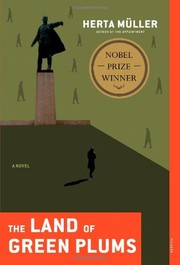
The Land of Green Plums
by Herta Müller
Summary
Set in communist Romania under the dictatorship of Nicolae Ceaușescu, The Land of Green Plums follows a group of young people from minority backgrounds who struggle to survive in a society ruled by fear, surveillance, and political repression. After a young woman from a German-speaking community begins studying in the city, she becomes part of a circle of friends whose lives are increasingly threatened by the secret police. As they face interrogation, betrayal, and the constant possibility of violence, their friendships become both a source of comfort and a test of loyalty. Through fragmented storytelling and haunting imagery, Herta Müller portrays the psychological consequences of authoritarianism and the erosion of trust under constant surveillance. The novel explores the struggle for personal freedom, the fragility of human relationships, and the lasting trauma inflicted by a regime that seeks to control every aspect of life.
Reviews
Login to leave a review.
No reviews yet. Be the first!
You might also like




- Published
- 1994
- Author
- Herta Müller