Literary Fiction
All countries
Afghanistan
Algeria
Antigua and Barbuda
Argentina
Australia
Austria
Azerbaijan
Bangladesh
Barbados
Belgium
Benin
Bosnia and Herzegovina
Brazil
Bulgaria
Burkina Faso
Burundi
Cabo Verde
Canada
Central African Republic
Chile
China
Colombia
Congo, Democratic Republic
Costa Rica
Côte d’Ivoire (Ivory Coast)
Croatia
Cyprus
Czech Republic
Denmark
Dominica
Dominican Republic
Egypt
El Salvador
Estonia
Ethiopia
France
Germany
Ghana
Greece
Hungary
Iceland
India
Iran
Iraq
Ireland
Italy
Jamaica
Japan
Jordan
Kazakhstan
Kenya
Kuwait
Latvia
Lebanon
Libya
Lithuania
Madagascar
Mexico
Moldova
Morocco
Myanmar
Netherlands
New Zealand
Nigeria
North Korea
North Macedonia
Norway
Oman
Pakistan
Palestine
Philippines
Poland
Portugal
Puerto Rico
Russia
Rwanda
Saint Kitts and Nevis
Saudi Arabia
Senegal
Singapore
South Korea
Spain
Sri Lanka
Sudan
Sweden
Switzerland
Syria
Taiwan
Tanzania
Thailand
Türkiye
Uganda
United Arab Emirates
United Kingdom
United States
Uzbekistan
Vietnam
Zambia
1
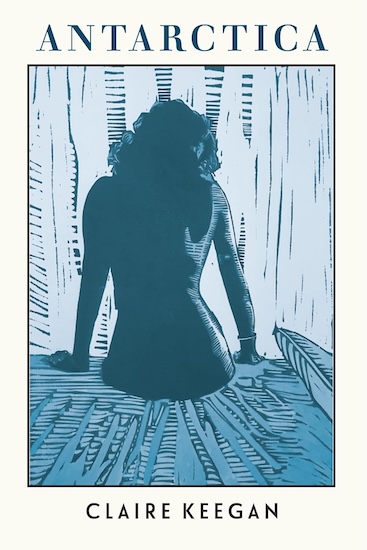
Antarctica
In her debut short-story collection, Claire Keegan examines the fragile boundaries between desire, loyalty, and betrayal. The opening story follows a married woman who travels away from home to discover what it might feel like to sleep with another man. Other stories introduce characters whose lives are unsettled by obsession, revenge, loneliness, and the sudden return of people from their past. A missing child, a long-awaited meeting between former lovers, and the uneasy dynamics within families reveal how quickly familiar worlds can become strange.
Moving between Ireland and the United States, these stories capture people at moments when their private desires collide with the expectations of others. Keegan writes with striking precision, balancing compassion with an unsparing eye for human weakness. Her characters are neither entirely innocent nor entirely cruel; instead, they inhabit the complicated territory between longing and consequence. Antarctica announced Keegan as a distinctive literary voice, exploring the unsettling truth that even ordinary lives can conceal extraordinary emotional danger.
Ireland
1999
2
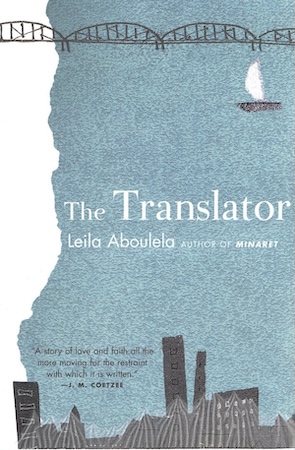
The Translator
Alone in the grey streets of Aberdeen, Sudanese widow Sammar struggles to find meaning after losing her husband and being separated from her young son. Her quiet, isolated life begins to change when she falls in love with Rae, a Scottish academic whose intellectual curiosity about Islam cannot bridge the gap between understanding a faith and truly believing in it. As their relationship deepens, Sammar faces an impossible choice between the man she loves and the spiritual convictions that give her life meaning. Moving between Scotland and Sudan, The Translator is a tender exploration of love, grief, and the search for belonging, asking whether two people can build a life together when their deepest beliefs pull them in different directions.
Sudan
1999
3
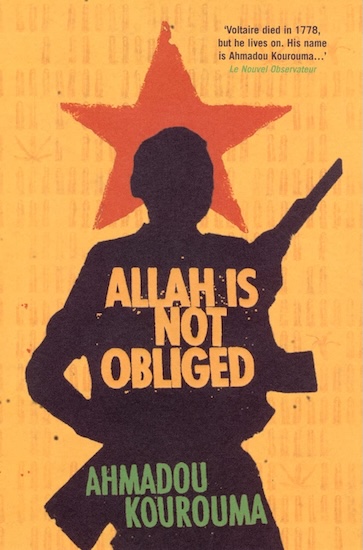
Allah Is Not Obliged
In Allah Is Not Obliged, Ahmadou Kourouma tells the harrowing story of Birahima, an orphaned boy from Côte d’Ivoire who becomes a child soldier during the civil wars that devastated Liberia and Sierra Leone. After his mother dies, Birahima sets out with Yacouba, a cunning sorcerer and confidence trickster, to find his aunt. Their journey takes a terrifying turn when they encounter armed rebel groups, and Birahima is forced into a world of violence, exploitation, and survival.
Narrated in the boy’s blunt, irreverent voice, the novel combines brutal scenes of war with dark humour and sharp satire. Birahima tries to make sense of the chaos around him using street slang, African expressions, and definitions borrowed from dictionaries, exposing the absurdity of the adult world that has stolen his childhood. Through his experiences, Kourouma examines the devastating consequences of civil war, the recruitment of children into armed groups, and the corruption and political struggles that allow such violence to continue. Despite its grim subject, the novel’s dark comedy makes its critique of war and human cruelty especially powerful.
Côte d’Ivoire (Ivory Coast)
2000
4
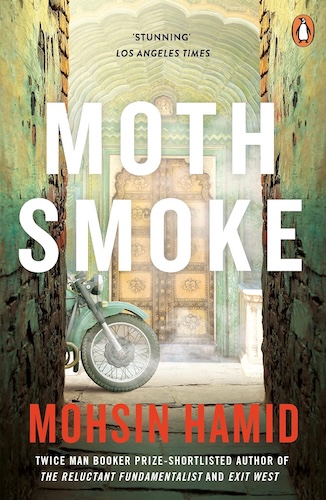
Moth Smoke
Set in Lahore during the sweltering summer of 1998, against the backdrop of Pakistan’s first nuclear tests, Moth Smoke follows Darashikoh “Daru” Shezad, a young banker whose carefully constructed life begins to collapse after he loses his job. Suddenly unable to maintain his place among the city’s privileged elite, Daru watches as his childhood friend Ozi returns from America with a wealthy lifestyle, a beautiful wife, and a future that seems increasingly out of reach. Daru becomes obsessed with Ozi’s wife, Mumtaz, a restless woman who secretly works as an investigative journalist, and their attraction draws him into a dangerous spiral of drugs, crime, and self-destruction. Told through shifting perspectives, courtroom testimonies, and the voices of those who know him, the novel gradually reveals the contradictions of its troubled protagonist. Beyond Daru’s personal downfall, Hamid paints a vivid portrait of a society divided by wealth, corruption, and inherited privilege. Like moths drawn irresistibly toward a flame, the characters pursue desires that may ultimately destroy them. Moth Smoke is a sharp, darkly humorous exploration of ambition, inequality, and moral collapse in a rapidly changing Pakistan.
Pakistan
2000
5
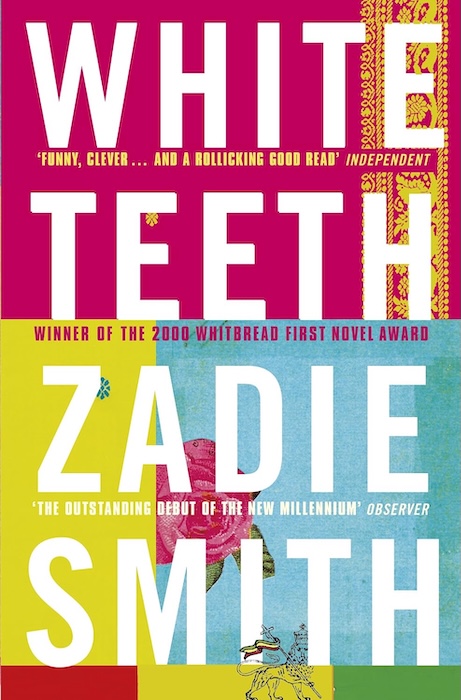
White Teeth
Set in multicultural London, White Teeth follows the intertwined lives of two families whose histories reflect the complexities of immigration, colonialism, and cultural belonging in modern Britain. Archie Jones, a disillusioned Englishman, and Samad Iqbal, a Bangladeshi Muslim immigrant, become unlikely friends during the Second World War. Decades later, their families remain connected as their children grow up navigating questions of heritage, religion, and identity in a rapidly changing society.
Samad struggles to preserve his cultural traditions while raising twin sons, Magid and Millat, whose opposing paths challenge his expectations. Meanwhile, Archie’s daughter, Irie, searches for a sense of belonging amid conflicting ideas about race, beauty, and family history. Their lives become entangled with the Chalfens, a liberal, intellectually confident British family whose influence exposes the contradictions within multicultural society.
Combining sharp humor, memorable characters, and intergenerational storytelling, Smith’s debut novel explores the tension between tradition and modernity, the lasting effects of colonial history, and the ways family legacies shape individual identity. White Teeth is a vibrant portrait of contemporary Britain and its many overlapping cultures.
United Kingdom
2000
6
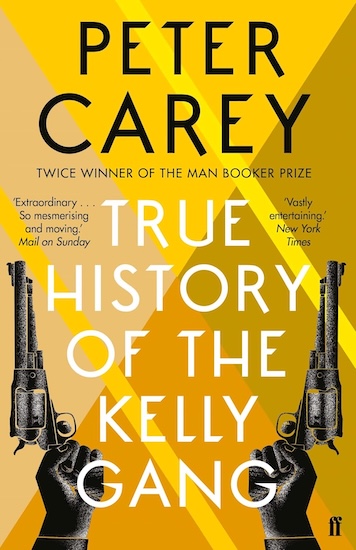
True History of the Kelly Gang
In True History of the Kelly Gang, Australian novelist Peter Carey reimagines the life of Ned Kelly, one of Australia’s most notorious historical outlaws, through a fictional autobiography written in Kelly’s own voice. Growing up in colonial Victoria during the nineteenth century, Ned experiences poverty, discrimination, and repeated confrontations with the authorities. His Irish family is treated with suspicion by the British colonial establishment, and his early encounters with the police help shape his growing resentment of a system he sees as unjust.
As Ned becomes a bushranger, he transforms from a struggling young man into a legendary outlaw whose exploits divide public opinion. To the authorities, he is a dangerous criminal; to some members of the impoverished colonial population, he represents resistance to oppression. Writing his account for the daughter he hopes will one day understand him, Ned attempts to reclaim his story from those who would define him as a villain.
Blending historical events with imaginative storytelling, Carey explores the relationship between truth and myth, the legacy of colonialism, and the ways poverty and injustice can shape a person’s destiny. Written in a distinctive vernacular style, the novel challenges readers to question who has the power to tell history and whose voices are remembered.
Australia
2000
7
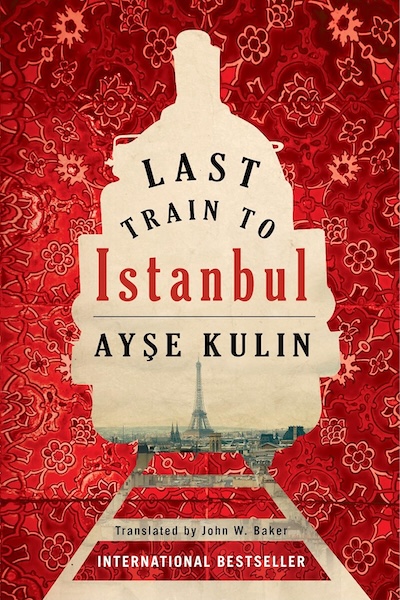
Last Train to Istanbul
As the Second World War threatens to engulf Europe, Selva, the daughter of a prominent Ottoman family, falls in love with Rafael Alfandari, a young Jewish man. Their relationship defies the expectations of both families, forcing them to leave Turkey and begin a new life together in France. But when the Nazis occupy the country, their happiness is overshadowed by the growing danger facing Jewish communities across Europe.
As persecution intensifies, Selva and Rafael find themselves trapped in a hostile world where their love and their young family may not be enough to keep them safe. Meanwhile, Turkish diplomats work behind the scenes to rescue Jewish people stranded in occupied Europe, arranging a perilous journey towards freedom. With time running out, the fate of Selva and Rafael becomes intertwined with the courage of those willing to risk their lives to save strangers.
Moving between Ankara, Istanbul, Paris, and other wartime cities, Last Train to Istanbul combines an intimate family story with a little-known chapter of Holocaust history. Inspired by accounts of Turkish diplomats who helped rescue Jews during the war, the novel explores love across cultural boundaries, moral courage, and the extraordinary acts of humanity that can emerge in the darkest times.
Türkiye
France
2002
8
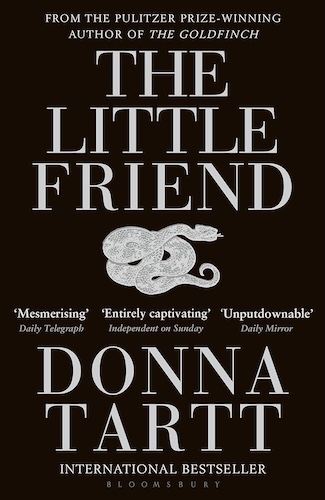
The Little Friend
In the sweltering American South, twelve-year-old Harriet Dufresnes becomes determined to solve the mysterious murder of her older brother, Robin, who was killed when she was still a baby. Driven by grief, imagination, and a fierce sense of justice, she ventures into a world of family secrets, dangerous people, and unsettling discoveries. A dark Southern Gothic novel about childhood, vengeance, and the stories we tell ourselves to make sense of loss.
United States
2002
9
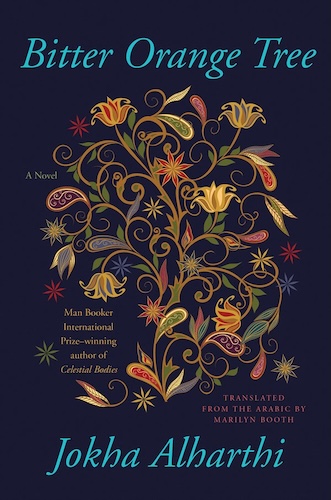
Bitter Orange Tree
When Omani student Zuhour leaves her home to study at a university in Britain, she finds herself caught between the promise of a new life and the memories of the people she has left behind. Among them is Bint Aamir, the woman she regarded as her grandmother, whose love and sacrifices shaped Zuhour’s childhood. Bint Aamir’s own life was marked by constrained choices and dreams she was never able to fulfil, finding solace beneath a beloved bitter orange tree.
As Zuhour struggles with loneliness, complicated friendships, and the challenge of finding her place in an unfamiliar country, memories and dreams draw her back to Oman. Through a lyrical, nonlinear narrative, Jokha Alharthi weaves together the lives of two women separated by generations but connected by longing, affection, and the desire for independence. Bitter Orange Tree explores how family histories, social class, and gender expectations shape women’s lives—and how understanding the past can help us imagine a different future.
Oman
2002
10
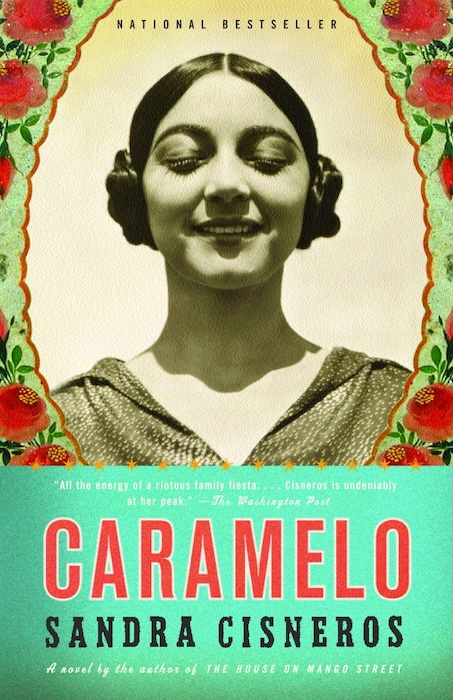
Caramelo
Caramelo follows Lala Reyes, a Mexican American girl who recounts her family’s history through generations of memories, stories, and secrets. During annual summer trips from Chicago to Mexico City, Lala becomes fascinated by her grandmother, Soledad, whose life story reveals the complexities of family relationships, cultural traditions, and personal sacrifice. As Lala pieces together her family’s past, she discovers that memory is often unreliable and that different generations tell conflicting versions of the same events. Moving between Mexico and the United States, the novel explores immigration, identity, love, and the tensions between tradition and independence. Through humor, vivid storytelling, and a rich blend of English and Spanish, Sandra Cisneros celebrates the complexities of Mexican American heritage while examining how family stories shape our understanding of ourselves and where we belong.
Mexico
2002
11
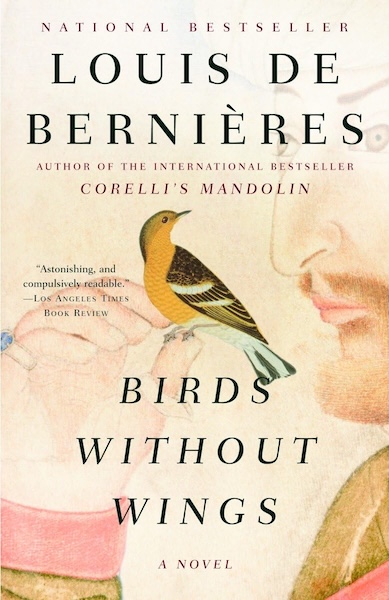
Birds Without Wings
In the small Anatolian village of Eskibahçe, Muslims and Christians have lived side by side for generations, sharing a language, traditions, friendships, and everyday life. At the heart of this close-knit community is the tender love between Philothei, a beautiful Greek Christian girl, and Ibrahim, a Muslim goatherd who has loved her since childhood. Their future seems possible—until the forces of history begin to tear their world apart.
As the Ottoman Empire collapses and modern Turkey emerges, the villagers are swept into the First World War, the rise of nationalism, and the brutal Greek-Turkish conflict. Through the voices of ordinary people, de Bernières creates an expansive portrait of a society destroyed by religious divisions, political ambition, and forced displacement. Both heartbreaking and darkly humorous, Birds Without Wings explores how people who once lived as neighbours can become enemies—and how love and humanity endure even amid extraordinary cruelty.
Türkiye
2004
12
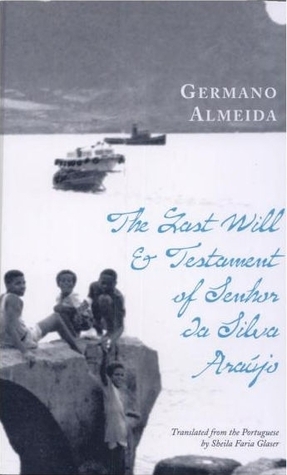
The Last Will & Testament of Senhor da Silva Araújo
Set on the Cape Verdean island of São Vicente, this witty and insightful novel begins with the death of Senhor Napumoceno da Silva Araújo, a respected businessman whose carefully constructed public image is about to unravel. Born into poverty, Napumoceno has built a successful import-export company and become a prominent figure in the community. To outsiders, he appears disciplined, respectable, and almost obsessively proper.
However, when his lengthy last will and testament is read aloud, it reveals a very different man. Through a combination of memoir, confession, and unexpected revelations, Napumoceno exposes secret relationships, questionable business dealings, and the existence of a daughter nobody knew about. His revelations also disrupt the inheritance plans of his nephew, who assumes he is the rightful heir.
With humour and gentle irony, Germano Almeida explores the gap between public reputation and private reality. The novel also examines social ambition, hypocrisy, family, and the legacies of colonial society in Cape Verde. Beneath its comic surface lies a thoughtful portrait of a man struggling to reconcile the person he wanted to be with the life he actually lived.
Cabo Verde
2004