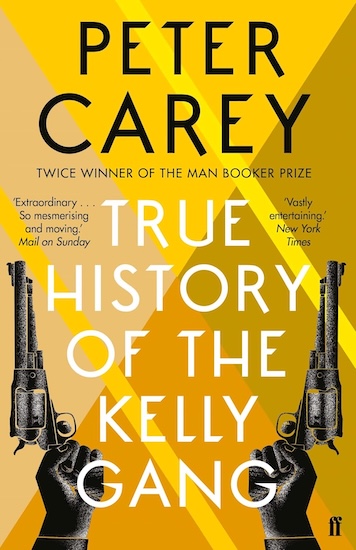
True History of the Kelly Gang
by Peter Carey
Summary
In True History of the Kelly Gang, Australian novelist Peter Carey reimagines the life of Ned Kelly, one of Australia’s most notorious historical outlaws, through a fictional autobiography written in Kelly’s own voice. Growing up in colonial Victoria during the nineteenth century, Ned experiences poverty, discrimination, and repeated confrontations with the authorities. His Irish family is treated with suspicion by the British colonial establishment, and his early encounters with the police help shape his growing resentment of a system he sees as unjust.
As Ned becomes a bushranger, he transforms from a struggling young man into a legendary outlaw whose exploits divide public opinion. To the authorities, he is a dangerous criminal; to some members of the impoverished colonial population, he represents resistance to oppression. Writing his account for the daughter he hopes will one day understand him, Ned attempts to reclaim his story from those who would define him as a villain.
Blending historical events with imaginative storytelling, Carey explores the relationship between truth and myth, the legacy of colonialism, and the ways poverty and injustice can shape a person’s destiny. Written in a distinctive vernacular style, the novel challenges readers to question who has the power to tell history and whose voices are remembered.
Reviews
Login to leave a review.
No reviews yet. Be the first!
You might also like


- Published
- 2000
- Author
- Peter Carey