Literary Fiction
All countries
Afghanistan
Algeria
Antigua and Barbuda
Argentina
Australia
Austria
Azerbaijan
Bangladesh
Barbados
Belgium
Benin
Bosnia and Herzegovina
Brazil
Bulgaria
Burkina Faso
Burundi
Cabo Verde
Canada
Central African Republic
Chile
China
Colombia
Congo, Democratic Republic
Costa Rica
Côte d’Ivoire (Ivory Coast)
Croatia
Cyprus
Czech Republic
Denmark
Dominica
Dominican Republic
Egypt
El Salvador
Estonia
Ethiopia
France
Germany
Ghana
Greece
Hungary
Iceland
India
Iran
Iraq
Ireland
Italy
Jamaica
Japan
Jordan
Kazakhstan
Kenya
Kuwait
Latvia
Lebanon
Libya
Lithuania
Madagascar
Mexico
Moldova
Morocco
Myanmar
Netherlands
New Zealand
Nigeria
North Korea
North Macedonia
Norway
Oman
Pakistan
Palestine
Philippines
Poland
Portugal
Puerto Rico
Russia
Rwanda
Saint Kitts and Nevis
Saudi Arabia
Senegal
Singapore
South Korea
Spain
Sri Lanka
Sudan
Sweden
Switzerland
Syria
Taiwan
Tanzania
Thailand
Türkiye
Uganda
United Arab Emirates
United Kingdom
United States
Uzbekistan
Vietnam
Zambia
1
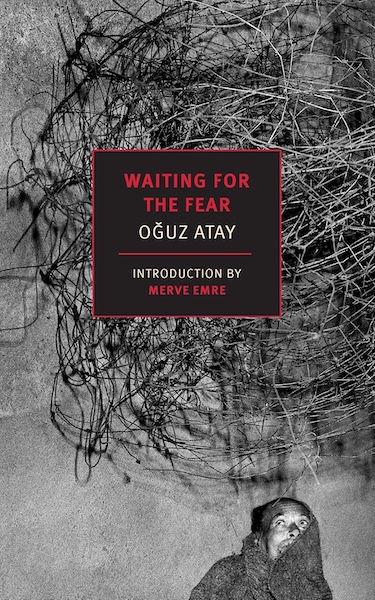
Waiting for the Fear
What happens when an ordinary letter makes you question everything you thought you knew? In the title story of Waiting for the Fear, an isolated man receives a mysterious message written in a language he cannot understand. As he struggles to decipher its meaning, suspicion gradually takes over his life, transforming his home into a place of dread and his everyday existence into an increasingly surreal nightmare.
Across eight stories, Oğuz Atay introduces a cast of outsiders, misfits, and troubled souls struggling to connect with a society that seems determined to misunderstand them. A woman confronts unsettling memories after discovering her former lover’s body; lonely storytellers sell invented tales to passengers at a remote railway station; other characters find themselves trapped between their private fantasies and an indifferent world.
Blending dark humour, psychological unease, absurdity, and experimental storytelling, Waiting for the Fear explores the fragile boundary between reality and imagination. Atay’s characters are haunted not only by external threats but also by their own thoughts, revealing the loneliness of people who can no longer trust the world—or themselves.
Türkiye
1975
2
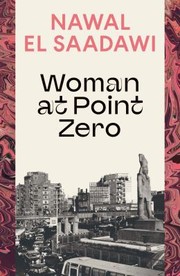
Woman at Point Zero
Woman at Point Zero tells the story of Firdaus, an Egyptian woman awaiting execution in a Cairo prison after killing a man. Through conversations with a female psychiatrist, Firdaus recounts the experiences that shaped her life, from a difficult childhood marked by poverty and abuse to her encounters with exploitation, violence, and patriarchal authority.
As Firdaus grows older, she discovers how men and social institutions repeatedly attempt to control her body, choices, and future. After experiencing marriage, prostitution, and various forms of economic dependence, she begins to question the values of a society that condemns women while protecting those who exploit them.
Drawing on themes of gender inequality, class, and power, El Saadawi presents Firdaus as a woman struggling to claim ownership of her life in a world that offers her few choices. The novel is a powerful critique of systemic oppression and an exploration of what freedom means when society denies a person dignity and autonomy.
Egypt
1975
3
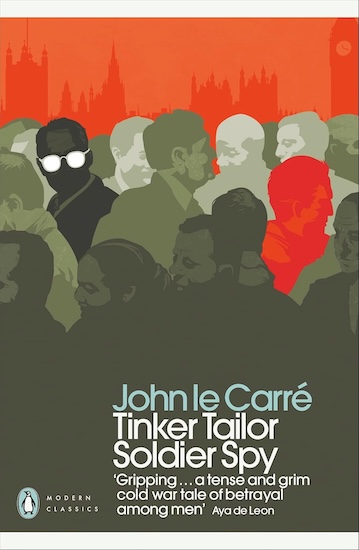
Tinker, Tailor, Soldier, Spy
At the height of the Cold War, British intelligence is facing a devastating crisis. A covert operation in Czechoslovakia has gone disastrously wrong, forcing the head of the Secret Intelligence Service, known as Control, into retirement. But before his departure, Control becomes convinced that a Soviet mole has infiltrated the highest levels of British intelligence, secretly feeding classified information to Moscow.
George Smiley, Control’s quiet, methodical former deputy, is brought back from retirement to investigate. Working in secret, he begins examining the service’s senior officers, each of whom has a codename from a childhood rhyme: Tinker, Tailor, Soldier, and others. As Smiley reconstructs past operations and follows a trail of carefully concealed evidence, he must determine which of his former colleagues has betrayed the organisation from within.
Set in the shadowy world of Cold War London, Tinker, Tailor, Soldier, Spy is a masterful espionage novel about deception, institutional loyalty, and the corrosive effects of suspicion. Rather than relying on spectacular action, John le Carré builds tension through quiet conversations, fragmented memories, and psychological insight, revealing a world where the greatest threat may be the person sitting beside you.
Russia
United Kingdom
1974
4
Água Viva
Água Viva is an experimental novel narrated by an unnamed woman, an artist who attempts to capture the fleeting experience of being alive through a continuous flow of thoughts, sensations, and reflections. Addressing an unnamed listener, she moves between memories, observations of nature, artistic inspiration, and philosophical questions, seeking to express what she calls the present moment—the elusive instant in which life is experienced before it becomes memory.
Rather than following a conventional plot, Clarice Lispector creates an intensely intimate meditation on consciousness, language, time, and existence. The narrator struggles with the limitations of words, searching for a form of expression that can convey the raw immediacy of experience. Images of flowers, animals, music, and water recur throughout the text, connecting the physical world with questions about the mysterious nature of being. Both poetic and challenging, Água Viva invites readers to experience life as something fluid, unpredictable, and impossible to fully explain.
Brazil
1973
5
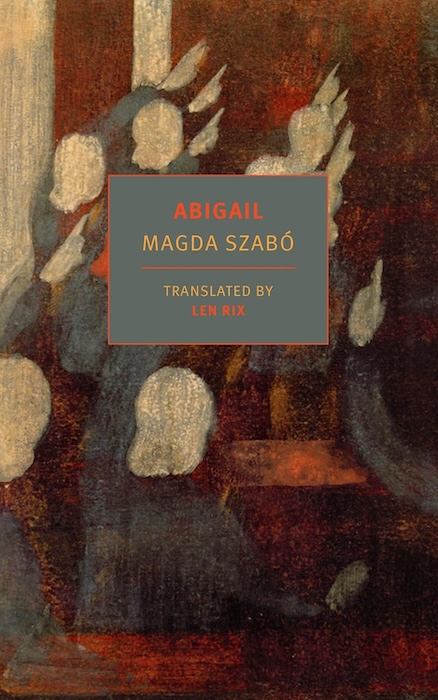
Abigail
Set in Hungary during the Second World War, Abigail follows fourteen-year-old Gina Vitay, the sheltered daughter of a Hungarian general. When her father unexpectedly sends her to a strict boarding school in the countryside, Gina feels betrayed and struggles to adapt to the school’s rigid rules and unfamiliar environment. Forbidden from revealing her father’s identity or explaining the circumstances of her arrival, she initially rebels against her teachers and classmates. Gradually, however, she discovers that the school hides secrets of its own, and that an enigmatic figure known as Abigail may offer help to those in danger. As the war intensifies, Gina must abandon her childish assumptions and learn to trust others, confront difficult truths, and take responsibility for her actions. Blending coming-of-age fiction, mystery, and historical drama, Szabó’s novel explores courage, loyalty, sacrifice, and the struggle to preserve one’s humanity under an oppressive regime.
Hungary
1970
6
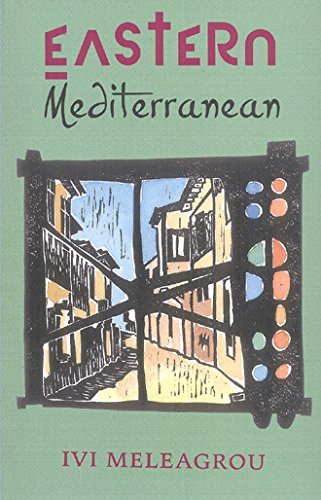
Eastern Mediterranean
Set in Nicosia between 1960 and the beginning of the intercommunal violence in 1963, Eastern Mediterranean portrays Cyprus during the turbulent early years of its independence. Through a cast of interconnected characters, Ivi Meleagrou explores a society caught between hopes for a new national future and the growing tensions threatening to tear it apart.
At the centre of the novel is Margarita, whose relationship with her homeland reflects the emotional and political uncertainty of the period. As the island struggles to define its identity following British colonial rule, longstanding divisions between Greek Cypriots and Turkish Cypriots deepen. Political ideals collide with personal loyalties, while ordinary people find their relationships and everyday lives increasingly shaped by forces beyond their control.
Alongside its portrayal of political upheaval, the novel examines romantic disappointment, marital alienation, and the struggle to preserve one’s sense of self amid collective uncertainty. Meleagrou connects the private lives of her characters with the wider fate of Cyprus, showing how historical events enter homes, reshape relationships, and challenge deeply held beliefs.
First published in Greek in 1969, this landmark work of Cypriot literature offers a nuanced portrait of a society approaching a critical historical turning point. It is particularly significant for its exploration of national identity, political division, and the fragile hopes surrounding independence.
Cyprus
1969
7
Katalin Street
Set in Budapest before, during, and after the Second World War, Katalin Street follows three families whose lives are closely intertwined through friendship, love, and shared childhood memories. At the centre of the story is Henriette, a Jewish girl whose death during the war leaves an enduring wound in the lives of her neighbours and friends: the Bálints, the Elekes, and the Helds. As political upheaval transforms Hungary, the survivors struggle to rebuild their lives, yet remain haunted by the past and by the choices they made. Through shifting perspectives and a nonlinear narrative, Szabó explores how trauma, guilt, and nostalgia shape personal identity and relationships across generations. The street itself becomes a powerful symbol of a lost world, representing the fragile security of childhood and the impossibility of returning to what once was. Both intimate and historically resonant, the novel examines the lasting consequences of war and the ways the dead continue to inhabit the lives of the living.
Hungary
1969
8
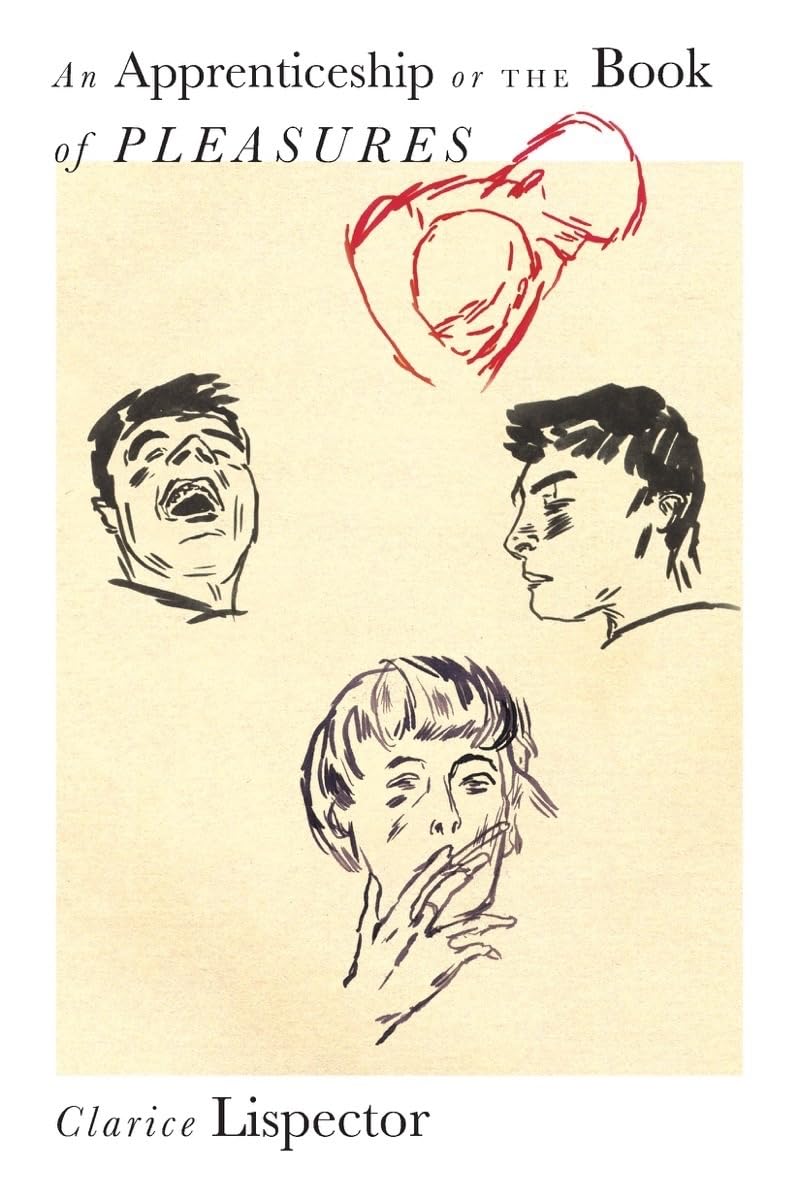
Apprenticeship or the Book of Pleasures
Apprenticeship or the Book of Pleasures follows Lóri, a schoolteacher living in Rio de Janeiro who struggles with loneliness, emotional vulnerability, and the difficulty of allowing herself to experience happiness. When she meets Ulisses, a philosophy professor who challenges her to confront her fears and desires, she begins a gradual journey toward emotional and personal freedom. Their relationship develops slowly, shaped by conversations, uncertainty, and Lóri’s attempts to understand what it means to love another person without losing herself.
Through introspective prose and philosophical reflections, Clarice Lispector explores love not simply as romance, but as a process of self-discovery and transformation. Lóri must learn to accept her own body, embrace uncertainty, and become comfortable with being alone before she can fully connect with someone else. Blurring the boundaries between fiction and philosophical meditation, the novel examines desire, intimacy, vulnerability, and the courage required to experience life more fully.
Brazil
1969
9
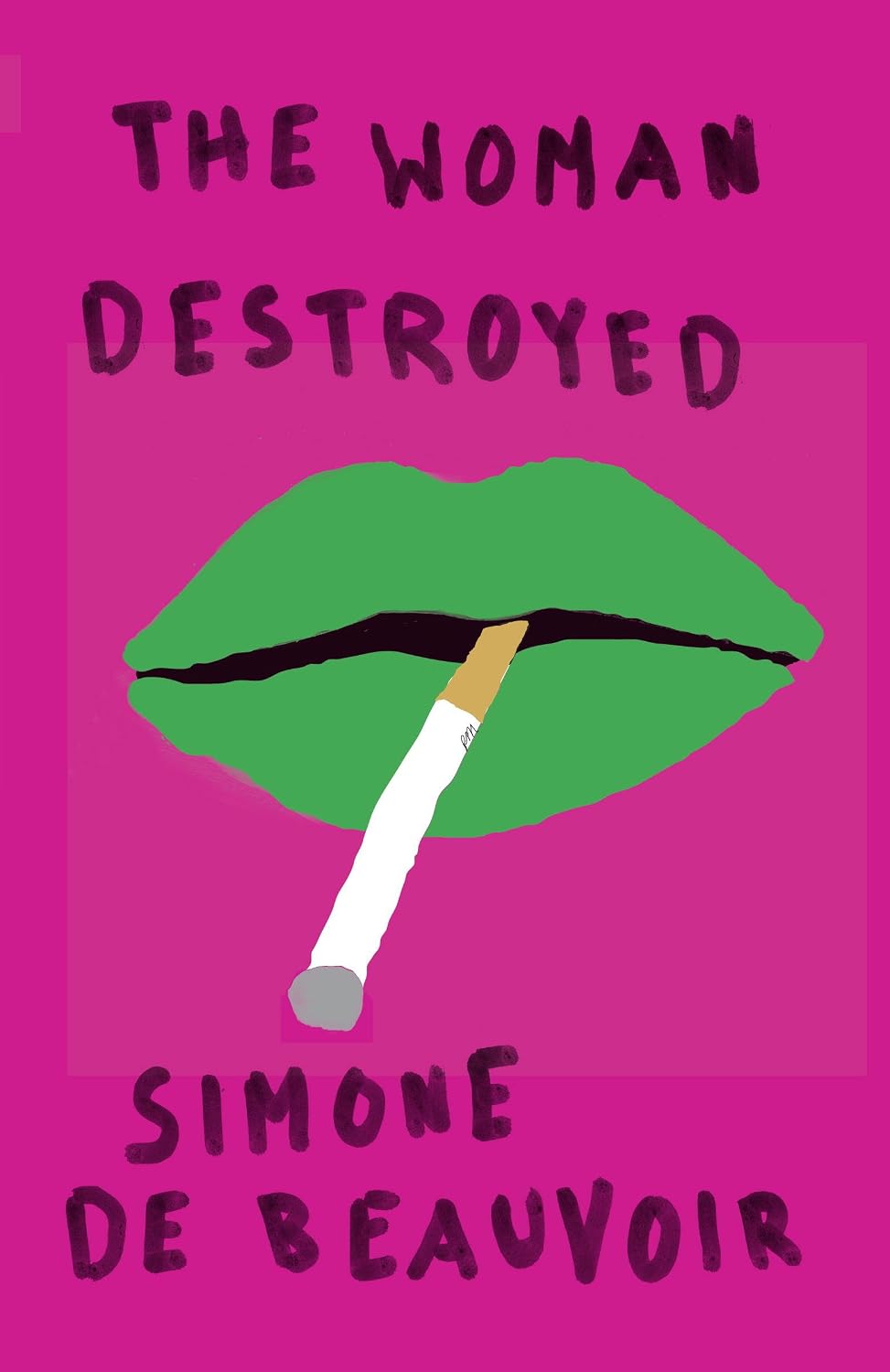
The Woman Destroyed
The Woman Destroyed is a collection of three novellas exploring the emotional crises of women confronting ageing, betrayal, and the collapse of the lives they have built around others. In the title story, Monique, a middle-aged wife and mother, struggles to cope when her husband reveals his infidelity, forcing her to question her marriage and her own sense of self. The other stories portray women facing disillusionment, professional frustration, and the painful realization that their expectations have not matched reality. Through intimate diaries and first-person narratives, Simone de Beauvoir examines the ways women can lose their identities by defining themselves through their relationships, families, and social roles. The collection offers a powerful reflection on independence, self-deception, and the difficult process of rebuilding a life when familiar certainties disappear.
France
1967
10
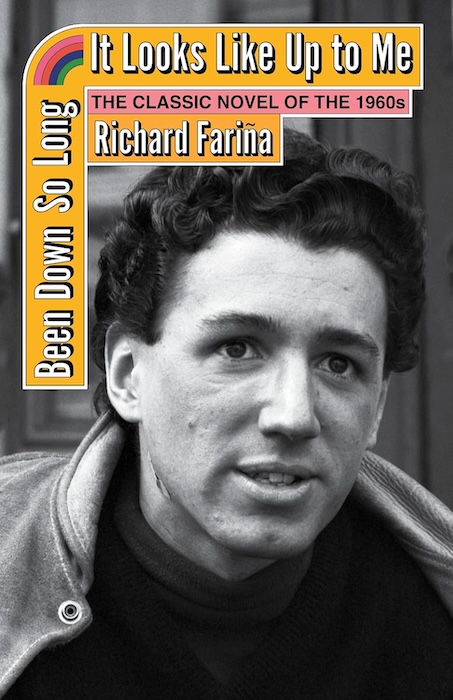
Been Down So Long It Looks Like Up to Me
Set against the restless spirit of the late 1950s and early 1960s, Been Down So Long It Looks Like Up to Me follows Gnossos Pappadopoulis, a rebellious college student navigating university life, romantic entanglements, psychedelic experiences, and his own search for meaning. Moving between a fictional university in upstate New York, the American West, and revolutionary Cuba, Gnossos challenges authority and conventional morality with irreverent humor and anarchic energy.
Drawing on Richard Fariña’s own experiences as a student and traveler, the novel captures the countercultural impulses that would help define the 1960s. Its unconventional narrative combines satire, absurdity, and philosophical reflection to question academic institutions, social expectations, and established ideas of success and respectability. Both a campus novel and a picaresque adventure, it portrays a young man attempting to find his place in a world he distrusts. Published just two days before Fariña’s death in a motorcycle accident, the novel became a cult classic of American counterculture.
United States
1966
11
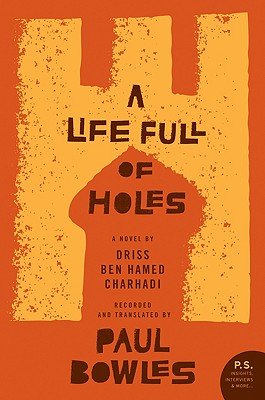
A Life Full of Holes
Set in Morocco during the mid-twentieth century, A Life Full of Holes follows Ahmed, a poor boy growing up in a society marked by poverty, inequality, and the lingering effects of colonialism. After his father disappears from his life and his mother remarries, Ahmed finds himself unwanted in his own home. Forced to fend for himself from an early age, he moves between jobs as a shepherd, labourer, baker’s assistant, and house servant, struggling to secure food, shelter, and a little dignity.
As Ahmed grows older, his experiences expose him to exploitation, police brutality, betrayal, and the harsh realities of life on the margins of Moroccan society. His journey is not a conventional story of triumph over adversity; instead, it presents survival as a daily struggle in a world where opportunities are scarce and power belongs to those who can exploit others.
The book is particularly distinctive because of its origins. Larbi Layachi dictated his life story in Moroccan Arabic to American writer Paul Bowles, who recorded and translated it into English. First published under the pseudonym Driss ben Hamed Charhadi, the narrative blurs the boundaries between autobiography and fiction, offering an intimate perspective on lives rarely represented in Western literature.
Through Ahmed’s experiences, the book explores childhood hardship, social exclusion, and the struggle to preserve one’s humanity in difficult circumstances. Its direct, unembellished storytelling gives readers a vivid portrait of everyday life in Morocco during a period of profound social and historical change.
Morocco
1964
12
The Wall
The Wall follows an unnamed woman who becomes inexplicably isolated in the Austrian countryside after an invisible, impenetrable wall suddenly separates her from the rest of the world. On the other side, all human life appears to have vanished. Trapped in a remote mountain valley with only a dog, a cow, and a few other animals for company, she must learn to survive without any hope of rescue.
As the seasons pass, the woman develops routines to secure food, gather firewood, and care for her animals. Her solitary existence forces her to confront the essentials of life while reflecting on her former identity, human relationships, and the society she has left behind. The natural world becomes both her refuge and her greatest challenge, offering moments of beauty alongside hunger, exhaustion, and danger.
Through its restrained, diary-like narration, Haushofer explores isolation, survival, freedom, and humanity’s relationship with nature. The novel also questions the assumptions of modern civilization, revealing how solitude can transform a person’s understanding of herself and the world.
Austria
1963