Freedom & Resistance
Voices of resistance, liberation, and the fight for justice.
All countries
Afghanistan
Albania
Algeria
Argentina
Australia
Belgium
Brazil
Burkina Faso
Central African Republic
Czech Republic
Dominican Republic
Egypt
France
Greece
Hungary
Iceland
India
Iran
Ireland
Italy
Japan
Jordan
Kenya
Kuwait
Malta
Morocco
Oman
Pakistan
Palestine
Philippines
Puerto Rico
Romania
Russia
Rwanda
South Africa
South Korea
Spain
Türkiye
Turkmenistan
United Kingdom
United States
Uruguay
Uzbekistan
Yemen
Zambia
1
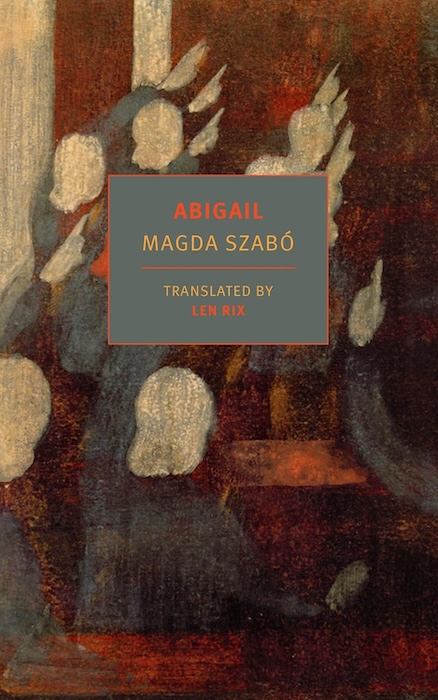
Abigail
Set in Hungary during the Second World War, Abigail follows fourteen-year-old Gina Vitay, the sheltered daughter of a Hungarian general. When her father unexpectedly sends her to a strict boarding school in the countryside, Gina feels betrayed and struggles to adapt to the school’s rigid rules and unfamiliar environment. Forbidden from revealing her father’s identity or explaining the circumstances of her arrival, she initially rebels against her teachers and classmates. Gradually, however, she discovers that the school hides secrets of its own, and that an enigmatic figure known as Abigail may offer help to those in danger. As the war intensifies, Gina must abandon her childish assumptions and learn to trust others, confront difficult truths, and take responsibility for her actions. Blending coming-of-age fiction, mystery, and historical drama, Szabó’s novel explores courage, loyalty, sacrifice, and the struggle to preserve one’s humanity under an oppressive regime.
Hungary
1970
2
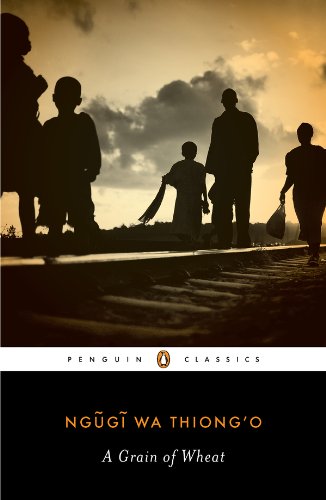
A Grain Of Wheat
Set in Kenya during the final days before independence from British colonial rule in 1963, A Grain of Wheat explores the personal and collective struggles of a community shaped by the Mau Mau uprising. At its center is Mugo, a quiet and respected man whose hidden past becomes entangled with the lives of those preparing to celebrate independence. Through the stories of Mugo and other villagers, Ngũgĩ wa Thiong’o examines the sacrifices, betrayals, and moral compromises made during the fight for liberation. As memories of imprisonment, torture, and resistance emerge, the novel questions the meaning of heroism and the cost of freedom. Blending political history with psychological depth, it explores colonial oppression, loyalty, guilt, and the difficult process of rebuilding a nation after years of violence.
Kenya
1967
3
Men in the Sun and Other Palestinian Stories
Men in the Sun and Other Palestinian Stories brings together some of Ghassan Kanafani’s most powerful works of fiction, exploring the lives of Palestinians displaced by the creation of Israel in 1948 and the subsequent loss of their homes and homeland. The collection’s central novella, Men in the Sun, follows three Palestinian men of different generations who attempt to escape the poverty and desperation of refugee life by travelling illegally from Iraq to Kuwait in search of work. Entrusting their fate to a smuggler, they place their hopes in the possibility of a better future, only to confront the devastating consequences of their journey.
Through stories of exile, poverty, political oppression, and shattered aspirations, Kanafani portrays the psychological and material realities of displacement. His characters struggle not only with survival but also with questions of identity, dignity, and collective responsibility. Written with stark realism and symbolic depth, the collection examines the human cost of dispossession and the longing for a place to call home. It remains a significant work of Palestinian literature, giving voice to the experiences of a people shaped by exile and resistance.
Palestine
1962
4
The Vet’s Daughter
Description:
The Vet’s Daughter is a dark, surreal novel about Alice Rowlands, a young woman growing up in a troubled London household dominated by her cruel father, a veterinary surgeon, and her fragile, dying mother. Isolated and emotionally neglected, Alice struggles to escape her father’s oppressive control while witnessing the suffering that surrounds her. After her mother’s death, her circumstances become increasingly desperate, and the novel gradually moves from grim domestic realism into the grotesque and supernatural. Alice discovers an extraordinary ability that transforms her from a powerless victim into someone capable of astonishing feats, though this new power brings its own unsettling consequences. Through strange imagery, black humour, and fairy-tale-like elements, Comyns explores abuse, repression, female vulnerability, and the longing for liberation. The novel’s unsettling atmosphere highlights how an ordinary world can become deeply disturbing when viewed through the eyes of someone denied love, safety, and independence.
United Kingdom
1959
5
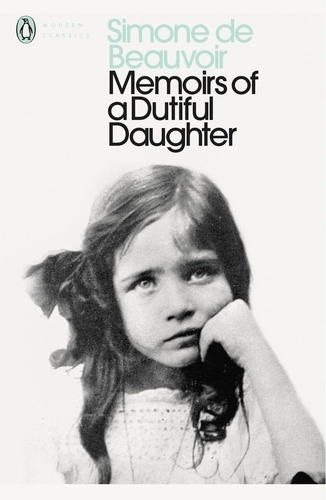
Memoirs of a Dutiful Daughter
Growing up in a respectable Parisian family, Simone de Beauvoir is taught to be a devout Catholic, an obedient daughter, and a woman destined for marriage. But as she discovers philosophy, literature, and the pleasure of independent thought, the beliefs that once defined her world begin to crumble. Questioning religion, challenging social conventions, and resisting her family’s expectations, she gradually realises that intellectual freedom comes at a price. Her journey towards independence is also a story of loneliness, friendship, and the painful discovery that the people we love can become obstacles to our becoming ourselves. Intimate and thought-provoking, this memoir captures the moment a young woman begins to break free from the life society has chosen for her.
France
1958
6

1984
Nineteen Eighty-Four follows Winston Smith, a low-ranking employee in a totalitarian state where the ruling Party controls information, language, and private life. Living under the constant surveillance of Big Brother, Winston secretly questions the official version of history and begins keeping a forbidden diary. His relationship with Julia offers a brief experience of intimacy and rebellion, but their defiance attracts the attention of the authorities. As Winston is subjected to psychological manipulation and brutal interrogation, the Party attempts not only to control his actions but also to reshape his understanding of reality. Orwell explores propaganda, censorship, surveillance, and the destruction of individual autonomy. The novel warns that political power becomes especially dangerous when it can dictate what people are permitted to remember, believe, and say.
United Kingdom
1949
7
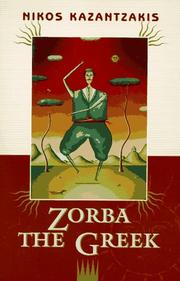
Zorba the Greek
Zorba the Greek follows an unnamed intellectual who travels to Crete to reopen a lignite mine and encounters Alexis Zorba, an energetic and unconventional man who becomes his companion. Whereas the narrator approaches life through books, abstract ideas, and careful reflection, Zorba embraces physical experience, music, food, love, and spontaneous action. Their contrasting personalities lead to conversations about religion, mortality, morality, and the meaning of freedom. As they work together and become involved in the lives of local villagers, the narrator begins to question his detached approach to existence. Zorba’s exuberance offers an alternative to the intellectual’s tendency to analyse rather than participate in life. Kazantzakis explores the tension between thought and action, celebrating the courage to experience pleasure and sorrow without attempting to control every outcome. The novel ultimately asks what it means to live fully despite the inevitability of loss.
Greece
1946
8
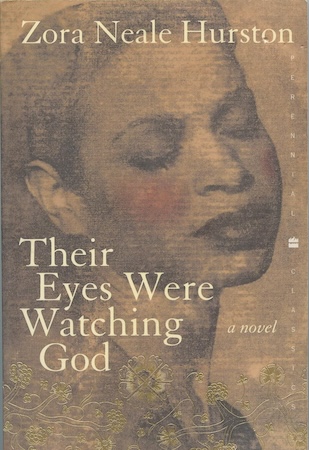
Their Eyes Were Watching God
Set in the early twentieth-century American South, Their Eyes Were Watching God follows Janie Crawford, an African American woman searching for love, independence, and a life she can call her own. Returning to her hometown of Eatonville, Florida, after a long absence, Janie faces the curiosity and judgment of her neighbours. Through a conversation with her friend Pheoby, she begins to recount the experiences that have shaped her.
Raised by her grandmother, who dreams of securing her future through marriage, Janie enters a series of relationships that teach her painful lessons about power, gender, and self-worth. Her first two marriages offer security and social status but leave little room for her voice or desires. It is only when she meets Tea Cake, a younger man who introduces her to a world of spontaneity, friendship, and adventure, that she begins to experience a more expansive kind of love.
Hurston’s novel is a landmark of African American literature, celebrated for its rich use of Black Southern dialect, folklore, and storytelling traditions. Through Janie’s journey, it explores the intersections of race, gender, class, and personal freedom, ultimately affirming a woman’s right to define herself beyond the expectations of others.
United States
1937
9
Batouala
Set in French Equatorial Africa, in the territory that is now the Central African Republic, Batouala follows Batouala, a respected Banda village chief whose authority and way of life are threatened by the growing influence of French colonial rule. Through his daily experiences, relationships, and observations of village life, the novel portrays a community shaped by traditional customs, ceremonies, rivalries, and its close relationship with the natural world.
As colonial exploitation increasingly disrupts local life, Batouala witnesses the consequences of forced labour, economic extraction, and the arrogance of colonial administrators. Maran depicts the gap between the French colonial administration’s claims of bringing civilisation and the suffering experienced by the people living under its authority.
Published in 1921, the novel became a landmark in Francophone literature for its direct criticism of colonialism. Its preface, written by Maran himself, intensified the controversy surrounding the book. Batouala won the Prix Goncourt that year, making Maran the first Black writer to receive the prestigious French literary prize. The novel remains an important work for understanding colonial power, cultural identity, and resistance.
Central African Republic
1921
10
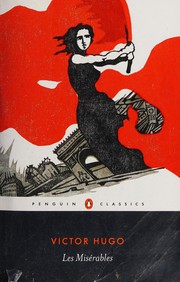
Les Misérables
Set in nineteenth-century France during a period of profound social inequality and political unrest, Les Misérables follows Jean Valjean, a former convict who struggles to rebuild his life after spending nineteen years in prison for stealing bread and attempting to escape. Despite his determination to become an honest man, he is relentlessly pursued by Inspector Javert, who believes that a criminal can never truly change. Valjean’s journey becomes intertwined with the lives of Fantine, a desperately poor woman; Cosette, her neglected daughter whom he raises as his own; and Marius, a young revolutionary caught up in the Paris uprising of 1832. Through their intersecting stories, Hugo explores poverty, injustice, sacrifice, love, and the possibility of redemption. Blending intimate human struggles with sweeping historical events, the novel offers a powerful critique of a society that punishes the vulnerable while questioning whether compassion and moral courage can overcome even the deepest forms of suffering.
France
1862
11
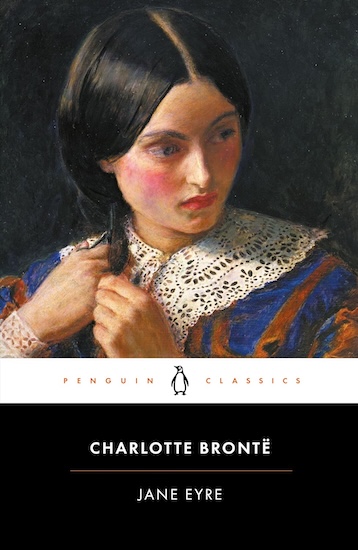
Jane Eyre
Jane Eyre follows an orphaned girl who grows up facing cruelty and neglect before becoming a governess at Thornfield Hall. Intelligent and determined, Jane values her independence and refuses to accept a life defined entirely by her social position or gender. At Thornfield, she falls in love with her employer, Edward Rochester, but discovers that his household conceals a disturbing secret that threatens their future together. When Jane is forced to choose between love and her moral principles, she leaves rather than compromise her dignity. Her journey eventually brings her new opportunities, unexpected family connections, and a chance to reconsider her relationship with Rochester. Brontë explores female autonomy, class inequality, religious morality, and the search for emotional belonging. The novel celebrates a woman’s right to pursue love without surrendering her conscience or independence.
United Kingdom
1847
About this theme
- Books
- 107
- Countries
- 45
Countries with this theme
Afghanistan
Asia
Albania
Europe
Algeria
Africa
Argentina
South America
Australia
Oceania
Belgium
Europe
Brazil
South America
Burkina Faso
Africa
Central African Republic
Africa
Czech Republic
Europe
Dominican Republic
North America
Egypt
Africa
France
Europe
Greece
Europe
Hungary
Europe
Iceland
Europe
India
Asia
Iran
Asia
Ireland
Europe
Italy
Europe
Japan
Asia
Jordan
Asia
Kenya
Africa
Kuwait
Asia
Malta
Europe
Morocco
Africa
Oman
Asia
Pakistan
Asia
Palestine
Asia
Philippines
Asia
Puerto Rico
South America
Romania
Europe
Russia
Europe
Rwanda
Africa
South Africa
Africa
South Korea
Asia
Spain
Europe
Türkiye
Asia
Turkmenistan
Asia
United Kingdom
Europe
United States
North America
Uruguay
South America
Uzbekistan
Asia
Yemen
Asia
Zambia
Africa