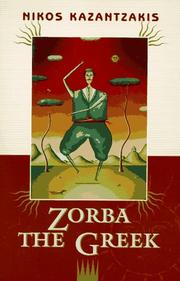
Zorba the Greek
Summary
Zorba the Greek follows an unnamed intellectual who travels to Crete to reopen a lignite mine and encounters Alexis Zorba, an energetic and unconventional man who becomes his companion. Whereas the narrator approaches life through books, abstract ideas, and careful reflection, Zorba embraces physical experience, music, food, love, and spontaneous action. Their contrasting personalities lead to conversations about religion, mortality, morality, and the meaning of freedom. As they work together and become involved in the lives of local villagers, the narrator begins to question his detached approach to existence. Zorba’s exuberance offers an alternative to the intellectual’s tendency to analyse rather than participate in life. Kazantzakis explores the tension between thought and action, celebrating the courage to experience pleasure and sorrow without attempting to control every outcome. The novel ultimately asks what it means to live fully despite the inevitability of loss.
Reviews
Login to leave a review.
No reviews yet. Be the first!
You might also like
- Published
- 1946
- Author
- Nikos Kazantzakis