Freedom & Resistance
Voices of resistance, liberation, and the fight for justice.
All countries
Afghanistan
Albania
Algeria
Argentina
Australia
Belgium
Brazil
Burkina Faso
Central African Republic
Czech Republic
Dominican Republic
Egypt
France
Greece
Hungary
Iceland
India
Iran
Ireland
Italy
Japan
Jordan
Kenya
Kuwait
Malta
Morocco
Oman
Pakistan
Palestine
Philippines
Puerto Rico
Romania
Russia
Rwanda
South Africa
South Korea
Spain
Türkiye
Turkmenistan
United Kingdom
United States
Uruguay
Uzbekistan
Yemen
Zambia
1
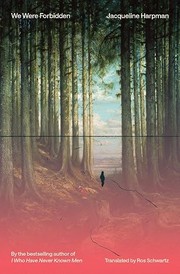
We Were Forbidden
We Were Forbidden is a collection of three previously untranslated stories exploring defiance, oppression, and the struggle for personal freedom. In The Ardennes Forest, a woman and her fellow survivors wander through a mysterious woodland after an unexplained war, forbidden from leaving its boundaries or stopping their endless march. In The Outcast, a teenage girl attending a French school in 1940s Casablanca is punished for questioning the beliefs and political ideas she is expected to accept. In The Broom Cupboard, a young woman trapped in a loveless marriage begins to question the expectations governing her intimate life and imagine alternatives to her circumstances.
Although the stories unfold in very different settings, each portrays a woman confronting rules imposed by external authorities or social conventions. Through unsettling scenarios, psychological insight, and understated prose, Harpman examines how obedience becomes ingrained and how individuals begin to resist it. The collection explores the tension between conformity and independence, revealing the quiet but powerful ways people challenge the boundaries placed around their lives.
Belgium
2026
2
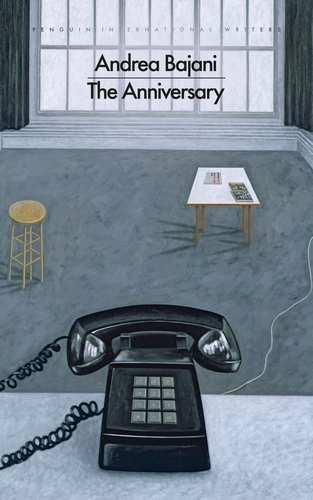
The Anniversary
Can you walk away from your family and never look back? Ten years after cutting all contact with his parents, an unnamed narrator reflects on the childhood and family life he left behind. His father ruled the household through violence, intimidation, and fear, while his mother quietly endured her husband’s control, gradually disappearing into the background of her own life. As the narrator revisits these painful memories, he begins to understand the cost of silence and the complicated ties that bind children to their parents. Both an intimate family portrait and a sharp critique of patriarchal power, The Anniversary asks whether breaking away from those who raised us is an act of betrayal—or a necessary step toward freedom.
Italy
2025
3
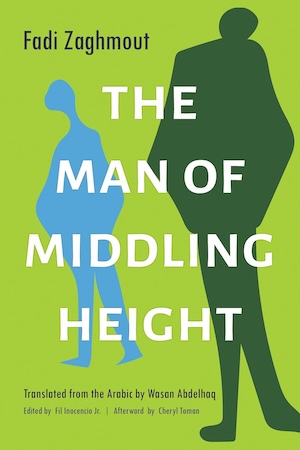
The Man of Middling Height
What if society’s deepest prejudices were based not on gender, but on height? In The Man of Middling Height, Jordanian author Fadi Zaghmout imagines an alternative world divided between two groups: tall people and short people. Height determines social status, personal freedom, romantic possibilities, and the roles individuals are expected to perform. Those who fall outside this rigid binary face exclusion and discrimination.
The story follows a short dressmaker whose life changes when she meets Tallan, a man of middling height who occupies an uncomfortable position in a society that recognizes only two categories. As their forbidden romance develops, they must confront the social rules that dictate whom they can love and how they are permitted to live. Other characters challenge these conventions in different ways, revealing the contradictions and injustices underpinning their world.
Through speculative fiction and biting social satire, Zaghmout examines how societies construct hierarchies and use arbitrary differences to justify inequality. By transforming familiar debates about gender, sexuality, and power into a story about height, he invites readers to question the assumptions that shape their own understanding of identity and belonging.
Jordan
2025
4
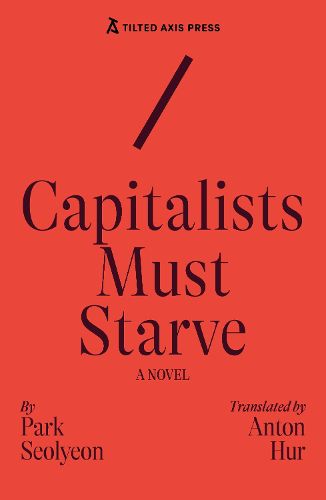
Capitalists Must Starve
Set in Korea under Japanese colonial rule, Capitalists Must Starve reimagines the life of Kang Juryong, a real-life labour activist who challenged the exploitation of workers in the early twentieth century. Born into poverty, Juryong dreams of becoming a modern, educated woman, but financial hardship and restrictive social expectations repeatedly obstruct her ambitions. After her husband’s death, she refuses to accept her family’s plans for her future and leaves for Pyongyang, where she finds work at a rubber factory. There, she becomes involved in the labour movement, confronting factory owners over their treatment of workers and joining the struggle for collective rights. Her determination culminates in a daring act of protest that makes her a symbol of resistance. Blending historical events with feminist storytelling, Park explores the intersections of gender, class and colonial oppression. With a sharp-tongued heroine, dark humour and emotional depth, the novel celebrates the courage of working-class women who refuse to remain silent in a society designed to suppress them.
South Korea
2025
5
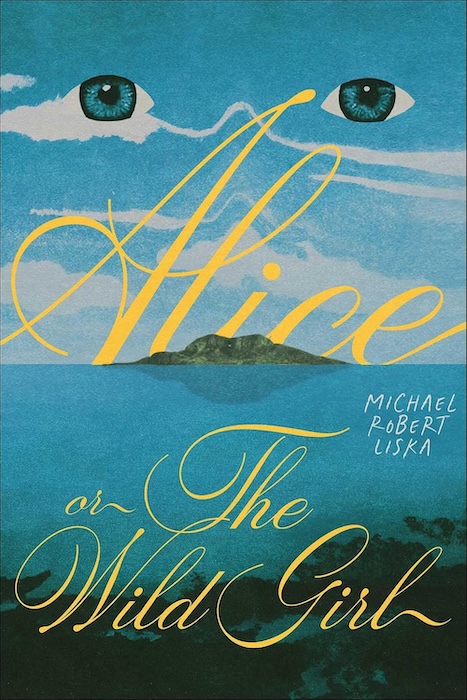
Alice, or The Wild Girl
In 1856, Lieutenant Henry Aaron Bird, an aging officer in the United States Navy, makes an extraordinary discovery on a remote Pacific island: a young, speechless girl living alone in the aftermath of a shipwreck. Naming her Alice, Bird takes her aboard his ship and eventually brings her to San Francisco, where he presents her to the public as the “Wild Girl of the Pacific.” To the crowds, Alice is a scientific curiosity and a spectacle; to Bird, she is both a responsibility and an opportunity to restore his fading reputation.
But Alice is not content to remain an object of fascination or a prisoner of someone else’s ambitions. As she struggles to reclaim control over her life, she must navigate the unfamiliar world of nineteenth-century America, where freedom can prove as elusive as it was on the island.
Blending historical fiction, maritime adventure, dark humour, and social satire, Liska explores exploitation, loneliness, and the power of storytelling. The novel asks who has the right to define another person’s identity—and whether true independence is ever entirely within our grasp.
United States
2025
6
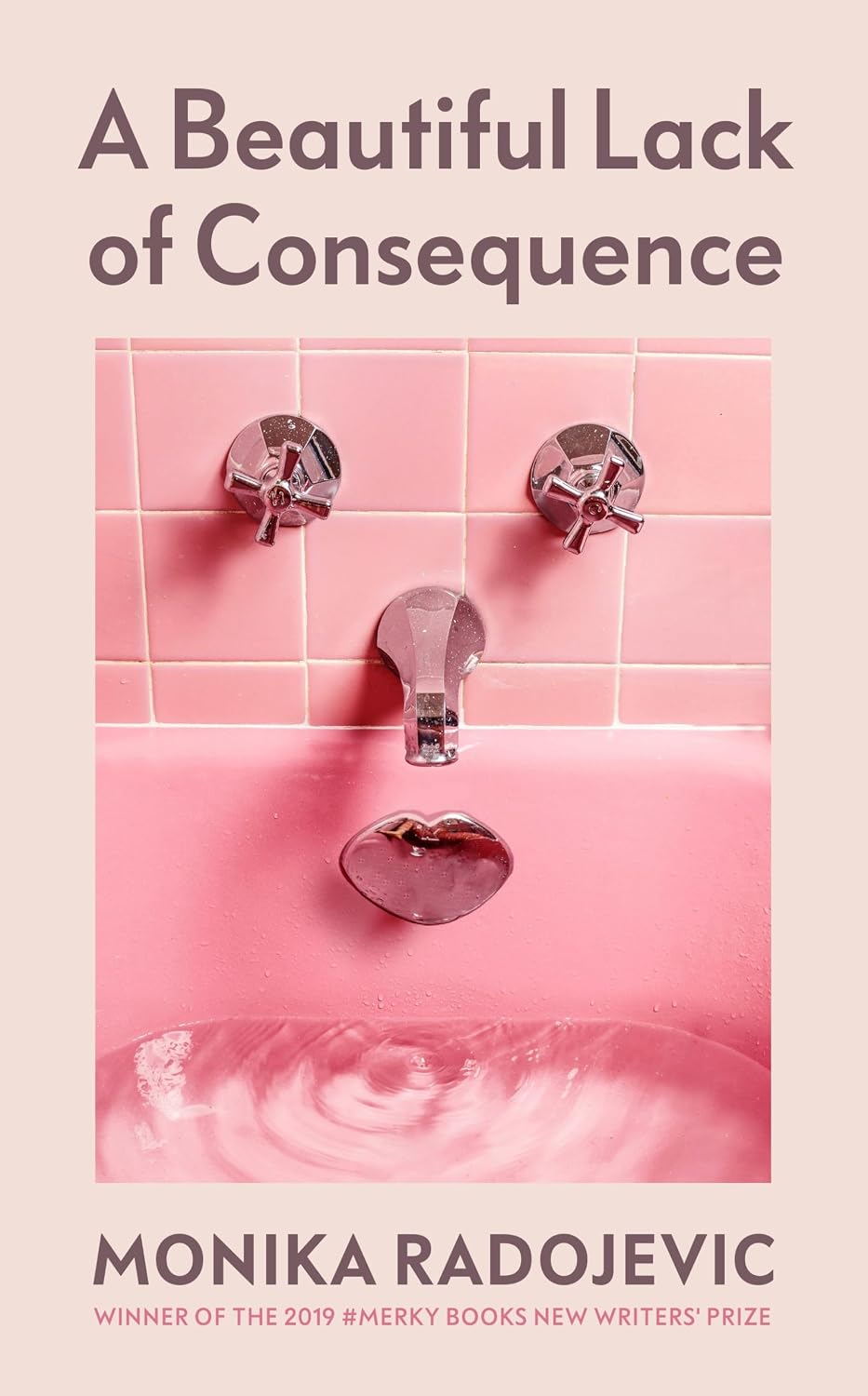
A Beautiful Lack of Consequence
A Beautiful Lack of Consequence is a collection of thirty short stories that explore the complexities of contemporary womanhood through a blend of realism, surrealism, dark humor, and feminist commentary.
Across its stories, Monika Radojevic depicts women confronting the pressures and expectations imposed on them by society. A woman enters a bar and finds herself completely invisible; a newly married couple faces a disturbing punishment for their childlessness; and a young girl trades her vocal cords for the possibility of freedom. These strange and unsettling scenarios transform familiar experiences of exclusion, fear, and powerlessness into imaginative explorations of resistance.
Moving between the everyday and the fantastical, the collection examines how women navigate relationships, social conventions, anger, and the struggle to make their voices heard. Radojevic combines tenderness with biting humor, capturing both the vulnerability and the strength of women pushed to their limits. Her stories ask what happens when those who have been expected to remain silent finally refuse to comply.
Dark, inventive, and sharply observed, the collection explores the possibilities of reclaiming agency in a world that continually attempts to define women’s lives.
United Kingdom
2025
7
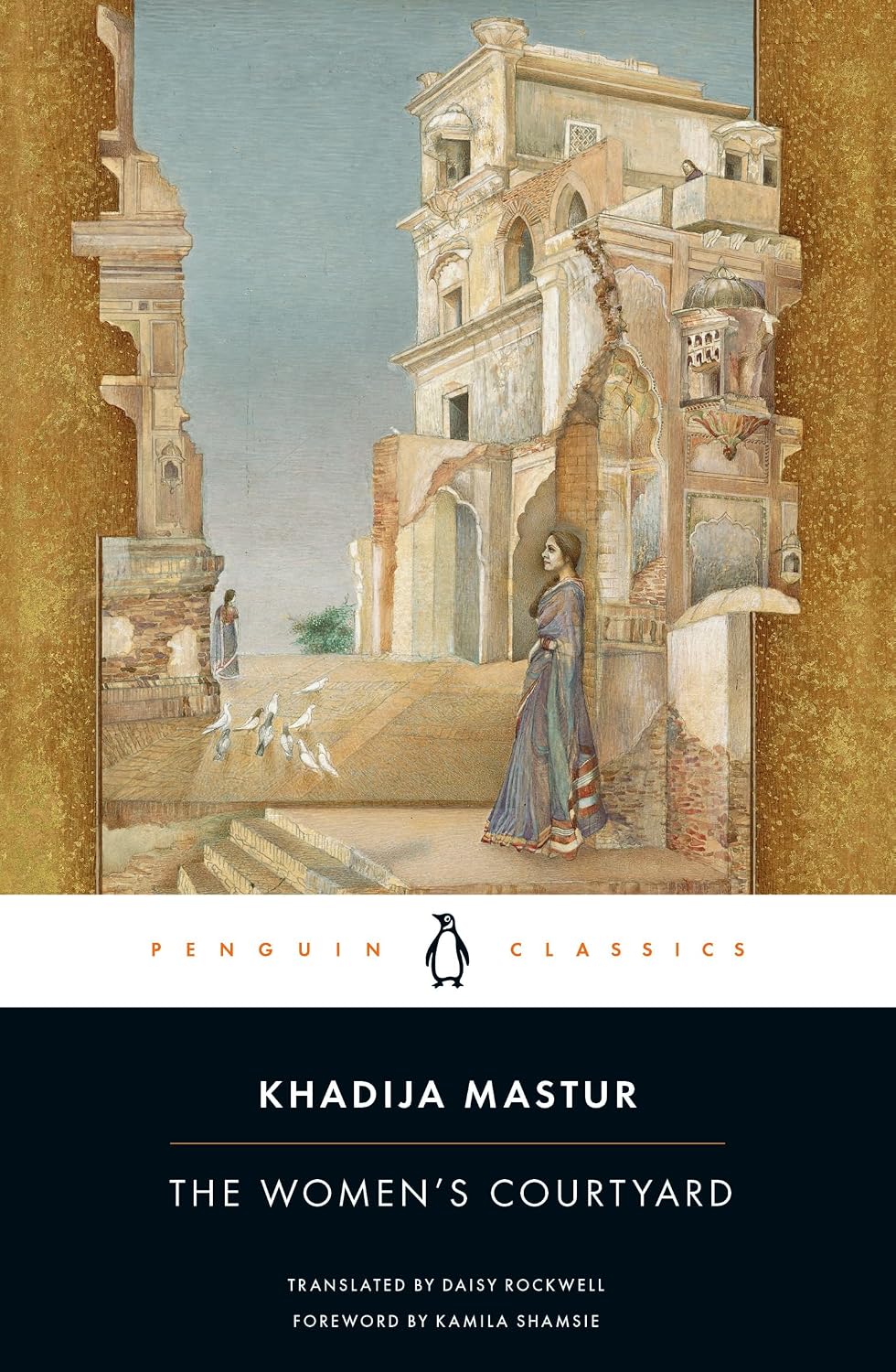
The Women's Courtyard
The Women’s Courtyard follows Aliya, a young Muslim girl growing up in an extended family in the years surrounding the Partition of British India. Much of the family’s life unfolds within the secluded courtyard of their home, where women manage domestic responsibilities, negotiate relationships, and respond to the political changes taking place beyond their walls. While the men become absorbed in the struggle for independence, the women face mounting financial difficulties and the consequences of decisions made largely without their participation. Aliya, meanwhile, longs for an education and a future that extends beyond the limits imposed on her. Through the everyday experiences of the household, Mastur presents a distinctive perspective on a period usually narrated through political leaders and public events. The novel explores gender inequality, family obligations, and women’s quiet determination to claim greater control over their lives.
Pakistan
2025
8
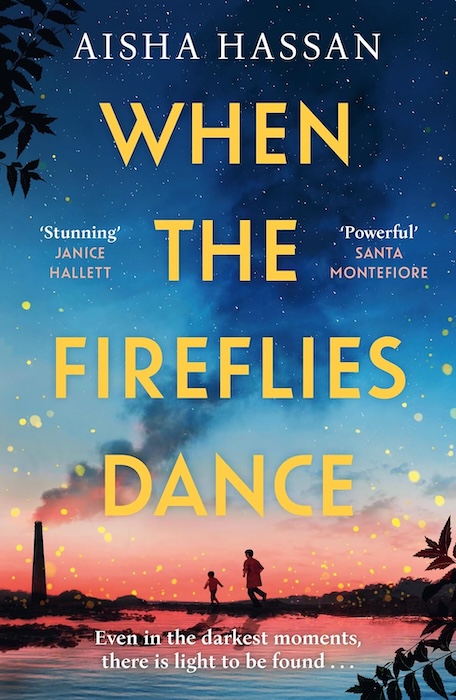
When the Fireflies Dance
When the Fireflies Dance tells the story of Lalloo, a young boy growing up in poverty near Lahore, Pakistan, where his family is trapped in a system of bonded labour at a brick kiln. After witnessing the brutal murder of his brother, Lalloo struggles to overcome the trauma of that night while confronting the exploitation and violence that govern his family’s existence. His parents and sisters remain trapped in a cycle of debt, forced to work endlessly under oppressive conditions. Determined to change their circumstances, Lalloo must find the courage to confront his past and seek a different future. Inspired by the realities of bonded labour in South Asia, Hassan explores injustice, family loyalty, and the human cost of exploitation. The novel portrays the resilience required to challenge an oppressive system and the hope that can survive even in the darkest circumstances.
Pakistan
2025
9
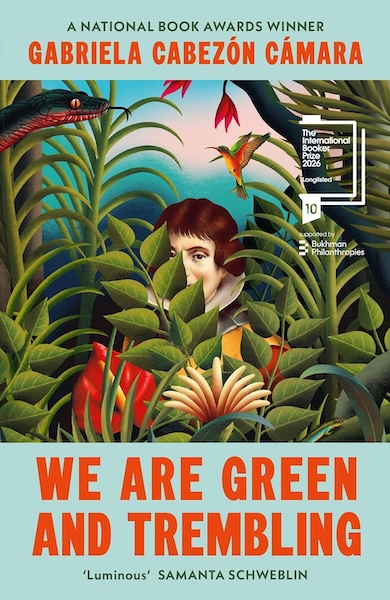
We are Green and Trembling
We Are Green and Trembling reimagines the story of Antonio de Erauso, a seventeenth-century Spanish figure who escaped a convent, adopted a male identity, and travelled through colonial South America. Narrated by Antonio’s companion, the Indigenous woman Micuén, the novel follows their adventures across a world shaped by colonial violence, religious authority, and rigid gender expectations. Blending historical fiction, satire, and exuberant storytelling, Gabriela Cabezón Cámara challenges conventional ideas about gender, identity, and power while exposing the brutality of colonialism. Through its unconventional characters and vivid prose, the novel celebrates resistance, transformation, and the possibility of creating a life beyond the identities imposed by society.
Argentina
2025
10
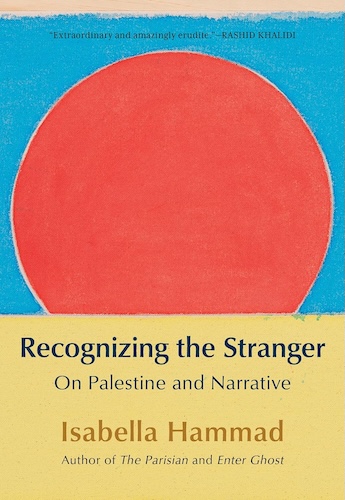
Recognizing the Stranger: On Palestine and Narrative
Who gets to tell a people’s story—and what happens when the world refuses to listen? In this powerful essay, Isabella Hammad examines how narratives shape our understanding of Palestine, political violence, and the struggle for freedom. Drawing on the work of Palestinian intellectual Edward Said, she explores how literature can challenge dominant perspectives, complicate simplistic political narratives, and make space for experiences that are too often overlooked. The book brings together Hammad’s 2023 Edward W. Said Memorial Lecture at Columbia University and a subsequent afterword written in early 2024, reflecting on the war in Gaza and the urgent struggle over how it is represented. A thoughtful meditation on storytelling, power, and moral responsibility, it asks readers to reconsider not only the stories they hear, but also the voices they may have learned not to recognize.
Palestine
2024
11
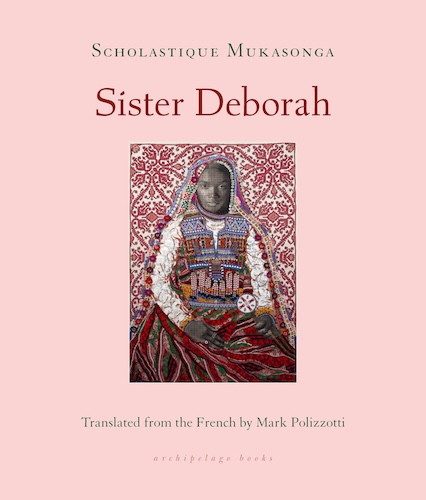
Sister Deborah
In 1930s Rwanda, a mysterious American evangelist arrives with a revolutionary message: the coming Messiah will be a Black woman, and women will finally be liberated from centuries of suffering. Known as Sister Deborah, she is both a healer and a prophetess, attracting women who long for a world beyond colonial domination and patriarchal authority. Her teachings unsettle not only the European missionaries but also the colonial administration, which fears the growing power of her movement. When Sister Deborah suddenly disappears, rumours multiply: was she murdered, or did she escape to begin a new life elsewhere? Years later, Ikirezi, a woman who was healed by Sister Deborah as a child, sets out to uncover the truth. Moving between historical records, folklore, and competing memories, Scholastique Mukasonga weaves a haunting tale about the struggle to reclaim forgotten histories. The novel explores how religion can become both an instrument of oppression and a language of resistance, particularly for women whose voices have been silenced.
Rwanda
2024
12
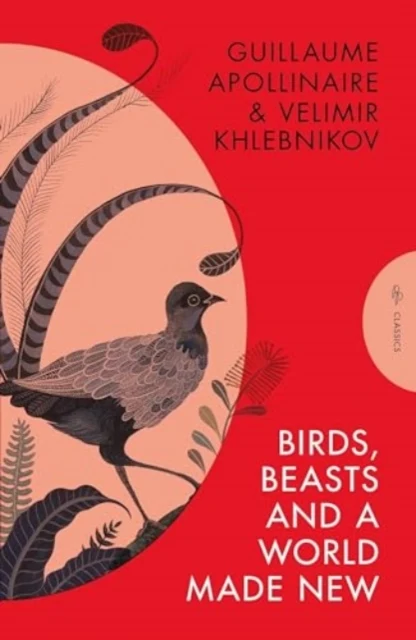
Birds, Beasts and a World Made New
What happens when poetry refuses to obey the rules of language, logic, and reality? This collection brings together two visionary poets who helped reshape modern literature: Russian Futurist Velimir Khlebnikov and French avant-garde writer Guillaume Apollinaire. Moving between animals, art, love, revolution, war, and the mysteries of time, their poems reveal radically different ways of seeing the world. Khlebnikov experiments with language and explores the hidden patterns of history, while Apollinaire blends lyrical beauty with daring modernist invention. Translated by Robert Chandler, this collection invites readers into a world where words become experiments, familiar things turn strange, and poetry imagines entirely new possibilities for human experience.
Russia
2024
About this theme
- Books
- 107
- Countries
- 45
Countries with this theme
Afghanistan
Asia
Albania
Europe
Algeria
Africa
Argentina
South America
Australia
Oceania
Belgium
Europe
Brazil
South America
Burkina Faso
Africa
Central African Republic
Africa
Czech Republic
Europe
Dominican Republic
North America
Egypt
Africa
France
Europe
Greece
Europe
Hungary
Europe
Iceland
Europe
India
Asia
Iran
Asia
Ireland
Europe
Italy
Europe
Japan
Asia
Jordan
Asia
Kenya
Africa
Kuwait
Asia
Malta
Europe
Morocco
Africa
Oman
Asia
Pakistan
Asia
Palestine
Asia
Philippines
Asia
Puerto Rico
South America
Romania
Europe
Russia
Europe
Rwanda
Africa
South Africa
Africa
South Korea
Asia
Spain
Europe
Türkiye
Asia
Turkmenistan
Asia
United Kingdom
Europe
United States
North America
Uruguay
South America
Uzbekistan
Asia
Yemen
Asia
Zambia
Africa