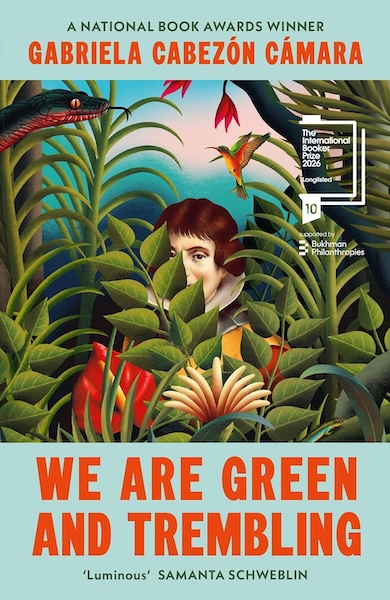
We are Green and Trembling
Argentina

We are Green and Trembling

by Gabriela Cabezón Cámara

Summary

We Are Green and Trembling reimagines the story of Antonio de Erauso, a seventeenth-century Spanish figure who escaped a convent, adopted a male identity, and travelled through colonial South America. Narrated by Antonio’s companion, the Indigenous woman Micuén, the novel follows their adventures across a world shaped by colonial violence, religious authority, and rigid gender expectations. Blending historical fiction, satire, and exuberant storytelling, Gabriela Cabezón Cámara challenges conventional ideas about gender, identity, and power while exposing the brutality of colonialism. Through its unconventional characters and vivid prose, the novel celebrates resistance, transformation, and the possibility of creating a life beyond the identities imposed by society.

Reviews

Login to leave a review.

No reviews yet. Be the first!

You might also like

Gabriela Cabezón Cámara

Gabriela Cabezón Cámara is an Argentine novelist, journalist, and feminist writer born in Buenos Aires in 1968. She is known for her experimental prose, irreverent humour, and bold reinterpretations of Argentine history and literature through feminist, queer, and postcolonial perspectives. Before becoming a full-time writer, she worked as a journalist, contributing to major Argentine publications and exploring questions of gender, class, and cultural identity. Her acclaimed novel The Adventures of China Iron (2017) reimagines José Hernández’s nineteenth-century epic poem Martín Fierro from the perspective of the gaucho’s wife, transforming a canonical national narrative into a story of female liberation, queer desire, and cultural reinvention. The novel was shortlisted for the International Booker Prize in 2020. Her other notable works include Slum Virgin (2009) and The Milanesa of Death (2012). Through exuberant language and unconventional storytelling, Cabezón Cámara challenges traditional representations of nationhood, gender, and identity, bringing marginalized voices to the centre of Argentine literature.

View author page
Published
2025
Author
Gabriela Cabezón Cámara