Non-Fiction
All countries
Albania
Algeria
Belarus
Bhutan
Bosnia and Herzegovina
Botswana
Burkina Faso
Cambodia
China
Congo, Democratic Republic
Cuba
Cyprus
Egypt
France
Ghana
India
Iran
Ireland
Jamaica
Japan
Pakistan
Palestine
Russia
Taiwan
Tanzania
Türkiye
Turkmenistan
Ukraine
United Kingdom
United States
Yemen
Zambia
1
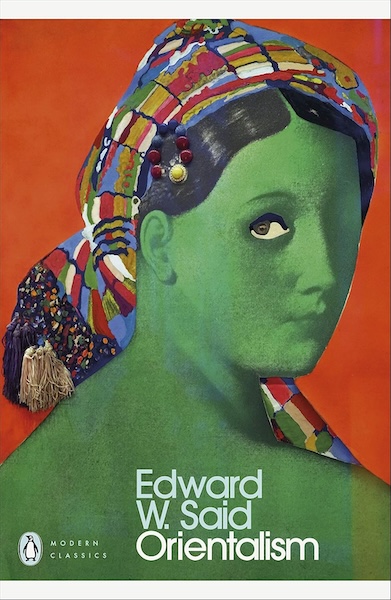
Orientalism
What if the way we see another culture tells us more about ourselves than about the people we are observing?
In Orientalism, literary critic and intellectual Edward W. Said examines how Western writers, scholars, artists, and political authorities constructed an image of the “Orient”—particularly the Arab and Islamic world—as exotic, irrational, backward, and fundamentally different from the West. He argues that these representations were not simply misunderstandings or harmless stereotypes: they became intertwined with imperial power, helping Europe justify its domination of Eastern societies.
Drawing on literature, history, art, and political thought, Said reveals how descriptions of other cultures can shape public opinion and influence the exercise of power. He challenges readers to question who has the authority to represent a people, whose voices are excluded, and how supposedly objective knowledge can reinforce existing hierarchies.
First published in 1978, Orientalism transformed postcolonial studies and continues to influence debates about cultural representation, racism, and the relationship between knowledge and power. It invites us to reconsider not only how the East has been portrayed, but also how these inherited images continue to shape the world today.
Palestine
United States
1978
2
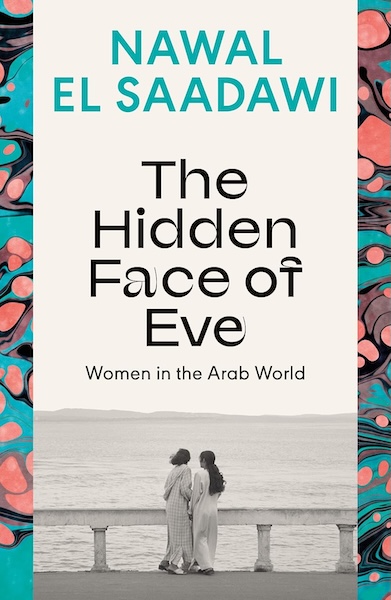
The Hidden Face of Eve
What lies beneath the traditions, laws, and social expectations that have shaped women’s lives for generations?
Drawing on her experience as a physician and feminist activist, Nawal El Saadawi examines the realities of women’s lives across the Arab world. She confronts subjects often pushed into silence, including female genital mutilation, sexual violence, honour killings, reproductive rights, and legal inequality.
Combining personal testimony, historical analysis, and cultural criticism, El Saadawi challenges the patriarchal structures used to justify women’s oppression. She also recovers the histories of women who resisted restrictive gender roles, questioning the boundaries between tradition, religion, and power.
First published in Arabic in 1977, this uncompromising work remains a landmark of Arab feminist writing and a powerful call for women’s freedom and equality.
Egypt
1977
3
God Dies by the Nile and Other Novels
What lies beneath the traditions, laws, and social expectations that have shaped women’s lives for generations?
In The Hidden Face of Eve, Egyptian writer, physician, and feminist Nawal El Saadawi examines the realities of women’s lives across the Arab world, drawing on her medical work in rural Egypt and her experiences as a women’s rights activist. She confronts subjects often pushed into silence, including female genital mutilation, sexual violence, honour killings, reproductive rights, and legal inequality.
Moving between personal testimony, historical analysis, religion, and cultural criticism, El Saadawi challenges the social structures used to justify women’s oppression. She also explores the historical contributions of Arab women and the struggles of those who have resisted restrictive gender roles.
Passionate and uncompromising, this influential work asks readers to question the boundaries between tradition, faith, and patriarchal power. First published in Arabic in 1977, The Hidden Face of Eve remains a landmark of Arab feminist writing and a powerful call for women’s freedom and equality.
Egypt
1977
4
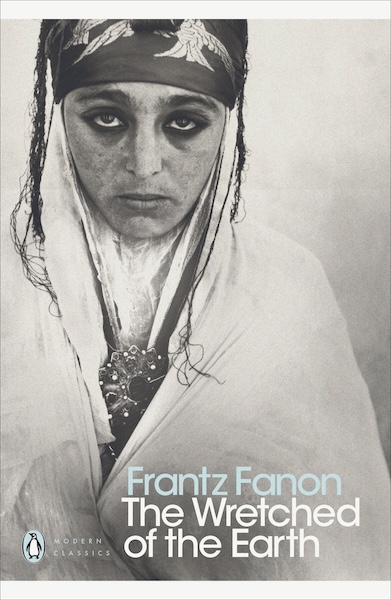
The Wretched of the Earth
What happens to a people when their land, culture, and identity are shaped by colonial rule—and what does it take to become free?
In The Wretched of the Earth, psychiatrist and revolutionary thinker Frantz Fanon examines the psychological, cultural, and political consequences of colonialism. Writing against the backdrop of Algeria’s struggle for independence from France, Fanon explores how colonial systems dehumanise the oppressed, reshape their sense of self, and create conditions for resistance.
Fanon confronts the role of violence in revolutionary movements while also warning that independence alone does not guarantee liberation. New national elites can reproduce the inequalities of colonial rule, leaving ordinary people excluded from the freedom they fought to achieve. He argues for a deeper transformation: one that challenges inherited hierarchies and creates a new society grounded in human dignity.
Passionate, provocative, and influential, The Wretched of the Earth remains a foundational work of anti-colonial thought. It asks readers to consider not only how colonial power is dismantled, but also what kind of world should replace it.
Algeria
1961
5
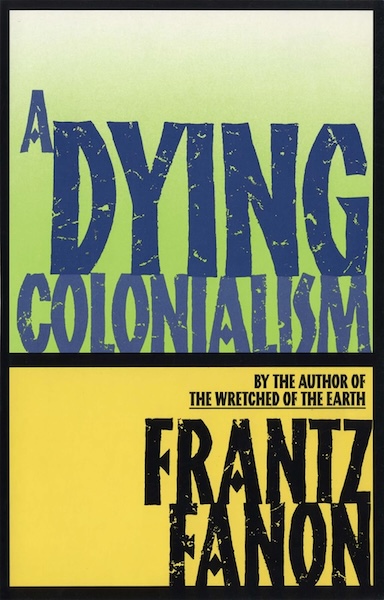
Dying Colonialism
How does a people’s struggle for freedom transform not only a nation, but also the everyday lives of its people?
In A Dying Colonialism, Frantz Fanon examines the Algerian Revolution against French colonial rule, revealing how the fight for independence reshaped Algerian society from within. Through the changing roles of women, the influence of radio, the use of medicine, and transformations in family life, Fanon explores how ordinary cultural practices became intertwined with political resistance.
Practices once dismissed or misunderstood by colonial authorities took on new meanings as Algerians challenged the structures imposed upon them. Clothing, language, technology, and social relationships became part of a wider struggle over identity and power. Fanon shows that decolonisation is not simply a political event: it reaches into the most intimate aspects of how people live, communicate, and understand themselves.
Based on his experience of the Algerian liberation movement, this influential work reveals colonialism as a system that attempts to control both institutions and everyday life. It also shows how resistance can transform a society in unexpected ways.
Algeria
1959
6
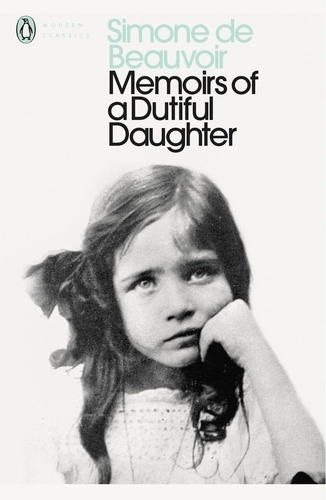
Memoirs of a Dutiful Daughter
Growing up in a respectable Parisian family, Simone de Beauvoir is taught to be a devout Catholic, an obedient daughter, and a woman destined for marriage. But as she discovers philosophy, literature, and the pleasure of independent thought, the beliefs that once defined her world begin to crumble. Questioning religion, challenging social conventions, and resisting her family’s expectations, she gradually realises that intellectual freedom comes at a price. Her journey towards independence is also a story of loneliness, friendship, and the painful discovery that the people we love can become obstacles to our becoming ourselves. Intimate and thought-provoking, this memoir captures the moment a young woman begins to break free from the life society has chosen for her.
France
1958
7
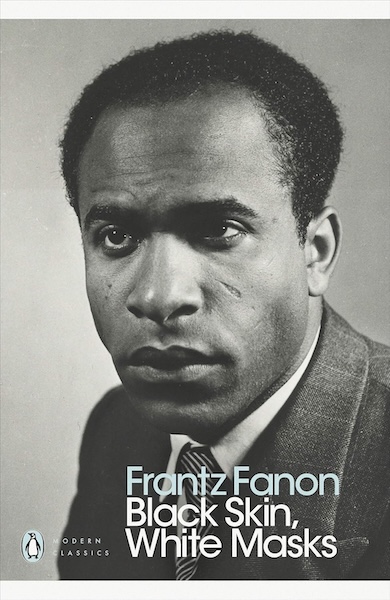
Black Skin, White Masks
What happens when a society teaches you to see yourself through the eyes of those who consider you inferior?
In Black Skin, White Masks, psychiatrist and philosopher Frantz Fanon examines the psychological scars left by racism and colonialism. Drawing on his own experiences as a Black man from Martinique, alongside psychology, philosophy, and cultural analysis, he explores how racial prejudice shapes identity, language, relationships, and self-worth.
Fanon investigates the pressure placed on colonised people to adopt the language, behaviour, and values of the dominant white society in the hope of gaining acceptance. Yet this pursuit of recognition can come at a profound cost: alienation from one’s own culture and an internalised sense of inferiority. He also examines how racism distorts relationships between Black and white people, exposing the power structures hidden beneath seemingly ordinary interactions.
Passionate and intellectually challenging, this landmark work asks what genuine freedom means in a world structured by racial hierarchies. Fanon ultimately calls for a new understanding of humanity—one that refuses to let race determine a person’s identity or possibilities. First published in French as Peau noire, masques blancs, the book remains foundational to anti-colonial thought and postcolonial studies.
France
1952