Literary Fiction
All countries
Afghanistan
Algeria
Antigua and Barbuda
Argentina
Australia
Austria
Azerbaijan
Bangladesh
Barbados
Belgium
Benin
Bosnia and Herzegovina
Brazil
Bulgaria
Burkina Faso
Burundi
Cabo Verde
Canada
Central African Republic
Chile
China
Colombia
Congo, Democratic Republic
Costa Rica
Côte d’Ivoire (Ivory Coast)
Croatia
Cyprus
Czech Republic
Denmark
Dominica
Dominican Republic
Egypt
El Salvador
Estonia
Ethiopia
France
Germany
Ghana
Greece
Hungary
Iceland
India
Iran
Iraq
Ireland
Italy
Jamaica
Japan
Jordan
Kazakhstan
Kenya
Kuwait
Latvia
Lebanon
Libya
Lithuania
Madagascar
Mexico
Moldova
Morocco
Myanmar
Netherlands
New Zealand
Nigeria
North Korea
North Macedonia
Norway
Oman
Pakistan
Palestine
Philippines
Poland
Portugal
Puerto Rico
Russia
Rwanda
Saint Kitts and Nevis
Saudi Arabia
Senegal
Singapore
South Korea
Spain
Sri Lanka
Sudan
Sweden
Switzerland
Syria
Taiwan
Tanzania
Thailand
Türkiye
Uganda
United Arab Emirates
United Kingdom
United States
Uzbekistan
Vietnam
Zambia
1
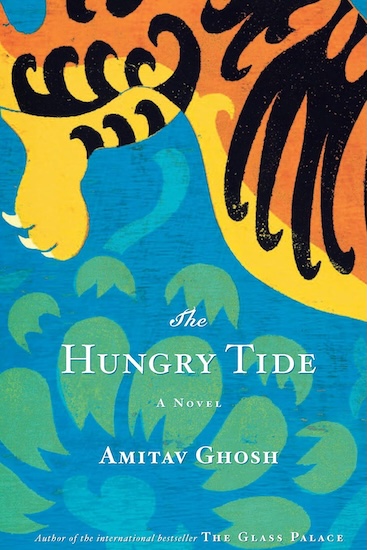
The Hungry Tide
Set in the Sundarbans, a vast archipelago of mangrove forests and tidal rivers on the eastern coast of India, The Hungry Tide brings together three people from different worlds. Piya Roy, an American marine biologist of Indian descent, arrives to study the endangered Irrawaddy dolphins. She meets Fokir, a local fisherman whose intimate knowledge of the waterways makes him an invaluable guide, and Kanai Dutt, a translator and businessman visiting his aunt on the islands. As their lives become intertwined, they encounter the region’s dangerous wildlife, political tensions, and precarious relationship between humans and nature. Through this richly layered story, Amitav Ghosh explores environmental conservation, cultural differences, displacement, and the struggle of vulnerable communities to survive in an unforgiving landscape. The novel examines the complex relationship between people and the natural world, questioning whether scientific knowledge, local traditions, and human ambition can coexist.
India
2004
2
On Beauty
On Beauty is a witty, richly layered novel about family, cultural identity, and intellectual life, set between a fictional university town near Boston and London. The story centers on Howard Belsey, a British art historian teaching at Wellington College, and his American wife, Kiki, whose marriage is strained by infidelity, ideological disagreements, and diverging personal ambitions. Their three children—Jerome, Zora, and Levi—are each searching for their own place in a world shaped by race, class, and competing cultural values.
The Belseys’ lives become increasingly entangled with those of the Kipps family, led by Monty Kipps, a conservative Caribbean-born academic whose views sharply oppose Howard’s liberal convictions. As the two families collide, their rivalries expose the contradictions between public beliefs and private behavior.
Inspired in part by E. M. Forster’s Howards End, Smith’s novel explores the complicated relationship between beauty and morality, the limits of intellectual certainty, and the tensions between tradition and change. Both humorous and emotionally perceptive, On Beauty offers a portrait of contemporary multicultural society and the fragile bonds that hold families together.
United Kingdom
2005
3
Hope and Other Dangerous Pursuits
Hope and Other Dangerous Pursuits follows four Moroccan migrants who attempt to cross the Strait of Gibraltar in a small inflatable boat, hoping to reach Spain and build better lives in Europe. Each has a different reason for leaving Morocco: unemployment, family responsibilities, personal dissatisfaction, or the desire to escape restrictive social expectations. Their dangerous journey ends with their interception by Spanish authorities, and the novel then traces the experiences that led each character to risk everything for an uncertain future.
Through interwoven narratives, Laila Lalami explores the economic inequalities, political frustrations, and social pressures that motivate migration. She reveals the difficult realities facing those who remain in Morocco, as well as the hopes and compromises of those who leave. The novel challenges simplistic ideas about immigration by presenting its characters as complex individuals with conflicting desires, private struggles, and understandable ambitions. Moving between Morocco and Spain, it examines belonging, identity, family, and the uncertain promise of a better life, asking what freedom means when the pursuit of opportunity requires risking everything.
Morocco
2005
4
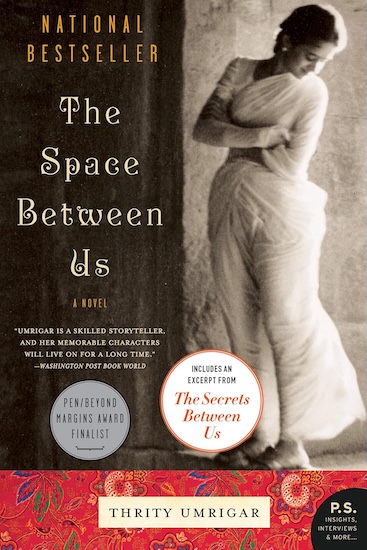
The Space Between Us (#1 Between Us)
In Mumbai, the lives of two women from vastly different social worlds become intertwined through a relationship shaped by affection, dependence, and inequality. Bhima, an impoverished domestic worker, has spent decades serving Sera Dubash, a middle-class Parsi woman living in relative comfort. Both women have endured painful marriages and personal tragedies, yet the privileges available to Sera remain far beyond Bhima’s reach. When Bhima’s granddaughter Maya becomes pregnant outside marriage, the fragile balance between the two households is threatened, exposing the prejudices and unspoken rules that govern their relationship. As secrets emerge and loyalties are tested, the women must confront the boundaries imposed by class, gender, and social expectations. Set against the vivid backdrop of contemporary Mumbai, The Space Between Us is a moving exploration of female friendship, domestic labour, and the unequal ways society distributes dignity and opportunity.
India
2006
5
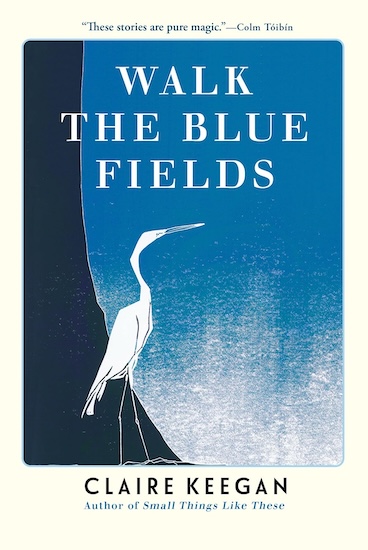
Walk the Blue Fields
In this collection of short stories, Claire Keegan explores the hidden tensions beneath ordinary lives in rural Ireland. In the title story, a Catholic priest stands at the altar on a wedding day, haunted by memories of a love affair that continues to challenge his faith and his sense of duty. Elsewhere, a writer seeking solitude finds her retreat disrupted by an unwelcome visitor, while farmers, lovers, and families confront disappointments and desires they struggle to articulate.
Keegan’s characters often find themselves caught between the lives they have chosen and the lives they secretly wish they could lead. Their private longings unfold against a changing Ireland, where tradition, religion, and social expectations exert a powerful influence. With spare, precise prose, she reveals the emotional weight hidden in everyday gestures and conversations. Walk the Blue Fields is a quietly penetrating collection about love, regret, faith, and the compromises people make in the hope of finding happiness.
Ireland
2007
6
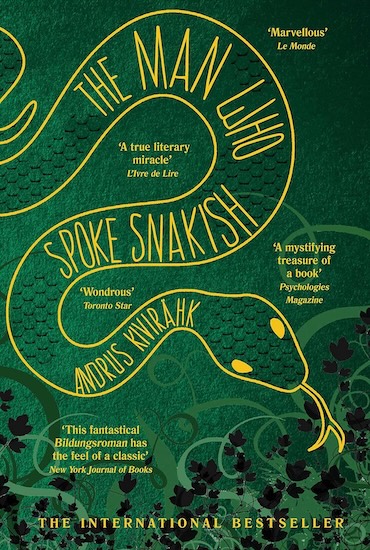
The Man Who Spoke Snakish
Set in a fantastical version of medieval Estonia, The Man Who Spoke Snakish follows Leemet, a boy growing up in the forest among the last people who preserve an ancient way of life. His people speak Snakish, a magical language that allows them to communicate with snakes and command animals. For generations, they have lived in close connection with nature, hunting for food and worshipping their ancestral spirits.
But the forest is gradually emptying. More and more people abandon their traditional lives to settle in villages, embrace Christianity, and adopt the customs introduced by foreign conquerors. As the old language and its knowledge disappear, Leemet finds himself caught between a vanishing world and a new society that regards his people’s traditions as backward and obsolete.
Combining dark humour, folklore, absurdity, and fantasy, Kivirähk creates an allegory about cultural assimilation and the loss of collective identity. The novel explores how conquest transforms not only political structures but also languages, relationships with nature, and people’s understanding of themselves. Through Leemet’s struggle to preserve his heritage, it asks what happens when an entire culture is dismissed as primitive—and whether traditions can survive when even their own people begin to abandon them.
Estonia
2007
7
Elena Knows
Elena Knows follows Elena, an elderly woman living with Parkinson’s disease, who refuses to accept the official conclusion that her daughter Rita’s death was a suicide. Determined to discover the truth, Elena undertakes a difficult journey across Buenos Aires, relying on a promise made by a woman from her past. As her physical limitations make each step increasingly challenging, her investigation becomes a confrontation with painful memories and unresolved questions about motherhood, responsibility, and personal freedom. Piñeiro combines the structure of a crime novel with an intimate examination of women’s lives in a society shaped by religious expectations and social judgement. The story challenges assumptions about disability and autonomy while revealing how family relationships can be shaped by obligation, resentment, and love.
Argentina
2007
8
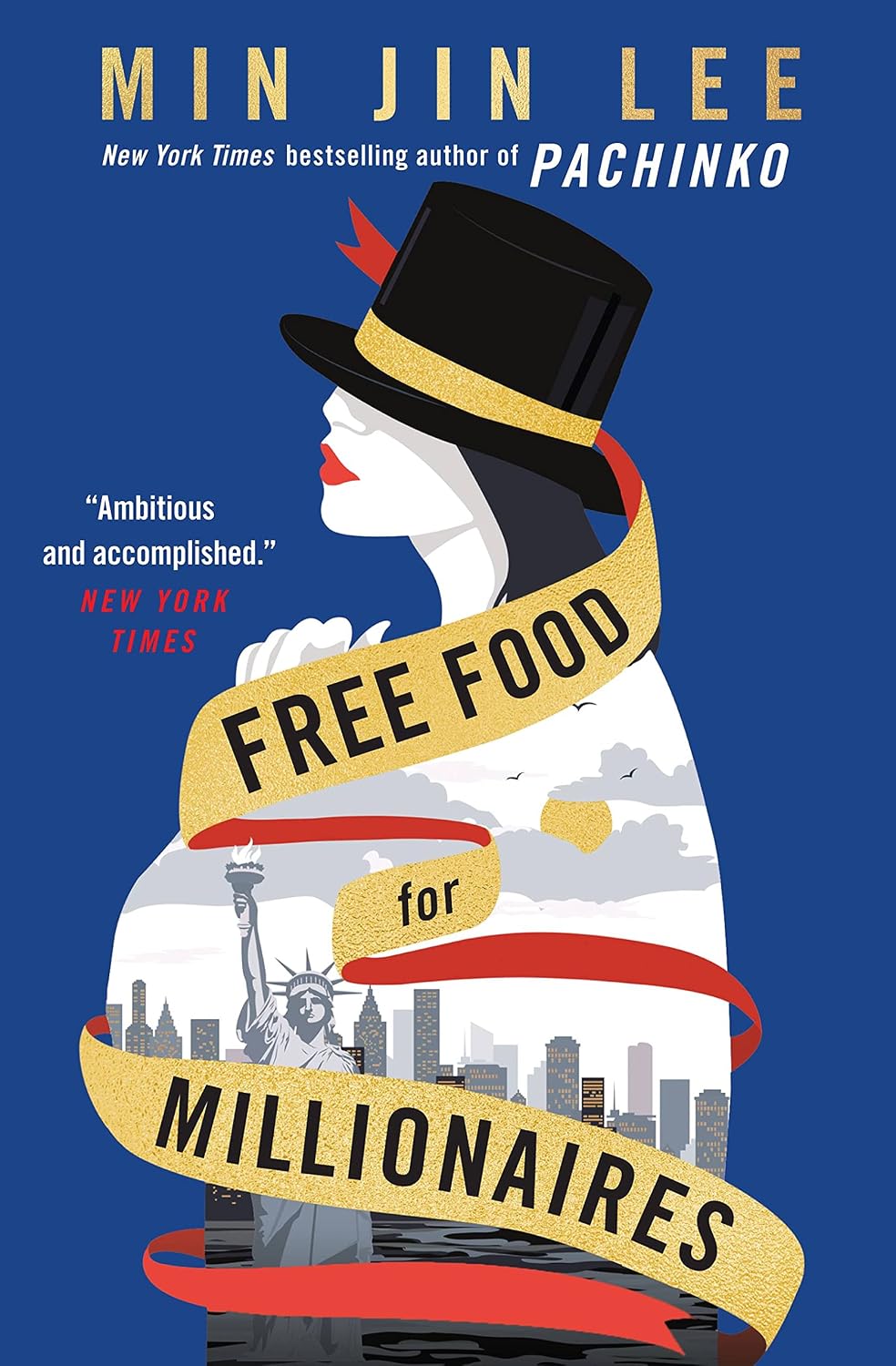
Free Food for Millionaires
Free Food for Millionaires follows Casey Han, a young Korean American woman who graduates from Princeton University and attempts to establish herself in New York City. Raised by immigrant parents with traditional expectations, Casey longs for independence, financial security, and entry into the glamorous world of Manhattan’s elite. Yet her expensive tastes, mounting debts, and complicated romantic relationships threaten to undermine her ambitions. As she navigates professional setbacks and social pressures, Casey struggles to reconcile her desire for personal freedom with the values instilled in her by her family. Through her experiences and those of the people around her, Lee examines class inequality, cultural assimilation, gender expectations, and the pursuit of success. The novel offers a portrait of immigrant life in which ambition can create opportunities while also deepening the conflict between inherited traditions and individual desires.
South Korea
2007
9
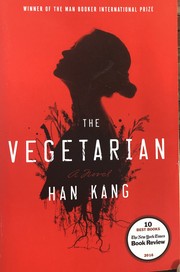
The Vegetarian
The Vegetarian tells the story of Yeong-hye, an ordinary South Korean woman whose decision to stop eating meat after experiencing disturbing dreams sets off a chain of increasingly unsettling events. Her husband initially sees her refusal as an inconvenience, while her family responds with anger and attempts to force her back into conformity. As Yeong-hye withdraws from conventional expectations, her behaviour becomes increasingly radical, challenging the roles imposed on her as a wife, daughter, and woman. Told through the perspectives of her husband, brother-in-law, and sister, the novel gradually reveals the psychological and emotional pressures beneath her transformation. Han Kang explores bodily autonomy, violence, desire, and the struggle to resist a society that demands obedience. The novel raises unsettling questions about whether rejecting social conventions can become an act of liberation, even when that resistance carries devastating consequences.
South Korea
2007
10
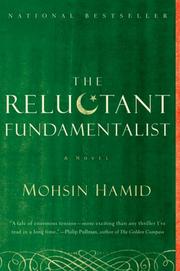
The Reluctant Fundamentalist
The Reluctant Fundamentalist follows Changez, a young Pakistani man who achieves professional success in New York after graduating from Princeton University. Recruited by an elite financial firm, he embraces the promise of the American dream and begins a relationship with Erica, a wealthy American woman struggling with grief. However, the attacks of September 11, 2001, transform the way Changez experiences life in the United States. Increasingly aware of the suspicion and hostility directed towards him because of his Pakistani identity, he begins to question his professional ambitions and his place in American society. Years later, he recounts his experiences to an American visitor in Lahore, leaving the reader uncertain about the encounter’s true nature. Hamid explores belonging, nationalism, prejudice, and the psychological consequences of living between cultures in a world divided by political fear.
Pakistan
2007
11
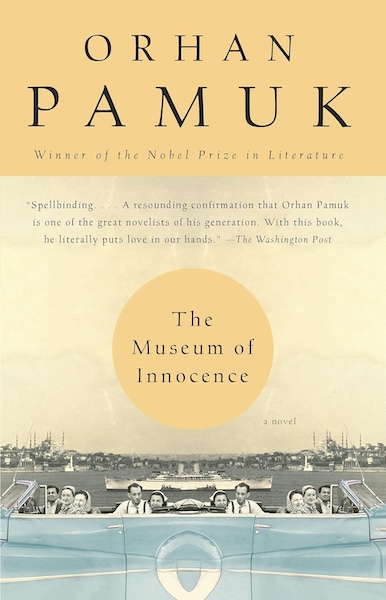
The Museum of Innocence
Istanbul, 1975. Kemal, the privileged son of a wealthy family, is preparing to marry Sibel, a woman who belongs to his own sophisticated social circle. But a chance encounter with Füsun, a beautiful young shop assistant and distant relative, sets his carefully ordered life on an unexpected course. Their passionate affair soon becomes complicated by social conventions, class divisions, and the expectations placed on women in a rapidly modernising Turkey.
When Füsun disappears from his life, Kemal begins collecting objects connected to her: earrings, hair clips, cigarette butts, and countless other seemingly insignificant things. Each item becomes a vessel for memory, allowing him to preserve moments that time would otherwise erase. Over the years, his collection grows into an extraordinary personal museum, reflecting both his devotion and his inability to let go.
Spanning decades of Istanbul’s social and cultural transformation, The Museum of Innocence is a richly layered exploration of love, obsession, memory, and longing. Nobel Prize-winning author Orhan Pamuk transforms ordinary objects into fragments of a vanished world, asking whether preserving the past can bring happiness—or merely keep us imprisoned within it.
Türkiye
2008
12
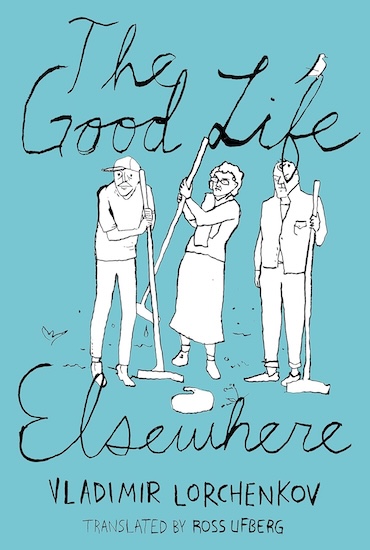
The Good Life Elsewhere
Set in the Moldovan village of Larga in the years following the collapse of the Soviet Union, The Good Life Elsewhere follows a community of villagers desperate to escape poverty and build better lives in Italy. Convinced that prosperity awaits them in Western Europe, the villagers devise increasingly absurd and improbable schemes to cross the border, despite repeated obstacles and the near impossibility of obtaining visas.
Among them are an Orthodox priest whose wife has emigrated to Italy, a resourceful mechanic who dreams of transforming his tractor into a vehicle capable of travelling by air and sea, and villagers who embark on an enormous, misguided crusade towards their imagined promised land. Even local politicians become entangled in the collective obsession with escape, revealing a society where hope and desperation often override common sense.
Blending absurdist humour, political satire, and tragedy, Lorchenkov portrays a country caught between its Soviet past and an uncertain future. Italy becomes more than a destination: it represents the promise of dignity, opportunity, and freedom from a life that seems impossible to change. Yet the villagers’ increasingly desperate attempts expose the harsh realities of migration, economic inequality, corruption, and the idealisation of life abroad. Beneath its comic extravagance, the novel offers a poignant portrait of people searching for a better future when home no longer seems to offer one.
Moldova
2008