Literary Fiction
All countries
Afghanistan
Algeria
Antigua and Barbuda
Argentina
Australia
Austria
Azerbaijan
Bangladesh
Barbados
Belgium
Benin
Bosnia and Herzegovina
Brazil
Bulgaria
Burkina Faso
Burundi
Cabo Verde
Canada
Central African Republic
Chile
China
Colombia
Congo, Democratic Republic
Costa Rica
Côte d’Ivoire (Ivory Coast)
Croatia
Cyprus
Czech Republic
Denmark
Dominica
Dominican Republic
Egypt
El Salvador
Estonia
Ethiopia
France
Germany
Ghana
Greece
Hungary
Iceland
India
Iran
Iraq
Ireland
Italy
Jamaica
Japan
Jordan
Kazakhstan
Kenya
Kuwait
Latvia
Lebanon
Liberia
Libya
Lithuania
Madagascar
Mali
Mauritania
Mauritius
Mexico
Moldova
Morocco
Mozambique
Myanmar
Namibia
Netherlands
New Zealand
Nigeria
North Korea
North Macedonia
Norway
Oman
Pakistan
Palestine
Philippines
Poland
Portugal
Puerto Rico
Russia
Rwanda
Saint Kitts and Nevis
Saudi Arabia
Senegal
Sierra Leone
Singapore
South Korea
Spain
Sri Lanka
Sudan
Sweden
Switzerland
Syria
Taiwan
Tanzania
Thailand
Tunisia
Türkiye
Uganda
United Arab Emirates
United Kingdom
United States
Uzbekistan
Vietnam
Zambia
1
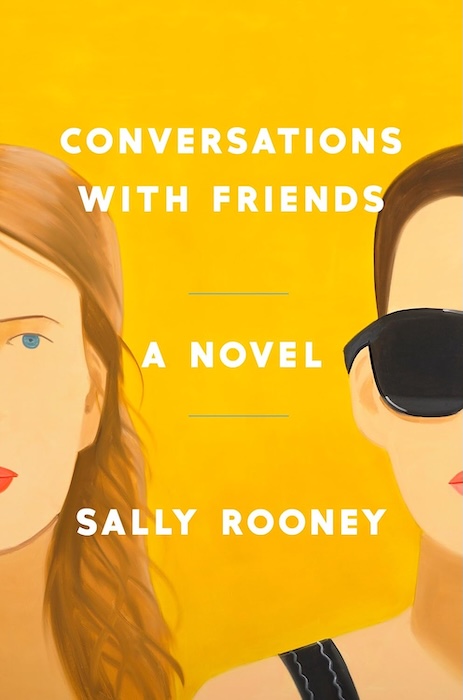
Conversations with Friends
Conversations with Friends follows Frances and Bobbi, two young women in Dublin who were once romantically involved and remain close friends. During a poetry performance, they meet Melissa, an established writer, and her husband, Nick, an actor. What begins as a new social connection gradually develops into a complicated web of attraction, secrecy, and emotional dependency.
Frances, a reserved and intellectually sharp university student, finds herself drawn into an affair with Nick while struggling to understand her own feelings and boundaries. As the relationships between the four characters shift, Frances must confront her ideas about intimacy, loyalty, and self-worth.
With her characteristic precision and understated humor, Sally Rooney explores the uncertainties of young adulthood, the gap between intellectual understanding and emotional experience, and the ways people negotiate power and vulnerability in relationships. The novel offers an intimate portrait of love and identity in contemporary Ireland.
Ireland
2017
2
On Earth As It Is Beneath
On Earth as It Is Beneath takes place in a remote Brazilian penal colony that has been abandoned by the authorities, leaving prisoners and guards trapped in a brutal and isolated environment. As the prison deteriorates, the people within it become increasingly subject to violence, cruelty, and arbitrary power. The boundaries between those responsible for maintaining order and those imprisoned begin to blur, exposing the moral corruption of a system that has effectively abandoned its own rules. Maia writes in stark, uncompromising prose, creating an atmosphere of dread in which the surrounding landscape intensifies the characters’ sense of confinement. The novel examines punishment, institutional neglect, and the dehumanising effects of unchecked authority. It asks what happens when a society removes people from view and then abandons responsibility for their lives.
Brazil
2017
3
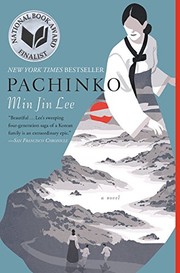
Pachinko
Pachinko follows four generations of a Korean family whose lives are transformed by migration, discrimination, and the search for belonging. The story begins in early twentieth-century Korea, where young Sunja becomes pregnant by a wealthy man who refuses to marry her. She accepts an offer of marriage from a kind-hearted minister and moves with him to Japan, hoping to build a better future. However, the family encounters widespread prejudice against Koreans living in Japan, limiting their opportunities and shaping their identities. As the story moves across generations, each family member struggles to balance personal ambition with cultural heritage and social expectations. Lee explores sacrifice, resilience, family loyalty, and the consequences of historical injustice, portraying how individuals attempt to create meaningful lives in a society that refuses to fully accept them.
South Korea
2017
4
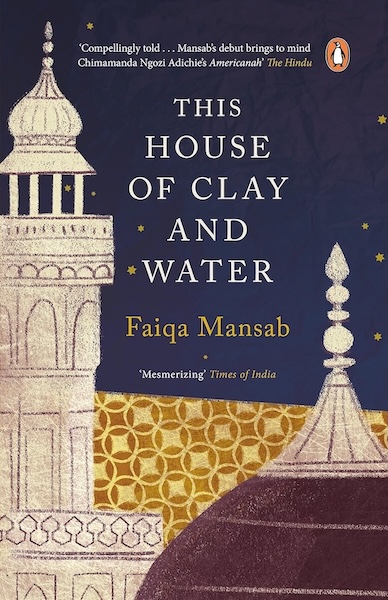
This House of Clay and Water
This House of Clay and Water follows two women whose lives intersect in contemporary Lahore, where social expectations, religious traditions, and personal desires shape the choices available to them. Nida is the wife of a police officer, living a life of privilege that conceals profound loneliness and dissatisfaction. When she encounters Bhanggi, a transgender woman living on the margins of society, an unexpected friendship develops between them. Their connection challenges the boundaries imposed by class, gender, and respectability.
Through their intertwined stories, Faiqa Mansab explores the search for belonging in a society where people who defy conventional expectations often face exclusion and violence. The novel also follows Sasha, a young man whose own emotional struggles become entangled with the women’s lives, adding further complexity to the story’s exploration of love and identity. Against the backdrop of Lahore’s vibrant yet deeply divided social landscape, the novel examines faith, desire, gender, and the human need for acceptance. It asks whether genuine connection can survive in a world determined to categorise people and dictate how they should live.
Pakistan
2017
5
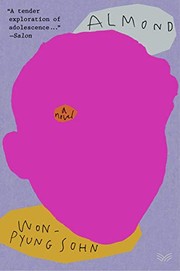
Almond
Almond follows Yunjae, a teenage boy who has difficulty recognising and expressing emotions because of a neurological condition called alexithymia. Due to an unusually small amygdala, the part of the brain associated with emotional responses, Yunjae struggles to understand fear, anger, and happiness in the ways others do. Raised by his mother and grandmother, who teach him how to navigate social situations, he leads a carefully structured life until a violent incident leaves him isolated and forces him to face the world alone.
At school, Yunjae encounters Gon, a troubled boy whose aggressive behaviour hides deep emotional pain. Despite their differences, an unexpected connection develops between them, challenging both boys’ understanding of themselves and each other. Through their evolving relationship, Sohn Won-pyung explores empathy, friendship, trauma, and the meaning of emotional connection. The novel asks whether compassion must come from instinctive feelings or can instead be learned through experience, suggesting that understanding another person may begin with the simple willingness to see beyond appearances.
South Korea
2017
6
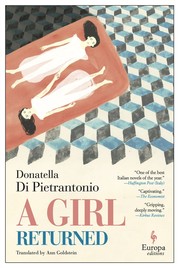
A Girl Returned
A Girl Returned follows a thirteen-year-old girl who is suddenly sent back to the family she barely remembers after being raised by a couple she believed were her parents. Without explanation, she finds herself living with her biological family in a crowded apartment in a poor rural community in southern Italy. Surrounded by unfamiliar siblings and a mother who feels like a stranger, she struggles to understand why she was given away and why she has now been returned.
As she adjusts to her new circumstances, the girl develops a complicated relationship with her younger sister, Adriana, whose boldness and resourcefulness offer both companionship and conflict. Through the protagonist’s perspective, Donatella Di Pietrantonio explores the emotional consequences of abandonment, the divisions between social classes, and the meaning of motherhood and belonging. Written in a restrained, powerful style, the novel captures the vulnerability of adolescence and the lasting impact of secrets within families. It asks whether family is defined by blood, love, or the people who choose to stay.
Italy
2017
7
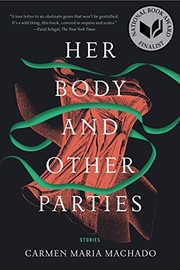
Her Body and Other Parties: Stories
In this electric and provocative debut, Carmen Maria Machado bends genre to shape startling narratives that map the realities of women's lives and the violence visited upon their bodies. A wife refuses her husband's entreaties to remove the green ribbon from around her neck. A woman recounts her sexual encounters as a plague slowly consumes humanity. A salesclerk in a mall makes a horrifying discovery within the seams of the store's prom dresses. One woman's surgery-induced weight loss results in an unwanted houseguest. And in the bravura novella 'Especially Heinous,' Machado reimagines every episode of Law & Order: Special Victims Unit, a show naively assumeded had shown it all, generating a phantasmagoric police procedural full of doppelgangers, ghosts, and girls with bells for eyes.
United States
2017
8
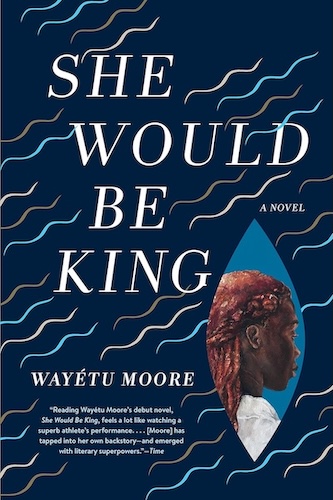
She Would Be King
In the nineteenth century, as Liberia emerges as a new nation, three extraordinary individuals from different parts of the African diaspora find their lives intertwined. Gbessa, a young woman from a West African village, is exiled after being accused of witchcraft. Left to die in the wilderness, she survives a deadly snakebite and discovers she possesses an unusual gift: immortality. June Dey, born into slavery on a plantation in Virginia, has extraordinary physical strength that he struggles to control. Norman Aragon, the son of a British coloniser and a Jamaican Maroon woman, can disappear from sight whenever the earth calls him.
Their journeys eventually bring them to Monrovia, where former enslaved people from America are attempting to establish a new society alongside Liberia's indigenous communities. As tensions rise between settlers, local populations, and European powers, the three must decide how to use their extraordinary abilities to protect their new homeland.
Blending magical realism, African folklore, and historical fiction, She Would Be King reimagines the founding of Liberia through stories of displacement, resistance, identity, and the complicated legacies of colonialism.
Liberia
Jamaica
United States
2018
9
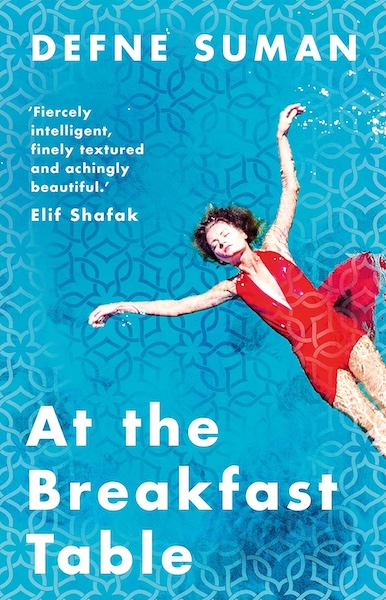
At the Breakfast Table
On Büyükada, an island off Istanbul, relatives gather in the summer of 2017 to celebrate the hundredth birthday of Şirin Saka, a celebrated artist whose long life has spanned nearly a century of political and cultural change. What should be a joyful family occasion soon becomes an encounter with the past, as the younger generations begin to question the silences that have shaped their lives.
Şirin’s grandchildren, Nur and Fikret, and her great-granddaughter, Selin, know that something painful lies beneath the family’s carefully maintained image. Hoping to uncover the truth, they invite Burak, a family friend and investigative journalist, to interview Şirin. But the elderly artist has spent decades concealing a history that reaches beyond her personal life into the suppressed memories of the country itself.
Told through four perspectives, At the Breakfast Table explores the inheritance of family secrets, the psychological cost of silence, and the courage required to confront uncomfortable truths. Defne Suman weaves together intimate family drama and Turkey’s complicated history in a novel about memory, identity, and the possibility of breaking free from the past.
Türkiye
2018
10
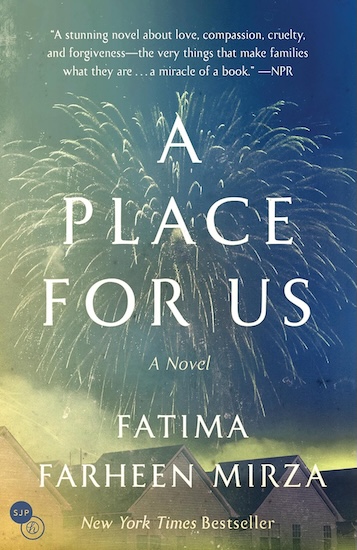
A Place for Us
A Place for Us explores the complicated bonds of an Indian-American Muslim family as its members navigate the tensions between cultural heritage, religious expectations, and personal freedom. The story begins at the wedding of Hadia, the eldest daughter of Rafiq and Layla, whose decision to marry for love rather than tradition reflects her determination to live on her own terms. The occasion also brings home her estranged younger brother, Amar, who returns to the family after three years of separation.
Through shifting perspectives and memories, Mirza gradually reveals the events that fractured the family. Rafiq and Layla emigrated from India to the United States hoping to give their children better opportunities while preserving their cultural and religious traditions. Yet their children’s experiences of growing up between two cultures create tensions that neither generation knows how to resolve. Hadia seeks independence, Huda follows her sister’s example, and Amar struggles with questions of faith, belonging, and his father’s expectations.
With tenderness and psychological insight, Mirza examines how love can coexist with disappointment, how silence can deepen family wounds, and how difficult it can be to understand those closest to us. The novel offers a nuanced portrait of the immigrant experience, exploring the challenge of building an identity that honours one’s heritage without sacrificing individuality. Ultimately, it asks whether a family can find its way back to one another after years of hurt and misunderstanding.
United States
2018
11
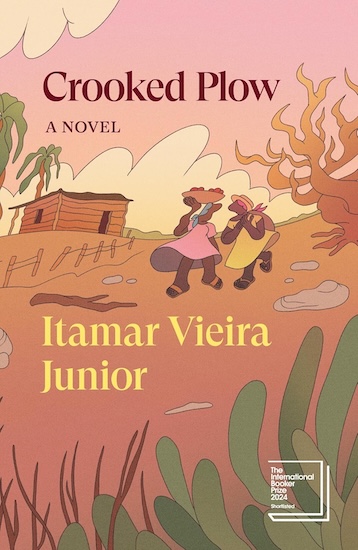
Crooked Plow
Set in the rural hinterlands of Bahia, Brazil, Crooked Plow follows Bibiana and Belonísia, two sisters growing up in a community of Black agricultural workers descended from enslaved people. Their lives change dramatically when, as children, they discover an old knife hidden beneath their grandmother’s bed. A sudden accident leaves one sister unable to speak, creating a bond between them that shapes their identities and futures.
As the sisters grow older, their paths diverge. Bibiana leaves home and becomes increasingly aware of the social and political forces that keep her community trapped in poverty, while Belonísia remains closely connected to the land and the traditions of her ancestors. Through their experiences, the novel reveals the exploitation of rural workers who cultivate land they do not own, despite generations of labour and their deep ancestral ties to it.
Blending social realism with magical elements and Afro-Brazilian spiritual traditions, Vieira Junior explores the enduring consequences of slavery, racial inequality, and land dispossession. The land itself becomes a source of both suffering and belonging, connecting the community to its history while providing the foundation for resistance. Through the sisters’ intertwined lives, the novel examines how people preserve their dignity, culture, and collective memory in the face of persistent injustice.
Brazil
2018
12
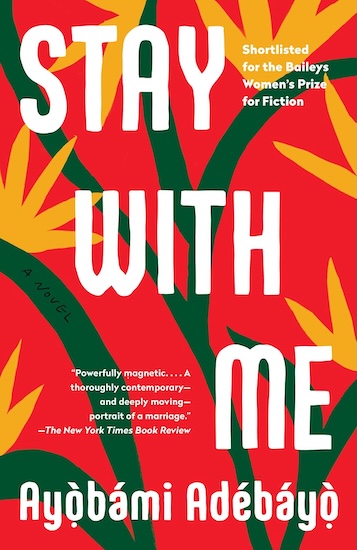
Stay with Me
Set in Nigeria during the 1980s and 1990s, Stay with Me tells the story of Yejide and Akin, a young couple whose passionate love is gradually tested by family expectations, infertility, and devastating secrets.
Having met and fallen in love at university, Yejide and Akin agree that polygamy has no place in their marriage. But after four years together without a child, pressure from Akin’s family becomes unbearable. His relatives eventually arrange for him to take a second wife, believing that another woman might succeed where Yejide has not. Humiliated and desperate to save her marriage, Yejide becomes increasingly determined to conceive.
As the couple struggle with fertility treatments, traditional remedies, and the demands of their families, their relationship begins to unravel. Decisions made out of fear and desperation lead to betrayal, grief, and consequences neither could have imagined. Meanwhile, political unrest and military upheaval provide a backdrop to their deeply personal struggles.
Told through the alternating perspectives of Yejide and Akin, the novel explores the painful intersection of love, marriage, and cultural expectations. Adebayo examines how the pressure to become parents can shape a person’s identity, how secrets can destroy even the closest relationships, and how grief changes the meaning of family. Ultimately, Stay with Me is a moving story about the sacrifices people make for love and the complicated ways they attempt to protect one another from heartbreak.
Nigeria
2018