Fiction
All countries
Afghanistan
Albania
Antigua and Barbuda
Argentina
Armenia
Australia
Austria
Azerbaijan
Bahamas
Bahrain
Bangladesh
Barbados
Belarus
Belgium
Belize
Bhutan
Bosnia and Herzegovina
Brazil
Brunei
Bulgaria
Cabo Verde
Canada
Central African Republic
Chile
China
Congo, Democratic Republic
Croatia
Cuba
Czech Republic
Denmark
Djibouti
Dominica
Dominican Republic
Ecuador
Egypt
Fiji
Finland
France
Georgia
Germany
Greece
Hungary
Iceland
India
Indonesia
Iran
Iraq
Ireland
Italy
Jamaica
Japan
Jordan
Kazakhstan
Kenya
Kuwait
Kyrgyzstan
Lebanon
Libya
Malaysia
Mexico
Morocco
Netherlands
New Zealand
Nigeria
Norway
Oman
Pakistan
Palestine
Panama
Peru
Philippines
Poland
Portugal
Romania
Russia
Saudi Arabia
Senegal
Singapore
Slovenia
Somalia
South Korea
Spain
Sri Lanka
Sudan
Sweden
Switzerland
Syria
Taiwan
Tanzania
Thailand
Türkiye
Turkmenistan
Ukraine
United Arab Emirates
United Kingdom
United States
Uzbekistan
Yemen
Zambia
1
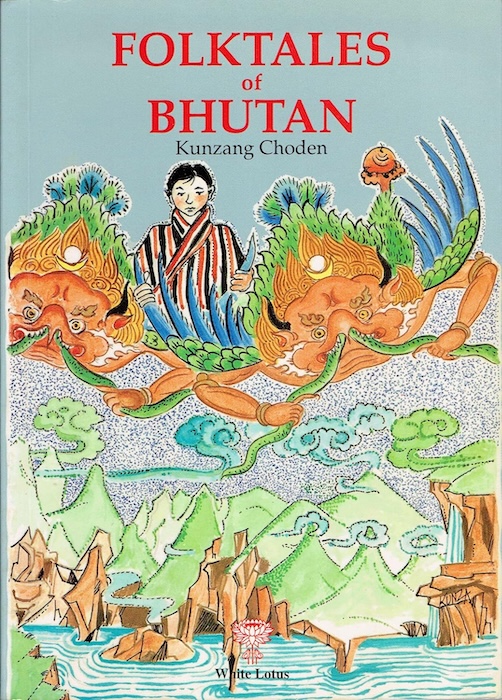
Folktales of Bhutan
Folktales of Bhutan is a collection of 38 traditional tales and legends gathered from Bhutan’s rich oral storytelling heritage. Drawing on stories she heard as a child growing up in Bumthang, central Bhutan, Kunzang Choden preserves narratives passed down through generations, offering readers a glimpse into the country’s cultural beliefs, values, and imagination.
The collection features a diverse range of stories involving animals, spirits, ghosts, demons, legendary figures, and the unseen forces believed to inhabit the natural world. Shaped by Buddhist beliefs, ideas about karma and rebirth, and Bhutan’s close relationship with its mountainous environment, these tales reflect how communities have understood life’s mysteries and their place in the world.
Illustrated by Bhutanese artists, the book combines traditional storytelling with distinctive visual interpretations inspired by Bhutanese and Buddhist art. Beyond entertaining readers, it serves as an important record of a cultural heritage that Choden sought to preserve as Bhutan underwent social change and modernisation.
Bhutan
1994
2
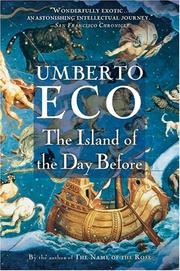
The Island of the Day Before
Set in the seventeenth century, The Island of the Day Before follows Roberto della Griva, an Italian nobleman who survives a shipwreck and finds himself stranded aboard an abandoned vessel in the South Pacific. The ship lies near a beautiful island that he can see but cannot reach, partly because he cannot swim. Alone, Roberto reflects on his childhood, his experiences of war, his education, and his complicated ideas about love and destiny. He becomes increasingly preoccupied with the island’s location on the opposite side of the international date line, imagining that it might hold the secret to travelling into yesterday. Through his reflections and encounters with the history of scientific discovery, Eco explores the relationship between time, knowledge, and human perception. Blending historical fiction, philosophy, and adventure, the novel examines the limits of reason and the ways solitude can transform a person’s understanding of reality.
Italy
1994
3
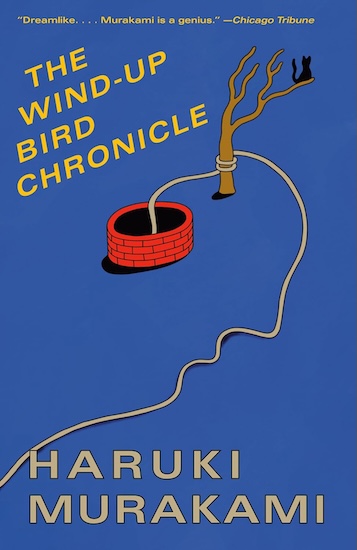
The Wind-up Bird Chronicle
The Wind-Up Bird Chronicle follows Toru Okada, an unemployed man whose ordinary life begins to unravel when his wife disappears and a series of increasingly strange events takes place in his Tokyo neighbourhood. His search leads him into encounters with enigmatic strangers, disturbing memories, and stories connected to Japan’s wartime history. As Toru investigates his wife’s disappearance, he finds himself drawn into a hidden world where dreams, violence, and psychological experience overlap. The novel gradually reveals the emotional distance within his marriage and the unresolved histories that shape the people around him. Murakami blends surrealism with historical reflection, examining alienation, power, and the difficulty of understanding one’s own life. Toru’s journey becomes an exploration of the hidden forces that influence human relationships and the fragile boundary between the familiar world and the unknown.
Japan
1994
4
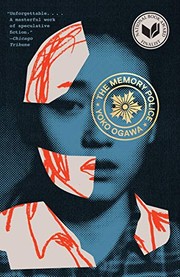
The Memory Police
The Memory Police takes place on an unnamed island where objects, memories, and aspects of everyday life mysteriously disappear. When something vanishes, the inhabitants gradually lose the ability to remember it, and the Memory Police ensure that no one preserves what has been erased. Flowers, birds, photographs, and other familiar things disappear from existence, leaving the island’s residents increasingly disconnected from their past.
The novel follows an unnamed young novelist whose editor, R, retains memories of the things that have vanished. When she learns that the Memory Police may discover his secret, she risks her own safety to hide him in a concealed room beneath her house. As disappearances continue, the world around them becomes smaller, and the struggle to preserve memory turns into an act of resistance.
Through its quiet, unsettling atmosphere, Ogawa explores censorship, surveillance, identity, and the fragility of human memory. The novel asks what remains of a person when the experiences, objects, and words that shape their understanding of the world are systematically taken away.
Japan
1994
5
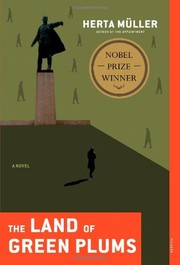
The Land of Green Plums
Set in communist Romania under the dictatorship of Nicolae Ceaușescu, The Land of Green Plums follows a group of young people from minority backgrounds who struggle to survive in a society ruled by fear, surveillance, and political repression. After a young woman from a German-speaking community begins studying in the city, she becomes part of a circle of friends whose lives are increasingly threatened by the secret police. As they face interrogation, betrayal, and the constant possibility of violence, their friendships become both a source of comfort and a test of loyalty. Through fragmented storytelling and haunting imagery, Herta Müller portrays the psychological consequences of authoritarianism and the erosion of trust under constant surveillance. The novel explores the struggle for personal freedom, the fragility of human relationships, and the lasting trauma inflicted by a regime that seeks to control every aspect of life.
Romania
1994
6
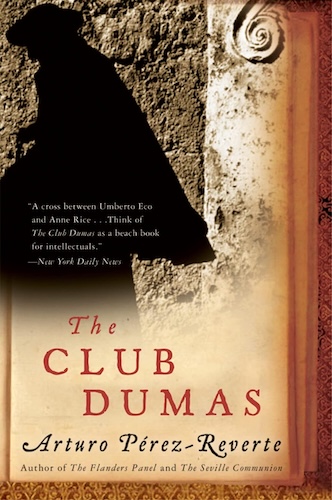
The Club Dumas
Lucas Corso is a cynical, resourceful book detective who makes his living tracking down rare editions for wealthy collectors. When he is hired to authenticate a manuscript believed to be a chapter from Alexandre Dumas’s The Three Musketeers, he finds himself drawn into a mystery involving a suspicious death, literary forgery, and a secret society of Dumas enthusiasts. But another assignment soon takes him into even darker territory: a wealthy collector wants him to verify a rare book entitled The Nine Doors of the Kingdom of Shadows, a mysterious volume said to contain instructions for summoning the Devil.
As Corso travels between Madrid, Toledo, and Paris, he encounters obsessive bibliophiles, enigmatic women, and individuals whose fascination with forbidden knowledge borders on madness. The two investigations begin to intertwine, blurring the boundaries between literary scholarship and the occult. With every clue, Corso becomes less certain about whom he can trust—or whether the dangers surrounding him are entirely human.
Combining intellectual mystery, Gothic suspense, and a playful exploration of literary history, Pérez-Reverte creates a thrilling tribute to the power of books and the obsessions they inspire. The Club Dumas asks whether rare books are merely objects to possess or gateways to worlds that might be better left unexplored.
Spain
1996
7
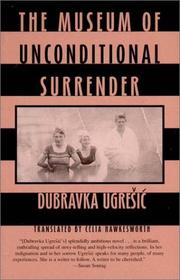
The Museum of Unconditional Surrender
The Museum of Unconditional Surrender explores exile, memory, and the fragmented experience of living after the breakup of Yugoslavia. Its unnamed narrator, a writer living in Berlin, moves through a world of photographs, objects, recollections, and encounters that evoke a lost homeland. Ordinary details—a family photograph, a recipe, a personal possession—become fragments through which she attempts to reconstruct a life disrupted by political upheaval and displacement. Rather than following a conventional plot, the novel unfolds as a series of reflections that mirror the instability of memory itself. Ugrešić examines how exile transforms a person’s relationship with language, history, and belonging, particularly when the country that once provided a sense of identity no longer exists in the same form. The novel portrays the difficulty of preserving a coherent self when personal memories are inseparable from a fractured collective past.
Croatia
1996
8
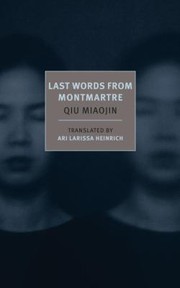
Last Words From Montmartre
Last Words from Montmartre is an experimental, semi-autobiographical novel told through a series of letters written by a young Taiwanese writer named Zoë. Addressing friends and loved ones, Zoë reflects on her relationships, sexuality, artistic ambitions, and growing sense of alienation while moving between Taiwan and Paris. As her emotional world becomes increasingly unstable, the letters reveal the difficulties of reconciling romantic desire with personal freedom and the longing to be understood by others.
Blending fiction, autobiography, philosophical reflection, and intimate confession, Qiu Miaojin explores the complexities of queer identity, heartbreak, and the search for meaning in a world that can feel profoundly isolating. The fragmented structure mirrors the narrator’s shifting emotional states, allowing memories, dreams, and observations to coexist without a conventional narrative progression. Written with remarkable intensity and vulnerability, the novel captures the transformative and sometimes destructive power of love while questioning the boundaries between life, art, and self-expression.
Taiwan
1996
9
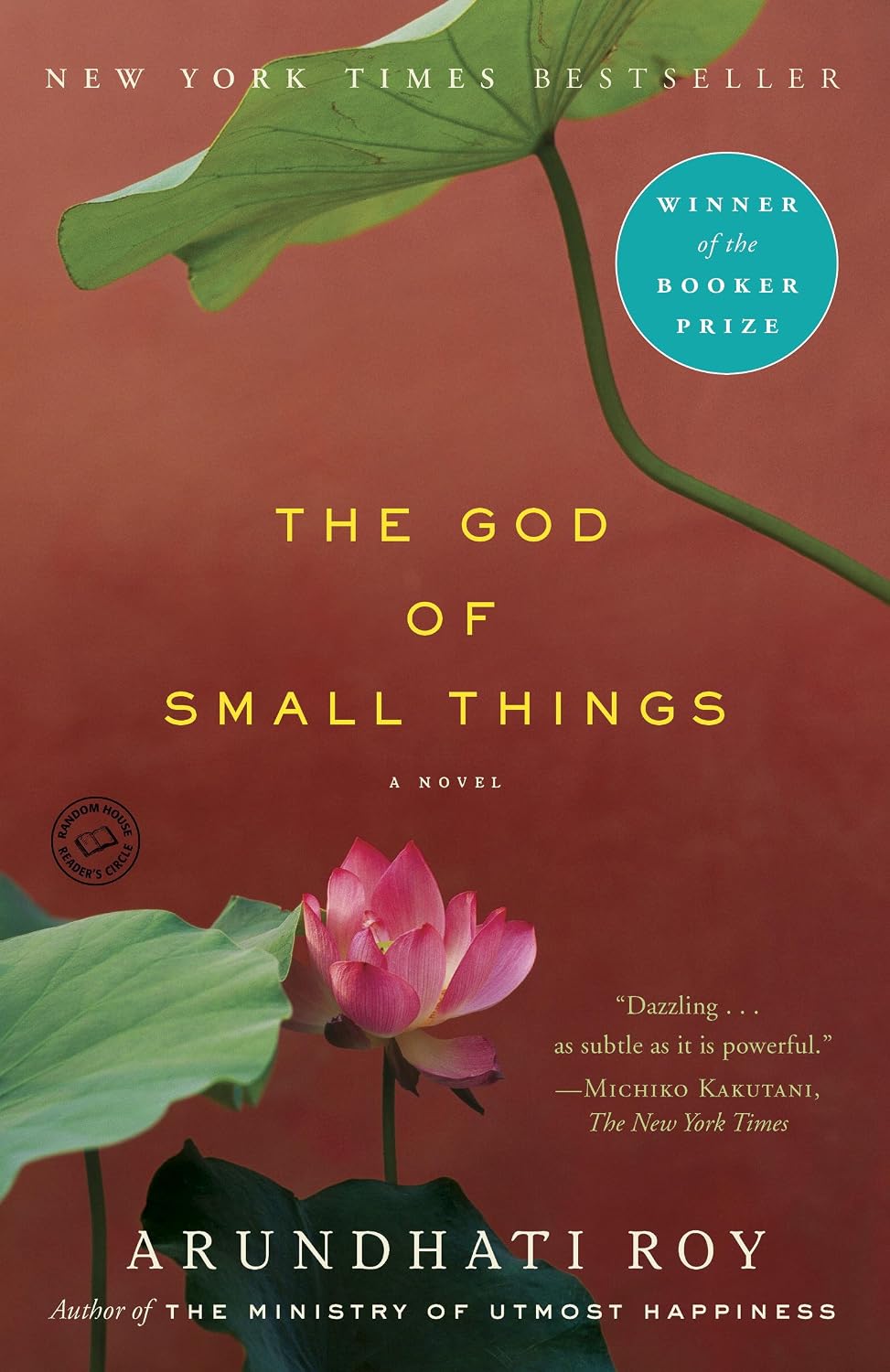
The God of Small Things
Set in Kerala, southern India, The God of Small Things tells the story of fraternal twins Estha and Rahel, whose childhood is shattered by a series of tragic events that permanently alter their family. Through a nonlinear narrative that moves between their childhood in 1969 and their reunion as adults, the novel explores the consequences of forbidden love, social prejudice, and deeply rooted cultural expectations. When their cousin Sophie Mol visits from England, an unexpected tragedy exposes the family’s hidden tensions and the cruelty of the social hierarchies governing their lives. At the centre of the story is Ammu, the twins’ mother, whose relationship with Velutha, a man from an oppressed caste, challenges the rigid boundaries of Indian society. Roy’s lyrical prose captures the beauty of childhood perception alongside the devastating effects of discrimination, silence, and loss. The novel examines how seemingly small moments can shape entire lives, revealing the profound consequences of breaking society’s unwritten rules.
India
1997
10
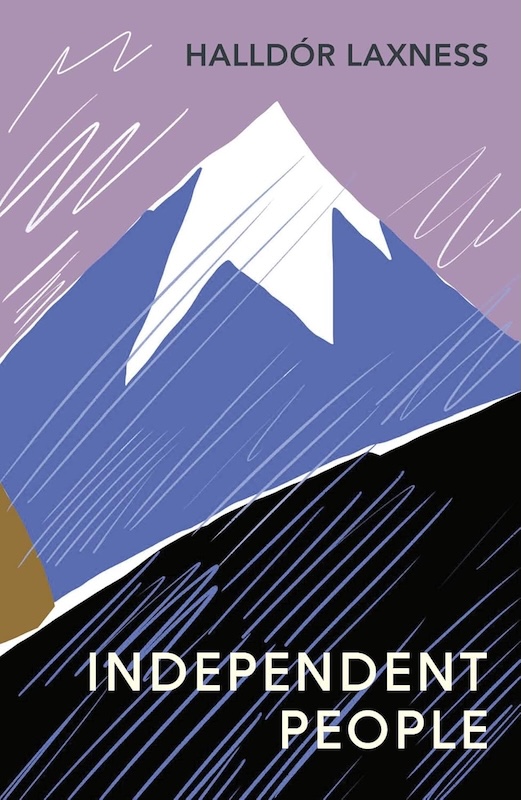
Independent People
Independent People follows Bjartur of Summerhouses, a stubborn Icelandic sheep farmer determined to achieve financial independence after years of working as a tenant. Having finally acquired his own small farm, he dedicates his life to preserving his freedom, believing that self-sufficiency is the highest form of dignity. However, his relentless pursuit of independence comes at a devastating cost to his family, particularly his wife and children, who endure poverty, isolation, and emotional hardship. Set against Iceland’s harsh rural landscape in the early twentieth century, the novel portrays the struggle between individual ambition and human connection. Through Bjartur’s tragic determination, Halldór Laxness explores poverty, pride, social inequality, and the contradictions of freedom, questioning whether a life entirely devoted to independence can ever lead to genuine happiness.
Iceland
1997
11
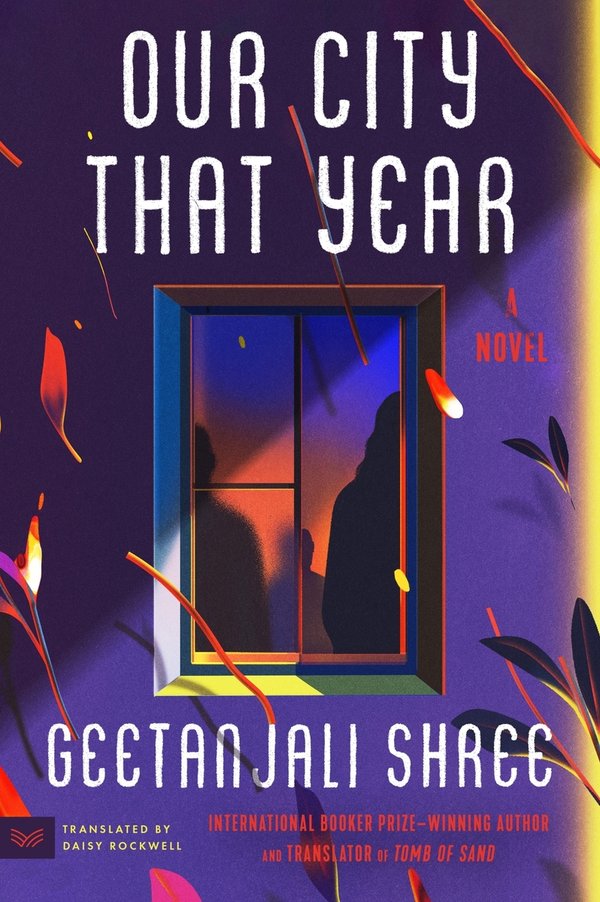
Our City That Year
An Indian city descends into communal violence, and the boundaries between neighbours, friends, and enemies begin to collapse. As religious extremism spreads and fear silences public life, three intellectuals struggle to make sense of the unfolding catastrophe. Shruti, a writer, finds herself unable to put the horrors into words; Hanif, an academic whose secular beliefs isolate him, watches his world shrink; and Sharad confronts the growing distance between himself and his childhood friend. Meanwhile, an unnamed narrator attempts to record what others might prefer to forget. Inspired by the political and social tensions surrounding the destruction of the Babri Mosque in 1992, Our City That Year is a haunting exploration of religious nationalism, fractured communities, and the responsibility of bearing witness when silence becomes complicity.
India
1998
12
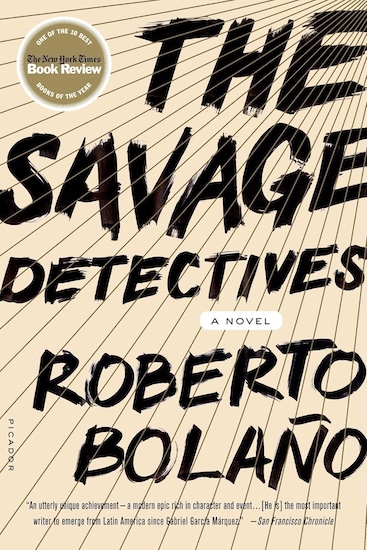
The Savage Detectives
The Savage Detectives follows two rebellious young poets, Arturo Belano and Ulises Lima, who become central figures in a loosely organised literary movement in Mexico City during the 1970s. The story begins through the diary of a teenage aspiring poet, García Madero, who becomes involved with their circle before joining them on a journey into the Mexican desert in search of a forgotten female poet. The novel then expands across decades and continents through the testimonies of people who encountered Belano and Lima, gradually assembling a fragmented portrait of their lives. Blending literary adventure, political history, and reflections on artistic ambition, Bolaño explores the restless search for meaning and the difficulty of sustaining youthful ideals. The novel celebrates literature’s rebellious spirit while revealing the loneliness and uncertainty that can accompany a life devoted to art.
Chile
1998