Fiction
All countries
Afghanistan
Albania
Antigua and Barbuda
Argentina
Armenia
Australia
Austria
Azerbaijan
Bahamas
Bahrain
Bangladesh
Barbados
Belarus
Belgium
Belize
Bhutan
Bosnia and Herzegovina
Brazil
Brunei
Bulgaria
Cabo Verde
Canada
Central African Republic
Chile
China
Congo, Democratic Republic
Croatia
Cuba
Czech Republic
Denmark
Djibouti
Dominica
Dominican Republic
Ecuador
Egypt
Fiji
Finland
France
Georgia
Germany
Greece
Hungary
Iceland
India
Indonesia
Iran
Iraq
Ireland
Italy
Jamaica
Japan
Jordan
Kazakhstan
Kenya
Kuwait
Kyrgyzstan
Lebanon
Libya
Malaysia
Mexico
Morocco
Netherlands
New Zealand
Nigeria
Norway
Oman
Pakistan
Palestine
Panama
Peru
Philippines
Poland
Portugal
Romania
Russia
Saudi Arabia
Senegal
Singapore
Slovenia
Somalia
South Korea
Spain
Sri Lanka
Sudan
Sweden
Switzerland
Syria
Taiwan
Tanzania
Thailand
Türkiye
Turkmenistan
Ukraine
United Arab Emirates
United Kingdom
United States
Uzbekistan
Yemen
Zambia
1
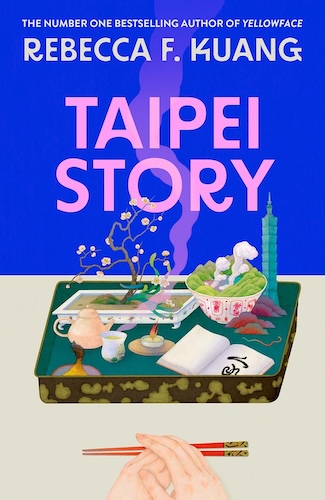
Taipei Story
What if returning to your cultural roots only makes you feel more like a stranger? When college student Lily Chen travels to Taipei for an intensive Chinese-language programme, she hopes to reconnect with the heritage she has never fully understood. Instead, awkward encounters, complicated relationships, and the sudden death of her grandfather leave her questioning everything she thought she knew about her family and herself. As Lily struggles with language, grief, and the silences surrounding her family’s past, she begins to realise that belonging cannot simply be inherited. Set against the vibrant backdrop of Taipei, this intimate coming-of-age novel explores the distance between cultural identity and lived experience—and the difficult search for a place to call home.
Taiwan
2026
2

Taiwan Travelogue
Set in Taiwan in 1938, during Japanese colonial rule, Taiwan Travelogue follows Aoyama Chizuko, a young Japanese novelist invited to undertake a lecture tour of the island. More interested in discovering Taiwan’s culture and cuisine than participating in official colonial events, she travels across the island with her Taiwanese interpreter, Ō Chizuru. Through local dishes, lively conversations, and journeys between towns, the two women develop a close and increasingly complicated relationship.
As Chizuko becomes more emotionally attached to her companion, she struggles to understand Chizuru’s reserve and the barriers separating them. Their relationship unfolds against the inequalities of colonial society, where language, nationality, and political power shape even the most intimate connections.
Blending historical fiction, romance, food writing, and metafiction, Yáng explores love, cultural identity, and the silenced histories of colonial Taiwan. The novel also challenges readers to consider who has the power to tell a story—and whose perspective history chooses to preserve.
Taiwan
2024
3
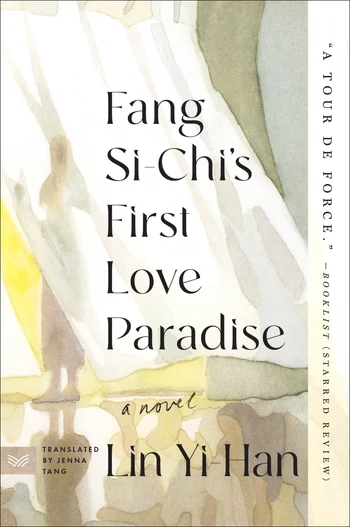
Fang Si-Chi's First Love Paradise
Thirteen-year-old Fang Si-Chi loves literature and believes that beautiful words can help her understand the world. When a respected literature teacher offers to tutor her, her parents see an opportunity for their gifted daughter. Instead, their trust exposes her to a devastating betrayal that will transform her understanding of love, desire, and herself. As Si-Chi struggles to make sense of her experience, she turns to the books she once believed held all the answers. Inspired by the author’s own experiences, this haunting novel examines sexual abuse, the manipulation of innocence, and the social structures that protect perpetrators while silencing victims. With lyrical prose and unflinching psychological insight, Lin Yi-Han exposes the terrifying distance between the romantic ideals we inherit from literature and the realities of human cruelty.
Taiwan
2017
4
Green Island
Green Island follows several generations of a Taiwanese family whose lives are transformed by political repression and the legacy of the February 28 Incident of 1947. The story begins when Dr. Tsai, a young physician, is arrested by Chinese Nationalist authorities after the uprising in Taiwan. His eventual return to his family does not restore their former life; instead, fear, suspicion, and silence become part of their everyday existence. Years later, his youngest daughter grows up carrying the emotional consequences of her father’s experiences and eventually confronts difficult choices of her own. Moving between Taiwan and the United States, the novel examines how political violence enters private life and shapes family relationships across generations. It explores survival, complicity, memory, and the moral compromises people make to protect those they love.
Taiwan
2017
5
Last Words From Montmartre
Last Words from Montmartre is an experimental, semi-autobiographical novel told through a series of letters written by a young Taiwanese writer named Zoë. Addressing friends and loved ones, Zoë reflects on her relationships, sexuality, artistic ambitions, and growing sense of alienation while moving between Taiwan and Paris. As her emotional world becomes increasingly unstable, the letters reveal the difficulties of reconciling romantic desire with personal freedom and the longing to be understood by others.
Blending fiction, autobiography, philosophical reflection, and intimate confession, Qiu Miaojin explores the complexities of queer identity, heartbreak, and the search for meaning in a world that can feel profoundly isolating. The fragmented structure mirrors the narrator’s shifting emotional states, allowing memories, dreams, and observations to coexist without a conventional narrative progression. Written with remarkable intensity and vulnerability, the novel captures the transformative and sometimes destructive power of love while questioning the boundaries between life, art, and self-expression.
Taiwan
1996
6
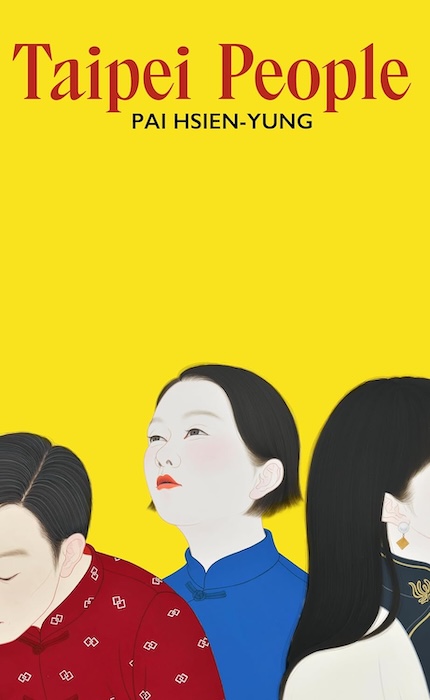
Taipei People
Taipei People is a collection of fourteen short stories portraying the lives of people who fled mainland China for Taiwan following the Chinese Civil War in 1949. Set primarily in Taipei, the stories follow former aristocrats, military officers, performers, and other displaced individuals as they struggle to adapt to a new society while remaining emotionally attached to the world they left behind.
Through characters haunted by memories of lost homes, vanished social positions, and past relationships, Pai Hsien-yung explores the experience of exile and the passage of time. Formerly celebrated figures confront aging and declining fortunes, while younger characters inherit the emotional burdens of a history they barely understand. Their private struggles reflect the wider transformations of Chinese society during the twentieth century.
Combining psychological depth with elegant, modernist storytelling, the collection examines nostalgia, displacement, loneliness, and the impossibility of returning to the past. Taipei becomes both a refuge and a place of alienation, inhabited by people who are physically present but remain inwardly connected to another time and place. Widely regarded as a classic of Taiwanese literature, Taipei People offers a moving portrait of lives shaped by historical upheaval and the enduring longing for home.
Taiwan
1982