Fiction
All countries
Afghanistan
Albania
Antigua and Barbuda
Argentina
Armenia
Australia
Austria
Azerbaijan
Bahamas
Bahrain
Bangladesh
Barbados
Belarus
Belgium
Belize
Bhutan
Bosnia and Herzegovina
Brazil
Brunei
Bulgaria
Cabo Verde
Canada
Central African Republic
Chile
China
Congo, Democratic Republic
Croatia
Cuba
Czech Republic
Denmark
Djibouti
Dominica
Dominican Republic
Ecuador
Egypt
Fiji
Finland
France
Georgia
Germany
Greece
Hungary
Iceland
India
Indonesia
Iran
Iraq
Ireland
Italy
Jamaica
Japan
Jordan
Kazakhstan
Kenya
Kuwait
Kyrgyzstan
Lebanon
Libya
Malaysia
Mexico
Morocco
Netherlands
New Zealand
Nigeria
Norway
Oman
Pakistan
Palestine
Panama
Peru
Philippines
Poland
Portugal
Romania
Russia
Saudi Arabia
Senegal
Singapore
Slovenia
Somalia
South Korea
Spain
Sri Lanka
Sudan
Sweden
Switzerland
Syria
Taiwan
Tanzania
Thailand
Türkiye
Turkmenistan
Ukraine
United Arab Emirates
United Kingdom
United States
Uzbekistan
Yemen
Zambia
1
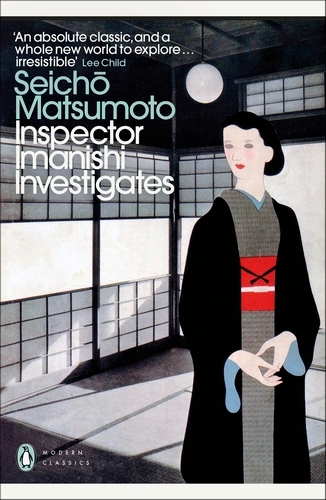
Inspector Imanishi Investigates
First published in 1961, Inspector Imanishi Investigates is a classic Japanese crime novel that follows Inspector Eitaro Imanishi as he investigates the mysterious murder of a man found dead beneath a train in Tokyo. What initially appears to be a straightforward case gradually unfolds into a complex investigation involving false identities, concealed pasts, and the social prejudices of postwar Japan. As Imanishi follows a trail of clues across the country, he encounters people whose lives have been shaped by ambition, discrimination, and the desire to escape their origins. Seichō Matsumoto combines the careful logic of a police procedural with a thoughtful examination of Japanese society, creating a mystery in which understanding human motivations is just as important as uncovering physical evidence.
Japan
1961
2
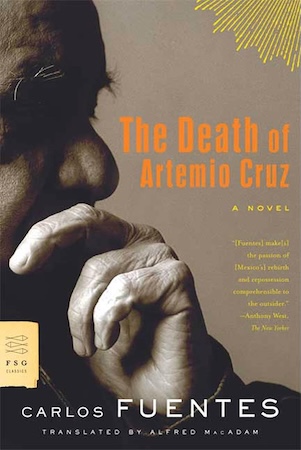
The Death of Artemio Cruz
On his deathbed, Artemio Cruz, a wealthy and powerful Mexican businessman, looks back over a life built on ambition, betrayal, and corruption. Once a young soldier fighting in the Mexican Revolution, he began with ideals of justice and freedom. But as the years passed, he traded those ideals for wealth and influence, exploiting the very people the revolution had promised to liberate.
Through fragmented memories spanning several decades, Fuentes reconstructs Cruz’s rise from a young revolutionary to a ruthless political and economic power broker. His recollections reveal lost love, compromised loyalties, and the personal sacrifices behind his success. As his body fails, he must confront the gulf between the man he once hoped to become and the man he has made himself.
Experimenting with shifting perspectives and a nonlinear narrative, Fuentes transforms one man’s final hours into a sweeping portrait of twentieth-century Mexico. The novel exposes how revolutions can betray their promises, how power corrupts, and how personal ambition can become inseparable from a nation’s troubled history. Both a psychological reckoning and a fierce political critique, The Death of Artemio Cruz asks what remains of a person’s ideals when the pursuit of power has consumed everything else.
Mexico
1962
3

Men in the Sun and Other Palestinian Stories
Men in the Sun and Other Palestinian Stories brings together some of Ghassan Kanafani’s most powerful works of fiction, exploring the lives of Palestinians displaced by the creation of Israel in 1948 and the subsequent loss of their homes and homeland. The collection’s central novella, Men in the Sun, follows three Palestinian men of different generations who attempt to escape the poverty and desperation of refugee life by travelling illegally from Iraq to Kuwait in search of work. Entrusting their fate to a smuggler, they place their hopes in the possibility of a better future, only to confront the devastating consequences of their journey.
Through stories of exile, poverty, political oppression, and shattered aspirations, Kanafani portrays the psychological and material realities of displacement. His characters struggle not only with survival but also with questions of identity, dignity, and collective responsibility. Written with stark realism and symbolic depth, the collection examines the human cost of dispossession and the longing for a place to call home. It remains a significant work of Palestinian literature, giving voice to the experiences of a people shaped by exile and resistance.
Palestine
1962
4
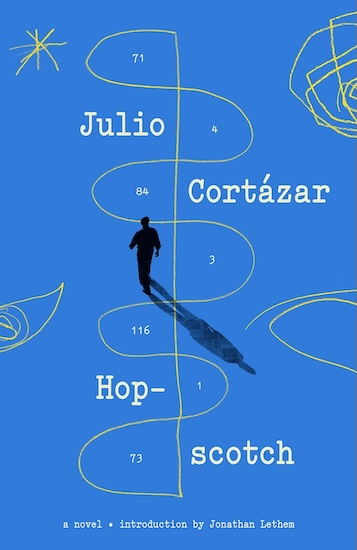
Hopscotch
Hopscotch follows Horacio Oliveira, an Argentine intellectual living in Paris who struggles to find meaning in relationships, art, and everyday existence. His complicated relationship with La Maga, a young Uruguayan woman, forms the emotional centre of a novel that resists conventional storytelling. Cortázar offers readers different ways to navigate the chapters, allowing the narrative to unfold in alternative sequences and challenging the traditional relationship between author and audience. As Oliveira returns to Argentina, his search for understanding becomes increasingly entangled with alienation and uncertainty. The novel explores the limitations of rational thought, the instability of identity, and the desire to discover a deeper reality beneath ordinary experience. Its experimental structure reflects a central question: whether a different way of reading might lead to a different way of living.
Argentina
1963
5
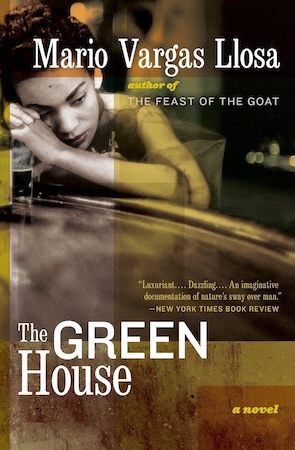
The Green House
In the dusty coastal town of Piura, Peru, a mysterious stranger named Don Anselmo builds a brothel that becomes the centre of a community’s desires, scandals, and conflicts. Known as the Green House, the establishment brings together people from different worlds, setting off a chain of events that will shape their lives for decades. Meanwhile, deep in the Peruvian Amazon, indigenous communities face the encroachment of missionaries, soldiers, and commercial interests that threaten their traditions and way of life.
Among the novel’s central figures is Bonifacia, an indigenous girl taken from her home and raised by nuns, whose attempts to find a place in the outside world lead to devastating consequences. Her story intersects with those of soldiers, smugglers, outcasts, and townspeople, creating a complex portrait of a society divided by class, race, and power.
Moving between the desert coast and the Amazon rainforest, and unfolding across several decades, Vargas Llosa weaves together multiple timelines and overlapping narratives. The result is a challenging, richly layered novel about desire, exploitation, moral ambiguity, and the collision of cultures. Beneath its intricate structure lies a powerful examination of how institutions and social hierarchies shape individual destinies—and how the boundaries between civilisation and brutality are often far less clear than they appear.
Peru
1966
6

Been Down So Long It Looks Like Up to Me
Set against the restless spirit of the late 1950s and early 1960s, Been Down So Long It Looks Like Up to Me follows Gnossos Pappadopoulis, a rebellious college student navigating university life, romantic entanglements, psychedelic experiences, and his own search for meaning. Moving between a fictional university in upstate New York, the American West, and revolutionary Cuba, Gnossos challenges authority and conventional morality with irreverent humor and anarchic energy.
Drawing on Richard Fariña’s own experiences as a student and traveler, the novel captures the countercultural impulses that would help define the 1960s. Its unconventional narrative combines satire, absurdity, and philosophical reflection to question academic institutions, social expectations, and established ideas of success and respectability. Both a campus novel and a picaresque adventure, it portrays a young man attempting to find his place in a world he distrusts. Published just two days before Fariña’s death in a motorcycle accident, the novel became a cult classic of American counterculture.
United States
1966
7
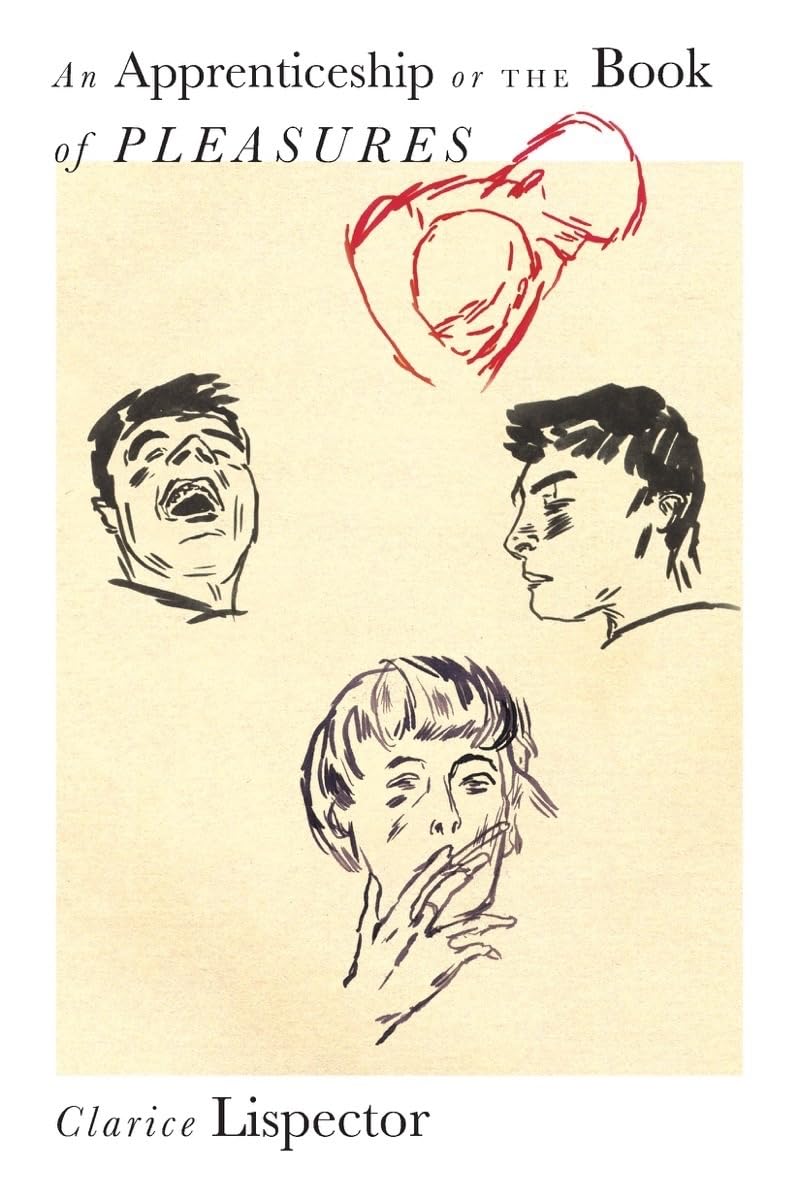
Apprenticeship or the Book of Pleasures
Apprenticeship or the Book of Pleasures follows Lóri, a schoolteacher living in Rio de Janeiro who struggles with loneliness, emotional vulnerability, and the difficulty of allowing herself to experience happiness. When she meets Ulisses, a philosophy professor who challenges her to confront her fears and desires, she begins a gradual journey toward emotional and personal freedom. Their relationship develops slowly, shaped by conversations, uncertainty, and Lóri’s attempts to understand what it means to love another person without losing herself.
Through introspective prose and philosophical reflections, Clarice Lispector explores love not simply as romance, but as a process of self-discovery and transformation. Lóri must learn to accept her own body, embrace uncertainty, and become comfortable with being alone before she can fully connect with someone else. Blurring the boundaries between fiction and philosophical meditation, the novel examines desire, intimacy, vulnerability, and the courage required to experience life more fully.
Brazil
1969
8
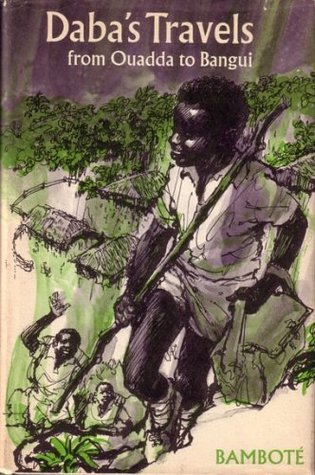
Daba’s Travels from Ouadda to Bangui
Daba’s Travels from Ouadda to Bangui follows Daba, a young boy growing up in the Central African Republic, whose life changes when he leaves his village of Ouadda to pursue an education. Raised in a close-knit rural community, Daba develops a deep affection for his family, his homeland, and the natural world around him. His journey takes him far beyond the familiar landscapes of his childhood, introducing him to new towns, people, and ways of life.
As Daba travels towards Bangui, the country’s capital, he encounters different communities and experiences that broaden his understanding of the world. Education becomes a gateway to new opportunities, but his travels also make him more aware of the contrasts between rural and urban life.
Drawing on the author’s own childhood experiences, the novel offers young readers an introduction to the geography, traditions, and everyday life of the Central African Republic. Through Daba’s adventures, Bamboté explores education, cultural identity, and the transition from childhood towards greater independence.
Central African Republic
1970
9
Abigail
Set in Hungary during the Second World War, Abigail follows fourteen-year-old Gina Vitay, the sheltered daughter of a Hungarian general. When her father unexpectedly sends her to a strict boarding school in the countryside, Gina feels betrayed and struggles to adapt to the school’s rigid rules and unfamiliar environment. Forbidden from revealing her father’s identity or explaining the circumstances of her arrival, she initially rebels against her teachers and classmates. Gradually, however, she discovers that the school hides secrets of its own, and that an enigmatic figure known as Abigail may offer help to those in danger. As the war intensifies, Gina must abandon her childish assumptions and learn to trust others, confront difficult truths, and take responsibility for her actions. Blending coming-of-age fiction, mystery, and historical drama, Szabó’s novel explores courage, loyalty, sacrifice, and the struggle to preserve one’s humanity under an oppressive regime.
Hungary
1970
10
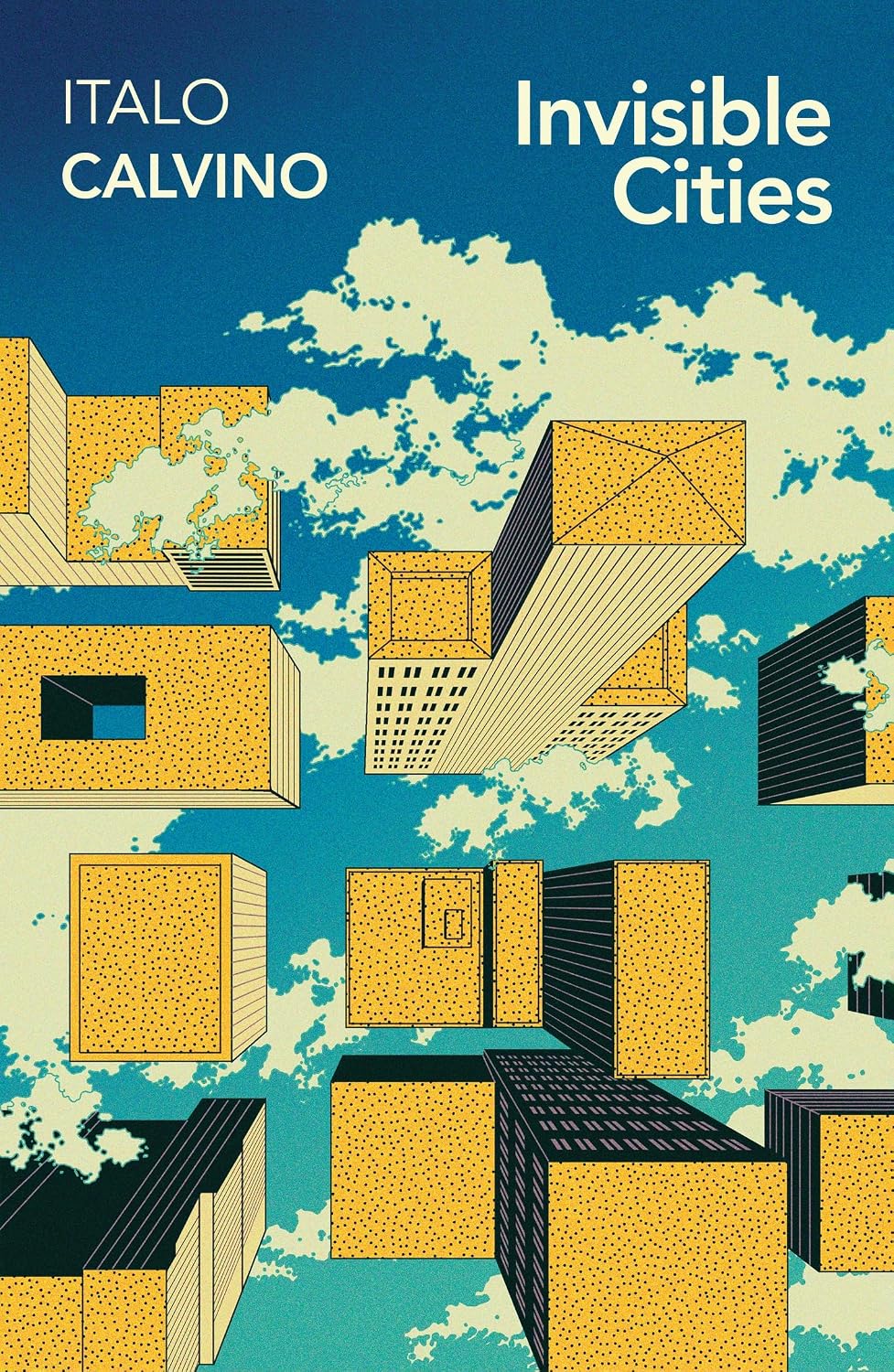
Invisible Cities
Invisible Cities imagines a series of conversations between the Venetian traveller Marco Polo and the Mongol emperor Kublai Khan. Polo describes extraordinary cities he claims to have visited, each possessing distinctive customs, architecture, memories, and relationships with time. Some cities seem suspended between life and death; others are organised around desire, exchange, or the endless accumulation of objects. Gradually, the descriptions become less like conventional travel accounts and more like meditations on human experience. Khan attempts to understand the vastness of his empire through Polo’s stories, while the traveller uses language to explore places that may reflect aspects of Venice itself. Calvino combines fantasy, philosophy, and poetic imagery to examine memory, communication, urban life, and the relationship between imagination and reality. The book invites readers to consider how cities express the hopes, fears, and contradictions of the people who inhabit them.
Italy
1972
11
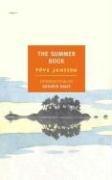
The Summer Book
The Summer Book follows Sophia, a young girl, and her grandmother as they spend the summer together on a tiny island in the Gulf of Finland. Living in a simple cottage surrounded by rocks, forests, and the sea, they fill their days with conversations, explorations, small adventures, and moments of quiet reflection. Sophia is curious and sometimes stubborn, while her grandmother is wise, playful, and increasingly aware of her own mortality. Their relationship unfolds through a series of loosely connected episodes that capture the rhythms of island life.
Through their exchanges, Tove Jansson explores childhood, ageing, grief, freedom, and humanity’s relationship with the natural world. The island becomes a place where ordinary experiences reveal deeper truths about life, while the changing sea and weather mirror the characters’ shifting emotions. Gentle, humorous, and contemplative, the novel celebrates the beauty of everyday moments and the bonds that connect generations. Beneath its simplicity lies a profound meditation on impermanence, solitude, and the comfort of being close to nature.
Finland
1972
12
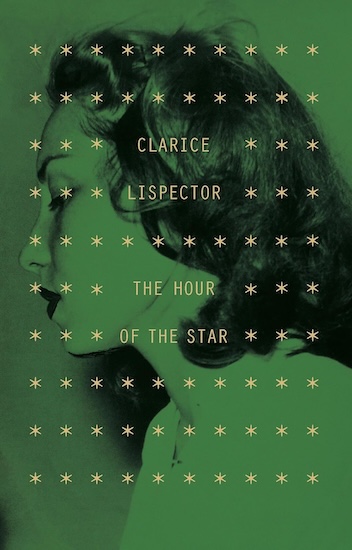
The Hour of the Star
The Hour of the Star follows Macabéa, a poor young woman from northeastern Brazil who moves to Rio de Janeiro in search of a better life. Working as a typist and living in poverty, she leads an almost invisible existence, lacking the education, confidence, and social awareness to understand the world around her. Despite her difficult circumstances, Macabéa possesses a quiet innocence and an unexpected capacity for happiness, finding small pleasures in everyday life.
Her story is narrated by Rodrigo S.M., a writer who struggles to represent her life honestly while confronting his own privilege and the limitations of storytelling. Through this unusual narrative perspective, Clarice Lispector explores poverty, gender, social exclusion, and the difficulty of giving voice to those society overlooks. Both intimate and unsettling, the novel asks profound questions about human dignity, identity, and whether an insignificant life can ever receive its moment of recognition.
Brazil
1977