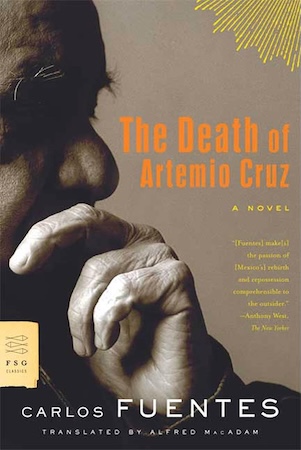
The Death of Artemio Cruz
Summary
On his deathbed, Artemio Cruz, a wealthy and powerful Mexican businessman, looks back over a life built on ambition, betrayal, and corruption. Once a young soldier fighting in the Mexican Revolution, he began with ideals of justice and freedom. But as the years passed, he traded those ideals for wealth and influence, exploiting the very people the revolution had promised to liberate.
Through fragmented memories spanning several decades, Fuentes reconstructs Cruz’s rise from a young revolutionary to a ruthless political and economic power broker. His recollections reveal lost love, compromised loyalties, and the personal sacrifices behind his success. As his body fails, he must confront the gulf between the man he once hoped to become and the man he has made himself.
Experimenting with shifting perspectives and a nonlinear narrative, Fuentes transforms one man’s final hours into a sweeping portrait of twentieth-century Mexico. The novel exposes how revolutions can betray their promises, how power corrupts, and how personal ambition can become inseparable from a nation’s troubled history. Both a psychological reckoning and a fierce political critique, The Death of Artemio Cruz asks what remains of a person’s ideals when the pursuit of power has consumed everything else.
Reviews
Login to leave a review.
No reviews yet. Be the first!
You might also like



- Published
- 1962
- Author
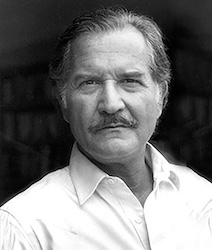
- Carlos Fuentes