Fiction
All countries
Afghanistan
Albania
Antigua and Barbuda
Argentina
Armenia
Australia
Austria
Azerbaijan
Bahamas
Bahrain
Bangladesh
Barbados
Belarus
Belgium
Belize
Bhutan
Bosnia and Herzegovina
Brazil
Brunei
Bulgaria
Cabo Verde
Canada
Central African Republic
Chile
China
Congo, Democratic Republic
Croatia
Cuba
Czech Republic
Denmark
Djibouti
Dominica
Dominican Republic
Ecuador
Egypt
Fiji
Finland
France
Georgia
Germany
Greece
Hungary
Iceland
India
Indonesia
Iran
Iraq
Ireland
Italy
Jamaica
Japan
Jordan
Kazakhstan
Kenya
Kuwait
Kyrgyzstan
Lebanon
Libya
Malaysia
Mexico
Morocco
Netherlands
New Zealand
Nigeria
Norway
Oman
Pakistan
Palestine
Panama
Peru
Philippines
Poland
Portugal
Romania
Russia
Saudi Arabia
Senegal
Singapore
Slovenia
Somalia
South Korea
Spain
Sri Lanka
Sudan
Sweden
Switzerland
Syria
Taiwan
Tanzania
Thailand
Türkiye
Turkmenistan
Ukraine
United Arab Emirates
United Kingdom
United States
Uzbekistan
Yemen
Zambia
1

The Tin Drum
The Tin Drum is narrated by Oskar Matzerath, who recounts his life from a mental institution while reflecting on the turbulent history of Germany before, during, and after the Second World War. Born in Danzig in 1924, Oskar decides at the age of three to stop growing, using his small stature and tin drum to distance himself from the adult world. He also possesses a piercing scream capable of shattering glass. Through his strange perspective, the novel depicts the rise of Nazism, the violence of war, and the moral compromises of ordinary people. Grass combines grotesque humour, fantasy, and historical realism to challenge conventional narratives of innocence and responsibility. Oskar’s unreliable account exposes the contradictions of a society that participated in or tolerated fascism, examining collective guilt, denial, and the difficulty of confronting a traumatic national past.
Germany
1959
2

Best of Everything
The Best of Everything follows five young women working in a New York publishing company during the late 1950s as they navigate professional ambition, romance, and the expectations placed on women in postwar America. Caroline Bender dreams of building a meaningful career, while her colleagues struggle with relationships, financial insecurity, and the pressure to find suitable husbands. Their experiences reveal a world in which women are encouraged to pursue independence but are still judged by their marital status and appearance. As the characters encounter workplace discrimination, emotional disappointments, and difficult personal choices, they begin to question what success and happiness really mean. Jaffe offers an unvarnished portrait of women’s lives in a rapidly changing society, exploring the conflict between individual aspirations and conventional expectations. The novel examines gender inequality, ambition, and the price women are often expected to pay for trying to have both a career and a fulfilling personal life.
United States
1958
3
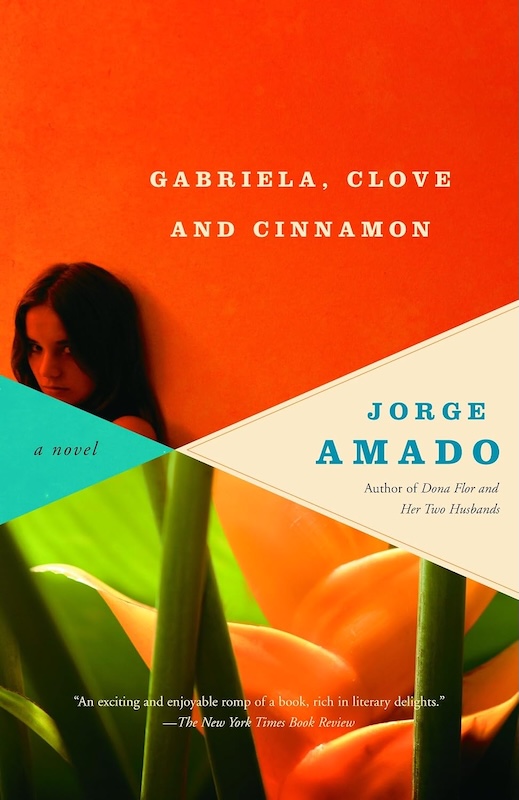
Gabriela, Clove and Cinnamon
Set in the coastal Brazilian town of Ilhéus in the 1920s, Gabriela, Clove and Cinnamon follows Gabriela, a beautiful and carefree young woman who arrives in town during a period of economic transformation driven by the cocoa trade. She becomes a cook in the bar of Nacib, a Syrian immigrant who falls in love with her and eventually marries her. However, Gabriela’s independent spirit and sensual nature clash with the conservative social expectations of marriage and respectability. Against the backdrop of political rivalries, changing gender roles, and the decline of traditional power structures, Jorge Amado portrays a society caught between old customs and modern aspirations. Blending romance, humor, and social satire, the novel explores desire, freedom, and the struggle of women to live beyond the constraints imposed by patriarchal traditions. Through its vivid characters and colorful setting, the book celebrates Brazilian culture and the transformative power of social change.
Brazil
1958
4
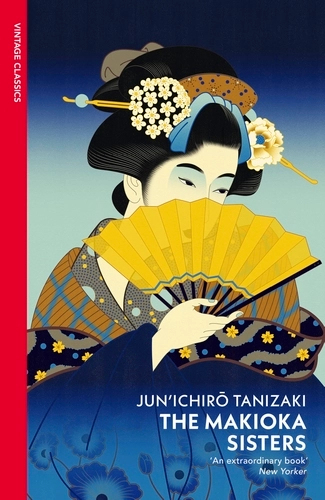
The Makioka Sisters
Set in Osaka and its surrounding areas during the years leading up to the Second World War, The Makioka Sisters follows four women from a once-prosperous merchant family struggling to preserve their social standing as Japanese society undergoes profound change. The story centers on the sisters’ efforts to arrange a suitable marriage for Yukiko, the quiet and reserved third daughter, whose future is complicated by family expectations, social conventions, and a series of unsuccessful matchmaking attempts. Meanwhile, the youngest sister, Taeko, pursues a more independent life, challenging the traditional values that govern her family’s decisions.
Through the sisters’ daily routines, seasonal celebrations, family gatherings, and romantic entanglements, Tanizaki captures the tensions between tradition and modernity in prewar Japan. Beneath the novel’s elegant descriptions of clothing, festivals, and landscapes lies a poignant portrait of a family confronting the gradual erosion of its privilege and influence. The novel explores the bonds between sisters, the pressures of social conformity, and the difficulty of adapting to a changing world. Rich in cultural detail and psychological insight, it is both an intimate family saga and an elegy for a disappearing way of life.
Japan
1957
5
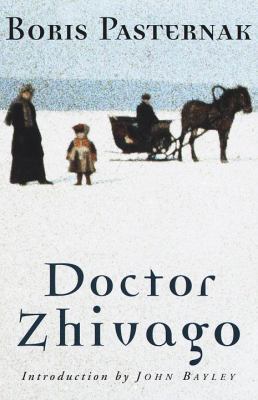
Doctor Zhivago
Doctor Zhivago follows Yuri Zhivago, a physician and poet whose life is transformed by the Russian Revolution and the civil war that follows. As political upheaval destroys established institutions and divides communities, Yuri struggles to reconcile his personal beliefs with the demands of the new order. His marriage to Tonya and his passionate relationship with Lara become entangled with the violence and uncertainty of the era. Forced to move between cities and rural settlements, Yuri witnesses the suffering of ordinary people caught between competing political forces. Pasternak explores the relationship between individual conscience and historical events, examining how love, art, and personal freedom endure under oppressive circumstances. The novel portrays a society in which private lives are repeatedly disrupted by ideological conflict, while poetry becomes a means of preserving human dignity amid destruction.
Russia
1957
6
Wide Sargasso Sea
Wide Sargasso Sea reimagines the life of Bertha Mason, the mysterious first wife of Mr Rochester in Charlotte Brontë’s Jane Eyre. Growing up in post-emancipation Jamaica, Antoinette Cosway belongs to a formerly wealthy white Creole family whose social position has become increasingly precarious. Her marriage to an Englishman initially promises security, but cultural misunderstanding, financial interests, and emotional manipulation gradually destroy their relationship. As Antoinette’s husband renames her and questions her sanity, she becomes increasingly alienated from herself and the world around her. Rhys explores colonialism, racial tensions, gender inequality, and the power of men to define women’s identities. By giving a voice to a character marginalised in a canonical English novel, she challenges established literary narratives and examines the devastating consequences of isolation and domination.
Dominica
1956
7
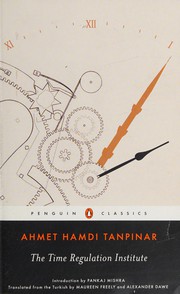
The Time Regulation Institute
The Time Regulation Institute is a satirical novel about a fictional institution established to ensure that everyone in Turkey follows the correct time. Its narrator, Hayri İrdal, recounts his life and the circumstances that lead him to become involved with the institute under the leadership of the charismatic Halit Ayarcı. As the organisation grows, its elaborate procedures and absurd regulations expose the contradictions of a society attempting to modernise rapidly while remaining attached to older traditions. Through bureaucratic absurdities and eccentric characters, Tanpınar explores the tension between Westernisation and cultural heritage in twentieth-century Turkey. The novel questions whether progress can be achieved through administrative reforms alone and whether institutions sometimes create problems merely to justify their own existence. Blending humour with philosophical reflection, it offers a critique of social conformity, bureaucracy, and the human tendency to confuse outward appearances with meaningful change.
Türkiye
1954
8
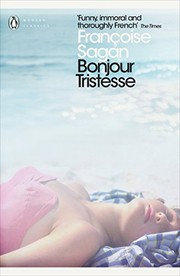
Bonjour Tristesse
Set along the sun-drenched French Riviera, Bonjour Tristesse follows seventeen-year-old Cécile, who spends a carefree summer with her charming, pleasure-seeking father, Raymond, and his young lover, Elsa. Their relaxed existence is disrupted when Anne, a sophisticated and principled woman who was once a friend of Cécile’s late mother, arrives and begins a relationship with Raymond. Fearing that Anne will impose discipline and destroy her freedom, Cécile devises a plan to separate the couple, setting in motion consequences she cannot fully control. Narrated by Cécile as she reflects on that pivotal summer, the novel explores adolescence, jealousy, desire, and the unsettling transition from innocence to adulthood. Sagan’s elegant, restrained prose captures the tensions between personal freedom and emotional responsibility, revealing how selfish choices can lead to irreversible loss.
France
1954
9
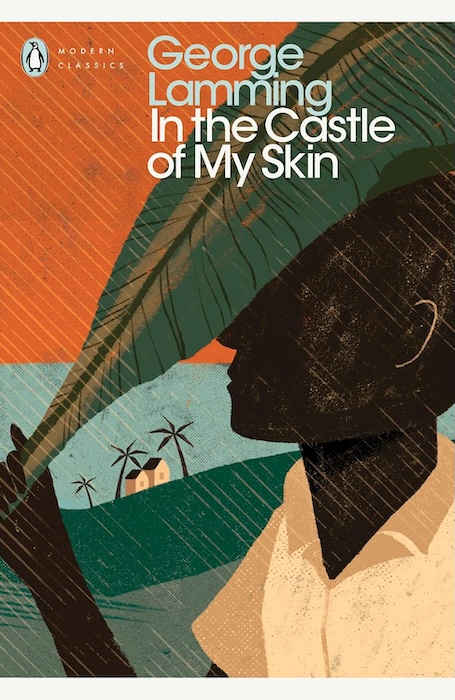
In the Castle of My Skin
In the Castle of My Skin follows G., a boy growing up in a Barbadian village during the final years of British colonial rule. Through his experiences at home, at school, and within his community, the novel explores how colonialism shapes the identities and aspirations of ordinary people. As G. approaches adulthood, he witnesses changes in the village’s social structure, including the decline of traditional authority and the growing desire for political independence. Lamming combines autobiographical elements with lyrical storytelling to examine the relationship between personal development and national transformation. The village becomes a miniature representation of a society struggling to understand its past and imagine its future. The novel reflects on education, class, belonging, and the psychological consequences of colonial domination.
Barbados
1953
10
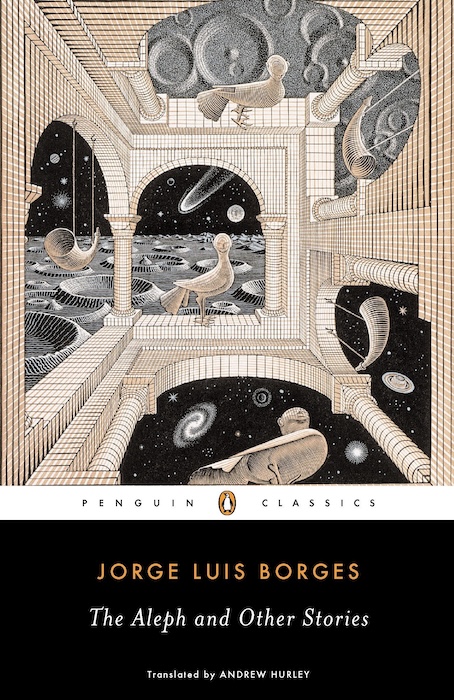
The Aleph
The Aleph is a collection of short stories that explores infinity, memory, identity, and the limits of human understanding. In the title story, a narrator discovers a point in space containing every other point in the universe, allowing him to perceive all things simultaneously without distortion or concealment. Other stories examine imaginary worlds, mysterious objects, labyrinthine histories, and the unsettling possibility that reality may be far stranger than it appears. Borges combines philosophical speculation with elements of fantasy, detective fiction, and literary scholarship, creating narratives that often feel like intellectual puzzles. His characters encounter knowledge that promises to reveal everything but frequently leaves them more uncertain than before. The collection asks whether human beings can ever comprehend the totality of existence or whether some mysteries must remain beyond the boundaries of language and reason.
Argentina
1949
11
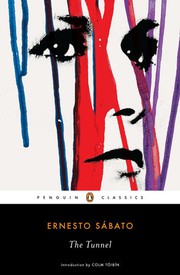
The Tunnel
The Tunnel is a psychological novel narrated by Juan Pablo Castel, an Argentine painter who confesses to murdering María Iribarne. From his prison cell, he recounts the events that led to the crime, beginning with an encounter at an art exhibition. Castel becomes fascinated by María after noticing that she is the only person who understands a small but meaningful detail in one of his paintings.
Convinced that they share a rare connection, Castel becomes increasingly obsessed with her. His longing to be understood gradually turns into jealousy, suspicion, and paranoia, making it impossible for him to distinguish genuine intimacy from his own fears. As his relationship with María deteriorates, he retreats further into isolation.
Through its unreliable narrator and claustrophobic atmosphere, Sábato explores alienation, obsession, and the human desire to be understood. The tunnel becomes a metaphor for Castel’s isolated inner world, in which he remains trapped despite his desperate search for connection.
Argentina
1948
12
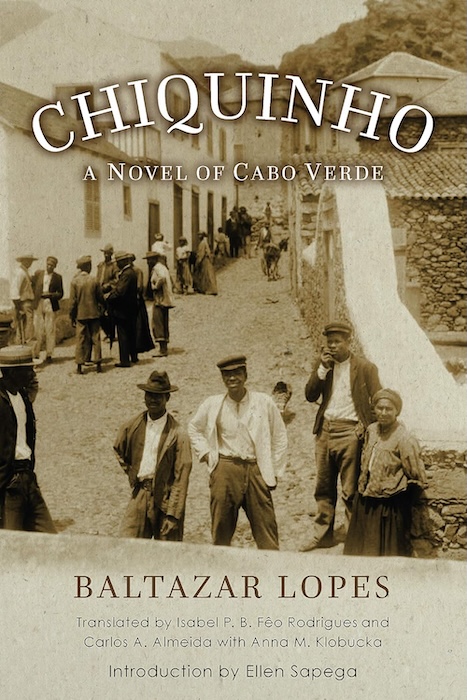
Chiquinho
Set in Cape Verde during the first half of the twentieth century, Chiquinho follows a young boy growing up on the island of São Nicolau. Divided into three parts, the novel traces his journey from childhood in a close-knit rural community to adolescence and, eventually, adulthood. As Chiquinho learns to read and discovers literature, he begins to imagine possibilities beyond his island. His education takes him to São Vicente, where he encounters new ideas, forms friendships, experiences his first love, and becomes increasingly aware of the social and economic difficulties facing his homeland.
When he returns to São Nicolau as a teacher, devastating drought and famine strike the islands, bringing suffering to his community and threatening his hopes for the future. Faced with limited opportunities, Chiquinho ultimately considers emigration to the United States as a path towards survival and a better life.
Blending personal growth with a portrait of Cape Verdean society, the novel explores belonging, education, hardship, and the painful choice between leaving home and remaining connected to one’s roots. It is widely regarded as a foundational work of modern Cape Verdean literature.
Cabo Verde
1947