Fiction
All countries
Afghanistan
Albania
Antigua and Barbuda
Argentina
Armenia
Australia
Austria
Azerbaijan
Bahamas
Bahrain
Bangladesh
Barbados
Belarus
Belgium
Belize
Bhutan
Bosnia and Herzegovina
Brazil
Brunei
Bulgaria
Cabo Verde
Canada
Central African Republic
Chile
China
Congo, Democratic Republic
Croatia
Cuba
Czech Republic
Denmark
Djibouti
Dominica
Dominican Republic
Ecuador
Egypt
Fiji
Finland
France
Georgia
Germany
Greece
Hungary
Iceland
India
Indonesia
Iran
Iraq
Ireland
Italy
Jamaica
Japan
Jordan
Kazakhstan
Kenya
Kuwait
Kyrgyzstan
Lebanon
Libya
Malaysia
Mexico
Morocco
Netherlands
New Zealand
Nigeria
Norway
Oman
Pakistan
Palestine
Panama
Peru
Philippines
Poland
Portugal
Romania
Russia
Saudi Arabia
Senegal
Singapore
Slovenia
Somalia
South Korea
Spain
Sri Lanka
Sudan
Sweden
Switzerland
Syria
Taiwan
Tanzania
Thailand
Türkiye
Turkmenistan
Ukraine
United Arab Emirates
United Kingdom
United States
Uzbekistan
Yemen
Zambia
1
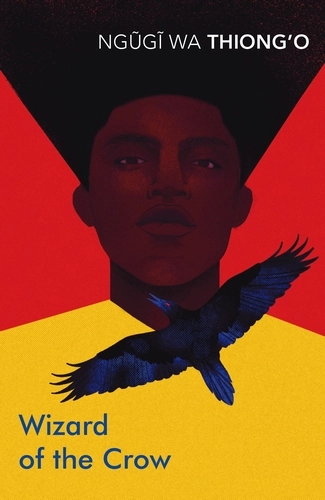
Wizard of the Crow
Set in the fictional African nation of Aburiria, Wizard of the Crow is a sprawling political satire about dictatorship, corruption, resistance, and the absurdities of absolute power. The country is ruled by a megalomaniacal leader known simply as the Ruler, whose grandiose ambitions and paranoia shape every aspect of public life. When the government announces plans to construct a monumental project called Marching to Heaven, it seeks financial support from international lenders, exposing the regime’s vanity and dependence on foreign approval.
At the center of the story are Kamĩtĩ, an unemployed university graduate who becomes known as the Wizard of the Crow, and Nyawĩra, a courageous activist involved in the underground resistance. Their lives become entangled with the Ruler’s increasingly bizarre court, where ministers compete for influence and ordinary citizens struggle to survive the consequences of political repression.
Combining magical realism, folklore, grotesque humor, and political allegory, Ngũgĩ examines how authoritarian regimes manipulate fear, language, religion, and superstition to maintain control. The novel also celebrates the resourcefulness of ordinary people and their capacity to challenge oppressive systems. Both a comic epic and a fierce critique of postcolonial power, it explores the struggle for dignity and freedom in a society ruled by absurdity and terror.
Kenya
2006
2
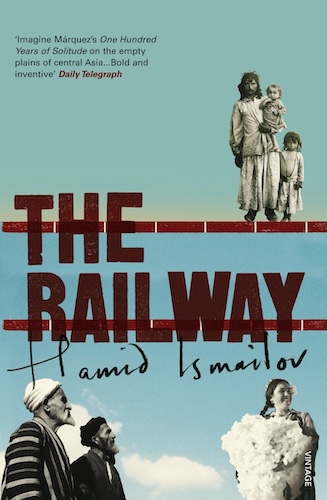
The Railway
In the fictional Uzbek town of Gilas, situated along the ancient Silk Road, a railway station becomes the centre of an extraordinary tapestry of human lives. Spanning much of the twentieth century, The Railway follows a diverse community of Uzbeks, Russians, Persians, Jews, Koreans, Tatars, and other ethnic groups whose lives intersect amid the upheavals of modern Central Asian history. Among its colourful inhabitants are an alcoholic intellectual, a Russian Orthodox priest, a formidable police chief, and an elderly moneylender. Through their stories, Hamid Ismailov captures a society caught between tradition and modernity, religious beliefs and revolutionary ideology, and local loyalties and outside influences. The arrival of the railway represents both opportunity and disruption, connecting this isolated community to a rapidly changing world while transforming its social structures. Blending humour, folklore, philosophical reflection, and historical observation, Ismailov creates a richly layered portrait of a multicultural society confronting the consequences of imperial expansion and Soviet rule. The novel offers a distinctive perspective on Central Asia’s complex cultural heritage and the profound changes that shaped the region during the twentieth century.
Uzbekistan
2006
3
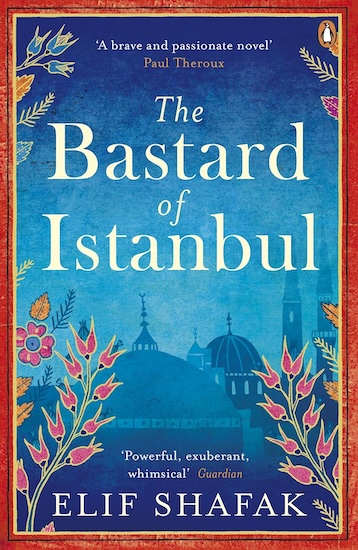
The Bastard of Istanbul
The Bastard of Istanbul centres on two young women whose lives connect through a complicated family history shaped by Turkish and Armenian experiences. Asya Kazancı grows up in Istanbul in a household dominated by women, surrounded by family secrets and conflicting interpretations of the past. Meanwhile, Armanoush, an Armenian American teenager, travels secretly to Istanbul in search of her cultural roots and a better understanding of her family’s history. When the two meet, their friendship brings buried memories and long-suppressed truths to the surface, particularly those connected to the Armenian genocide and its legacy. Through humour, food, family relationships, and competing memories, Shafak examines the relationship between personal identity and collective history. The novel explores how silence and denial can shape generations, while asking whether individuals can build meaningful connections across cultural and historical divisions.
Türkiye
2006
4
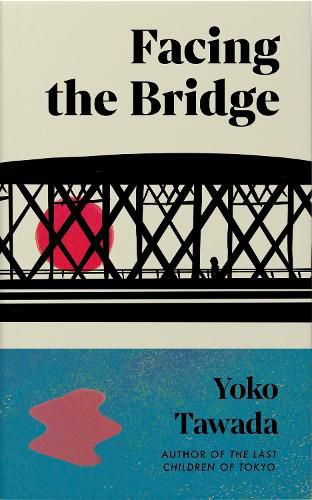
Facing the Bridge
In Facing the Bridge, Yoko Tawada brings together three surreal, interconnected tales that challenge conventional ideas of identity, language, and belonging. Moving between Japan, Germany, Vietnam, and the Canary Islands, these stories follow characters whose lives are shaped by cultural displacement, unexpected encounters, and the strange instability of the world around them.
In one tale, Amo, an African boy kidnapped and brought to Europe, and Tamao, a Japanese exchange student in Germany, inhabit different historical periods yet find themselves pursued by the same mysterious shadow. Another follows Kazuko, a young Japanese woman whose journey to Vietnam begins with a mysterious postcard and develops into an unsettling exploration of identity. In the third, an unnamed translator retreats to the Canary Islands, where her attempt to interpret a text becomes entangled with banana groves, literary references, and strange encounters.
With dreamlike logic, playful language, and unexpected transformations, Tawada blurs the boundaries between cultures, histories, and realities. The collection explores what happens when familiar categories of nationality, language, and selfhood begin to dissolve. Rather than presenting identity as something fixed, these stories suggest that it is continually reshaped through encounters with other people, places, and languages.
Japan
2007
5
Elena Knows
Elena Knows follows Elena, an elderly woman living with Parkinson’s disease, who refuses to accept the official conclusion that her daughter Rita’s death was a suicide. Determined to discover the truth, Elena undertakes a difficult journey across Buenos Aires, relying on a promise made by a woman from her past. As her physical limitations make each step increasingly challenging, her investigation becomes a confrontation with painful memories and unresolved questions about motherhood, responsibility, and personal freedom. Piñeiro combines the structure of a crime novel with an intimate examination of women’s lives in a society shaped by religious expectations and social judgement. The story challenges assumptions about disability and autonomy while revealing how family relationships can be shaped by obligation, resentment, and love.
Argentina
2007
6
Foucault's Pendulum
Foucault’s Pendulum follows three Italian editors who work for a small publishing house specialising in obscure historical and occult manuscripts. As a private intellectual game, they begin inventing an elaborate conspiracy theory that connects secret societies, the Knights Templar, and centuries of hidden knowledge. Their fictional pattern gradually becomes more elaborate, drawing in real-world enthusiasts who believe the invented conspiracy reveals the truth about history. What begins as a playful exercise becomes increasingly dangerous as the editors lose control of the story they have created. Eco explores the human tendency to search for patterns and hidden meanings, showing how the desire to explain the world can lead people into irrational beliefs. Blending historical references, intellectual satire, and suspense, the novel examines conspiracy thinking, interpretation, and the dangers of confusing imaginative connections with evidence.
Italy
2007
7

Sworn Virgin
Sworn Virgin follows Hana Doda, a young Albanian woman who chooses to live as a man under the traditional institution of the sworn virgin. In the isolated mountain communities of northern Albania, women who take this oath may assume male social roles, dress as men, and enjoy freedoms otherwise denied to them, provided they renounce marriage and sexual relationships. Hana makes this choice to escape an arranged marriage and gain control over her future. Years later, she leaves Albania and travels to the United States, where she must reconsider the identity she has constructed and the possibilities available to her in a different society. Dones explores gender, autonomy, tradition, and displacement, revealing the psychological costs of living according to restrictive social codes. The novel asks whether freedom can be achieved through rejecting one identity or whether genuine independence requires creating a new one.
Albania
2007
8
Free Food for Millionaires
Free Food for Millionaires follows Casey Han, a young Korean American woman who graduates from Princeton University and attempts to establish herself in New York City. Raised by immigrant parents with traditional expectations, Casey longs for independence, financial security, and entry into the glamorous world of Manhattan’s elite. Yet her expensive tastes, mounting debts, and complicated romantic relationships threaten to undermine her ambitions. As she navigates professional setbacks and social pressures, Casey struggles to reconcile her desire for personal freedom with the values instilled in her by her family. Through her experiences and those of the people around her, Lee examines class inequality, cultural assimilation, gender expectations, and the pursuit of success. The novel offers a portrait of immigrant life in which ambition can create opportunities while also deepening the conflict between inherited traditions and individual desires.
South Korea
2007
9
The Vegetarian
The Vegetarian tells the story of Yeong-hye, an ordinary South Korean woman whose decision to stop eating meat after experiencing disturbing dreams sets off a chain of increasingly unsettling events. Her husband initially sees her refusal as an inconvenience, while her family responds with anger and attempts to force her back into conformity. As Yeong-hye withdraws from conventional expectations, her behaviour becomes increasingly radical, challenging the roles imposed on her as a wife, daughter, and woman. Told through the perspectives of her husband, brother-in-law, and sister, the novel gradually reveals the psychological and emotional pressures beneath her transformation. Han Kang explores bodily autonomy, violence, desire, and the struggle to resist a society that demands obedience. The novel raises unsettling questions about whether rejecting social conventions can become an act of liberation, even when that resistance carries devastating consequences.
South Korea
2007
10
The Reluctant Fundamentalist
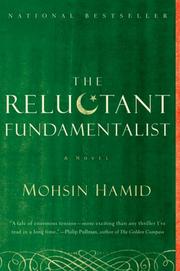
The Reluctant Fundamentalist follows Changez, a young Pakistani man who achieves professional success in New York after graduating from Princeton University. Recruited by an elite financial firm, he embraces the promise of the American dream and begins a relationship with Erica, a wealthy American woman struggling with grief. However, the attacks of September 11, 2001, transform the way Changez experiences life in the United States. Increasingly aware of the suspicion and hostility directed towards him because of his Pakistani identity, he begins to question his professional ambitions and his place in American society. Years later, he recounts his experiences to an American visitor in Lahore, leaving the reader uncertain about the encounter’s true nature. Hamid explores belonging, nationalism, prejudice, and the psychological consequences of living between cultures in a world divided by political fear.
Pakistan
2007
11
The Angel’s Game
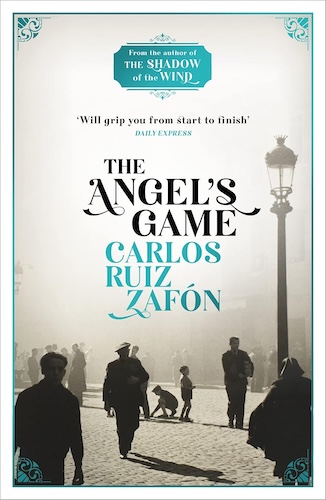
In the dark, atmospheric streets of 1920s Barcelona, David Martín makes his living writing sensational crime stories under a pseudonym. Haunted by a troubled childhood and an impossible love, he finds refuge in literature and in a decaying mansion whose sinister history gradually begins to consume him. When a mysterious French publisher named Andreas Corelli offers him an extraordinary sum of money to write a book unlike any other, David accepts, believing the commission could transform his life.
But as he begins his work, unsettling connections emerge between the book he is writing, the secrets hidden within his mansion, and the strange events unfolding around him. What initially appears to be a dream opportunity becomes an increasingly dangerous mystery, blurring the boundaries between fiction and reality, faith and deception, and creation and destruction.
Returning to the shadowy literary universe of the Cemetery of Forgotten Books, Zafón crafts a Gothic thriller filled with secret passages, forbidden knowledge, obsessive love, and supernatural menace. Beneath its intricate mysteries lies a meditation on the power of storytelling and the price of artistic ambition. The Angel’s Game asks whether a writer can truly control the stories he creates—or whether some stories have the power to control their creators.
Spain
2008
12

A Leopard-Skin Hat
Some people remain impossible to understand, no matter how deeply we love them. In this intimate, unconventional novel, an unnamed narrator recounts his lifelong friendship with Fanny, a brilliant, rebellious, and deeply troubled woman whose inner world remains beyond his grasp. Bound to her by affection and concern, he witnesses her struggle with profound psychological difficulties, moving between moments of hope and periods of despair. Yet Fanny refuses to be reduced to her suffering: she is unpredictable, spirited, and fiercely individual. Told through brief, lyrical scenes, the novel explores the fragile boundaries between love and helplessness, understanding and mystery. Written in the wake of the death of Serre’s younger sister, this moving work becomes both a tribute to a life cut short and a meditation on grief, memory, and the limits of our ability to truly know another person.
France
2008