The Railway
Uzbekistan

The Railway

by Hamid Ismailov

Summary

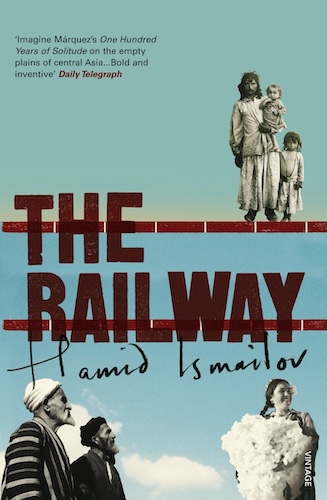
In the fictional Uzbek town of Gilas, situated along the ancient Silk Road, a railway station becomes the centre of an extraordinary tapestry of human lives. Spanning much of the twentieth century, The Railway follows a diverse community of Uzbeks, Russians, Persians, Jews, Koreans, Tatars, and other ethnic groups whose lives intersect amid the upheavals of modern Central Asian history. Among its colourful inhabitants are an alcoholic intellectual, a Russian Orthodox priest, a formidable police chief, and an elderly moneylender. Through their stories, Hamid Ismailov captures a society caught between tradition and modernity, religious beliefs and revolutionary ideology, and local loyalties and outside influences. The arrival of the railway represents both opportunity and disruption, connecting this isolated community to a rapidly changing world while transforming its social structures. Blending humour, folklore, philosophical reflection, and historical observation, Ismailov creates a richly layered portrait of a multicultural society confronting the consequences of imperial expansion and Soviet rule. The novel offers a distinctive perspective on Central Asia’s complex cultural heritage and the profound changes that shaped the region during the twentieth century.

Reviews

Login to leave a review.

No reviews yet. Be the first!

You might also like

Hamid Ismailov
Hamid Ismailov

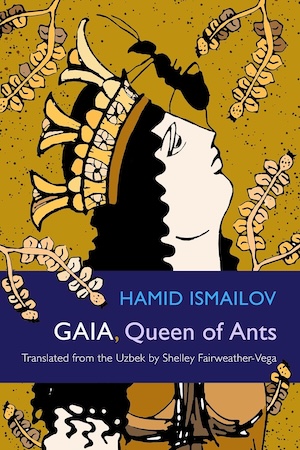
Hamid Ismailov is an Uzbek novelist, poet, and journalist born in 1954 in Tokmok, in what was then the Kirghiz Soviet Socialist Republic. He grew up in Uzbekistan and became a prominent literary voice whose work explores Central Asian history, cultural identity, political repression, and the experience of exile. Writing in Uzbek and Russian, Ismailov has produced novels, poetry, short stories, and literary criticism, often combining historical events with folklore, philosophical reflection, and experimental storytelling. In 1992, Ismailov left Uzbekistan amid increasing political pressure, eventually settling in London in 1994. His books were subsequently banned in his homeland. He worked for the BBC World Service for many years, including as head of its Central Asian service, while continuing his literary career. His best-known works include The Railway (2006), The Underground (2015), Of Strangers and Bees (2019), and The Devil’s Dance (2018; English translation published in 2019). The Devil’s Dance, which explores the life of Uzbek writer Abdulla Qodiriy during Stalin’s purges, won the 2019 EBRD Literature Prize. Ismailov’s fiction has been translated into numerous languages and is recognised for bringing Central Asian histories and experiences to international readers. In Gaia, Queen of Ants (English translation, 2020), Ismailov blends political satire, Sufi philosophy, and mythology to explore exile, identity, and the lasting effects of Soviet power.

View author page
Published
2006
Author
Hamid Ismailov