Classics
All countries
Antigua and Barbuda
Argentina
Armenia
Australia
Austria
Azerbaijan
Bangladesh
Barbados
Belgium
Bosnia and Herzegovina
Brazil
Chile
China
Colombia
Czech Republic
Denmark
Dominica
Dominican Republic
Egypt
Finland
France
Germany
Greece
Hungary
Iceland
India
Indonesia
Iran
Ireland
Italy
Japan
Kenya
Kyrgyzstan
Lebanon
Lithuania
Mexico
Netherlands
Norway
Pakistan
Palestine
Peru
Portugal
Romania
Russia
Saudi Arabia
Spain
Sudan
Sweden
Switzerland
Taiwan
Türkiye
Ukraine
United Kingdom
United States
1
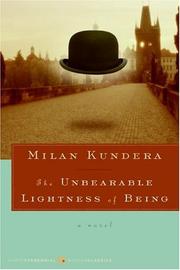
The Unbearable Lightness of Being
Set in Prague during the 1960s and the Soviet-led invasion of Czechoslovakia in 1968, The Unbearable Lightness of Being explores the intertwined lives of four characters struggling with love, freedom, and the meaning of existence. Tomas, a surgeon and womaniser, finds himself torn between his desire for independence and his deep attachment to Tereza, a sensitive photographer who longs for emotional security. Their relationship unfolds alongside the passionate affair between Sabina, an artist who rejects convention, and Franz, a married academic drawn to ideals of political commitment. Against the backdrop of historical upheaval, Milan Kundera examines the tension between personal freedom and responsibility, questioning whether life’s fleeting nature makes our choices meaningless or profoundly significant. Through philosophical reflections, irony, and intimate storytelling, the novel explores betrayal, memory, political oppression, and the contradictions of human desire. It invites readers to consider how the decisions we make shape our identities in a world where nothing can ever be repeated exactly.
Czech Republic
1984
2
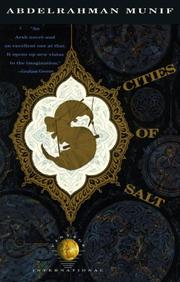
Cities of Salt
Cities of Salt is the first novel in Abdul Rahman Munif’s celebrated quintet exploring the transformation of the Arabian Peninsula following the discovery of oil. Set in a fictional oasis community in the Arabian Gulf, the story begins when foreign oil companies arrive and begin exploiting the region’s natural resources. Their presence disrupts the traditional way of life, forcing local inhabitants to confront unfamiliar technologies, new economic structures, and the growing influence of foreign powers.
Through the experiences of villagers, merchants, tribal leaders, and migrant workers, Munif portrays the profound social and cultural upheaval caused by rapid modernisation. As oil wealth transforms the landscape, longstanding relationships and communal traditions begin to fracture, while new hierarchies of power emerge. The novel examines the consequences of economic exploitation, environmental destruction, and political domination, revealing how entire communities can be reshaped by forces beyond their control. With its expansive narrative and collective cast of characters, Cities of Salt offers a powerful reflection on the human costs of oil-driven development and the disappearance of traditional ways of life.
Saudi Arabia
1984
3

The Lover
The Lover is an autobiographical novel set in French colonial Indochina in the late 1920s. It follows a fifteen-year-old French girl from a financially struggling family who begins a relationship with a wealthy Chinese man several years older than her. Their encounter takes place against a backdrop of racial divisions, colonial hierarchies, and social conventions that shape their lives and determine how their relationship is perceived.
Through fragmented memories and lyrical, introspective prose, Marguerite Duras explores desire, shame, power, and the complicated dynamics of intimacy. The narrator’s relationship with her lover becomes entangled with her difficult family life, particularly her strained relationship with her mother and brothers. As she reflects on the experience from adulthood, memory transforms the story into an examination of how love and sexuality shape identity. Both intimate and unsentimental, the novel reveals the inequalities embedded in colonial society while questioning the boundaries between personal history, desire, and the stories people tell about their past.
France
1984
4

The Day Lasts More than a Hundred Years
Set in the vast Central Asian steppe, The Day Lasts More Than a Hundred Years begins with the death of Kazangap, a railway worker whose longtime friend, Edigei, undertakes to carry him to his ancestral burial ground. During the journey, Edigei remembers their lives together and the transformations that have reshaped their community under Soviet rule. Their destination, however, is blocked by a restricted military zone, turning a simple act of mourning into a confrontation with a world increasingly governed by impersonal authority.
As the narrative unfolds, Aitmatov interweaves the characters’ memories with Kazakh legends, reflections on cultural heritage, and a science-fiction storyline involving contact with an extraterrestrial civilization. These seemingly distant narratives converge around questions of memory, humanity, and the dangers of forgetting one’s past.
The novel examines how political power, technological ambition, and ideological conformity can erode cultural identity and human dignity. Drawing on the oral traditions of the steppe while imagining humanity’s future among the stars, Aitmatov creates an ambitious meditation on what it means to remain human in a rapidly changing world.
Kyrgyzstan
1983
5
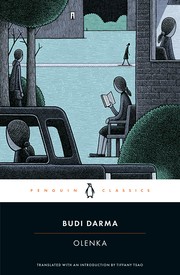
Olenka
Olenka is a modern Indonesian novel by Budi Darma that explores obsession, loneliness, and the elusive nature of human relationships. The story follows Fanton Drummond, an Indonesian man living in an American city, who becomes fascinated by a mysterious woman named Olenka. His attraction develops into an increasingly complicated psychological pursuit as he attempts to understand her personality, her past, and her motivations. However, Olenka remains difficult to comprehend, resisting the idealised image Fanton constructs of her. Through fragmented encounters, introspection, and philosophical reflections, Darma examines the distance between reality and imagination, questioning whether we can ever truly understand another person. Blending psychological fiction with existential themes, the novel explores alienation, desire, and the instability of personal identity, while reflecting on the absurdities and uncertainties of modern life.
Indonesia
1983
6
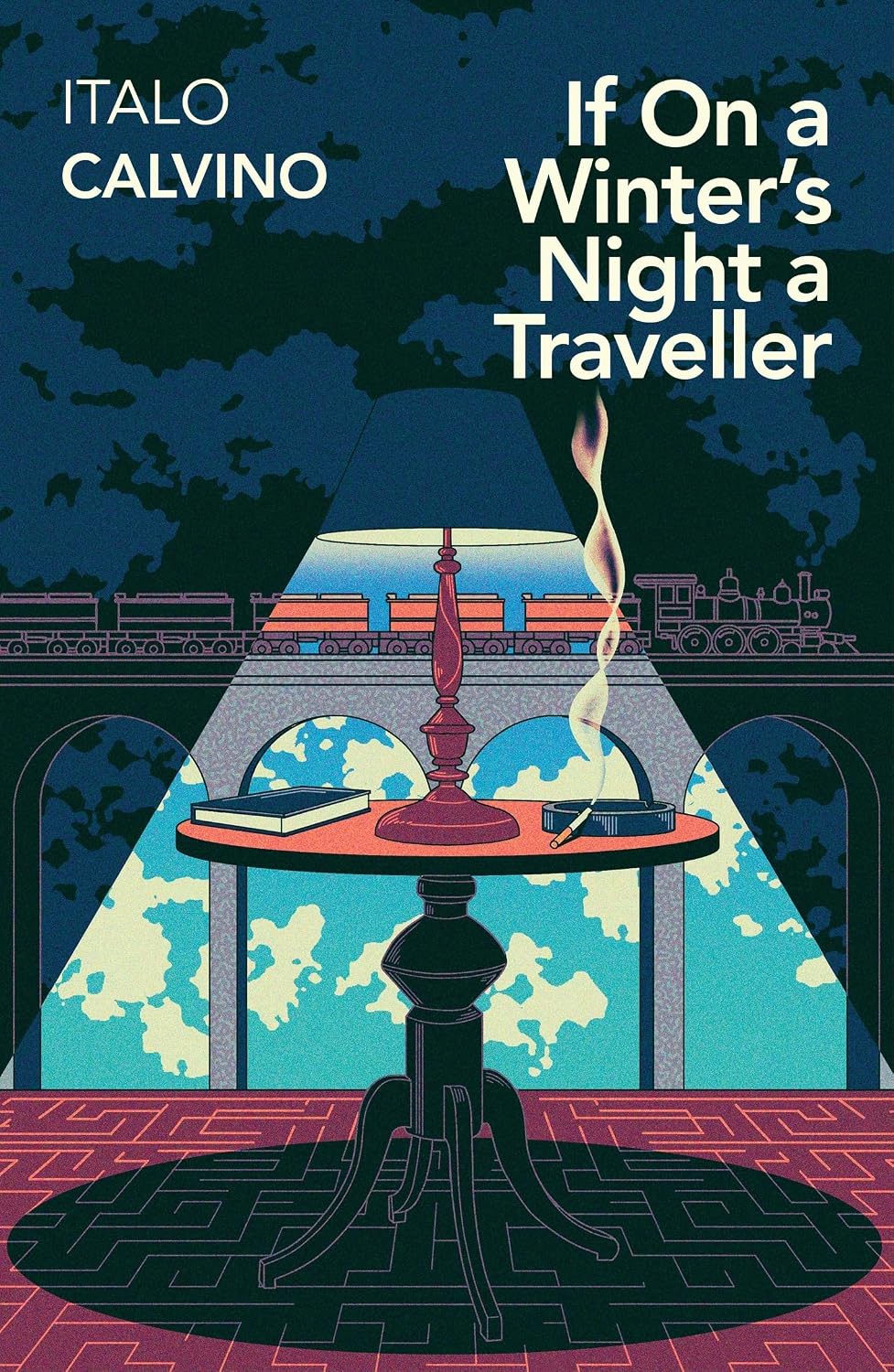
If on a Winter's Night a Traveler
If on a winter’s night a traveler is an experimental novel that places the reader at the centre of the story. It begins with a reader attempting to enjoy a new book by Italo Calvino, only to discover that the text is incomplete. As the reader searches for the missing continuation, they encounter a series of other novels, each beginning in a different literary style but ending abruptly. Along the way, the reader becomes involved with Ludmilla, another reader who shares the desire to discover how the stories conclude. Calvino turns the act of reading into an adventure, examining the relationship between authors, readers, and the books they create together. The novel explores curiosity, interpretation, and the human desire for narrative closure, playfully questioning whether a story’s meaning lies in its ending, its beginning, or the experience of reading itself.
Italy
1982
7

The Post-Office Girl
Set in Austria after the First World War, The Post-Office Girl follows Christine Hoflehner, a young woman working in a small post office in a provincial town. Trapped in poverty and burdened by the responsibility of caring for her sick mother, Christine leads a life marked by exhaustion and limited possibilities. Her circumstances change unexpectedly when she receives an invitation to visit her wealthy aunt in Switzerland, where she experiences luxury, freedom, and a world previously beyond her imagination. However, her brief escape exposes the deep divisions between social classes and makes returning to her former life almost unbearable. When Christine encounters Ferdinand, a disillusioned war veteran, they begin to imagine a different future together. Zweig portrays the psychological consequences of poverty, the fragility of hope, and the crushing effects of social inequality in a society struggling to recover from war.
Austria
1982
8
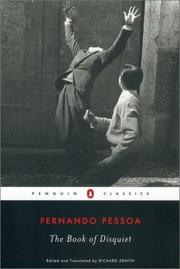
The Book of Disquiet
The Book of Disquiet is a fragmentary, deeply introspective work attributed to Bernardo Soares, an assistant bookkeeper living a quiet, unremarkable life in Lisbon. Through a series of diary-like reflections, philosophical meditations, and poetic observations, Soares examines his inner world, revealing a profound sense of alienation from society and an ongoing struggle to understand his own existence. Ordinary experiences, from walking through Lisbon’s streets to sitting at his desk, become starting points for reflections on dreams, identity, time, and the distance between the self and the world.
Rather than following a conventional narrative, Fernando Pessoa’s work unfolds as an intimate record of consciousness, capturing the contradictions and uncertainties of being human. The narrator finds both refuge and imprisonment in his imagination, often preferring the richness of dreams to the demands of reality. Blurring the boundaries between autobiography, fiction, and philosophy, The Book of Disquiet is a haunting meditation on loneliness, the fragmented nature of identity, and the quiet beauty of an uneventful life.
Note: Although Pessoa began writing the fragments decades earlier, the book was first published posthumously in Portuguese in 1982.
Portugal
1982
9

Troubled Waters
Set in the pleasure district of Meiji-era Japan, Troubled Waters (Nigorie) portrays the troubled life of Oriki, a popular courtesan at the Kikunoi establishment. Beautiful and admired by her customers, Oriki conceals a deep unhappiness rooted in poverty, social exclusion, and the limited choices available to women in her position. Her past is intertwined with Genshichi, a former customer whose obsessive devotion to her has cost him his business and left his wife and child in desperate circumstances. Although Oriki has begun seeing another wealthy patron, she remains haunted by the consequences of her earlier relationship.
Through fragmented conversations and shifting perspectives, Higuchi gradually reveals the emotional burdens carried by Oriki and those around her. The story examines the destructive effects of poverty, the unequal power dynamics between men and women, and the social structures that trap individuals in seemingly inescapable circumstances. With psychological subtlety and compassion, Higuchi gives voice to people marginalized by respectable society. Troubled Waters remains a powerful portrait of female vulnerability and the human cost of a world in which economic hardship and social expectations constrain personal freedom.
Publication note: The original Japanese story, Nigorie, appeared in 1895. English translations have been published under several titles, including Muddy Bay (1958) and Troubled Waters (1981). A new translation by Bryan Karetnyk is included in a 2026 collection of Higuchi’s stories published by Pushkin Press.
Japan
1981
10
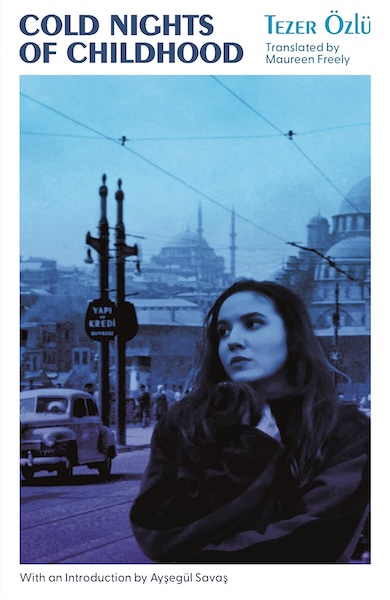
Cold Nights of Childhood
Growing up in 1950s Turkey, a young woman feels increasingly alienated by the conventional world surrounding her. In a society shaped by patriarchal expectations, nationalism, and rigid ideas of respectability, she longs for freedom, sensuality, and a life beyond the boundaries imposed on her. Childhood memories of family life and school follow her into adulthood, becoming inseparable from her search for independence.
As she moves between Istanbul, Berlin, and Paris, she pursues love and escape, yet finds herself struggling with depression and repeated stays in psychiatric institutions. There, she encounters treatments that threaten to suppress the very individuality she is fighting to preserve. Through fragmented memories, intimate reflections, and an unconventional narrative, she confronts the painful distance between the life society expects her to live and the one she desperately wants.
Part autobiographical novel and part intimate psychological portrait, Cold Nights of Childhood is a fearless exploration of female desire, alienation, and resistance. Tezer Özlü transforms personal suffering into a powerful meditation on what it means to remain true to oneself in a world determined to define who one should be.
Türkiye
1980
11
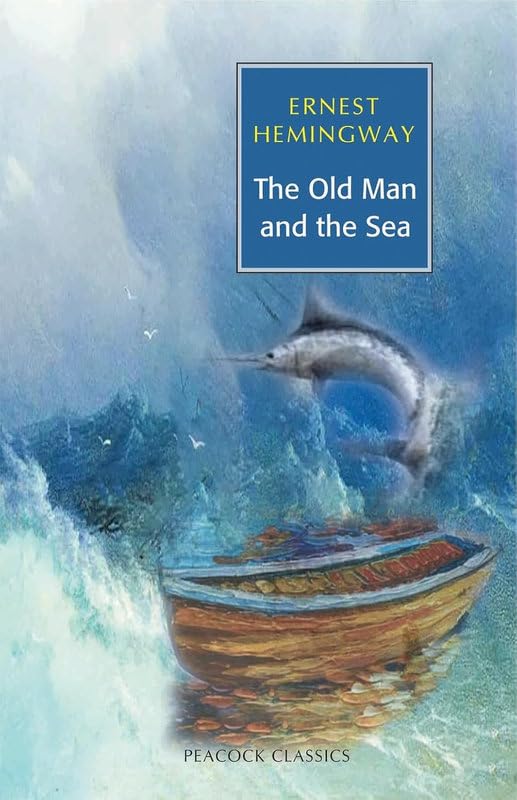
The Old Man and the Sea
The Old Man and the Sea follows Santiago, an ageing Cuban fisherman who has gone eighty-four days without catching a fish. Determined to prove that he has not lost his skill, he sails far into the Gulf Stream, where he hooks an enormous marlin. The fish pulls his small boat across the sea for days, forcing Santiago to endure exhaustion, pain, and loneliness as he struggles to bring his catch home. His battle becomes a test of endurance and respect between human being and animal. Although he eventually succeeds in killing the marlin, sharks destroy much of his prize during the journey back. Hemingway explores perseverance, dignity, and the relationship between humanity and nature. Santiago’s struggle suggests that success cannot always be measured by material results, as courage and the willingness to endure hardship may themselves represent a form of victory.
United States
1980
12
The Book of Laughter and Forgetting
The Book of Laughter and Forgetting is a fragmented, philosophical novel that explores the relationship between personal memory, political power, and the struggle to preserve individual identity. Set primarily in Czechoslovakia after the 1968 Soviet invasion, the book weaves together several interconnected stories about people whose lives are shaped by exile, betrayal, love, and the deliberate manipulation of history. One story follows Tamina, a widow living in exile who desperately tries to recover the letters and memories of her deceased husband, while others examine how political regimes erase inconvenient figures from photographs, public records, and collective consciousness. Kundera moves between fiction, autobiography, historical reflection, and philosophical commentary, using humour and irony to expose the absurdities of authoritarianism and human behaviour. Laughter becomes both a form of resistance and a weapon of conformity, while forgetting emerges as a deeply political act. The novel questions whether individuals can protect their memories and identities when those in power attempt to control the past, revealing the intimate connection between remembering, freedom, and the right to define one’s own life.
Czech Republic
1979