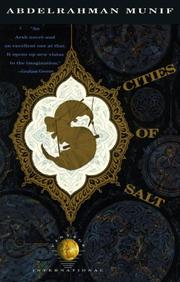
Cities of Salt
Summary
Cities of Salt is the first novel in Abdul Rahman Munif’s celebrated quintet exploring the transformation of the Arabian Peninsula following the discovery of oil. Set in a fictional oasis community in the Arabian Gulf, the story begins when foreign oil companies arrive and begin exploiting the region’s natural resources. Their presence disrupts the traditional way of life, forcing local inhabitants to confront unfamiliar technologies, new economic structures, and the growing influence of foreign powers.
Through the experiences of villagers, merchants, tribal leaders, and migrant workers, Munif portrays the profound social and cultural upheaval caused by rapid modernisation. As oil wealth transforms the landscape, longstanding relationships and communal traditions begin to fracture, while new hierarchies of power emerge. The novel examines the consequences of economic exploitation, environmental destruction, and political domination, revealing how entire communities can be reshaped by forces beyond their control. With its expansive narrative and collective cast of characters, Cities of Salt offers a powerful reflection on the human costs of oil-driven development and the disappearance of traditional ways of life.
Reviews
Login to leave a review.
No reviews yet. Be the first!
You might also like



- Published
- 1984
- Author
- Abd al-Rahman Munif