Classics
All countries
Antigua and Barbuda
Argentina
Armenia
Australia
Austria
Azerbaijan
Bangladesh
Barbados
Belgium
Bosnia and Herzegovina
Brazil
Chile
China
Colombia
Czech Republic
Denmark
Dominica
Dominican Republic
Egypt
Finland
France
Germany
Greece
Hungary
Iceland
India
Indonesia
Iran
Ireland
Italy
Japan
Kenya
Kyrgyzstan
Lebanon
Lithuania
Mexico
Netherlands
Norway
Pakistan
Palestine
Peru
Portugal
Romania
Russia
Saudi Arabia
Spain
Sudan
Sweden
Switzerland
Taiwan
Türkiye
Ukraine
United Kingdom
United States
1
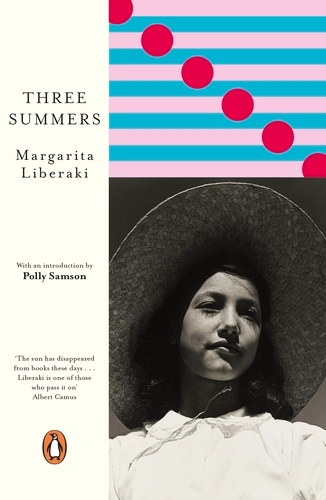
Three Summers
Set in the Greek countryside near Athens in the years before the Second World War, Three Summers follows three sisters as they navigate adolescence, love, desire, and the mysteries of family life. Maria, the eldest, is passionate and eager to marry and start a family; Infanta is beautiful, independent, and emotionally reserved; while Katerina, the youngest and the novel’s principal narrator, is dreamy, rebellious, and fascinated by the world around her. Across three summers, the sisters fall in love, keep secrets, observe the complicated relationships of adults, and begin to imagine the women they might become. Against a backdrop of sun-drenched gardens, olive groves, and long, languid afternoons, Margarita Liberaki captures the fleeting magic of youth and the bittersweet awareness that childhood cannot last forever. Tender, sensual, and nostalgic, this coming-of-age novel celebrates female independence, sisterhood, and the exhilarating uncertainty of growing up.
Greece
1946
2
Zorba the Greek
Zorba the Greek follows an unnamed intellectual who travels to Crete to reopen a lignite mine and encounters Alexis Zorba, an energetic and unconventional man who becomes his companion. Whereas the narrator approaches life through books, abstract ideas, and careful reflection, Zorba embraces physical experience, music, food, love, and spontaneous action. Their contrasting personalities lead to conversations about religion, mortality, morality, and the meaning of freedom. As they work together and become involved in the lives of local villagers, the narrator begins to question his detached approach to existence. Zorba’s exuberance offers an alternative to the intellectual’s tendency to analyse rather than participate in life. Kazantzakis explores the tension between thought and action, celebrating the courage to experience pleasure and sorrow without attempting to control every outcome. The novel ultimately asks what it means to live fully despite the inevitability of loss.
Greece
1946