Freedom & Resistance
Voices of resistance, liberation, and the fight for justice.
All countries
Afghanistan
Albania
Algeria
Argentina
Australia
Belgium
Brazil
Burkina Faso
Central African Republic
Czech Republic
Dominican Republic
Egypt
France
Greece
Hungary
Iceland
India
Iran
Ireland
Italy
Japan
Jordan
Kenya
Kuwait
Malta
Morocco
Oman
Pakistan
Palestine
Philippines
Puerto Rico
Romania
Russia
Rwanda
South Africa
South Korea
Spain
Türkiye
Turkmenistan
United Kingdom
United States
Uruguay
Uzbekistan
Yemen
Zambia
1
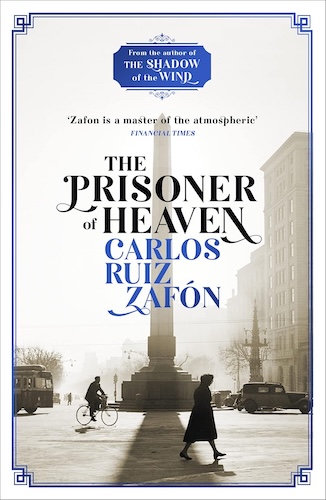
Prisoner Of Heaven
Barcelona, 1957. At the Sempere & Sons bookshop, Daniel Sempere seems to have finally found happiness. Married to Bea and the father of a young son, he shares his days with his devoted friend Fermín Romero de Torres, who is preparing for his own wedding. But their peaceful life is disrupted when a mysterious stranger enters the shop and purchases a rare, beautifully illustrated edition of The Count of Monte Cristo. Before leaving, he writes a disturbing dedication addressed to Fermín, hinting at a secret buried deep in the past.
Daniel soon discovers that his friend’s history is far darker than he imagined. The mystery leads back to the brutal years of Francisco Franco’s dictatorship, revealing a story of imprisonment, betrayal, revenge, and survival. As buried memories resurface, Daniel and Fermín must confront the consequences of secrets that could endanger everything they hold dear.
The third novel in Zafón’s Cemetery of Forgotten Books series, The Prisoner of Heaven brings together characters and mysteries from The Shadow of the Wind and The Angel’s Game. Blending Gothic suspense, historical fiction, and the enduring magic of books, the novel explores how the past refuses to remain buried—and how friendship and loyalty can survive even the darkest chapters of history.
Spain
2011
2
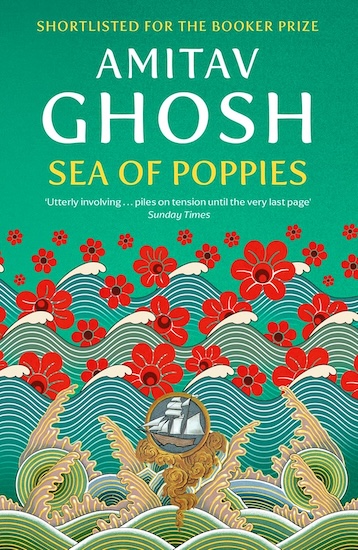
Sea of Poppies
Set in 1838, shortly before the First Opium War, Sea of Poppies follows a diverse group of characters whose lives converge aboard the Ibis, a former slave ship sailing from India to Mauritius. Among them are Deeti, a village woman escaping an oppressive marriage; Kalua, a low-caste ox-cart driver; Neel Rattan Halder, a wealthy landowner facing ruin; and Zachary Reid, an American sailor navigating questions of race and identity. As they journey across the Indian Ocean, these individuals find themselves bound together by circumstances shaped by colonialism, the opium trade, caste discrimination, and economic exploitation. Through their intertwined stories, Amitav Ghosh brings to life a turbulent period in Indian history, revealing how imperial ambitions transform ordinary lives. Blending historical detail, adventure, and rich linguistic diversity, the novel explores displacement, social inequality, and the universal desire for freedom and belonging.
India
2008
3
The Vegetarian
The Vegetarian tells the story of Yeong-hye, an ordinary South Korean woman whose decision to stop eating meat after experiencing disturbing dreams sets off a chain of increasingly unsettling events. Her husband initially sees her refusal as an inconvenience, while her family responds with anger and attempts to force her back into conformity. As Yeong-hye withdraws from conventional expectations, her behaviour becomes increasingly radical, challenging the roles imposed on her as a wife, daughter, and woman. Told through the perspectives of her husband, brother-in-law, and sister, the novel gradually reveals the psychological and emotional pressures beneath her transformation. Han Kang explores bodily autonomy, violence, desire, and the struggle to resist a society that demands obedience. The novel raises unsettling questions about whether rejecting social conventions can become an act of liberation, even when that resistance carries devastating consequences.
South Korea
2007
4
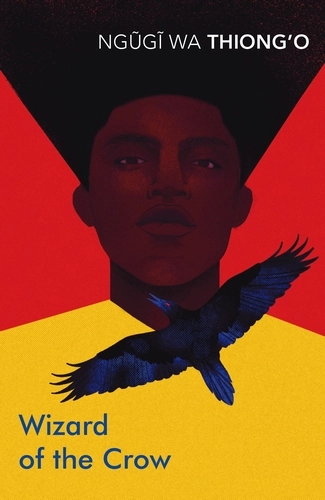
Wizard of the Crow
Set in the fictional African nation of Aburiria, Wizard of the Crow is a sprawling political satire about dictatorship, corruption, resistance, and the absurdities of absolute power. The country is ruled by a megalomaniacal leader known simply as the Ruler, whose grandiose ambitions and paranoia shape every aspect of public life. When the government announces plans to construct a monumental project called Marching to Heaven, it seeks financial support from international lenders, exposing the regime’s vanity and dependence on foreign approval.
At the center of the story are Kamĩtĩ, an unemployed university graduate who becomes known as the Wizard of the Crow, and Nyawĩra, a courageous activist involved in the underground resistance. Their lives become entangled with the Ruler’s increasingly bizarre court, where ministers compete for influence and ordinary citizens struggle to survive the consequences of political repression.
Combining magical realism, folklore, grotesque humor, and political allegory, Ngũgĩ examines how authoritarian regimes manipulate fear, language, religion, and superstition to maintain control. The novel also celebrates the resourcefulness of ordinary people and their capacity to challenge oppressive systems. Both a comic epic and a fierce critique of postcolonial power, it explores the struggle for dignity and freedom in a society ruled by absurdity and terror.
Kenya
2006
5
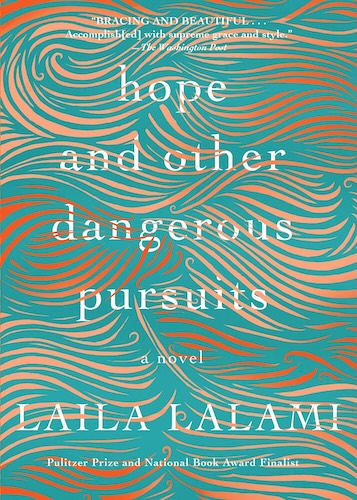
Hope and Other Dangerous Pursuits
Hope and Other Dangerous Pursuits follows four Moroccan migrants who attempt to cross the Strait of Gibraltar in a small inflatable boat, hoping to reach Spain and build better lives in Europe. Each has a different reason for leaving Morocco: unemployment, family responsibilities, personal dissatisfaction, or the desire to escape restrictive social expectations. Their dangerous journey ends with their interception by Spanish authorities, and the novel then traces the experiences that led each character to risk everything for an uncertain future.
Through interwoven narratives, Laila Lalami explores the economic inequalities, political frustrations, and social pressures that motivate migration. She reveals the difficult realities facing those who remain in Morocco, as well as the hopes and compromises of those who leave. The novel challenges simplistic ideas about immigration by presenting its characters as complex individuals with conflicting desires, private struggles, and understandable ambitions. Moving between Morocco and Spain, it examines belonging, identity, family, and the uncertain promise of a better life, asking what freedom means when the pursuit of opportunity requires risking everything.
Morocco
2005
6
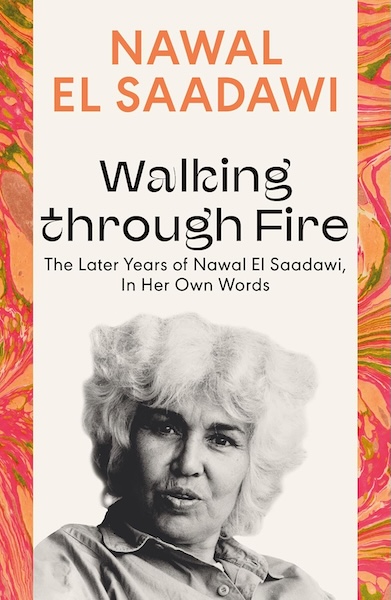
Walking through Fire
For Nawal El Saadawi, speaking openly about women’s oppression came at a personal cost: censorship, imprisonment, threats, and eventually exile. Yet she refused to surrender her voice.
In Walking Through Fire, El Saadawi continues the story of her extraordinary life, recounting her years as a physician, writer, and activist in a society where challenging political and religious authority could be dangerous. She describes her efforts to establish women’s organisations and publish feminist writing, the threats that forced her into exile, and the personal struggles that accompanied her public resistance.
The memoir reveals the woman behind the internationally recognised intellectual: passionate, questioning, and sometimes conflicted, but determined to live according to her convictions. Through recollections of marriage, motherhood, political repression, and the fight for justice, she explores what it means to remain independent in the face of relentless pressure.
A testament to intellectual courage and personal freedom, the book documents a life spent confronting the forces that sought to silence her.
Egypt
2002
7
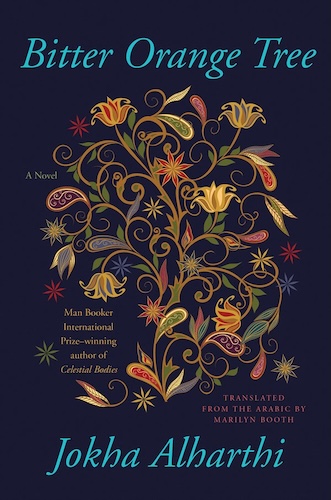
Bitter Orange Tree
When Omani student Zuhour leaves her home to study at a university in Britain, she finds herself caught between the promise of a new life and the memories of the people she has left behind. Among them is Bint Aamir, the woman she regarded as her grandmother, whose love and sacrifices shaped Zuhour’s childhood. Bint Aamir’s own life was marked by constrained choices and dreams she was never able to fulfil, finding solace beneath a beloved bitter orange tree.
As Zuhour struggles with loneliness, complicated friendships, and the challenge of finding her place in an unfamiliar country, memories and dreams draw her back to Oman. Through a lyrical, nonlinear narrative, Jokha Alharthi weaves together the lives of two women separated by generations but connected by longing, affection, and the desire for independence. Bitter Orange Tree explores how family histories, social class, and gender expectations shape women’s lives—and how understanding the past can help us imagine a different future.
Oman
2002
8
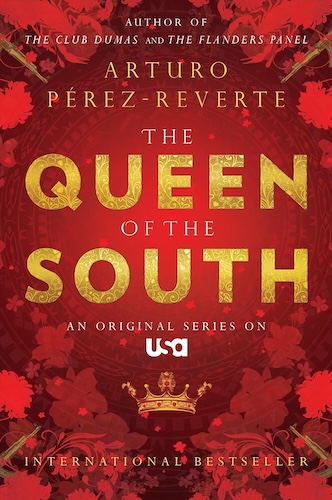
Queen of the South
When the phone rings, Teresa Mendoza knows her life is about to change forever. Her boyfriend, a pilot who smuggles drugs for the Mexican cartels, has warned her that if she ever receives that call, she must run for her life. When he is murdered, Teresa flees Mexico, leaving behind everything she knows and entering an unfamiliar world where survival depends on intelligence, courage, and the ability to trust no one.
Her journey takes her from Mexico to Spain, where she becomes involved in the dangerous business of smuggling hashish across the Strait of Gibraltar. Initially an outsider in a ruthless, male-dominated criminal world, Teresa gradually discovers her talent for negotiation, strategy, and business. As she builds her own network and accumulates wealth and influence, she transforms herself from a frightened young woman into a formidable criminal leader.
Spanning continents and more than a decade, Pérez-Reverte’s novel combines crime thriller, political intrigue, and a powerful portrait of female ambition. Inspired in part by real-world drug-trafficking networks, the story explores loyalty, betrayal, identity, and the price of power. Teresa’s rise challenges conventional ideas about femininity and authority, while revealing the brutal realities of a world where survival often demands becoming the very person one once feared.
Spain
2002
9
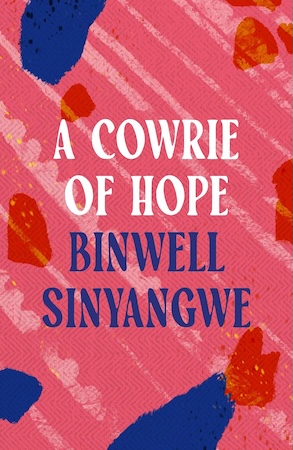
A Cowrie of Hope
Set in Zambia during the economic hardships of the 1990s, A Cowrie of Hope follows Nasula, a young widow determined to secure a better future for her daughter, Sula. After her husband’s death, Nasula refuses to accept the traditional expectation that she should marry her brother-in-law. Her independence comes at a terrible cost: her in-laws strip her of her possessions, leaving her struggling to survive in an impoverished rural community. Yet Nasula has a clear purpose. She believes that education will give Sula the opportunity to escape poverty and build a life free from the restrictions that have shaped her own. When she discovers that she cannot afford her daughter’s school fees, she travels to Lusaka to sell her last sack of valuable beans. In the city, however, she encounters exploitation and dangers that threaten everything she has worked for. Through Nasula’s determination, Sinyangwe portrays a woman’s struggle against poverty, patriarchy, and social injustice. Tender yet unflinching, the novel celebrates maternal love, female solidarity, and the courage required to imagine a different future.
Zambia
2000
10
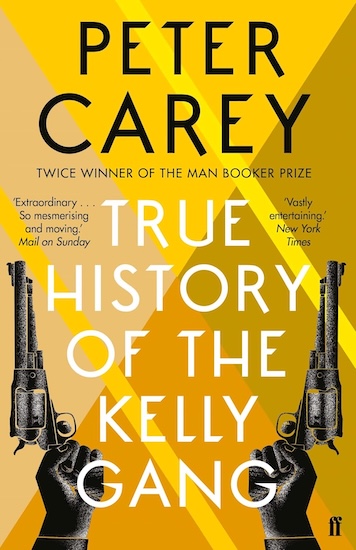
True History of the Kelly Gang
In True History of the Kelly Gang, Australian novelist Peter Carey reimagines the life of Ned Kelly, one of Australia’s most notorious historical outlaws, through a fictional autobiography written in Kelly’s own voice. Growing up in colonial Victoria during the nineteenth century, Ned experiences poverty, discrimination, and repeated confrontations with the authorities. His Irish family is treated with suspicion by the British colonial establishment, and his early encounters with the police help shape his growing resentment of a system he sees as unjust.
As Ned becomes a bushranger, he transforms from a struggling young man into a legendary outlaw whose exploits divide public opinion. To the authorities, he is a dangerous criminal; to some members of the impoverished colonial population, he represents resistance to oppression. Writing his account for the daughter he hopes will one day understand him, Ned attempts to reclaim his story from those who would define him as a villain.
Blending historical events with imaginative storytelling, Carey explores the relationship between truth and myth, the legacy of colonialism, and the ways poverty and injustice can shape a person’s destiny. Written in a distinctive vernacular style, the novel challenges readers to question who has the power to tell history and whose voices are remembered.
Australia
2000
11
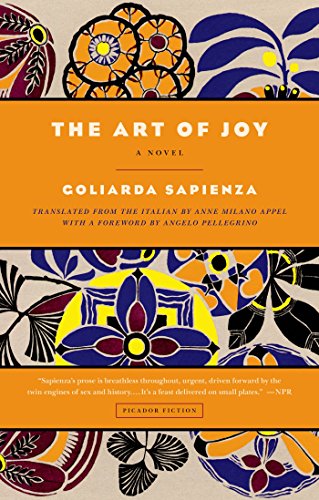
Art of Joy
The Art of Joy follows Modesta, a fiercely independent woman born into poverty in Sicily on New Year’s Day 1900. After a difficult childhood marked by family tragedy, she finds refuge in a convent, but her intelligence, ambition, and refusal to accept the limits imposed on women lead her toward a very different life. Through determination and cunning, Modesta rises into aristocratic society, building relationships and pursuing intellectual, emotional, and sexual freedom on her own terms.
Spanning much of the twentieth century, the novel follows Modesta through personal transformations and the political upheavals of modern Italian history. Goliarda Sapienza challenges conventional ideas about morality, religion, marriage, and femininity, presenting a protagonist who refuses to be defined by society’s expectations. Bold, sensual, and politically provocative, the novel celebrates the pursuit of pleasure and self-determination while examining the contradictions involved in living freely in an unequal world.
Italy
1998
12
Parable of the Talents
Set in a dystopian America in the early twenty-first century, Parable of the Talents continues the story of Lauren Olamina, founder of the Earthseed movement, which teaches that humanity’s destiny is to shape change and eventually travel beyond Earth. As Lauren works to build a community based on cooperation, equality, and spiritual transformation, a Christian fundamentalist government rises to power, bringing persecution and violence. The novel is narrated partly through the perspective of Lauren’s estranged daughter, who struggles to understand her mother’s beliefs and legacy. Through their intertwined stories, Octavia E. Butler examines religious extremism, authoritarianism, racial injustice, and the struggle to preserve freedom in a society shaped by fear. The novel offers a powerful reflection on the dangers of political fanaticism and the resilience required to imagine a different future.
United States
1998
About this theme
- Books
- 107
- Countries
- 45
Countries with this theme
Afghanistan
Asia
Albania
Europe
Algeria
Africa
Argentina
South America
Australia
Oceania
Belgium
Europe
Brazil
South America
Burkina Faso
Africa
Central African Republic
Africa
Czech Republic
Europe
Dominican Republic
North America
Egypt
Africa
France
Europe
Greece
Europe
Hungary
Europe
Iceland
Europe
India
Asia
Iran
Asia
Ireland
Europe
Italy
Europe
Japan
Asia
Jordan
Asia
Kenya
Africa
Kuwait
Asia
Malta
Europe
Morocco
Africa
Oman
Asia
Pakistan
Asia
Palestine
Asia
Philippines
Asia
Puerto Rico
South America
Romania
Europe
Russia
Europe
Rwanda
Africa
South Africa
Africa
South Korea
Asia
Spain
Europe
Türkiye
Asia
Turkmenistan
Asia
United Kingdom
Europe
United States
North America
Uruguay
South America
Uzbekistan
Asia
Yemen
Asia
Zambia
Africa