Freedom & Resistance
Voices of resistance, liberation, and the fight for justice.
All countries
Afghanistan
Albania
Algeria
Argentina
Australia
Belgium
Brazil
Burkina Faso
Central African Republic
Czech Republic
Dominican Republic
Egypt
France
Greece
Hungary
Iceland
India
Iran
Ireland
Italy
Japan
Jordan
Kenya
Kuwait
Malta
Morocco
Oman
Pakistan
Palestine
Philippines
Puerto Rico
Romania
Russia
Rwanda
South Africa
South Korea
Spain
Türkiye
Turkmenistan
United Kingdom
United States
Uruguay
Uzbekistan
Yemen
Zambia
1
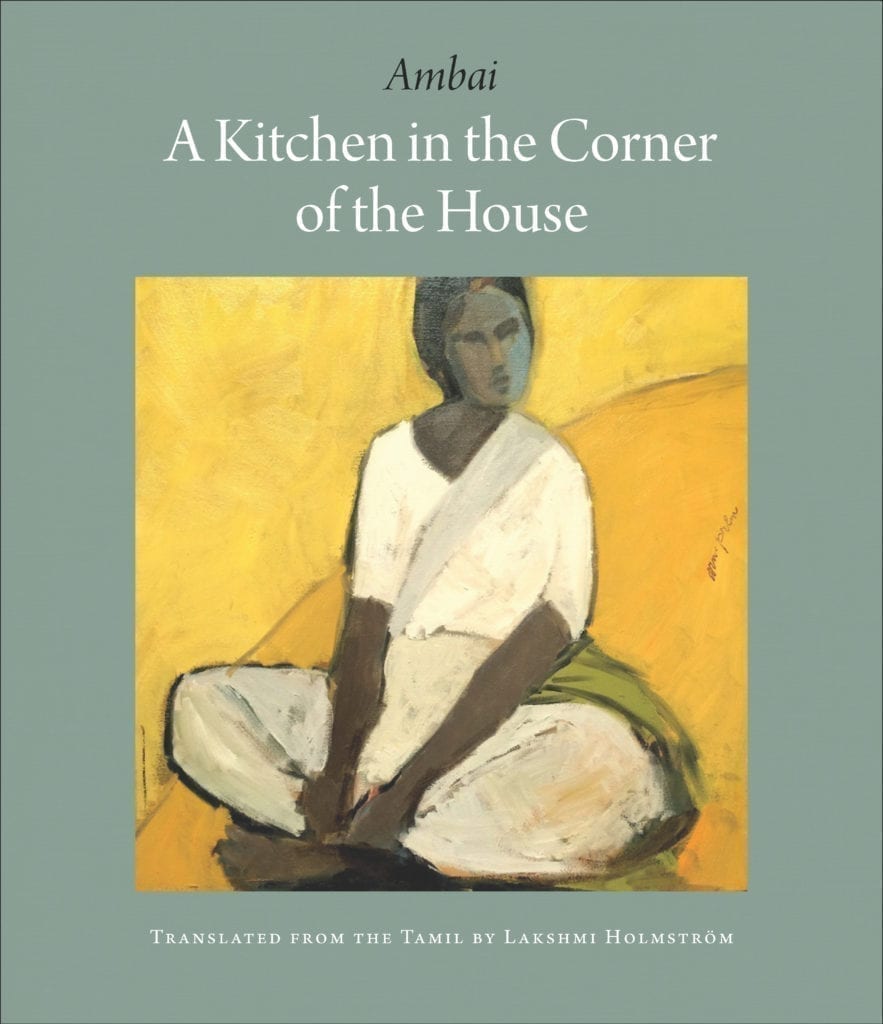
A Kitchen in the Corner of the House
In this rich collection of short stories, Ambai explores the lives of women navigating the competing demands of family, tradition, love, and personal freedom in India. Moving between domestic spaces and wider social worlds, her characters include wives questioning their marriages, mothers negotiating the bonds between generations, and women discovering possibilities beyond the roles society has assigned them. The kitchen in the title story becomes a powerful symbol of women’s lives: a space associated with domestic labour and confinement, yet also one where women exercise influence, preserve traditions, and create their own forms of power. Through fragmented narratives, letters, memories, and mythological references, Ambai captures the contradictions of womanhood with warmth, humour, and quiet rebellion. Her stories challenge the assumption that liberation must mean rejecting one’s roots, instead revealing how women can reshape their worlds while remaining connected to their histories, relationships, and cultural identities.
India
2019
2
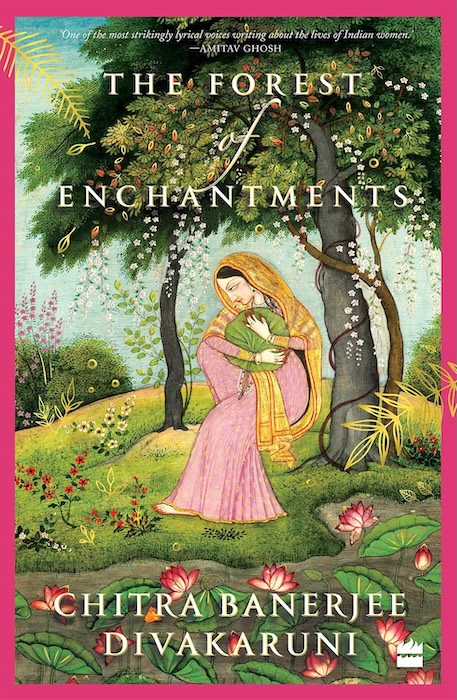
Forest of Enchantments
The Forest of Enchantments reimagines the ancient Indian epic Ramayana through the perspective of Sita, the heroine whose experiences have often been overshadowed by those of the male characters. From her early life and marriage to Prince Rama to their exile in the forest, Sita’s story unfolds as a journey marked by love, sacrifice, and difficult choices. After she is abducted by the demon king Ravana and eventually reunited with Rama, she faces further trials that challenge her dignity and independence. Divakaruni also brings attention to other women in the epic, including Kaikeyi, Surpanakha, and Mandodari, exploring the complicated motivations behind their actions. By giving these women their own voices, the novel questions traditional ideas about duty, honour, and obedience. It offers a feminist interpretation of a foundational Indian epic, examining women’s autonomy and their struggle to define themselves within a world governed by patriarchal expectations.
India
2019
3
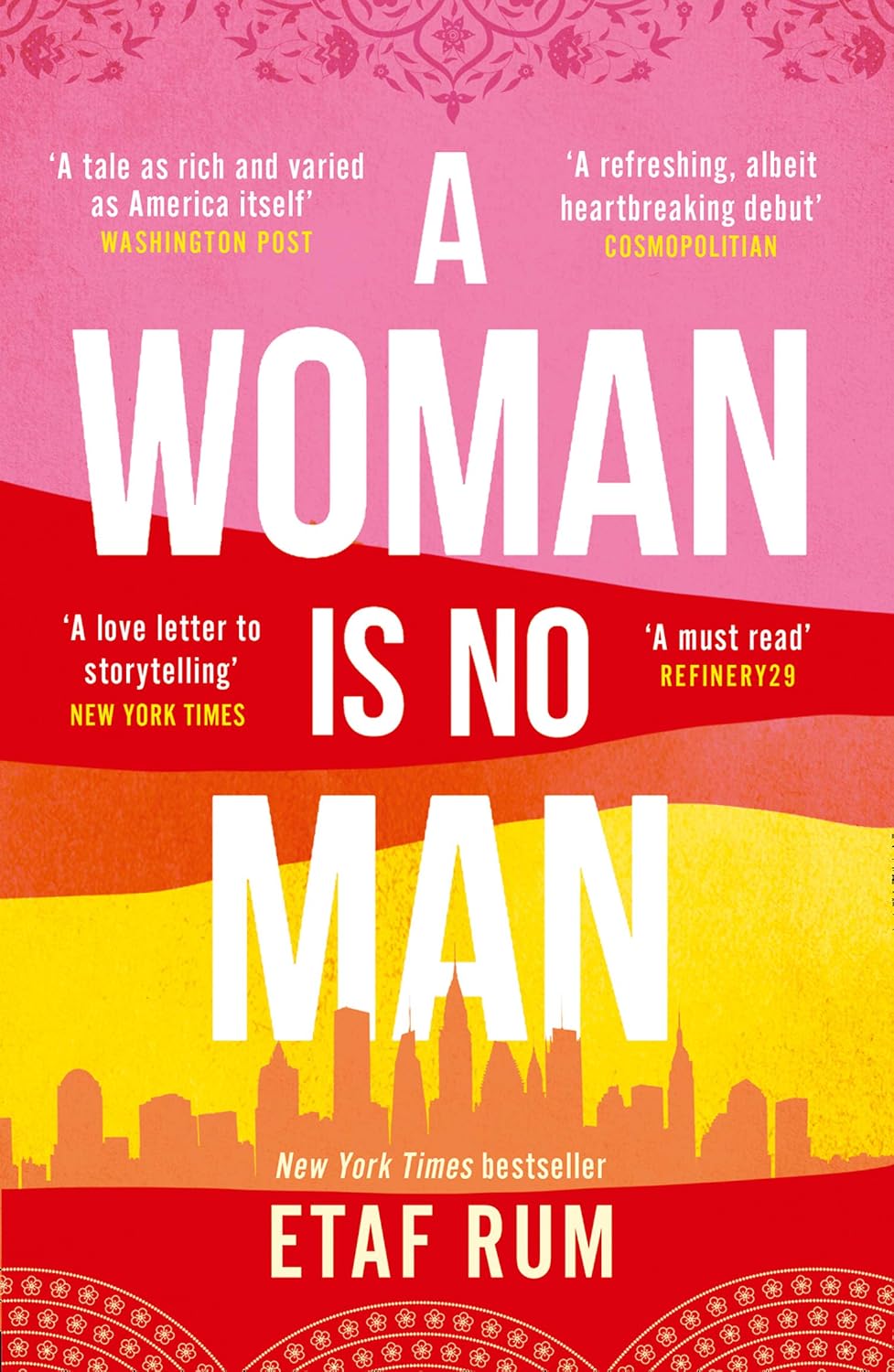
Woman Is No Man
A Woman Is No Man follows three generations of Palestinian women whose lives are shaped by family expectations, cultural traditions, and the struggle for independence. In 1990s Brooklyn, seventeen-year-old Isra marries Adam, a Palestinian American man, and leaves her home in Palestine to begin a new life in the United States. Instead of the freedom she hopes to find, she encounters strict expectations about marriage, motherhood, and obedience. Years later, her daughter Deya grows up under similar pressures, uncertain about her future and the secrets surrounding her mother’s life. As Deya begins to question the stories she has been told, hidden truths emerge that challenge her understanding of family and tradition. Rum explores intergenerational trauma, gender inequality, and the difficult choices women face when personal aspirations conflict with inherited expectations.
Palestine
2019
4
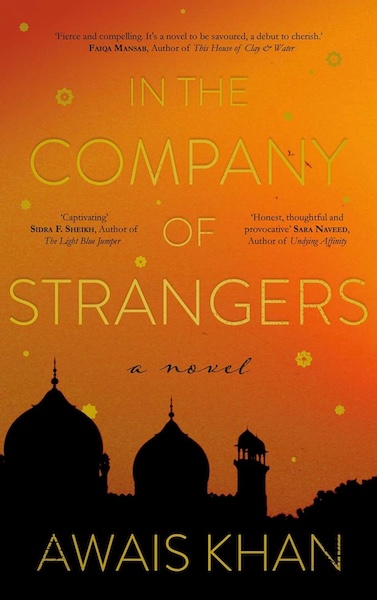
In the Company of Strangers
In the Company of Strangers follows Mona, a forty-one-year-old woman living in Lahore’s wealthy social circles. Despite her financial comfort and privileged lifestyle, she feels trapped in a loveless marriage to a cruel businessman and longs for genuine affection and independence. Seeking an escape from her emotional isolation, she reconnects with an old friend, Meera, who introduces her to a world of glamorous parties, secret affairs, and drugs. There, Mona meets Ali, a younger man whose troubled past and difficult circumstances conceal a deep emotional vulnerability.
As Mona and Ali fall into a forbidden relationship, their attempts to find happiness threaten to unravel their carefully maintained public lives. Against the backdrop of contemporary Pakistan, Awais Khan explores the contradictions of a society where wealth and status coexist with rigid social expectations and hidden suffering. The novel examines class inequality, gender roles, loneliness, and the price of personal freedom, revealing how the desire to escape one form of confinement can lead to unexpected and devastating consequences.
Pakistan
2019
5
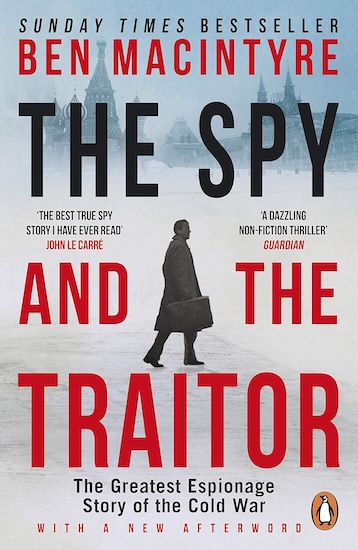
The Spy and the Traitor
In 1985, a seemingly ordinary man walks through the streets of Moscow carrying a plastic shopping bag. Hidden in plain sight, he is Oleg Gordievsky, a senior KGB officer who has secretly been working for British intelligence for more than a decade. As one of Britain’s most valuable spies inside the Soviet Union, he has passed on critical information about Soviet intelligence operations, helping the West understand the Kremlin’s intentions during the final years of the Cold War.
But Gordievsky’s double life becomes increasingly dangerous. While MI6 struggles to protect its most important source, the CIA grows suspicious and launches its own investigation to identify the mysterious British informant. Unknown to Gordievsky, the hunt for him leads to Aldrich Ames, a CIA officer secretly betraying American intelligence to the Soviets. When Gordievsky is recalled to Moscow, he faces interrogation, surveillance, and the possibility of execution. His only hope lies in an extraordinary escape plan that must unfold under the watchful eyes of the KGB.
Drawing on extensive research and previously undisclosed details, Ben Macintyre reconstructs one of the Cold War’s most remarkable espionage stories. The Spy and the Traitor explores loyalty, ideological conviction, betrayal, and the extraordinary courage required to risk everything for one’s beliefs.
Russia
United Kingdom
2018
6
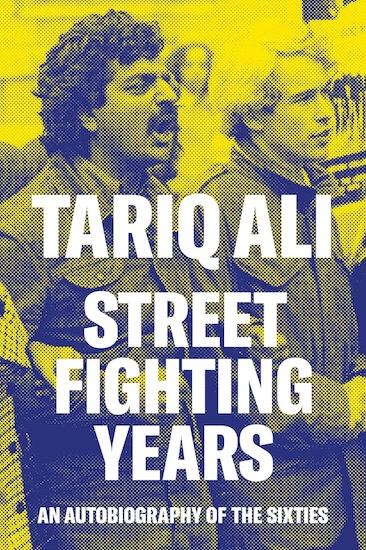
Street Fighting Years
In Street Fighting Years, Tariq Ali recounts his transformation from a young Pakistani student into one of the most prominent radical activists of the 1960s. Moving between London, Paris, Prague, Hanoi, and other centres of political upheaval, Ali offers a personal account of a decade defined by student revolts, anti-war demonstrations, revolutionary movements, and challenges to established political authority.
Through his encounters with figures such as Malcolm X, Bertrand Russell, Che Guevara, and Mick Jagger, Ali captures the energy and contradictions of a generation determined to reshape society. He reflects on the Vietnam War, the suppression of the Prague Spring, the rise of the international protest movement, and the growing opposition to Western imperialism. Blending autobiography with political history, the book explores the hopes, disagreements, and disappointments of activists who believed that collective action could transform the world. It is both a portrait of a turbulent era and a reflection on the personal costs of political commitment.
Pakistan
United Kingdom
2018
7
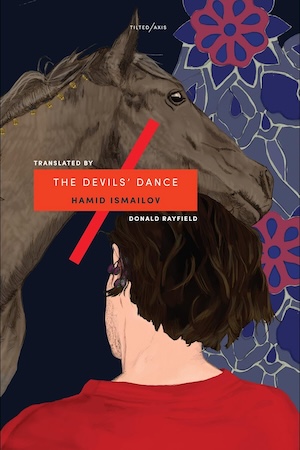
The Devils' Dance
In 1937, during Stalin’s Great Terror, the celebrated Uzbek writer Abdulla Qodiriy is arrested by the Soviet secret police and imprisoned in Tashkent. Facing brutal interrogations and the constant threat of execution, he seeks refuge in his imagination, attempting to reconstruct the historical novel he was writing before his arrest. His unfinished work tells the story of Oyxon, a nineteenth-century enslaved girl who rises to prominence in the courts of Central Asian khans, only to become entangled in a dangerous world of political rivalries, forced marriages, and imperial intrigue. As Qodiriy develops Oyxon’s story in his mind, the boundaries between his fictional world and his own terrifying circumstances begin to dissolve. Their experiences mirror one another, connecting the struggles of a woman fighting for agency in a patriarchal society with those of a writer facing persecution under a repressive regime. Rich in Uzbek poetry, folklore, and historical detail, Hamid Ismailov’s novel is both a tribute to Central Asian literary traditions and a powerful meditation on artistic freedom, cultural identity, and the devastating consequences of political oppression.
Uzbekistan
2018
8
The Widows of Malabar Hill
Set in Bombay in 1921, The Widows of Malabar Hill introduces Perveen Mistry, one of India’s first female lawyers. Educated in England and working in her father’s legal practice, Perveen encounters an unusual inheritance case involving three Muslim widows who live in seclusion and communicate with the outside world through male representatives. When she discovers inconsistencies in the documents governing their late husband’s estate, she begins to suspect that the women may be vulnerable to manipulation or exploitation. Her investigation becomes more dangerous when a murder draws her deeper into the case. Alongside the mystery, Perveen’s own experiences reveal the limitations placed on women in colonial Indian society, particularly in matters of marriage, education, and professional independence. Massey combines historical detail with a compelling detective story, exploring women’s rights, religious traditions, and the pursuit of justice in a changing society.
India
2018
9
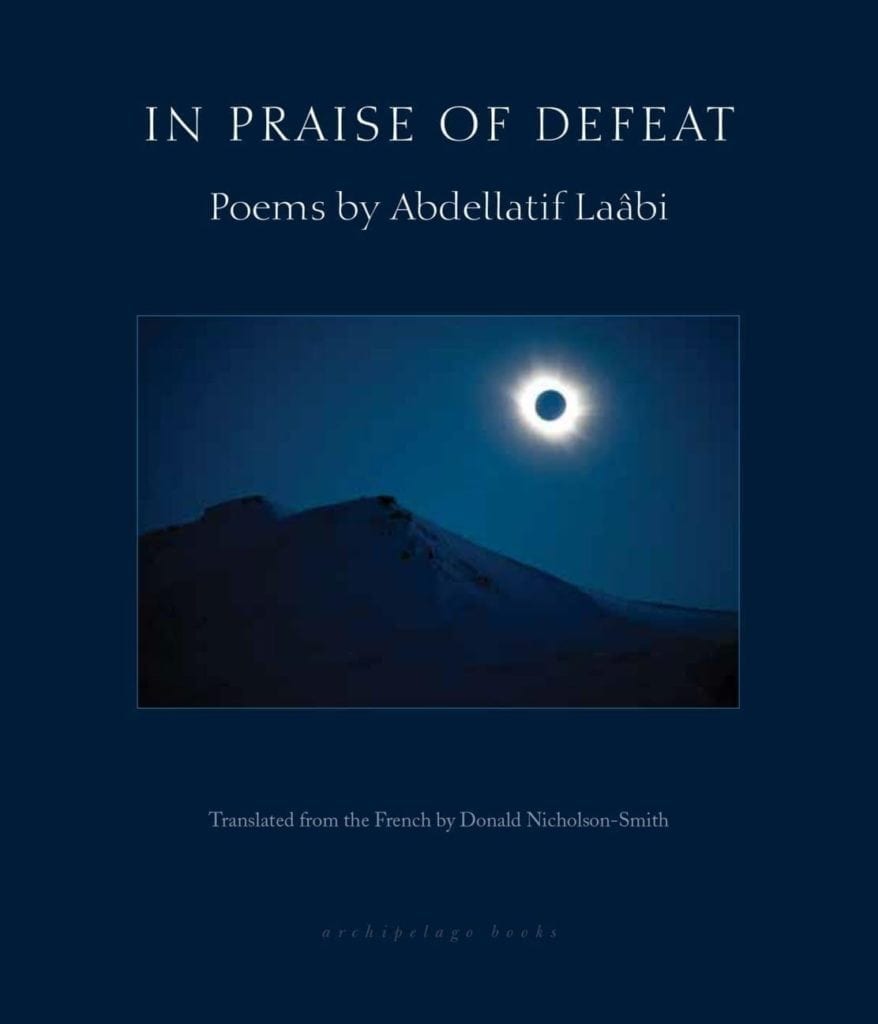
In Praise of Defeat
Spanning six decades of writing, In Praise of Defeat is a powerful collection tracing the evolution of one of Morocco’s most important contemporary poets. Through poems shaped by political imprisonment, exile, love, and the struggle for human dignity, Abdellatif Laâbi confronts the brutality of authoritarian power while insisting on the possibility of hope. His early works carry the urgency of protest, bearing witness to censorship, torture, and the silencing of dissent. Later poems become more intimate and reflective, exploring tenderness, family, spirituality, and the fragile beauty of everyday existence. Yet resistance remains at the heart of his work: for Laâbi, poetry is not an escape from reality but a way of confronting it without surrendering one’s humanity. Moving between anguish and joy, political defiance and personal vulnerability, these poems celebrate the courage to continue creating even in the face of defeat. The collection ultimately suggests that failure need not mean surrender—and that preserving one’s capacity to love, imagine, and speak freely is itself a form of victory.
Morocco
2017
10
Exit West: A Novel
Exit West follows Nadia and Saeed, two young people who fall in love in an unnamed country descending into civil war. As violence spreads through their city, everyday life becomes increasingly dangerous, and the couple begins searching for a way to escape. They hear rumours of mysterious doors that can transport people to distant countries, offering a possible route to safety. After passing through one of these doors, Nadia and Saeed find themselves navigating the uncertainties of refugee life in unfamiliar places, including Greece, London, and California. Their relationship changes as they adapt to new communities and confront the emotional costs of displacement. Blending realism with speculative fiction, Hamid explores migration, borders, belonging, and the resilience required to build a future after leaving home. The novel also asks how movement across borders transforms individuals and societies.
Pakistan
2017
11
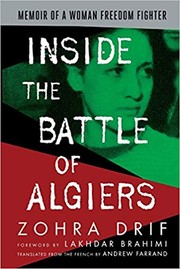
Inside the Battle of Algiers
In this memoir, Algerian revolutionary Zohra Drif recounts her experiences during Algeria’s struggle for independence from French colonial rule in the 1950s and early 1960s. A young woman studying law in Algiers, Drif joins the National Liberation Front (FLN) and becomes involved in its armed resistance alongside other women who challenge both colonial authority and traditional expectations of women’s roles in society.
Through personal recollections, she describes the political tensions, underground operations, arrests, and difficult choices that shaped the independence movement. Her account also explores the place of women in revolutionary struggle and the moral complexities of political violence. Offering a firsthand perspective on one of the defining conflicts of modern Algerian history, the memoir examines the sacrifices, convictions, and contradictions involved in fighting for national liberation.
Algeria
2017
12
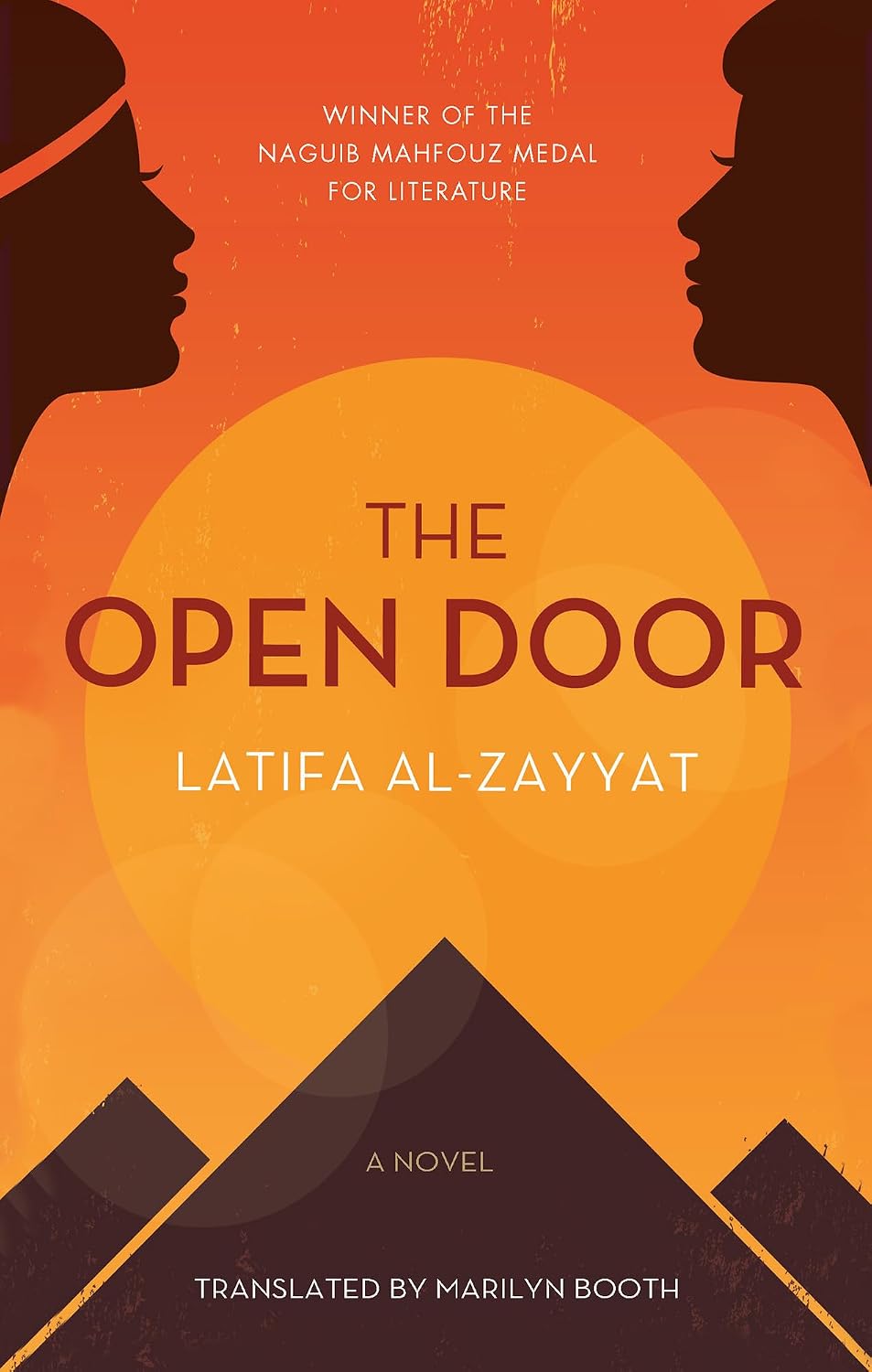
Open Door
Open Door is an autobiographical account by Latifa, an Afghan woman who describes her experiences growing up in Kabul under Taliban rule. Before the Taliban seized power, she enjoyed a relatively modern upbringing, attending school and imagining a future shaped by education and independence. As the regime tightened its control over everyday life, however, women and girls were increasingly deprived of basic freedoms, including the right to study, work, and move freely in public.
Through personal memories and reflections, Latifa recounts the fear, restrictions, and uncertainty that came to define life under the regime. Her story reveals how political oppression reaches into the most intimate aspects of family life, education, and personal identity. It also highlights the resilience of Afghan women who continued to seek knowledge and dignity despite severe constraints. Both a personal testimony and a broader reflection on human rights, Open Door explores the struggle for freedom in a society where women’s autonomy is systematically denied.
Egypt
2017
About this theme
- Books
- 107
- Countries
- 45
Countries with this theme
Afghanistan
Asia
Albania
Europe
Algeria
Africa
Argentina
South America
Australia
Oceania
Belgium
Europe
Brazil
South America
Burkina Faso
Africa
Central African Republic
Africa
Czech Republic
Europe
Dominican Republic
North America
Egypt
Africa
France
Europe
Greece
Europe
Hungary
Europe
Iceland
Europe
India
Asia
Iran
Asia
Ireland
Europe
Italy
Europe
Japan
Asia
Jordan
Asia
Kenya
Africa
Kuwait
Asia
Malta
Europe
Morocco
Africa
Oman
Asia
Pakistan
Asia
Palestine
Asia
Philippines
Asia
Puerto Rico
South America
Romania
Europe
Russia
Europe
Rwanda
Africa
South Africa
Africa
South Korea
Asia
Spain
Europe
Türkiye
Asia
Turkmenistan
Asia
United Kingdom
Europe
United States
North America
Uruguay
South America
Uzbekistan
Asia
Yemen
Asia
Zambia
Africa