Literary Fiction
All countries
Afghanistan
Algeria
Antigua and Barbuda
Argentina
Australia
Austria
Azerbaijan
Bangladesh
Barbados
Belgium
Benin
Bosnia and Herzegovina
Brazil
Bulgaria
Burkina Faso
Burundi
Cabo Verde
Canada
Central African Republic
Chile
China
Colombia
Congo, Democratic Republic
Costa Rica
Côte d’Ivoire (Ivory Coast)
Croatia
Cyprus
Czech Republic
Denmark
Dominica
Dominican Republic
Egypt
El Salvador
Estonia
Ethiopia
France
Germany
Ghana
Greece
Hungary
Iceland
India
Iran
Iraq
Ireland
Italy
Jamaica
Japan
Jordan
Kazakhstan
Kenya
Kuwait
Latvia
Lebanon
Libya
Lithuania
Madagascar
Mexico
Moldova
Morocco
Myanmar
Netherlands
New Zealand
Nigeria
North Korea
North Macedonia
Norway
Oman
Pakistan
Palestine
Philippines
Poland
Portugal
Puerto Rico
Russia
Rwanda
Saint Kitts and Nevis
Saudi Arabia
Senegal
Singapore
South Korea
Spain
Sri Lanka
Sudan
Sweden
Switzerland
Syria
Taiwan
Tanzania
Thailand
Türkiye
Uganda
United Arab Emirates
United Kingdom
United States
Uzbekistan
Vietnam
Zambia
1
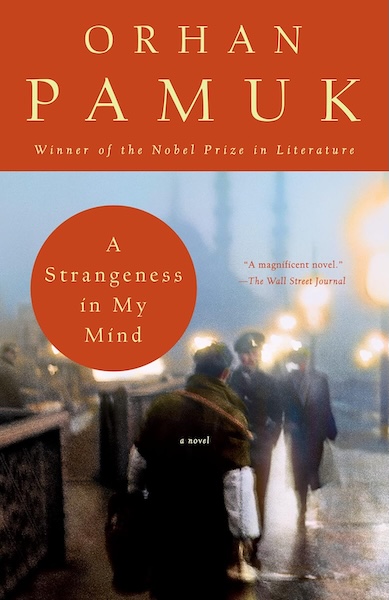
A Strangeness in My Mind
In 1969, twelve-year-old Mevlut leaves his village in central Anatolia and arrives in Istanbul, a city expanding so rapidly that familiar streets and entire neighbourhoods seem to disappear almost overnight. Hoping to build a better life, he works alongside his father selling boza, a traditional fermented drink, on the city’s streets. Over the years, he takes on different jobs, falls in love, marries, and raises a family while watching Istanbul transform around him.
Mevlut is neither a great success nor a complete failure. While others grow wealthy from the city’s rapid development, he remains an outsider in a place he has called home for decades. Even as his life changes, he continues to wonder about the peculiar feeling inside him—a sense that the world he inhabits never quite matches the world he imagines.
Spanning more than forty years, A Strangeness in My Mind is a sweeping portrait of urban migration, ordinary working lives, and the transformation of modern Istanbul. Through Mevlut’s quiet resilience, Pamuk explores love, social mobility, and the search for belonging in a city that is always becoming something new.
Türkiye
2014
2
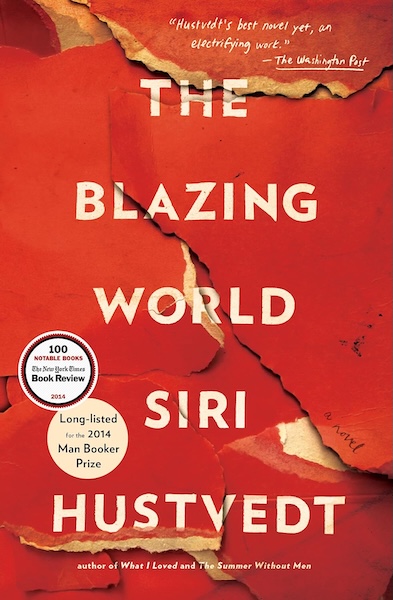
The Blazing World
What if your art were celebrated only when people believed it had been created by a man?
Harriet Burden is a fiercely intelligent artist who has spent years watching the New York art world overlook her work. After the death of her husband, she decides to conduct an audacious experiment: she secretly recruits three men to present her artwork as their own, concealing her identity behind their names. When the exhibitions receive the recognition she has long been denied, Harriet finally reveals the truth. But instead of winning acclaim, she encounters disbelief—and her final collaborator, the enigmatic artist Rune, refuses to acknowledge her role.
Told through diaries, interviews, reviews, and conflicting recollections assembled after Harriet’s death, The Blazing World becomes a literary puzzle in which the truth depends on who is telling the story. As the relationship between Harriet and Rune grows increasingly dangerous, questions of authorship, gender, power, and perception take centre stage.
Intellectually playful and psychologically intense, Siri Hustvedt’s novel challenges the assumptions that determine whose creativity is valued and whose voice is believed. Longlisted for the Booker Prize and winner of the 2014 Los Angeles Times Book Prize for Fiction, it is a provocative exploration of what it means to be seen—and what happens when recognition comes too late.
United States
2014
3
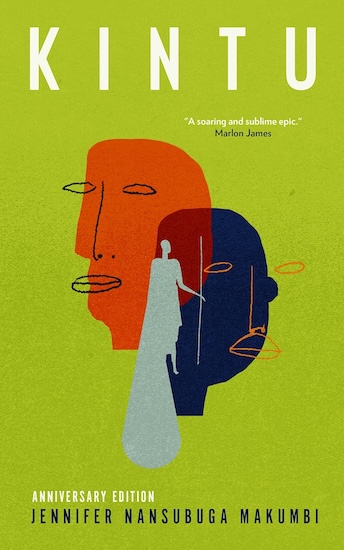
Kintu
Set across several centuries of Ugandan history, Kintu is an ambitious family saga that reimagines the history, mythology, and cultural traditions of the Buganda kingdom. The story begins in 1750, when Kintu Kidda, a powerful provincial governor, travels to the capital to pledge allegiance to the new king. During the journey, a tragic incident sets a curse in motion, bringing suffering to his descendants for generations.
Centuries later, members of the Kintu family struggle with personal tragedies, fractured relationships, and unexplained misfortunes. As they confront their shared history, they must decide whether their suffering stems from an ancestral curse, historical circumstances, or the unresolved conflicts passed down through generations.
Blending Ugandan oral traditions, mythology, spirituality, and historical storytelling, Makumbi challenges conventional approaches to African history. The novel places indigenous Ugandan perspectives at its centre, exploring how colonialism, religious change, and modernisation have transformed cultural identity. It is both a multigenerational family epic and a powerful exploration of the relationship between personal memory and national history.
Uganda
2014
4
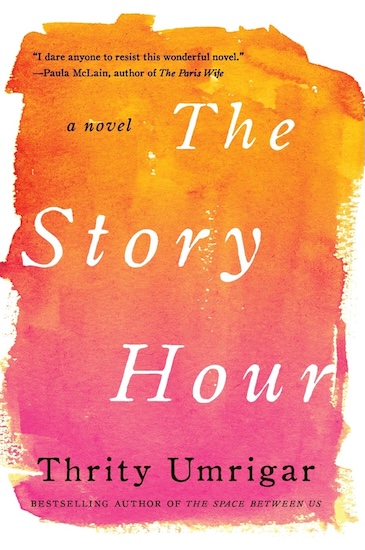
The Story Hour
When Lakshmi, an Indian immigrant trapped in a loveless marriage, attempts suicide, she meets Maggie Bose, an experienced African American psychologist who becomes unexpectedly invested in her recovery. Lonely and isolated from her family in India, Lakshmi struggles to find her place in a country where she feels powerless and misunderstood. Maggie, who initially believes she can help Lakshmi through therapy, gradually discovers that their relationship is becoming something more complicated than a professional one. As the women share stories about their pasts, they develop a deep friendship that crosses boundaries of culture, class, and experience. But both carry secrets that threaten to shatter their growing trust. When painful truths emerge, their relationship is tested in ways neither could have anticipated. The Story Hour explores the stories people tell to survive, the complexity of human relationships, and the difficult path toward forgiveness and self-acceptance.
India
2014
5
The Last Illusion
Born in a remote Iranian village, Zal spends the first ten years of his life imprisoned in a birdcage, his mother convinced that his unusually pale appearance marks him as a demon. Rescued and brought to New York, he must learn how to live among humans while struggling to understand who he is. Inspired by an ancient Persian myth, this imaginative novel weaves Iranian folklore into contemporary American life, exploring the boundaries between belonging and alienation, myth and reality, and the difficult journey toward selfhood.
Iran
2014
6
Unnecessary Woman
An Unnecessary Woman centres on Aaliya Saleh, a seventy-two-year-old woman living alone in Beirut. Divorced and estranged from much of her family, Aaliya has spent decades translating literary works into Arabic for her own satisfaction, often without publishing or sharing them. Books provide her with companionship, intellectual freedom, and a refuge from the expectations of a society that frequently overlooks older women. As political tensions and personal memories intrude on her carefully ordered life, Aaliya reflects on her relationships, the civil war, and the choices that have shaped her existence. Her solitary routine is disrupted when an unexpected event threatens to expose the private world she has built around literature. Alameddine explores ageing, independence, cultural identity, and the importance of art, portraying a woman who finds meaning not through conventional success but through the life of the mind.
Lebanon
2014
7
The Book of Disappearance
The Book of Disappearance imagines a startling alternative reality: one morning, all Palestinians living within Israel suddenly vanish without explanation. The disappearance transforms the country, leaving behind empty homes, abandoned workplaces, and a society forced to confront the absence of a population whose presence has shaped its history and everyday life. At the centre of the novel is Alaa, a Palestinian journalist living in Tel Aviv, whose Israeli friend Ariel discovers Alaa’s abandoned diary and begins reading it. Through their intertwined perspectives, the novel explores memory, displacement, belonging, and the political tensions surrounding Palestinian identity. As Ariel searches for meaning in the disappearance, Alaa’s diary reveals the intimate experiences and historical wounds that official narratives often overlook. Blending speculative fiction with social and political commentary, Ibtisam Azem challenges readers to imagine how history, identity, and power might look if those who have been marginalised were suddenly impossible to ignore.
Palestine
2014
8
The Fishermen
In 1990s Nigeria, four brothers— Ikenna, Boja, Obembe, and Benjamin—enjoy a close bond until their father leaves their hometown of Akure for work. Taking advantage of his absence, the boys skip school to fish at a forbidden river. There, they encounter Abulu, a local man believed to be mad, who delivers a terrifying prophecy: the eldest brother, Ikenna, will be killed by one of his own siblings.
The prediction plants a seed of suspicion that gradually poisons the brothers’ relationship. As Ikenna becomes increasingly consumed by fear and paranoia, the family struggles to understand the forces tearing them apart. Narrated by nine-year-old Benjamin, the novel follows the devastating consequences of a single prophecy, exploring how belief, fear, and resentment can transform love into violence.
Blending Nigerian folklore, biblical allusions, and the structure of Greek tragedy, The Fishermen is both an intimate portrait of a family in crisis and a broader meditation on fate, brotherhood, and the fragility of human relationships.
Nigeria
2015
9
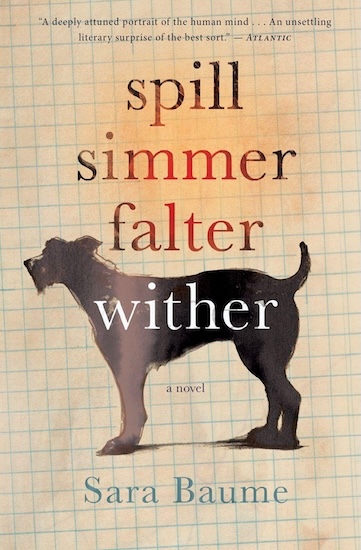
Spill Simmer Falter Wither
Ray is a solitary, middle-aged man who has spent most of his life isolated from the world. When he adopts One Eye, a small, scarred dog with a troubled past, the two unlikely companions begin to build a fragile life together. Both are outsiders, accustomed to being misunderstood and keeping their distance from others. But when an unfortunate incident turns their quiet existence upside down, they leave their coastal village and set out on the road, travelling through the Irish countryside.
Told in an intimate, unconventional voice addressed to the dog, Spill Simmer Falter Wither traces a year through the changing seasons. Sara Baume combines lyrical descriptions of the natural world with a moving portrait of loneliness, vulnerability, and unexpected companionship. This tender yet unsentimental novel asks whether two damaged souls can find belonging in one another when the wider world has little room for either of them.
Ireland
2015
10
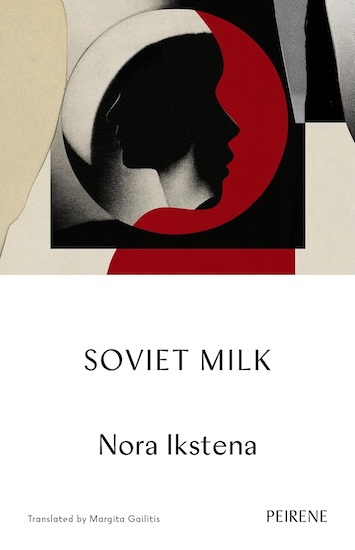
Soviet Milk
Set in Soviet-occupied Latvia between 1969 and 1989, Soviet Milk tells the story of three generations of women whose lives are shaped by political oppression, emotional isolation, and the struggle for personal freedom. At its centre is a talented young gynaecologist who refuses to accept the restrictions imposed by the Soviet system. After a professional conflict with the authorities, she loses the career she has worked towards and is sent to practise medicine in the Latvian countryside. Increasingly withdrawn and unable to find meaning in her life, she struggles to connect with her daughter, who grows up feeling the weight of her mother’s unhappiness.
The story alternates between the voices of the mother and daughter, revealing how political repression reaches into the most intimate corners of family life. While the mother retreats into despair, the daughter searches for understanding, belonging, and hope, finding emotional stability in the care of her grandmother. As Latvia approaches the restoration of its independence, the women’s personal struggles become intertwined with their country’s desire for liberation.
Through its portrayal of a fractured mother-daughter relationship, Ikstena explores how authoritarian systems can damage individual lives across generations. Yet the novel also celebrates the resilience of women, the sustaining power of familial love, and the possibility of breaking free from inherited suffering.
Latvia
2015
11
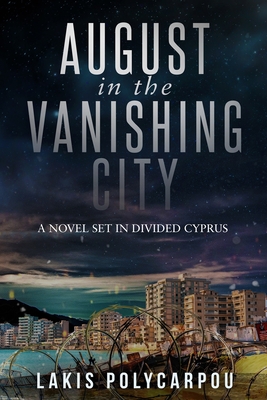
August in the Vanishing City
Set in Cyprus in the mid-1990s, August in the Vanishing City follows Petros, a young Greek Cypriot soldier struggling with love, loss, and the consequences of living on a divided island. Two decades after the Turkish invasion of 1974, the coastal city of Varosha, once a glamorous holiday destination, lies abandoned behind barbed wire and military barriers. For those who were forced to flee, it remains a painful reminder of the homes and lives they lost.
When Petros discovers that Joanna, the woman he has loved since childhood, has fallen for his best friend Elias, he becomes desperate to win her back. His plan leads him to attempt a dangerous journey into Varosha to retrieve a personal keepsake connected to their shared past. Crossing into the restricted city means risking his life, as the area remains under military control.
As Petros navigates the ruins of a vanished world, he must confront not only the dangers surrounding him but also his own ideas about love, loyalty, and what is worth fighting for. His personal struggle unfolds against the broader tensions between Greek and Turkish Cypriots, revealing how political conflict shapes relationships and individual choices.
Combining romance, suspense, and historical context, Polycarpou’s novel explores the meaning of home, the wounds of displacement, and the enduring effects of war on ordinary people. Varosha itself becomes a powerful symbol of interrupted lives and memories that refuse to disappear.
Cyprus
2015
12
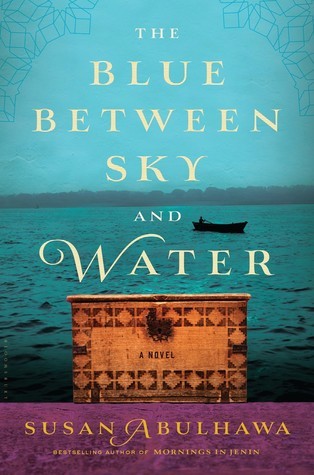
The Blue Between Sky and Water
In 1947, the Baraka family lives in Beit Daras, a Palestinian village surrounded by olive groves and fertile farmland. When their home is destroyed and the family is forced to flee during the Nakba, siblings Nazmiyeh and Mamdouh embark on separate journeys that will shape the lives of generations to come. In Gaza, Nazmiyeh struggles to rebuild her life in a refugee community, preserving her family’s traditions and nurturing the people around her despite repeated hardships. Meanwhile, Mamdouh eventually settles in the United States, where his granddaughter Nur grows up far from her ancestral homeland, struggling with loneliness and a fractured sense of belonging. Decades later, Nur travels to Gaza, where she encounters Alwan and her son Khaled, whose mysterious condition connects their families in unexpected ways. Blending Palestinian history, magical realism, and the intimate stories of several generations, Susan Abulhawa’s novel explores displacement, inherited trauma, family bonds, and the enduring longing for home.
Palestine
2015