Literary Fiction
All countries
Afghanistan
Algeria
Antigua and Barbuda
Argentina
Australia
Austria
Azerbaijan
Bangladesh
Barbados
Belgium
Benin
Bosnia and Herzegovina
Brazil
Bulgaria
Burkina Faso
Burundi
Cabo Verde
Canada
Central African Republic
Chile
China
Colombia
Congo, Democratic Republic
Costa Rica
Côte d’Ivoire (Ivory Coast)
Croatia
Cyprus
Czech Republic
Denmark
Dominica
Dominican Republic
Egypt
El Salvador
Estonia
Ethiopia
France
Germany
Ghana
Greece
Hungary
Iceland
India
Iran
Iraq
Ireland
Italy
Jamaica
Japan
Jordan
Kazakhstan
Kenya
Kuwait
Latvia
Lebanon
Libya
Lithuania
Madagascar
Mexico
Moldova
Morocco
Myanmar
Netherlands
New Zealand
Nigeria
North Korea
North Macedonia
Norway
Oman
Pakistan
Palestine
Philippines
Poland
Portugal
Puerto Rico
Russia
Rwanda
Saint Kitts and Nevis
Saudi Arabia
Senegal
Singapore
South Korea
Spain
Sri Lanka
Sudan
Sweden
Switzerland
Syria
Taiwan
Tanzania
Thailand
Türkiye
Uganda
United Arab Emirates
United Kingdom
United States
Uzbekistan
Vietnam
Zambia
1
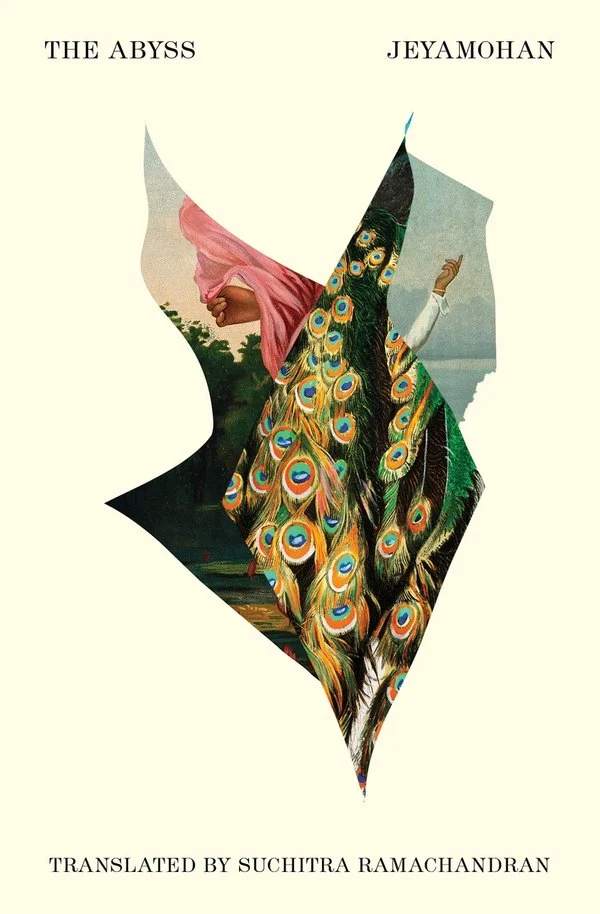
The Abyss
In the hidden world of India’s professional begging networks, human suffering has become a business. Pothivelu Pandaram is a respected, religious man who has built his prosperity on an appalling trade: he buys and breeds people with physical disabilities, then places them outside temples to beg for money. Among those he exploits are Mangandi Samy, a profoundly disabled man whose haunting songs express a longing for divine love, and others whose lives have been reduced to commodities. Pandaram treats them as possessions rather than human beings, convinced that his success and social standing justify his actions. But when an unexpected transaction disrupts his carefully controlled world, the moral foundations of his existence begin to crumble. Combining dark humour, grotesque realism, and spiritual inquiry, Jeyamohan confronts readers with uncomfortable questions about compassion, exploitation, and human dignity. Rather than offering easy answers, The Abyss challenges us to examine the cruelty people can inflict on one another—and the possibility of liberation even in the most degrading circumstances.
India
2026
2
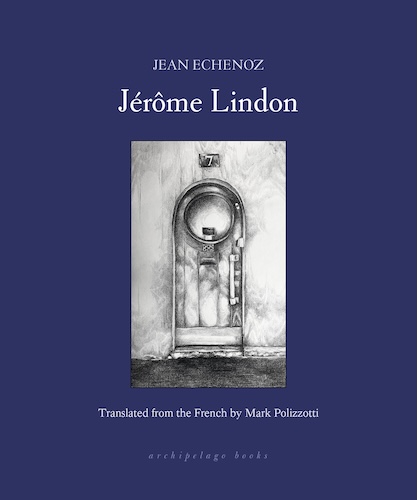
Jérôme Lindon
What makes a great editor—and what happens when the person who believes in your work is no longer there? In this intimate, witty memoir, French novelist Jean Echenoz remembers Jérôme Lindon, the formidable publisher who led Éditions de Minuit and helped shape modern French literature. Their relationship began in 1979, when Echenoz, an unpublished writer, nervously submitted his first novel to Lindon. Instead of rejecting the manuscript, Lindon offered him a contract, beginning a friendship and professional partnership that would last more than twenty years. Through recollections of early-morning phone calls, lunches, disagreements, and conversations about the smallest details of writing, Echenoz reveals a man whose stern exterior concealed generosity, conviction, and an unwavering commitment to literature. Both a personal farewell and a portrait of literary life, this slender book celebrates the often complicated bond between a writer and the editor who helps bring his work into the world.
France
2026
3
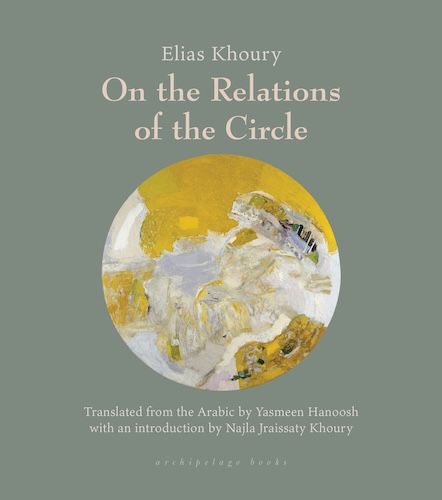
On the Relations of the Circle
In Beirut on the eve of the Lebanese Civil War, a young orphan named Mansour searches for the fragments of his identity: his origins, his family name, and the father he has never known. Yet his journey unfolds in a world where reality and imagination constantly overlap. Birds speak, trees become companions, and ordinary objects seem to possess lives of their own. Through dreamlike episodes, shifting perspectives, and stories that circle back upon themselves, Elias Khoury creates a portrait of a city poised on the edge of catastrophe. Published in 1975, the same year the Lebanese Civil War began, the novel explores how individuals construct their identities amid uncertainty and how storytelling can preserve a sense of belonging when history threatens to destroy it. Both playful and haunting, this experimental work introduces themes that would become central to Khoury’s writing: memory, displacement, fractured identity, and the enduring power of imagination.
Lebanon
2026
4
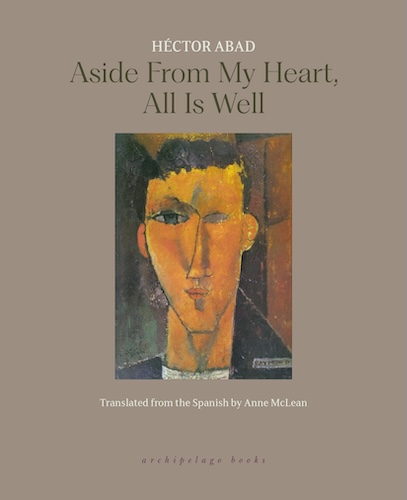
Aside From My Heart, All Is Well
Can a man devoted to God still hunger for everything life has to offer? Luis Córdoba is a Colombian Catholic priest with an extraordinary appetite for art, music, food, and human connection. A passionate film critic and opera enthusiast, he has built a life rich in intellectual pleasures and friendships. But when a serious heart condition leaves him waiting for a transplant, he must abandon his familiar home and move in with a female friend and her children. Surrounded by the unpredictable warmth of family life, Luis begins to reconsider the boundaries between faith and desire, duty and happiness, solitude and belonging. Narrated by his closest friend, fellow priest Aurelio Sánchez, the novel blends affection, humour, and melancholy into a tender portrait of a man confronting his mortality. Inspired by a real Colombian priest and film critic, this moving story celebrates the beauty of ordinary pleasures and the connections that make life worth living.
Colombia
2026
5
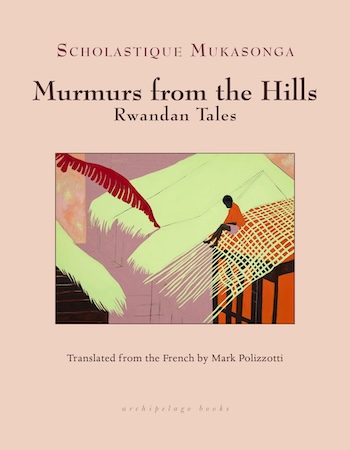
Murmurs from the Hills: Rwandan Tales
Before Rwanda became synonymous with tragedy, its hills held centuries of stories, traditions, and ancestral wisdom. In this evocative collection, Scholastique Mukasonga reaches back into her homeland’s cultural memory, weaving together Rwandan folklore, family recollections, mythology, and the history of colonialism. Rivers carry the echoes of childhood, sacred objects preserve the stories of generations, and the voices of elders bring forgotten worlds back to life. Through tales of kings, village communities, spiritual beliefs, and encounters between African traditions and European influence, Mukasonga creates a rich portrait of a society struggling to preserve its identity amid profound change. The stories move between the intimate and the legendary, revealing how collective memory shapes a people’s understanding of themselves. Both a celebration of Rwanda’s cultural heritage and a meditation on the power of storytelling, this collection seeks to recover a world that history threatened to erase.
Rwanda
2026
6

Springtime in the Bones
Set in Salvador, Bahia, Springtime in the Bones follows Luísa, a successful advertising professional whose carefully constructed life is shattered by sexual assault and the breakdown of her marriage. Still emotionally attached to her former husband, Michel, who has embraced his attraction to men, Luísa finds herself confronting two profound losses: the love she cannot let go of and the sense of safety stolen from her. As she struggles with the aftermath of violence, grief gives way to an uncompromising desire for revenge against the men who attacked her.
Told through a fragmented, nonlinear narrative, the novel moves between memories, philosophical reflections, dark humor, and moments of raw emotional intensity. Leilla creates a protagonist who refuses to remain a passive victim, instead exploring the uncomfortable relationship between trauma, anger, and the pursuit of justice. Through Luísa’s determination to reclaim control over her body and her life, the novel challenges conventional expectations of how survivors should respond to violence. Poetic, provocative, and formally experimental, it is a powerful exploration of female autonomy, desire, and the possibility of renewal after profound suffering.
Brazil
2026
7
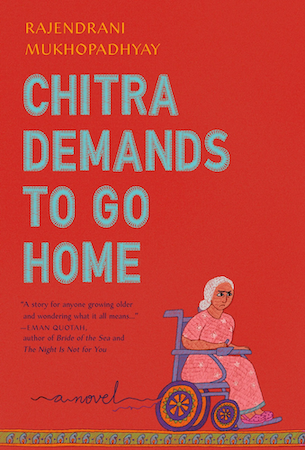
Chitra Demands to Go Home
Seventy-five-year-old Chitra is a Bengali widow who has spent much of her life caring for her family and maintaining a beloved home in Kolkata. Now, with her children grown and living their own lives, she looks forward to enjoying her independence and travelling the world. But her plans collapse when she suffers a stroke while visiting her younger son in the United States. After her son also experiences a medical emergency, Chitra finds herself in Tranquil Town, an assisted-living facility in Columbus, Ohio, surrounded by strangers and unfamiliar customs. Determined to return to India, she refuses to accept her new circumstances and relentlessly pressures her sons to take her home. Yet beneath her stubbornness lies a deeper struggle with displacement, ageing, and the loss of control over her own life. With warmth, humour, and emotional insight, Rajendrani Mukhopadhyay explores the complexities of intergenerational relationships, cultural differences, and the meaning of home. Chitra’s story challenges familiar expectations about ageing and family duty, offering a compassionate portrait of a woman determined to live on her own terms.
India
2026
8
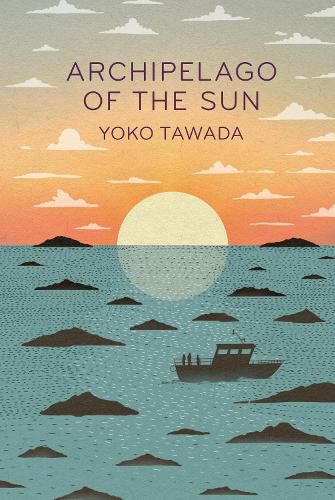
Archipelago of the Sun
In the concluding volume of Yoko Tawada’s imaginative Scattered All Over the Earth trilogy, Hiruko continues her search for her lost homeland, a country that seems to have disappeared from maps and from collective memory. Travelling aboard a mail boat across the Baltic Sea, she is accompanied by an unusual group of companions: Knut, a Danish linguist; Akash, an Indian man exploring gender identity; Nanook, a Greenlander and former sushi chef; Nora, a German museum worker concerned with social justice and the environment; and Susanoo, a mysterious Japanese cook. As the voyage unfolds, unexpected passengers—including figures from literature and mythology—complicate their journey and challenge their understanding of history, nationality and belonging. Blending surrealism, humour and philosophical speculation, Tawada explores how language shapes identity and how people build connections across cultural boundaries. The novel ultimately imagines belonging not as a fixed geographical inheritance, but as something that can emerge through dialogue, storytelling and shared experience.
Japan
2026
9

Repetition
As winter settles over Norway, a chance encounter prompts a woman to revisit the events of her sixteenth year. At the time, she was navigating the familiar upheavals of adolescence: first experiences of alcohol and sex, growing independence, and the uneasy distance between herself and her parents. Her mother watched her anxiously, while her father remained emotionally remote. Yet beneath these ordinary teenage experiences lay something more disturbing, an event that reshaped the family and led to a silence that endured for decades. Looking back as an adult, the narrator struggles to understand what happened and how her family’s response influenced her sense of self. With psychological precision and an unflinching examination of memory, Hjorth explores the lasting power of childhood experiences, the stories families suppress, and the difficulty of recovering a past that may never be fully understood.
Norway
2026
10

People in Love
Nora has spent a decade building a life with her partner, Robin. Their relationship is comfortable and deeply affectionate, shaped by private jokes, quiet mornings, and the small rituals that make a shared life feel like home. When Robin unexpectedly proposes, Nora says yes. They had always agreed that marriage was unnecessary, but perhaps this is simply the next step in a life that already feels settled. Then, on the night of their engagement party, Bren appears at her door.
Bren was Nora’s childhood best friend, the person everyone once assumed she would eventually marry. But a painful heartbreak drove them apart: he left, she stayed, and the feelings neither could articulate remained unresolved. Now his return rekindles an attraction Nora thought belonged to the past, forcing her to reconsider the choices that brought her to this moment.
Moving between the comfort of a long-term relationship and the intoxicating pull of a love left unfinished, Daverley explores the complicated nature of commitment, longing, and regret. This tender, emotionally perceptive novel asks whether the right life is necessarily the one we have chosen—or whether the people we once loved can reveal possibilities we never fully considered. It is a story about the paths not taken, the misunderstandings that shape our lives, and the difficult work of understanding our own hearts.
United Kingdom
2026
11

Paradiso 17
Born in Palestine on the eve of the 1948 Nakba, five-year-old Sufien is forced to leave his family’s ancestral home, beginning a lifelong journey shaped by displacement and the search for belonging. From a refugee camp in Syria to the oil-rich deserts of Kuwait, the university streets of Florence, and the crowded neighbourhoods of New York, Sufien moves between countries and cultures, repeatedly attempting to build a home somewhere new. Yet every place offers both the promise of reinvention and the painful reminder of what he has lost.
In Kuwait, he experiences first love and family estrangement. In Italy, he discovers intellectual freedom and the intoxicating possibilities of life beyond his upbringing. Later, in New York, he forms an unlikely friendship with a wealthy Jewish American man and falls in love with a Jewish woman, creating a family of his own. But even as he establishes roots in the United States, the past remains an enduring presence.
Recounted from his deathbed, Sufien’s story moves between memory and reflection, tracing the complicated relationship between exile, identity, and the desire to belong. Inspired by the life of Assadi’s Palestinian father, this lyrical novel explores how displacement reverberates across generations and asks whether home is a place we can recover, a community we create, or an idea we carry within ourselves.
Palestine
2026
12
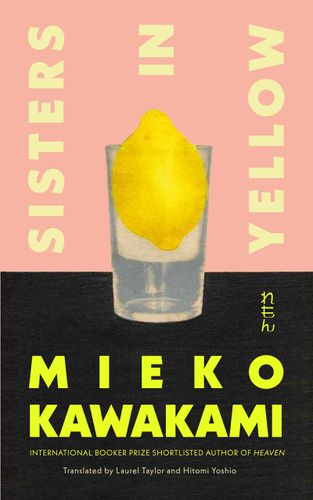
Sisters in Yellow
Fifteen-year-old Hana Ito lives with her young mother in a cramped Tokyo apartment, struggling with poverty and the uncertainty of a life without security. In the late 1990s, when Japan is grappling with economic stagnation, the future seems particularly bleak for those born without privilege. Then Hana meets Kimiko Yoshikawa, an older woman whose confidence and warmth offer her a glimpse of another possible life. Together, they establish Lemon, a modest bar that becomes a refuge for Hana and a place where she begins to imagine a future beyond mere survival.
As the business grows, Hana forms relationships with other young women who, like her, are trying to find their footing in a world that offers them few choices. But financial desperation, dangerous acquaintances, and difficult moral compromises gradually threaten the fragile community they have built. Decades later, news of a shocking criminal case involving Kimiko forces Hana to revisit the past and confront the consequences of decisions she has spent years trying to forget.
Blending crime fiction with an intimate portrait of female relationships, Kawakami explores poverty, ambition, betrayal, and the ways women struggle to protect one another in an unequal society. The novel asks how far people will go to survive—and whether the bonds formed in desperate circumstances can withstand the weight of time and guilt.
Japan
2026