Literary Fiction
All countries
Afghanistan
Algeria
Antigua and Barbuda
Argentina
Australia
Austria
Azerbaijan
Bangladesh
Barbados
Belgium
Benin
Bosnia and Herzegovina
Brazil
Bulgaria
Burkina Faso
Burundi
Cabo Verde
Canada
Central African Republic
Chile
China
Colombia
Congo, Democratic Republic
Costa Rica
Côte d’Ivoire (Ivory Coast)
Croatia
Cyprus
Czech Republic
Denmark
Dominica
Dominican Republic
Egypt
El Salvador
Estonia
Ethiopia
France
Germany
Ghana
Greece
Hungary
Iceland
India
Iran
Iraq
Ireland
Italy
Jamaica
Japan
Jordan
Kazakhstan
Kenya
Kuwait
Latvia
Lebanon
Libya
Lithuania
Madagascar
Mexico
Moldova
Morocco
Myanmar
Netherlands
New Zealand
Nigeria
North Korea
North Macedonia
Norway
Oman
Pakistan
Palestine
Philippines
Poland
Portugal
Puerto Rico
Russia
Rwanda
Saint Kitts and Nevis
Saudi Arabia
Senegal
Singapore
South Korea
Spain
Sri Lanka
Sudan
Sweden
Switzerland
Syria
Taiwan
Tanzania
Thailand
Türkiye
Uganda
United Arab Emirates
United Kingdom
United States
Uzbekistan
Vietnam
Zambia
1
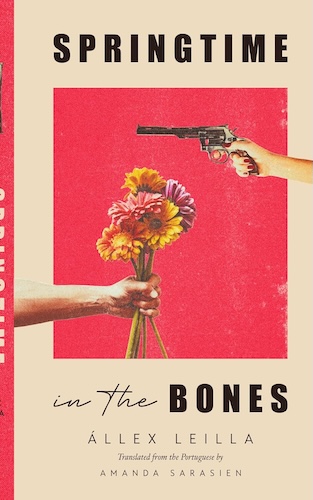
Springtime in the Bones
Set in Salvador, Bahia, Springtime in the Bones follows Luísa, a successful advertising professional whose carefully constructed life is shattered by sexual assault and the breakdown of her marriage. Still emotionally attached to her former husband, Michel, who has embraced his attraction to men, Luísa finds herself confronting two profound losses: the love she cannot let go of and the sense of safety stolen from her. As she struggles with the aftermath of violence, grief gives way to an uncompromising desire for revenge against the men who attacked her.
Told through a fragmented, nonlinear narrative, the novel moves between memories, philosophical reflections, dark humor, and moments of raw emotional intensity. Leilla creates a protagonist who refuses to remain a passive victim, instead exploring the uncomfortable relationship between trauma, anger, and the pursuit of justice. Through Luísa’s determination to reclaim control over her body and her life, the novel challenges conventional expectations of how survivors should respond to violence. Poetic, provocative, and formally experimental, it is a powerful exploration of female autonomy, desire, and the possibility of renewal after profound suffering.
Brazil
2026
2
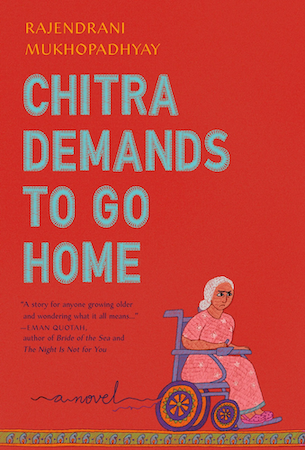
Chitra Demands to Go Home
Seventy-five-year-old Chitra is a Bengali widow who has spent much of her life caring for her family and maintaining a beloved home in Kolkata. Now, with her children grown and living their own lives, she looks forward to enjoying her independence and travelling the world. But her plans collapse when she suffers a stroke while visiting her younger son in the United States. After her son also experiences a medical emergency, Chitra finds herself in Tranquil Town, an assisted-living facility in Columbus, Ohio, surrounded by strangers and unfamiliar customs. Determined to return to India, she refuses to accept her new circumstances and relentlessly pressures her sons to take her home. Yet beneath her stubbornness lies a deeper struggle with displacement, ageing, and the loss of control over her own life. With warmth, humour, and emotional insight, Rajendrani Mukhopadhyay explores the complexities of intergenerational relationships, cultural differences, and the meaning of home. Chitra’s story challenges familiar expectations about ageing and family duty, offering a compassionate portrait of a woman determined to live on her own terms.
India
2026
3
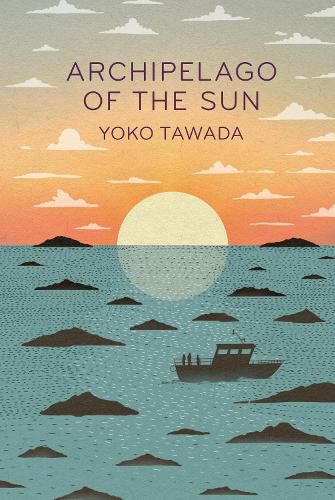
Archipelago of the Sun
In the concluding volume of Yoko Tawada’s imaginative Scattered All Over the Earth trilogy, Hiruko continues her search for her lost homeland, a country that seems to have disappeared from maps and from collective memory. Travelling aboard a mail boat across the Baltic Sea, she is accompanied by an unusual group of companions: Knut, a Danish linguist; Akash, an Indian man exploring gender identity; Nanook, a Greenlander and former sushi chef; Nora, a German museum worker concerned with social justice and the environment; and Susanoo, a mysterious Japanese cook. As the voyage unfolds, unexpected passengers—including figures from literature and mythology—complicate their journey and challenge their understanding of history, nationality and belonging. Blending surrealism, humour and philosophical speculation, Tawada explores how language shapes identity and how people build connections across cultural boundaries. The novel ultimately imagines belonging not as a fixed geographical inheritance, but as something that can emerge through dialogue, storytelling and shared experience.
Japan
2026
4
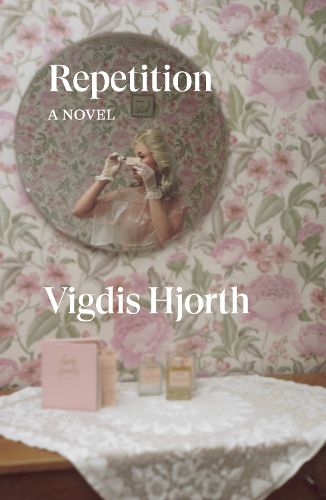
Repetition
As winter settles over Norway, a chance encounter prompts a woman to revisit the events of her sixteenth year. At the time, she was navigating the familiar upheavals of adolescence: first experiences of alcohol and sex, growing independence, and the uneasy distance between herself and her parents. Her mother watched her anxiously, while her father remained emotionally remote. Yet beneath these ordinary teenage experiences lay something more disturbing, an event that reshaped the family and led to a silence that endured for decades. Looking back as an adult, the narrator struggles to understand what happened and how her family’s response influenced her sense of self. With psychological precision and an unflinching examination of memory, Hjorth explores the lasting power of childhood experiences, the stories families suppress, and the difficulty of recovering a past that may never be fully understood.
Norway
2026
5
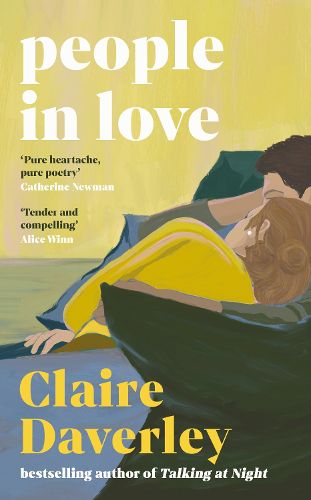
People in Love
Nora has spent a decade building a life with her partner, Robin. Their relationship is comfortable and deeply affectionate, shaped by private jokes, quiet mornings, and the small rituals that make a shared life feel like home. When Robin unexpectedly proposes, Nora says yes. They had always agreed that marriage was unnecessary, but perhaps this is simply the next step in a life that already feels settled. Then, on the night of their engagement party, Bren appears at her door.
Bren was Nora’s childhood best friend, the person everyone once assumed she would eventually marry. But a painful heartbreak drove them apart: he left, she stayed, and the feelings neither could articulate remained unresolved. Now his return rekindles an attraction Nora thought belonged to the past, forcing her to reconsider the choices that brought her to this moment.
Moving between the comfort of a long-term relationship and the intoxicating pull of a love left unfinished, Daverley explores the complicated nature of commitment, longing, and regret. This tender, emotionally perceptive novel asks whether the right life is necessarily the one we have chosen—or whether the people we once loved can reveal possibilities we never fully considered. It is a story about the paths not taken, the misunderstandings that shape our lives, and the difficult work of understanding our own hearts.
United Kingdom
2026
6
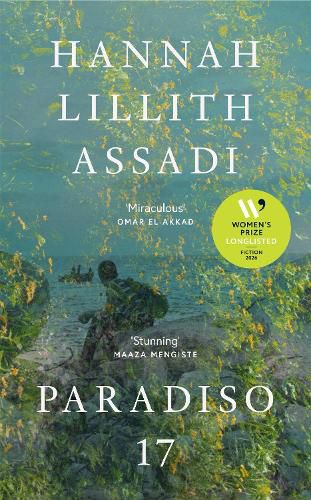
Paradiso 17
Born in Palestine on the eve of the 1948 Nakba, five-year-old Sufien is forced to leave his family’s ancestral home, beginning a lifelong journey shaped by displacement and the search for belonging. From a refugee camp in Syria to the oil-rich deserts of Kuwait, the university streets of Florence, and the crowded neighbourhoods of New York, Sufien moves between countries and cultures, repeatedly attempting to build a home somewhere new. Yet every place offers both the promise of reinvention and the painful reminder of what he has lost.
In Kuwait, he experiences first love and family estrangement. In Italy, he discovers intellectual freedom and the intoxicating possibilities of life beyond his upbringing. Later, in New York, he forms an unlikely friendship with a wealthy Jewish American man and falls in love with a Jewish woman, creating a family of his own. But even as he establishes roots in the United States, the past remains an enduring presence.
Recounted from his deathbed, Sufien’s story moves between memory and reflection, tracing the complicated relationship between exile, identity, and the desire to belong. Inspired by the life of Assadi’s Palestinian father, this lyrical novel explores how displacement reverberates across generations and asks whether home is a place we can recover, a community we create, or an idea we carry within ourselves.
Palestine
2026
7
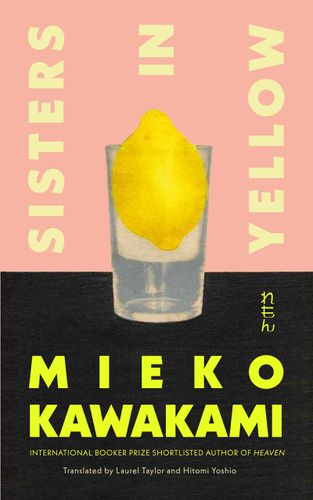
Sisters in Yellow
Fifteen-year-old Hana Ito lives with her young mother in a cramped Tokyo apartment, struggling with poverty and the uncertainty of a life without security. In the late 1990s, when Japan is grappling with economic stagnation, the future seems particularly bleak for those born without privilege. Then Hana meets Kimiko Yoshikawa, an older woman whose confidence and warmth offer her a glimpse of another possible life. Together, they establish Lemon, a modest bar that becomes a refuge for Hana and a place where she begins to imagine a future beyond mere survival.
As the business grows, Hana forms relationships with other young women who, like her, are trying to find their footing in a world that offers them few choices. But financial desperation, dangerous acquaintances, and difficult moral compromises gradually threaten the fragile community they have built. Decades later, news of a shocking criminal case involving Kimiko forces Hana to revisit the past and confront the consequences of decisions she has spent years trying to forget.
Blending crime fiction with an intimate portrait of female relationships, Kawakami explores poverty, ambition, betrayal, and the ways women struggle to protect one another in an unequal society. The novel asks how far people will go to survive—and whether the bonds formed in desperate circumstances can withstand the weight of time and guilt.
Japan
2026
8

Frida Slattery As Herself
When aspiring actress Frida Slattery meets ambitious theatre director John Reddan in a Dublin pub in 2005, neither can imagine how profoundly they will shape each other’s lives. Frida is struggling to establish herself as an actress, while John is beginning to make a name for himself as a writer and director. Recognizing each other’s creative potential, they embark on an artistic partnership that brings them professional success, critical acclaim, and an increasingly complicated personal relationship.
Over the next sixteen years, their intertwined lives carry them from Dublin to London, New York, and Los Angeles. As their careers evolve and their personal lives become more complicated, the boundaries between artistic collaboration, friendship, ambition, and romantic desire grow increasingly difficult to navigate. Success brings new opportunities, but also betrayal, disappointment, and heartbreak. Despite marriages, separations, and the changing circumstances of their lives, Frida and John remain connected in ways neither can fully explain.
With wit and psychological insight, Ana Kinsella explores the relationship between art and identity, examining how creative partnerships can inspire us while also threatening to define us. This expansive literary novel is ultimately a story about love, ambition, artistic expression, and the difficult process of finding one’s own voice.
Ireland
2026
9
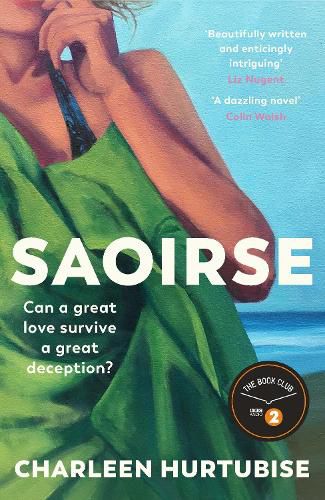
Saoirse
In 1999, Saoirse Byrne appears to have found the life she always dreamed of. Living on Ireland’s rugged Donegal coast, she shares a peaceful home with her partner, Daithí, and their two daughters. A talented artist, she pours her love for her family and her appreciation of the surrounding landscape into her paintings. But beneath this seemingly idyllic existence lies a secret: Saoirse has been living under a stolen identity since fleeing the United States as a teenager. She has crossed an ocean to escape a traumatic childhood and the dangerous people connected to her past, determined never to return to the life she left behind.
When an exhibition in Dublin brings her unexpected acclaim, the attention threatens to expose the carefully constructed identity that has allowed her to survive. As memories of her troubled upbringing and the choices she made to escape resurface, Saoirse must confront the possibility that the past she has tried to bury could destroy the family and freedom she has worked so hard to build.
Moving between Ireland and the United States, this suspenseful literary novel explores trauma, reinvention, the complexities of love, and the fragile boundary between survival and deception. It asks whether it is possible to escape one’s past—or whether true freedom requires facing it at last.
Ireland
2026
10
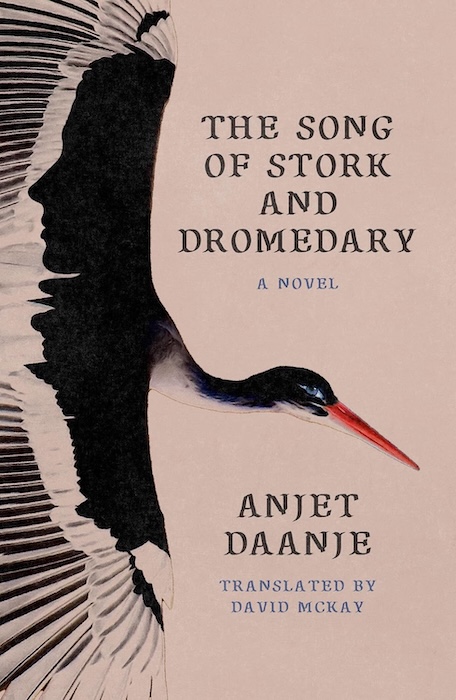
The Song of Stork and Dromedary
Inspired by the lives and literary legacies of the Brontë sisters, The Song of Stork and Dromedary is an intricate literary mystery about an elusive writer whose work continues to fascinate readers long after her death.
In nineteenth-century Yorkshire, Eliza May Drayden and her sisters grow up in relative isolation, finding refuge in their shared passion for literature. When Eliza May finally publishes her only novel, Haeger Mass, it is condemned as disturbing and immoral. Yet, over time, the book acquires a devoted following, and its mysterious author becomes the subject of endless speculation. Who was Eliza May Drayden, and what secrets lie within her strange and unsettling work?
Told across eleven interconnected narratives spanning almost three centuries, the novel unfolds through letters, biographies, personal recollections, mysterious notebooks, and the lives of people touched by Eliza May’s writing. As each perspective reveals new details, conflicting interpretations emerge, making the truth increasingly elusive.
Blending Gothic fiction, historical storytelling, and philosophical mystery, Daanje explores artistic identity, the relationship between an author and her readers, and the human desire to find meaning in stories. Ultimately, the novel reflects on literature’s extraordinary ability to transcend time and mortality.
Denmark
2026
11
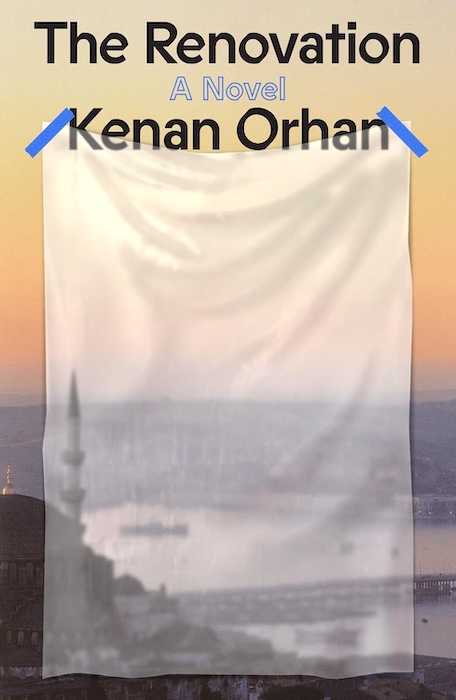
The Renovation
Dilara, a Turkish exile living in a small Italian town, is struggling to care for her father, whose memories are gradually disappearing as dementia takes hold. Preparing to welcome him into her home, she commissions a renovation to make the apartment more comfortable. But when the builders finish, she discovers that her new bathroom has been transformed into a Turkish prison cell, complete with guards and prisoners.
What initially seems like an absurd mistake soon becomes a mysterious connection to the homeland Dilara left behind. Through the cell, she encounters echoes of Istanbul, her family’s painful past, and the political violence that forced them into exile. As her domestic life begins to unravel, the prison becomes an unexpected gateway to memories she can neither fully recover nor escape.
Blending surrealism, dark humour, and political allegory, The Renovation explores exile, belonging, family, and the ways political oppression and personal grief can imprison us long after we have crossed borders.
Türkiye
2026
12

Favorita
When Fila receives a mysterious phone call informing her that her estranged mother, Magdalena, has been murdered, she must confront a family history she has spent years trying to escape. Raised by her grandmother in Switzerland, Fila has barely seen her mother since Magdalena scandalised the family by advertising her brothel in a newspaper. Now, carrying her mother’s ashes, Fila travels to Italy to retrace Magdalena’s turbulent life and discover the truth about her death.
Her journey becomes a surreal, feverish odyssey populated by feminist revolutionaries, ghosts, fascist deserters, and forgotten victims of violence. As Fila investigates her mother’s past, she uncovers a wider history of patriarchal oppression and violence against women.
Blending magical realism, dark humour, historical fiction, and feminist revenge, Favorita explores the complicated inheritance between mothers and daughters, the persistence of trauma across generations, and the struggle to reclaim women’s stories from the forces that seek to silence them.
Switzerland
2026