Literary Fiction
All countries
Afghanistan
Algeria
Antigua and Barbuda
Argentina
Australia
Austria
Azerbaijan
Bangladesh
Barbados
Belgium
Benin
Bosnia and Herzegovina
Brazil
Bulgaria
Burkina Faso
Burundi
Cabo Verde
Canada
Central African Republic
Chile
China
Colombia
Congo, Democratic Republic
Costa Rica
Côte d’Ivoire (Ivory Coast)
Croatia
Cyprus
Czech Republic
Denmark
Dominica
Dominican Republic
Egypt
El Salvador
Estonia
Ethiopia
France
Germany
Ghana
Greece
Hungary
Iceland
India
Iran
Iraq
Ireland
Italy
Jamaica
Japan
Jordan
Kazakhstan
Kenya
Kuwait
Latvia
Lebanon
Liberia
Libya
Lithuania
Madagascar
Mali
Mauritania
Mauritius
Mexico
Moldova
Morocco
Mozambique
Myanmar
Namibia
Netherlands
New Zealand
Nigeria
North Korea
North Macedonia
Norway
Oman
Pakistan
Palestine
Philippines
Poland
Portugal
Puerto Rico
Russia
Rwanda
Saint Kitts and Nevis
Saudi Arabia
Senegal
Sierra Leone
Singapore
South Korea
Spain
Sri Lanka
Sudan
Sweden
Switzerland
Syria
Taiwan
Tanzania
Thailand
Tunisia
Türkiye
Uganda
United Arab Emirates
United Kingdom
United States
Uzbekistan
Vietnam
Zambia
1
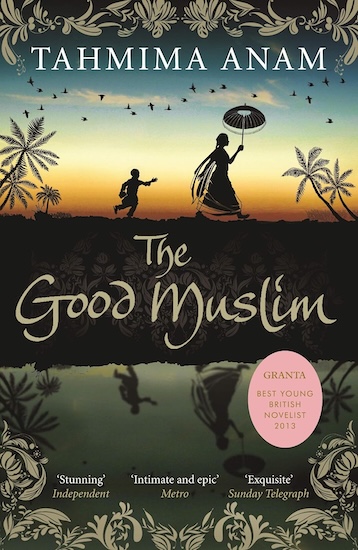
The Good Muslim
Nearly a decade after Bangladesh’s war of independence, Maya Haque returns to Dhaka to reconnect with her family and discovers that the world she left behind has changed profoundly. Her beloved brother, Sohail, once a revolutionary and committed secularist, has embraced religious conservatism and become a charismatic religious leader. As Maya continues to pursue her medical career and fight for women’s rights, the siblings find themselves on opposing sides of an increasingly bitter ideological divide. Their conflict deepens when Sohail makes a decision about his young son, Zaid, that threatens to tear the family apart. Set against the political and social upheavals of post-independence Bangladesh, The Good Muslim explores how war leaves lasting psychological scars, how faith can reshape identity, and how families struggle to reconcile love with deeply held convictions.
Bangladesh
2011
2
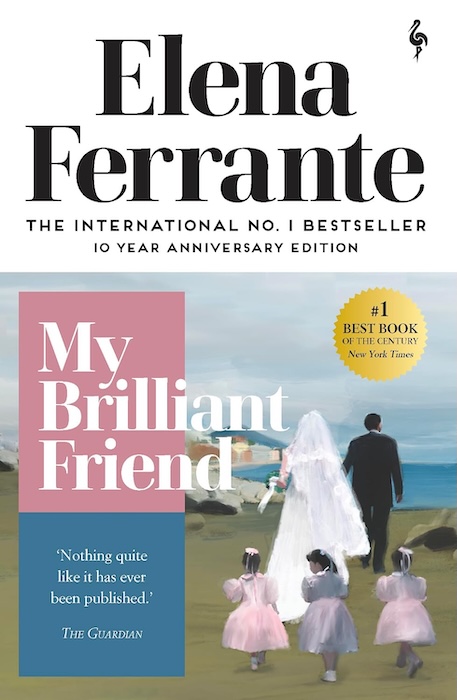
My Brilliant Friend
My Brilliant Friend follows Elena Greco and Raffaella Cerullo, known as Lila, two intelligent and ambitious girls growing up in a poor neighborhood of Naples in the 1950s. Despite their contrasting personalities, they develop a complex friendship shaped by admiration, rivalry, jealousy, and affection. As they navigate childhood and adolescence, both confront the limitations imposed by poverty, gender expectations, and a society marked by violence and rigid social hierarchies. While Elena continues her education, Lila’s opportunities are increasingly restricted, creating a tension that follows them as their lives take different directions. Through their evolving relationship, Ferrante explores female friendship, ambition, identity, and the transformative power of education. The novel is the first installment of the Neapolitan series, offering an intimate portrait of growing up and discovering oneself in a changing Italy.
Italy
2011
3
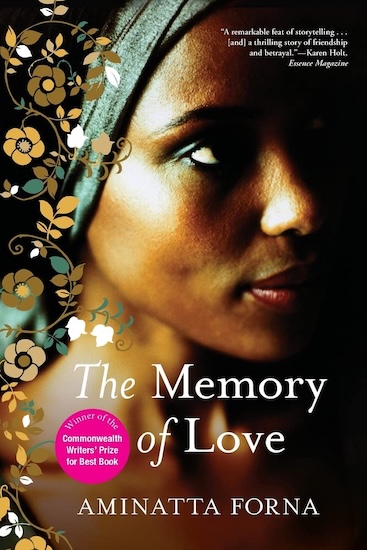
The Memory of Love
In post-civil-war Freetown, Sierra Leone, three men struggle to come to terms with the past and the emotional scars left by decades of political violence. Adrian Lockheart, a British psychologist, arrives in the country hoping to escape his own troubled life. At the hospital where he works, he meets Kai Mansaray, a gifted young surgeon haunted by the horrors he witnessed during the civil war, and Elias Cole, an elderly former university professor whose failing health has brought him face to face with memories he has spent decades trying to suppress.
As Adrian listens to Elias recount his youth in the late 1960s, a story of obsessive love, jealousy, and betrayal gradually emerges. His memories reveal how personal choices became entangled with political repression and the fate of an entire nation. Meanwhile, Kai struggles to reconcile his professional dedication with the psychological wounds that threaten to overwhelm him.
Moving between different generations and periods of Sierra Leonean history, The Memory of Love explores the relationship between private suffering and collective trauma. It is a moving examination of love, guilt, memory, and the long shadow that war casts over those who survive it.
Sierra Leone
2010
4
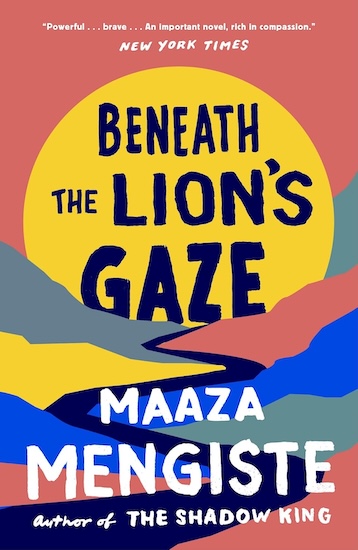
Beneath the Lion's Gaze
Addis Ababa, 1974. As protests sweep Ethiopia and Emperor Haile Selassie’s reign approaches its end, the Hailu family finds itself caught in a revolution that will transform the country—and destroy the fragile security of their lives. Hailu, a respected doctor, faces an impossible moral choice after helping a young woman who has been tortured by the authorities. His decision brings him into the machinery of state repression, while his sons take increasingly different paths: Yonas seeks refuge in faith and family, whereas Dawit joins the underground resistance, risking everything to fight for freedom.
As the monarchy falls and a brutal military regime takes power, the family’s loyalties, convictions, and relationships are tested by violence and fear. Moving between the intimate struggles of a household and the upheaval of a nation, Maaza Mengiste’s debut novel explores the human cost of revolution and the difficult choices people face under authoritarian rule. It is a powerful portrait of a country at a turning point, where the hope of liberation threatens to give way to another cycle of oppression.
Ethiopia
2010
5
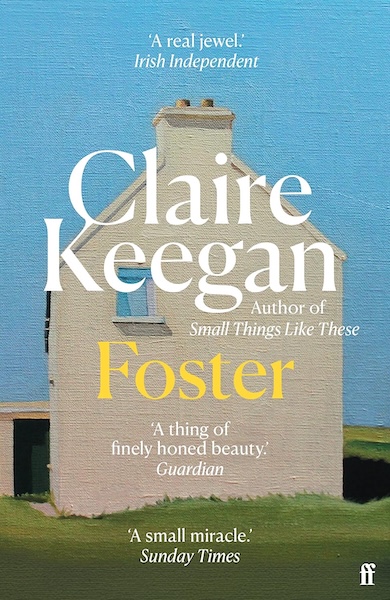
Foster
During the summer of 1981, an unnamed young girl is sent from her crowded family home to live with relatives in rural County Wexford while her mother prepares to give birth. Quiet and observant, she arrives at the Kinsellas’ farm uncertain of what awaits her. But unlike the home she has left behind, this household offers her tenderness, attention, and a sense of belonging she has never experienced before.
As the summer unfolds, the girl discovers the transformative power of being cared for. Yet beneath the peaceful routines of farm life lies a grief the Kinsellas rarely discuss. Through small gestures, unspoken truths, and the child’s growing awareness of the adult world, Claire Keegan creates a moving portrait of childhood and the complicated bonds between parents and children. Foster is a beautifully restrained novella about the families we are born into, the love we find unexpectedly, and the lasting impact of being seen and valued.
Ireland
2010
6
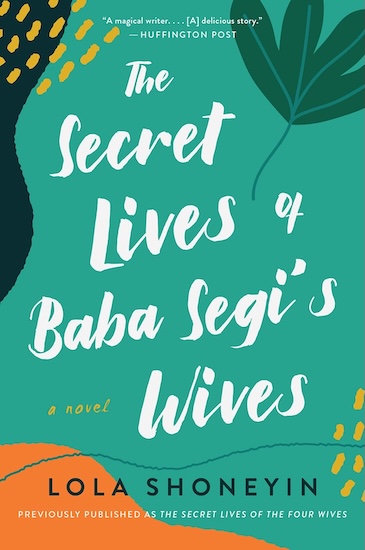
The Secret Lives of Baba Segi's Wives
Set in contemporary Ibadan, Nigeria, The Secret Lives of Baba Segi’s Wives explores the complicated dynamics of a polygamous household where jealousy, ambition, and long-buried secrets threaten to destroy the family’s carefully maintained balance.
Bolanle, a young university graduate, becomes the fourth wife of Baba Segi, a wealthy businessman whose large family is a source of pride and proof of his masculinity. Hoping to find security and acceptance, she enters a household already governed by three wives, each with her own personality, ambitions, and strategies for survival. However, Bolanle’s education and independence make her a source of suspicion and resentment, particularly when she offers to teach the other wives to read.
When Bolanle struggles to conceive, Baba Segi takes her to the hospital to discover the reason for her childlessness. The investigation threatens to expose a secret that the other wives have carefully protected for years. As the truth begins to emerge, the family must confront the consequences of deception and the fragile foundations upon which their relationships have been built.
Told through the perspectives of Baba Segi and his wives, Shoneyin’s novel combines dark humour with an incisive examination of marriage, motherhood, female rivalry, and patriarchal expectations. Beneath its entertaining portrayal of domestic life lies a deeper exploration of the ways women navigate restrictive social structures, compete for security, and find agency within a system that often measures their worth by their ability to bear children.
Nigeria
2010
7
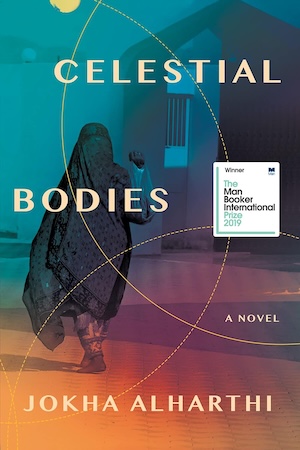
Celestial Bodies
In the Omani village of al-Awafi, three sisters navigate love, marriage, family expectations, and the changing world around them. Mayya marries Abdallah, the son of a wealthy merchant, after experiencing heartbreak. Asma enters marriage out of a sense of duty, while Khawla refuses every suitor, remaining devoted to the man she loves, who has emigrated to Canada.
Through the intertwined lives of these women and their extended family, Jokha Alharthi paints a richly layered portrait of Oman across generations. The novel moves between memories, personal histories, and shifting perspectives, gradually revealing how individual lives are shaped by social class, gender roles, and the legacy of slavery. As Oman transitions from a traditional society to a modern nation, its people struggle to reconcile inherited customs with new possibilities.
Poetic and intricately structured, Celestial Bodies explores the tension between personal desire and social obligation, showing how love, loss, and family secrets echo across generations. The novel won the 2019 Man Booker International Prize, shared by Alharthi and her translator, Marilyn Booth.
Oman
2010
8
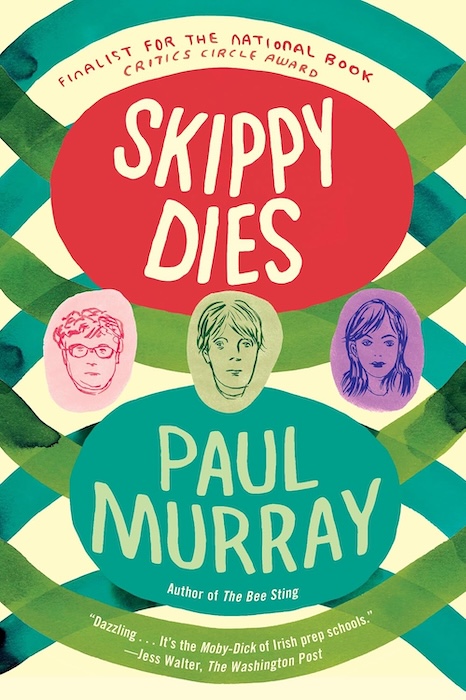
Skippy Dies
Skippy Dies begins with a shocking event at Seabrook College, a prestigious Catholic boarding school in Dublin: fourteen-year-old Daniel “Skippy” Juster collapses and dies in a doughnut shop. His death sets off a chain of revelations that expose the hidden struggles of the students and adults around him.
Before this tragedy, Skippy had been falling in love with Lori, a girl from a neighboring school, while trying to navigate adolescence, bullying, and the pressures of school life. His roommate, Ruprecht Van Doren, a brilliant but socially awkward teenager obsessed with theoretical physics, becomes increasingly determined to understand what happened to his friend. Meanwhile, the school’s teachers wrestle with their own disappointments, secrets, and moral failures.
Combining dark comedy, heartbreak, and social satire, Murray’s novel explores teenage loneliness, first love, addiction, institutional hypocrisy, and the difficulties of growing up. Beneath its humorous surface lies a moving portrait of young people searching for connection in a world that often fails to protect them.
Ireland
2010
9
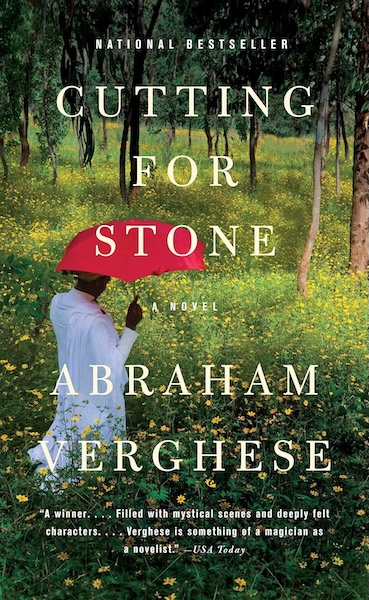
Cutting for Stone
In 1950s Addis Ababa, Ethiopia, twin brothers Marion and Shiva Stone are born from a secret relationship between an Indian nun and a British surgeon at a mission hospital. Their mother dies during childbirth, and their father disappears, leaving the twins to be raised by two devoted doctors who become their adoptive parents. Growing up surrounded by the world of medicine, the brothers develop an extraordinary bond and a shared fascination with surgery.
But as Ethiopia approaches revolution, their lives become entangled in forbidden love, jealousy, and betrayal. A devastating rupture drives Marion into exile in the United States, where he must confront the past he has tried to escape. When circumstances eventually bring him back to the world of his childhood, he faces the people and choices that shaped his life—and discovers that healing some wounds requires more than surgical skill.
Spanning continents and decades, Cutting for Stone is an epic story of brotherhood, sacrifice, and the complicated ties between parents and children. Abraham Verghese combines the intimate drama of a family saga with the intricate world of medicine, exploring how love, loss, and the accidents of birth can shape a person’s destiny.
Ethiopia
United States
2009
10

Vilnius Poker
Set in Soviet-occupied Vilnius during the 1970s, Vilnius Poker is a dark, surreal exploration of life under totalitarian rule. The novel follows Vytautas Vargalys, an intellectual working as a cataloguer in a public library, who becomes obsessed with uncovering a mysterious organisation known as “Them.” He believes this hidden force controls society, manipulating people’s thoughts, behaviour, and destinies. His growing paranoia intertwines with his relationship with Lolita, a mysterious woman whose fate becomes central to his increasingly fractured understanding of reality.
The story unfolds through four different narrators, each offering a conflicting account of events. As their perspectives overlap and contradict one another, the distinction between truth, memory, fantasy, and delusion begins to collapse. Vilnius itself emerges as a living presence: a labyrinthine city haunted by historical trauma, political oppression, and the psychological damage inflicted by Soviet rule.
Combining psychological horror, political satire, and postmodern experimentation, Gavelis challenges official historical narratives and exposes the ways authoritarian systems infiltrate people’s inner lives. The novel also questions whether individuals can ever fully escape the structures of power surrounding them. Published in 1989, as Lithuania approached independence, Vilnius Poker became a landmark of modern Lithuanian literature and a powerful literary reckoning with the Soviet experience.
Lithuania
2009
11
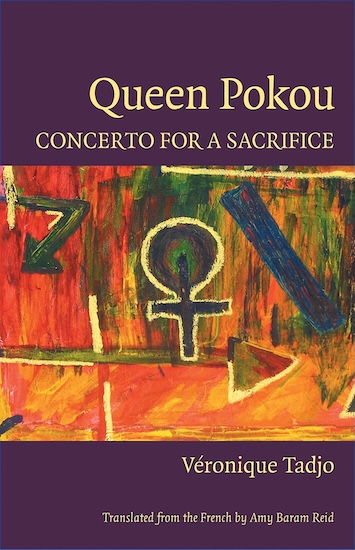
Queen Pokou
In Queen Pokou, Véronique Tadjo reimagines the legend of Queen Abraha Pokou, the eighteenth-century Akan leader traditionally credited with founding the Baoulé people of Côte d’Ivoire. According to the legend, as Pokou leads her people away from danger and across the Comoé River, she faces an impossible choice: sacrifice her only son to secure their passage and save her community. Her decision becomes a defining story of collective survival, maternal grief, and the origins of a people.
Rather than presenting the legend as one fixed historical truth, Tadjo retells it through multiple imagined possibilities. What if Pokou refused to sacrifice her child? What if grief destroyed her, or her journey led her towards a different fate? These alternative narratives challenge the authority of traditional stories and explore how myths are reshaped by the people who inherit them.
Moving between eighteenth-century West Africa and more recent conflicts across the continent, Tadjo connects the queen’s legendary sacrifice to the enduring consequences of war, displacement, and political violence. At its heart, the book asks what communities demand of their leaders—and what individuals must surrender for collective survival. It is both a reimagining of an important African legend and a reflection on motherhood, historical memory, and the human cost of founding a nation.
Côte d’Ivoire (Ivory Coast)
2009
12
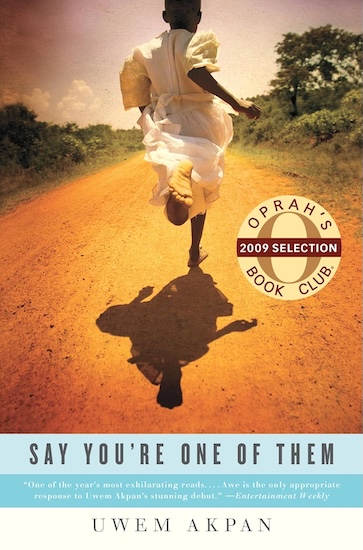
Say You're One of Them
Say You’re One of Them is a collection of five interconnected-in-spirit stories set in different African countries, exploring the lives of children caught in circumstances far beyond their control. Through the eyes of young narrators, Uwem Akpan portrays the devastating effects of poverty, religious conflict, human trafficking, and political violence on families and communities.
Written with emotional intensity and compassion, the collection challenges readers to look beyond headlines and statistics to recognise the individual lives behind Africa’s social and political crises. Rather than reducing its characters to victims, Akpan gives them distinctive voices, relationships, and hopes, creating a powerful portrait of childhood under extreme circumstances.
Benin
Ethiopia
Kenya
Nigeria
Rwanda
2009