Literary Fiction
All countries
Afghanistan
Algeria
Antigua and Barbuda
Argentina
Australia
Austria
Azerbaijan
Bangladesh
Barbados
Belgium
Benin
Bosnia and Herzegovina
Brazil
Bulgaria
Burkina Faso
Burundi
Cabo Verde
Canada
Central African Republic
Chile
China
Colombia
Congo, Democratic Republic
Costa Rica
Côte d’Ivoire (Ivory Coast)
Croatia
Cyprus
Czech Republic
Denmark
Dominica
Dominican Republic
Egypt
El Salvador
Estonia
Ethiopia
France
Germany
Ghana
Greece
Hungary
Iceland
India
Iran
Iraq
Ireland
Italy
Jamaica
Japan
Jordan
Kazakhstan
Kenya
Kuwait
Latvia
Lebanon
Liberia
Libya
Lithuania
Madagascar
Mali
Mauritania
Mauritius
Mexico
Moldova
Morocco
Mozambique
Myanmar
Namibia
Netherlands
New Zealand
Nigeria
North Korea
North Macedonia
Norway
Oman
Pakistan
Palestine
Philippines
Poland
Portugal
Puerto Rico
Russia
Rwanda
Saint Kitts and Nevis
Saudi Arabia
Senegal
Sierra Leone
Singapore
South Korea
Spain
Sri Lanka
Sudan
Sweden
Switzerland
Syria
Taiwan
Tanzania
Thailand
Tunisia
Türkiye
Uganda
United Arab Emirates
United Kingdom
United States
Uzbekistan
Vietnam
Zambia
1
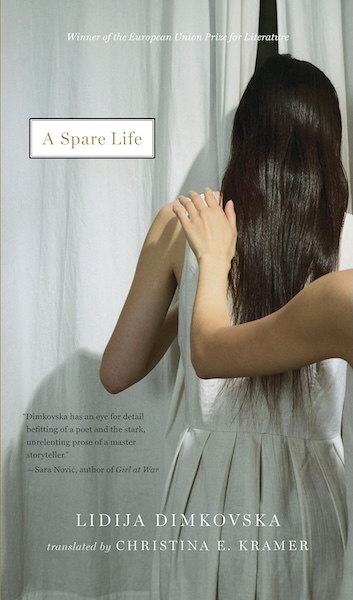
A Spare Life
In 1984, twin sisters Zlata and Srebra are born in Skopje, Macedonia, joined at the head. Growing up physically connected in a society undergoing profound political and social change, they share a body but struggle to establish separate identities, desires, and futures. Their lives are shaped by the devotion and exhaustion of their family, the curiosity and prejudice of strangers, and the everyday difficulties of navigating a world designed for people who can move independently.
Narrated by Zlata, A Spare Life follows the sisters from childhood into adulthood against the backdrop of Yugoslavia’s dissolution and the emergence of an independent Macedonia. As their circumstances change, their longing for privacy and personal freedom becomes increasingly urgent. Combining an intimate family story with a broader portrait of a society in transition, Lidija Dimkovska explores individuality, bodily autonomy, belonging, and the boundaries between dependence and independence. The novel asks what it means to live an authentic life when even the most fundamental choices must be shared.
North Macedonia
2016
2
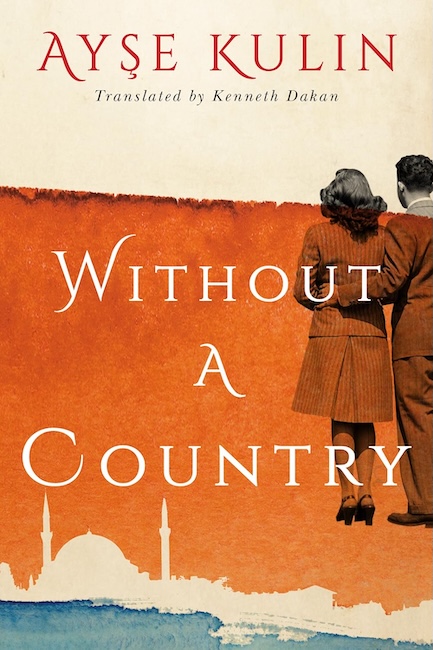
Without a Country
As Hitler’s persecution of Jews intensifies in 1930s Germany, medical professor Gerhard Schliemann and his wife, Elsa, face an impossible choice: remain in the country they call home or flee to protect their family. Their escape leads them to Turkey, where German Jewish academics are offered positions at universities and hospitals as the young republic works to modernise its institutions.
Although the Schliemanns find refuge and the opportunity to rebuild their lives, safety does not guarantee belonging. Across four generations, their descendants navigate political upheaval, military coups, interfaith relationships, and renewed antisemitism. As Turkey itself changes, the family must confront difficult questions about identity, loyalty, and what it means to belong to a country that may never fully accept them.
Spanning nearly a century, Without a Country is a multigenerational saga inspired by the real history of German-speaking Jewish academics who found refuge in Turkey during the Nazi era. Ayşe Kulin explores the complicated relationship between displacement and belonging, showing how the search for a safe home can shape a family’s destiny long after the original refugees are gone.
Türkiye
Germany
2016
3
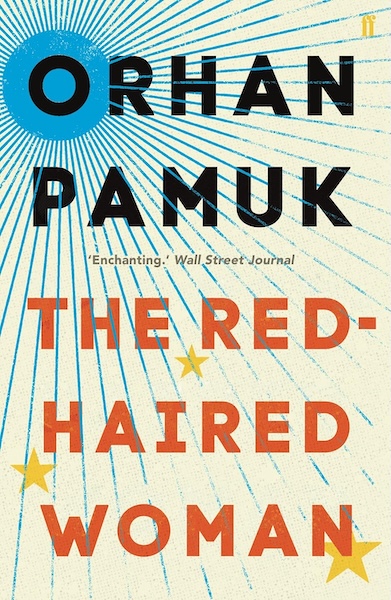
The Red-Haired Woman
In the mid-1980s, teenage Cem leaves Istanbul to work as an apprentice to Mahmut, an experienced well-digger. Together, they travel to a small town outside the city, where they labour to find water in the dry earth. As they work, Mahmut becomes a father figure to Cem, teaching him practical skills and sharing stories that shape the young man’s understanding of the world.
One summer, Cem encounters a mysterious red-haired woman performing with a travelling theatre troupe. Fascinated by her, he becomes entangled in an experience that will haunt him for decades. A terrible incident at the well changes the course of his life, and years later, when Cem has become a successful businessman, the past returns with consequences he could never have anticipated.
Drawing on the ancient myths of Oedipus and Rostam and Sohrab, The Red-Haired Woman explores fathers and sons, guilt, authority, and the forces that shape our destinies. It is a compact, unsettling novel about the stories we inherit and whether we can ever escape them.
Türkiye
2016
4
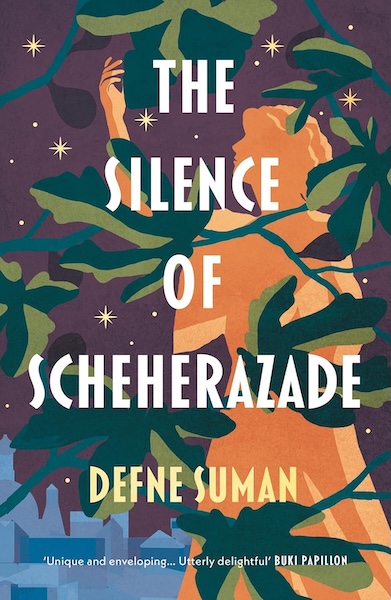
The Silence of Scheherazade
In September 1905, in the cosmopolitan Ottoman port city of Smyrna, a girl named Scheherazade is born as an Indian spy arrives with a secret mission for the British Empire. Their stories unfold alongside those of four families—a Levantine, a Greek, a Turkish, and an Armenian—whose lives are bound together by love, ambition, and the city’s extraordinary cultural diversity.
Over the following seventeen years, the families navigate political upheaval, shifting loyalties, forbidden relationships, and the growing tensions surrounding the decline of the Ottoman Empire. As war transforms the region, the world they know begins to crumble, culminating in the devastating fire that engulfs Smyrna in 1922.
Rich in historical detail and intimate human drama, The Silence of Scheherazade resurrects a lost multicultural world and gives voice to the people caught between competing nationalisms. It is a story of love, displacement, and the silences that history leaves behind.
Türkiye
2016
5
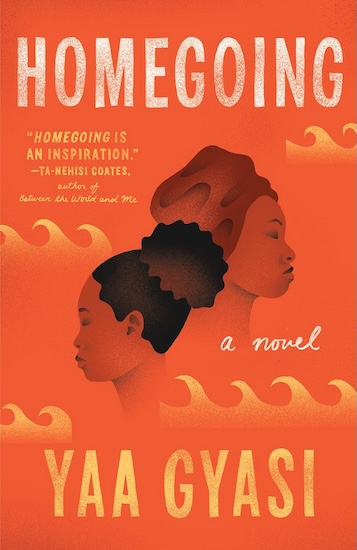
Homegoing
Two half-sisters, Effia and Esi, are born in eighteenth-century Ghana, their lives divided by the forces of slavery and colonialism. Effia marries a British slave trader and lives in comfort above the dungeons of Cape Coast Castle, unaware that her sister Esi is imprisoned below before being sold into slavery in America. From the villages of Ghana to the plantations of the American South and the streets of modern Harlem, their descendants inherit the consequences of choices, violence, and histories they never experienced themselves. Spanning eight generations and three centuries, Homegoing is a powerful exploration of how slavery reshapes families, how trauma travels across generations, and how the past continues to influence the present.
Ghana
2016
6
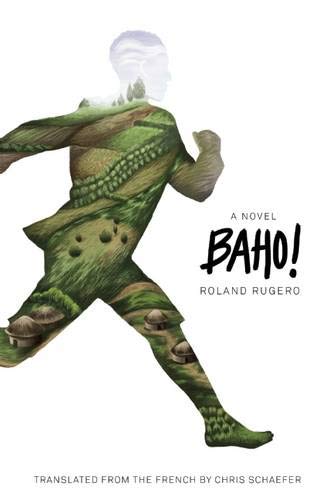
Baho!
Set in a fictional village in Burundi, Baho! follows Nyamuragi, a young boy who cannot speak. When he attempts to ask a young woman for directions to a suitable place to relieve himself, his gestures are misunderstood, and he is accused of intending to sexually assault her. Frightened, he runs away, but his flight is interpreted as proof of guilt. Soon, villagers join the pursuit, and a simple misunderstanding escalates into collective outrage and the threat of mob justice.
Through this tense and darkly satirical story, Roland Rugero examines the dangers of prejudice, social conformity, and the rush to judgment. The novel also explores the consequences of Burundi’s violent past and the challenges of rebuilding trust within a divided society. Incorporating Kirundi proverbs and elements of oral storytelling, Rugero creates a distinctive portrait of Burundian culture while questioning how fear and rumour can distort people’s understanding of truth and justice.
Burundi
2016
7
Stork Mountain
Stork Mountain follows a young Bulgarian-American man who returns to his ancestral village in Bulgaria after the disappearance of his grandfather, a former communist official. Hoping to uncover the truth about his family’s past, he becomes immersed in the history and traditions of a rural community near the Turkish border, where generations have lived through political upheaval, shifting national identities, and religious tensions.
As he investigates his grandfather’s life, the narrator encounters stories of forbidden love, ancient rituals, and the complicated legacy of Bulgaria’s communist era. The village’s inhabitants preserve memories and customs that seem increasingly distant from the modern world, while the narrator struggles to reconcile his American upbringing with the homeland he has inherited through family history. Miroslav Penkov blends folklore, historical fiction, and contemporary storytelling to explore belonging, migration, and the ways personal identity is shaped by collective memory. The novel reveals how the past continues to influence the present, even when its stories have been forgotten, distorted, or deliberately concealed.
Bulgaria
2016
8
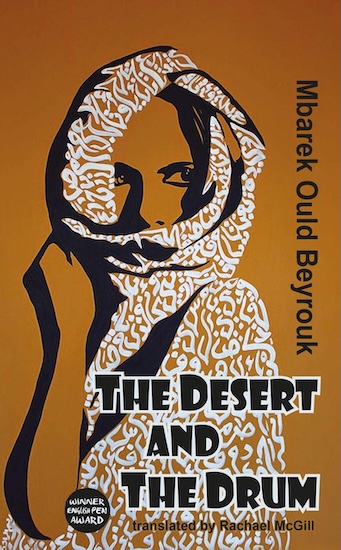
The Desert and the Drum
Rayhana lives with her Bedouin community in the Mauritanian desert, where tradition and family expectations shape every aspect of life. When foreign mining workers arrive near her camp, she becomes fascinated by Yahya, an enigmatic stranger whose presence awakens her curiosity about a world beyond the desert. Her growing attachment to him leads her to make a decision that shocks her community: she runs away to the city, taking with her the tribe's sacred drum. Pursued by her own people, Rayhana must navigate an unfamiliar urban world while searching for someone she has lost.
As she encounters the contradictions of modern Mauritania, Rayhana struggles to distinguish friendship from exploitation and freedom from another form of confinement. Through her journey, Beyrouk examines the tensions between traditional Bedouin society and modern urban life, the restrictions placed on women, and the consequences of economic development for communities whose land and customs are threatened. The novel offers a vivid portrait of a country caught between its past and an uncertain future.
Mauritania
2015
9
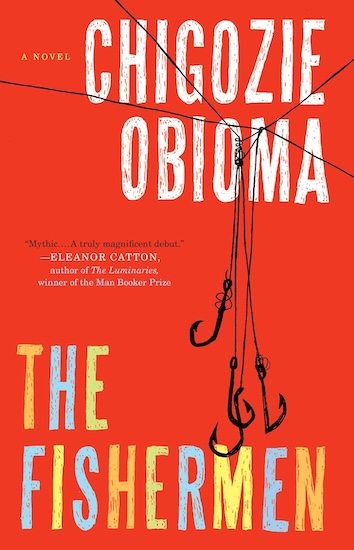
The Fishermen
In 1990s Nigeria, four brothers— Ikenna, Boja, Obembe, and Benjamin—enjoy a close bond until their father leaves their hometown of Akure for work. Taking advantage of his absence, the boys skip school to fish at a forbidden river. There, they encounter Abulu, a local man believed to be mad, who delivers a terrifying prophecy: the eldest brother, Ikenna, will be killed by one of his own siblings.
The prediction plants a seed of suspicion that gradually poisons the brothers’ relationship. As Ikenna becomes increasingly consumed by fear and paranoia, the family struggles to understand the forces tearing them apart. Narrated by nine-year-old Benjamin, the novel follows the devastating consequences of a single prophecy, exploring how belief, fear, and resentment can transform love into violence.
Blending Nigerian folklore, biblical allusions, and the structure of Greek tragedy, The Fishermen is both an intimate portrait of a family in crisis and a broader meditation on fate, brotherhood, and the fragility of human relationships.
Nigeria
2015
10
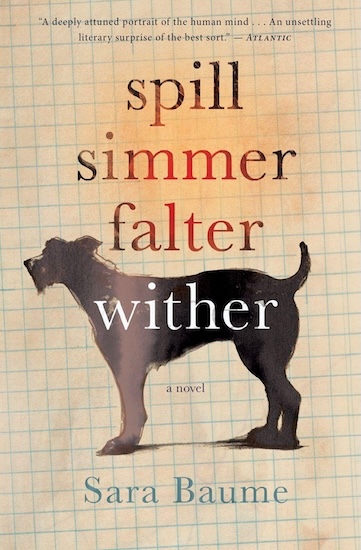
Spill Simmer Falter Wither
Ray is a solitary, middle-aged man who has spent most of his life isolated from the world. When he adopts One Eye, a small, scarred dog with a troubled past, the two unlikely companions begin to build a fragile life together. Both are outsiders, accustomed to being misunderstood and keeping their distance from others. But when an unfortunate incident turns their quiet existence upside down, they leave their coastal village and set out on the road, travelling through the Irish countryside.
Told in an intimate, unconventional voice addressed to the dog, Spill Simmer Falter Wither traces a year through the changing seasons. Sara Baume combines lyrical descriptions of the natural world with a moving portrait of loneliness, vulnerability, and unexpected companionship. This tender yet unsentimental novel asks whether two damaged souls can find belonging in one another when the wider world has little room for either of them.
Ireland
2015
11
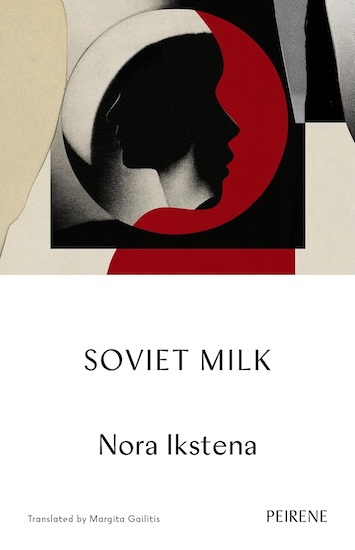
Soviet Milk
Set in Soviet-occupied Latvia between 1969 and 1989, Soviet Milk tells the story of three generations of women whose lives are shaped by political oppression, emotional isolation, and the struggle for personal freedom. At its centre is a talented young gynaecologist who refuses to accept the restrictions imposed by the Soviet system. After a professional conflict with the authorities, she loses the career she has worked towards and is sent to practise medicine in the Latvian countryside. Increasingly withdrawn and unable to find meaning in her life, she struggles to connect with her daughter, who grows up feeling the weight of her mother’s unhappiness.
The story alternates between the voices of the mother and daughter, revealing how political repression reaches into the most intimate corners of family life. While the mother retreats into despair, the daughter searches for understanding, belonging, and hope, finding emotional stability in the care of her grandmother. As Latvia approaches the restoration of its independence, the women’s personal struggles become intertwined with their country’s desire for liberation.
Through its portrayal of a fractured mother-daughter relationship, Ikstena explores how authoritarian systems can damage individual lives across generations. Yet the novel also celebrates the resilience of women, the sustaining power of familial love, and the possibility of breaking free from inherited suffering.
Latvia
2015
12
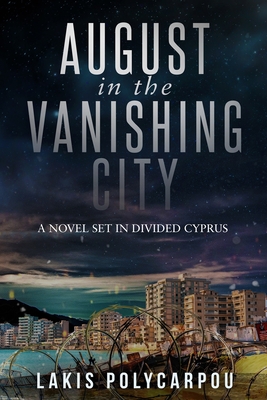
August in the Vanishing City
Set in Cyprus in the mid-1990s, August in the Vanishing City follows Petros, a young Greek Cypriot soldier struggling with love, loss, and the consequences of living on a divided island. Two decades after the Turkish invasion of 1974, the coastal city of Varosha, once a glamorous holiday destination, lies abandoned behind barbed wire and military barriers. For those who were forced to flee, it remains a painful reminder of the homes and lives they lost.
When Petros discovers that Joanna, the woman he has loved since childhood, has fallen for his best friend Elias, he becomes desperate to win her back. His plan leads him to attempt a dangerous journey into Varosha to retrieve a personal keepsake connected to their shared past. Crossing into the restricted city means risking his life, as the area remains under military control.
As Petros navigates the ruins of a vanished world, he must confront not only the dangers surrounding him but also his own ideas about love, loyalty, and what is worth fighting for. His personal struggle unfolds against the broader tensions between Greek and Turkish Cypriots, revealing how political conflict shapes relationships and individual choices.
Combining romance, suspense, and historical context, Polycarpou’s novel explores the meaning of home, the wounds of displacement, and the enduring effects of war on ordinary people. Varosha itself becomes a powerful symbol of interrupted lives and memories that refuse to disappear.
Cyprus
2015