Literary Fiction
All countries
Afghanistan
Algeria
Antigua and Barbuda
Argentina
Australia
Austria
Azerbaijan
Bangladesh
Barbados
Belgium
Benin
Bosnia and Herzegovina
Brazil
Bulgaria
Burkina Faso
Burundi
Cabo Verde
Canada
Central African Republic
Chile
China
Colombia
Congo, Democratic Republic
Costa Rica
Côte d’Ivoire (Ivory Coast)
Croatia
Cyprus
Czech Republic
Denmark
Dominica
Dominican Republic
Egypt
El Salvador
Estonia
Ethiopia
France
Germany
Ghana
Greece
Hungary
Iceland
India
Iran
Iraq
Ireland
Italy
Jamaica
Japan
Jordan
Kazakhstan
Kenya
Kuwait
Latvia
Lebanon
Libya
Lithuania
Madagascar
Mexico
Moldova
Morocco
Myanmar
Netherlands
New Zealand
Nigeria
North Korea
North Macedonia
Norway
Oman
Pakistan
Palestine
Philippines
Poland
Portugal
Puerto Rico
Russia
Rwanda
Saint Kitts and Nevis
Saudi Arabia
Senegal
Singapore
South Korea
Spain
Sri Lanka
Sudan
Sweden
Switzerland
Syria
Taiwan
Tanzania
Thailand
Türkiye
Uganda
United Arab Emirates
United Kingdom
United States
Uzbekistan
Vietnam
Zambia
1
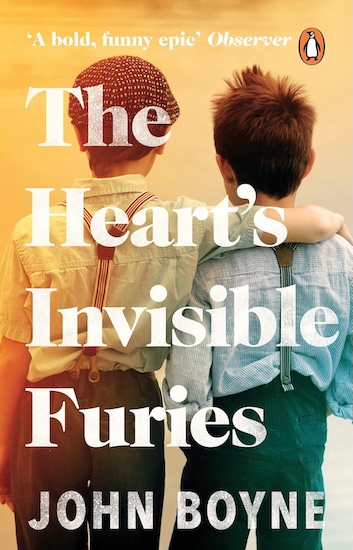
The Heart’s Invisible Furies
Spanning seven decades of Irish history, The Heart’s Invisible Furies follows Cyril Avery, a boy born in 1940s Ireland to an unmarried teenage mother who is publicly shamed by her community and forced to leave her home. Adopted by a wealthy couple in Dublin, Cyril grows up in a household where he is constantly reminded that he is not their biological son. Feeling like an outsider, he embarks on a lifelong search for love, acceptance, and a place where he truly belongs.
As Cyril moves through adulthood, his experiences unfold against the backdrop of a changing Ireland. Growing up in a deeply conservative Catholic society, he struggles to understand and accept his sexuality in a country where homosexuality is criminalised and social prejudice shapes countless lives. His journey takes him beyond Ireland, through relationships, personal losses, and difficult discoveries, before eventually bringing him back to his homeland.
Combining dark humour with moments of profound tenderness, Boyne explores the consequences of religious intolerance, social exclusion, and the silence surrounding sexuality. Through Cyril’s personal experiences, the novel also traces Ireland’s transformation from a society dominated by the Catholic Church to one increasingly willing to confront its past. Ultimately, it is a story about identity, belonging, friendship, and the possibility of finding love and reconciliation after a lifetime of struggle.
Ireland
2017
2
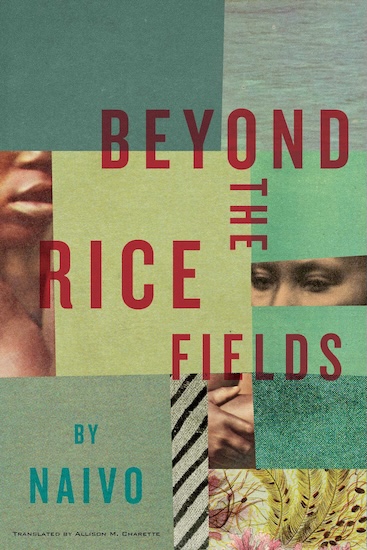
Beyond the Rice Fields
Nineteenth-century Madagascar is a kingdom on the brink of profound transformation. Tsito, a young boy enslaved after the destruction of his village, is taken to live in Sahasoa, where he develops a close bond with Fara, the daughter of his new master. As they grow older, their lives diverge: Tsito dreams of freedom, while Fara struggles with her family’s secrets and the restrictions placed upon her future. Their world is transformed by the arrival of British Christian missionaries and French industrialists, whose influence intensifies existing political and cultural tensions. As religious persecution and brutal royal purges spread across the kingdom, Tsito and Fara find themselves caught in a violent struggle over faith, power, and belonging. Through their intertwined stories, Naivo explores the legacy of slavery, the collision between Malagasy traditions and European influence, and the devastating consequences of political and religious intolerance.
Madagascar
2017
3
f
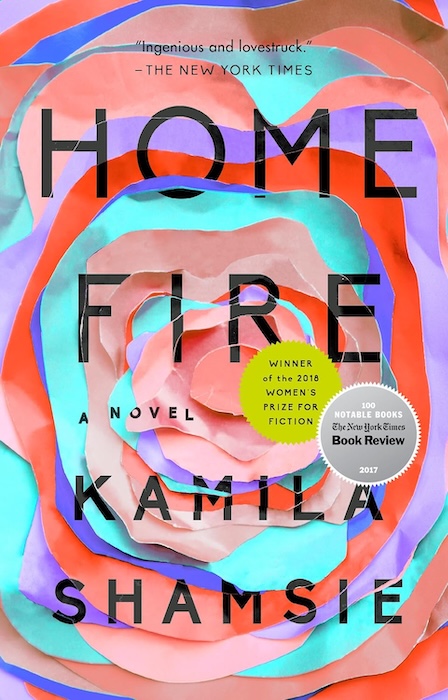
Home Fire is a contemporary reimagining of Sophocles’ ancient Greek tragedy Antigone, exploring family loyalty, political power, and the struggles of British Muslims to reconcile cultural identity with national belonging.
The novel follows Isma Pasha, who has spent years caring for her younger twin siblings, Aneeka and Parvaiz, after their mother’s death. When Isma finally leaves London to pursue her studies in the United States, she remains deeply concerned about her siblings. Parvaiz, haunted by the legacy of his deceased jihadist father, travels to Syria to join ISIS, only to discover that he has made a devastating mistake. Desperate to bring her brother home, Aneeka becomes involved with Eamonn Lone, the son of a powerful British politician whose hard-line policies threaten her family’s future.
As personal relationships become entangled with national security and political ambition, Shamsie examines the painful consequences of divided loyalties. The novel explores how governments define belonging, whose grief is considered legitimate, and what people are willing to sacrifice for those they love. Home Fire won the 2018 Women’s Prize for Fiction.
United Kingdom
2017
4
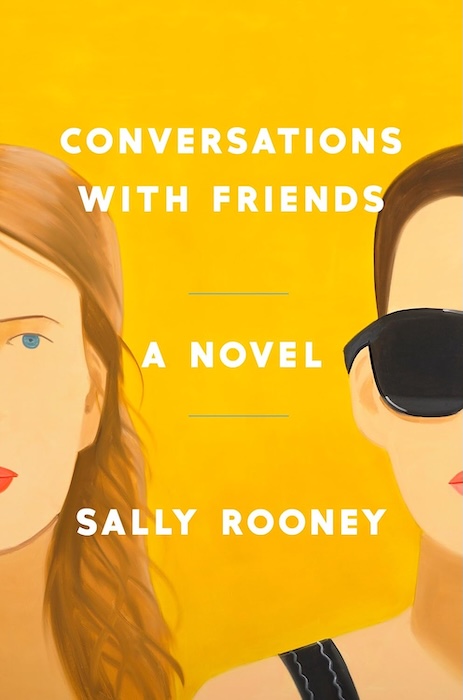
Conversations with Friends
Conversations with Friends follows Frances and Bobbi, two young women in Dublin who were once romantically involved and remain close friends. During a poetry performance, they meet Melissa, an established writer, and her husband, Nick, an actor. What begins as a new social connection gradually develops into a complicated web of attraction, secrecy, and emotional dependency.
Frances, a reserved and intellectually sharp university student, finds herself drawn into an affair with Nick while struggling to understand her own feelings and boundaries. As the relationships between the four characters shift, Frances must confront her ideas about intimacy, loyalty, and self-worth.
With her characteristic precision and understated humor, Sally Rooney explores the uncertainties of young adulthood, the gap between intellectual understanding and emotional experience, and the ways people negotiate power and vulnerability in relationships. The novel offers an intimate portrait of love and identity in contemporary Ireland.
Ireland
2017
5
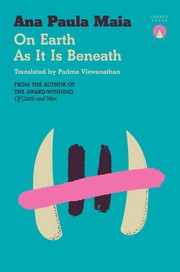
On Earth As It Is Beneath
On Earth as It Is Beneath takes place in a remote Brazilian penal colony that has been abandoned by the authorities, leaving prisoners and guards trapped in a brutal and isolated environment. As the prison deteriorates, the people within it become increasingly subject to violence, cruelty, and arbitrary power. The boundaries between those responsible for maintaining order and those imprisoned begin to blur, exposing the moral corruption of a system that has effectively abandoned its own rules. Maia writes in stark, uncompromising prose, creating an atmosphere of dread in which the surrounding landscape intensifies the characters’ sense of confinement. The novel examines punishment, institutional neglect, and the dehumanising effects of unchecked authority. It asks what happens when a society removes people from view and then abandons responsibility for their lives.
Brazil
2017
6
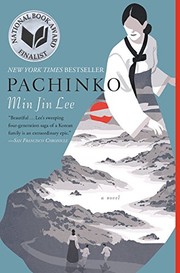
Pachinko
Pachinko follows four generations of a Korean family whose lives are transformed by migration, discrimination, and the search for belonging. The story begins in early twentieth-century Korea, where young Sunja becomes pregnant by a wealthy man who refuses to marry her. She accepts an offer of marriage from a kind-hearted minister and moves with him to Japan, hoping to build a better future. However, the family encounters widespread prejudice against Koreans living in Japan, limiting their opportunities and shaping their identities. As the story moves across generations, each family member struggles to balance personal ambition with cultural heritage and social expectations. Lee explores sacrifice, resilience, family loyalty, and the consequences of historical injustice, portraying how individuals attempt to create meaningful lives in a society that refuses to fully accept them.
South Korea
2017
7
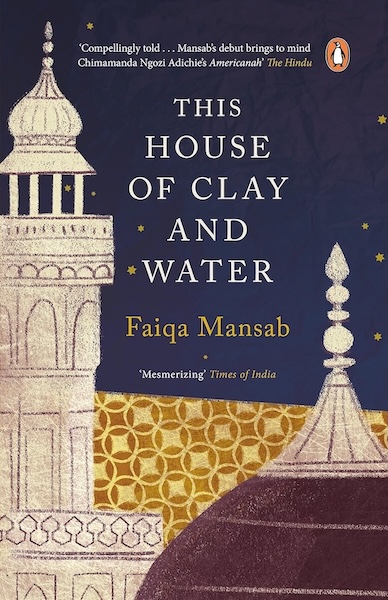
This House of Clay and Water
This House of Clay and Water follows two women whose lives intersect in contemporary Lahore, where social expectations, religious traditions, and personal desires shape the choices available to them. Nida is the wife of a police officer, living a life of privilege that conceals profound loneliness and dissatisfaction. When she encounters Bhanggi, a transgender woman living on the margins of society, an unexpected friendship develops between them. Their connection challenges the boundaries imposed by class, gender, and respectability.
Through their intertwined stories, Faiqa Mansab explores the search for belonging in a society where people who defy conventional expectations often face exclusion and violence. The novel also follows Sasha, a young man whose own emotional struggles become entangled with the women’s lives, adding further complexity to the story’s exploration of love and identity. Against the backdrop of Lahore’s vibrant yet deeply divided social landscape, the novel examines faith, desire, gender, and the human need for acceptance. It asks whether genuine connection can survive in a world determined to categorise people and dictate how they should live.
Pakistan
2017
8
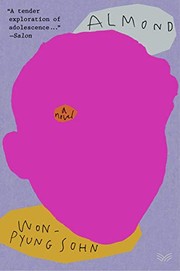
Almond
Almond follows Yunjae, a teenage boy who has difficulty recognising and expressing emotions because of a neurological condition called alexithymia. Due to an unusually small amygdala, the part of the brain associated with emotional responses, Yunjae struggles to understand fear, anger, and happiness in the ways others do. Raised by his mother and grandmother, who teach him how to navigate social situations, he leads a carefully structured life until a violent incident leaves him isolated and forces him to face the world alone.
At school, Yunjae encounters Gon, a troubled boy whose aggressive behaviour hides deep emotional pain. Despite their differences, an unexpected connection develops between them, challenging both boys’ understanding of themselves and each other. Through their evolving relationship, Sohn Won-pyung explores empathy, friendship, trauma, and the meaning of emotional connection. The novel asks whether compassion must come from instinctive feelings or can instead be learned through experience, suggesting that understanding another person may begin with the simple willingness to see beyond appearances.
South Korea
2017
9
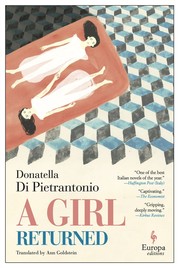
A Girl Returned
A Girl Returned follows a thirteen-year-old girl who is suddenly sent back to the family she barely remembers after being raised by a couple she believed were her parents. Without explanation, she finds herself living with her biological family in a crowded apartment in a poor rural community in southern Italy. Surrounded by unfamiliar siblings and a mother who feels like a stranger, she struggles to understand why she was given away and why she has now been returned.
As she adjusts to her new circumstances, the girl develops a complicated relationship with her younger sister, Adriana, whose boldness and resourcefulness offer both companionship and conflict. Through the protagonist’s perspective, Donatella Di Pietrantonio explores the emotional consequences of abandonment, the divisions between social classes, and the meaning of motherhood and belonging. Written in a restrained, powerful style, the novel captures the vulnerability of adolescence and the lasting impact of secrets within families. It asks whether family is defined by blood, love, or the people who choose to stay.
Italy
2017
10
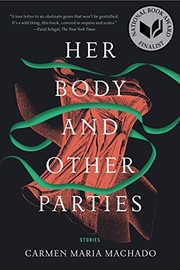
Her Body and Other Parties: Stories
In this electric and provocative debut, Carmen Maria Machado bends genre to shape startling narratives that map the realities of women's lives and the violence visited upon their bodies. A wife refuses her husband's entreaties to remove the green ribbon from around her neck. A woman recounts her sexual encounters as a plague slowly consumes humanity. A salesclerk in a mall makes a horrifying discovery within the seams of the store's prom dresses. One woman's surgery-induced weight loss results in an unwanted houseguest. And in the bravura novella 'Especially Heinous,' Machado reimagines every episode of Law & Order: Special Victims Unit, a show naively assumeded had shown it all, generating a phantasmagoric police procedural full of doppelgangers, ghosts, and girls with bells for eyes.
United States
2017
11
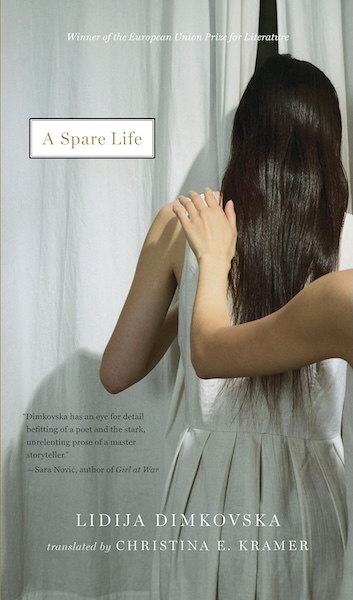
A Spare Life
In 1984, twin sisters Zlata and Srebra are born in Skopje, Macedonia, joined at the head. Growing up physically connected in a society undergoing profound political and social change, they share a body but struggle to establish separate identities, desires, and futures. Their lives are shaped by the devotion and exhaustion of their family, the curiosity and prejudice of strangers, and the everyday difficulties of navigating a world designed for people who can move independently.
Narrated by Zlata, A Spare Life follows the sisters from childhood into adulthood against the backdrop of Yugoslavia’s dissolution and the emergence of an independent Macedonia. As their circumstances change, their longing for privacy and personal freedom becomes increasingly urgent. Combining an intimate family story with a broader portrait of a society in transition, Lidija Dimkovska explores individuality, bodily autonomy, belonging, and the boundaries between dependence and independence. The novel asks what it means to live an authentic life when even the most fundamental choices must be shared.
North Macedonia
2016
12
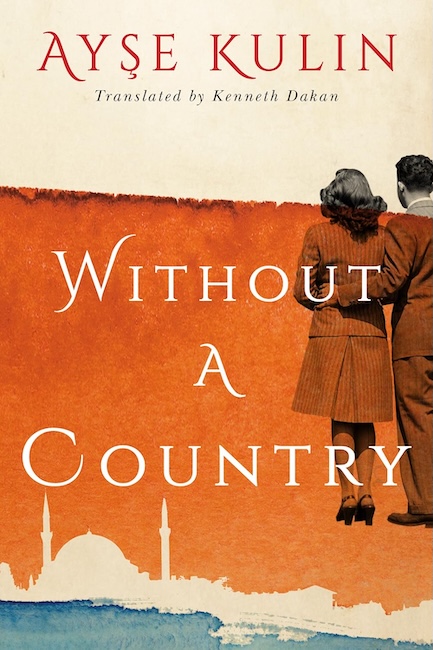
Without a Country
As Hitler’s persecution of Jews intensifies in 1930s Germany, medical professor Gerhard Schliemann and his wife, Elsa, face an impossible choice: remain in the country they call home or flee to protect their family. Their escape leads them to Turkey, where German Jewish academics are offered positions at universities and hospitals as the young republic works to modernise its institutions.
Although the Schliemanns find refuge and the opportunity to rebuild their lives, safety does not guarantee belonging. Across four generations, their descendants navigate political upheaval, military coups, interfaith relationships, and renewed antisemitism. As Turkey itself changes, the family must confront difficult questions about identity, loyalty, and what it means to belong to a country that may never fully accept them.
Spanning nearly a century, Without a Country is a multigenerational saga inspired by the real history of German-speaking Jewish academics who found refuge in Turkey during the Nazi era. Ayşe Kulin explores the complicated relationship between displacement and belonging, showing how the search for a safe home can shape a family’s destiny long after the original refugees are gone.
Türkiye
Germany
2016