Literary Fiction
All countries
Afghanistan
Algeria
Antigua and Barbuda
Argentina
Australia
Austria
Azerbaijan
Bangladesh
Barbados
Belgium
Benin
Bosnia and Herzegovina
Brazil
Bulgaria
Burkina Faso
Burundi
Cabo Verde
Canada
Central African Republic
Chile
China
Colombia
Congo, Democratic Republic
Costa Rica
Côte d’Ivoire (Ivory Coast)
Croatia
Cyprus
Czech Republic
Denmark
Dominica
Dominican Republic
Egypt
El Salvador
Estonia
Ethiopia
France
Germany
Ghana
Greece
Hungary
Iceland
India
Iran
Iraq
Ireland
Italy
Jamaica
Japan
Jordan
Kazakhstan
Kenya
Kuwait
Latvia
Lebanon
Liberia
Libya
Lithuania
Madagascar
Mali
Mauritania
Mauritius
Mexico
Moldova
Morocco
Mozambique
Myanmar
Namibia
Netherlands
New Zealand
Nigeria
North Korea
North Macedonia
Norway
Oman
Pakistan
Palestine
Philippines
Poland
Portugal
Puerto Rico
Russia
Rwanda
Saint Kitts and Nevis
Saudi Arabia
Senegal
Sierra Leone
Singapore
South Korea
Spain
Sri Lanka
Sudan
Sweden
Switzerland
Syria
Taiwan
Tanzania
Thailand
Tunisia
Türkiye
Uganda
United Arab Emirates
United Kingdom
United States
Uzbekistan
Vietnam
Zambia
1
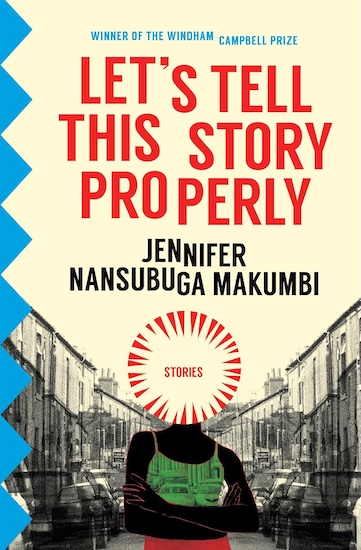
Let's Tell This Story Properly
In Let’s Tell This Story Properly, Jennifer Nansubuga Makumbi explores the experiences of Ugandans living in Britain, examining how migration reshapes identity, family relationships, and the meaning of home. Across a collection of interconnected stories, her characters navigate the challenges of building lives in a country where they may be highly visible as workers and neighbours yet remain socially marginalised. From airport security staff to healthcare workers and families divided between continents, the stories reveal the everyday realities of belonging to more than one place.
The title story follows Nnam, a Ugandan woman living in Manchester, who returns to Uganda with her husband’s body for his funeral rites. There, she discovers that the life she thought she understood concealed painful secrets. Other stories explore the difficult adjustment of immigrants, generational tensions within diaspora families, and the ways cultural expectations persist across distance. Characters often find themselves caught between the home they left and the new home they are trying to make, never feeling entirely at ease in either.
With emotional depth, sharp observation, and occasional dark humour, Makumbi portrays migration as more than a geographical journey. It is also a process of renegotiating family loyalties, cultural identity, and personal history. The collection asks how far people must travel to find belonging—and what happens when the meaning of home changes while they are away.
Uganda
United Kingdom
2019
2
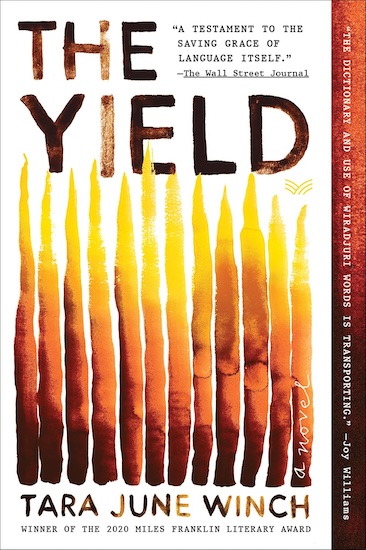
The Yield
In The Yield, Tara June Winch tells the story of Albert Gondiwindi, an elderly Wiradjuri man determined to preserve his people’s language and cultural knowledge before he dies. When Albert passes away, his granddaughter August returns to her family’s home in rural New South Wales after spending ten years in England. Her homecoming brings her face-to-face with painful memories, including the disappearance of her older sister, Jedda, and the colonial history that has shaped her family’s life.
August soon discovers that their ancestral home, Prosperous House, is threatened by a mining company seeking to take over the surrounding land. Determined to protect her family’s heritage, she searches for the dictionary Albert was compiling, a collection of Wiradjuri words and stories that preserves generations of knowledge. His work becomes a vital link to the past, helping August reconnect with her identity and understand the experiences of her ancestors.
The novel unfolds through three interwoven narratives: August’s return, Albert’s dictionary, and the historical account of a missionary whose actions reveal the destructive effects of colonial intervention. Through these different perspectives, Winch explores the connections between language, land, memory, and belonging. The Yield is both a powerful examination of Indigenous dispossession and a celebration of cultural survival, showing how reclaiming language and storytelling can help restore what history has attempted to erase.
Australia
2019
3
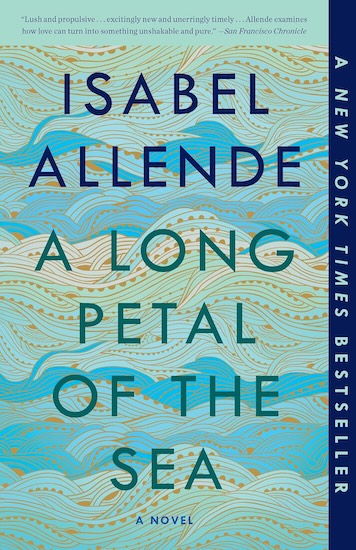
A Long Petal of the Sea
Beginning during the Spanish Civil War, A Long Petal of the Sea follows two people whose lives are transformed by war and exile. Victor Dalmau, a young doctor, becomes caught in the conflict when Franco’s forces defeat the Republican side. Alongside Roser Bruguera, a pregnant widow and gifted pianist, he is forced to flee Spain. To survive, they enter into a marriage neither originally desired and join thousands of Spanish refugees seeking safety abroad.
Their journey takes them aboard the SS Winnipeg, a ship chartered by Chilean poet Pablo Neruda to transport refugees to South America. In Chile, Victor and Roser build a new life while navigating political tensions, cultural differences, and the challenges of starting over in an unfamiliar country. As decades pass, their adopted homeland experiences its own political upheavals, forcing them to confront once again the relationship between belonging, exile, and home.
Spanning generations and continents, Allende’s novel explores how displacement reshapes identity, family, and personal loyalties. Through Victor and Roser’s experiences, she examines the courage required to rebuild a life after losing everything and the enduring hope that one day it may be possible to return home.
Spain
Chile
2019
4
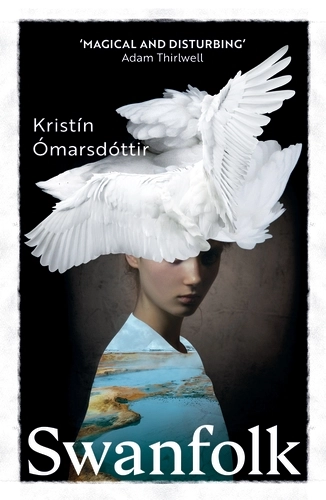
Swanfolk
Set in a strange, unsettling future, Swanfolk follows Elísabet Eva, a young intelligence agent whose life begins to unravel after a traumatic assignment in Paris. Seeking solitude, she takes long walks beside a lake, where she encounters mysterious creatures that are half-woman and half-swan. Fascinated by these beings, she gradually enters their hidden world and becomes entangled in their obsessive, sometimes violent struggle to exist alongside humans. As her involvement deepens, Elísabet begins to question her own perceptions and the reliability of her memories. Blending surrealism, dark fantasy, and psychological fiction, Kristín Ómarsdóttir’s novel explores the fragile boundaries between reality and imagination, belonging and alienation, and the human desire to escape one’s past. Strange, lyrical, and unsettling, Swanfolk uses its mythical creatures to examine the complexities of identity and the difficulty of understanding oneself.
Iceland
2019
5
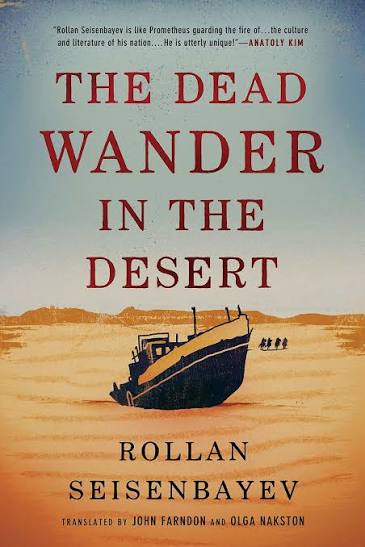
The Dead Wander in the Desert
Set on the vast steppes of Soviet Kazakhstan during the final decades of the USSR, The Dead Wander in the Desert tells the story of a community whose existence is threatened by the ecological destruction of the Aral Sea. Nasyr, an elderly fisherman who becomes a village mullah, watches as the waters that once sustained his people recede, leaving behind a barren landscape and a vanishing way of life. His son, Kakharman, challenges the authorities responsible for diverting the rivers that feed the sea to support ambitious agricultural projects, particularly cotton cultivation. But his struggle against the Soviet bureaucracy seems almost impossible.
Through the lives of a Kazakh family and their neighbors, Seisenbayev explores the devastating consequences of environmental mismanagement, political oppression, and the pursuit of progress at any cost. Blending social history, philosophical reflection, and the rhythms of traditional storytelling, the novel also recalls the wider tragedies endured by the Kazakh people under Soviet rule. Both an elegy for a disappearing world and a warning about humanity’s relationship with nature, it gives a deeply personal dimension to one of the twentieth century’s greatest environmental catastrophes.
Kazakhstan
2019
6
Three Daughters of Eve
Three Daughters of Eve follows Peri, a wealthy Turkish woman whose apparently comfortable life in Istanbul conceals unresolved questions about faith, identity, and personal responsibility. During a dinner party years after her university studies at Oxford, a photograph unexpectedly brings back memories of her time there in the 1990s. As a student, Peri became involved with a charismatic professor who encouraged his pupils to debate religion and belief. Her friendships with two fellow students—one deeply religious and the other firmly atheist—exposed her to conflicting ideas about spirituality, feminism, and freedom. Their relationships eventually culminated in an incident that Peri has struggled to understand ever since. Shafak explores the tension between faith and doubt, the influence of family and culture, and the difficulty of forming an independent worldview in a politically divided society.
Türkiye
2019
7
The Namesake
The Namesake follows the Ganguli family as they move from Calcutta to the United States in search of a new life. Their son, Gogol, grows up caught between his Bengali heritage and the American culture in which he was raised. Named after the Russian writer Nikolai Gogol for personal reasons connected to his father’s past, he comes to resent the unusual name that distinguishes him from his peers. As he grows older, Gogol struggles with romantic relationships, family expectations, and the challenge of defining himself independently of his parents’ experiences. Following the family’s journey across several decades, Lahiri explores migration, cultural adaptation, and the complicated relationship between parents and children. The novel examines how names, memories, and inherited traditions shape identity, revealing that belonging is rarely a simple choice between two cultures.
India
2019
8
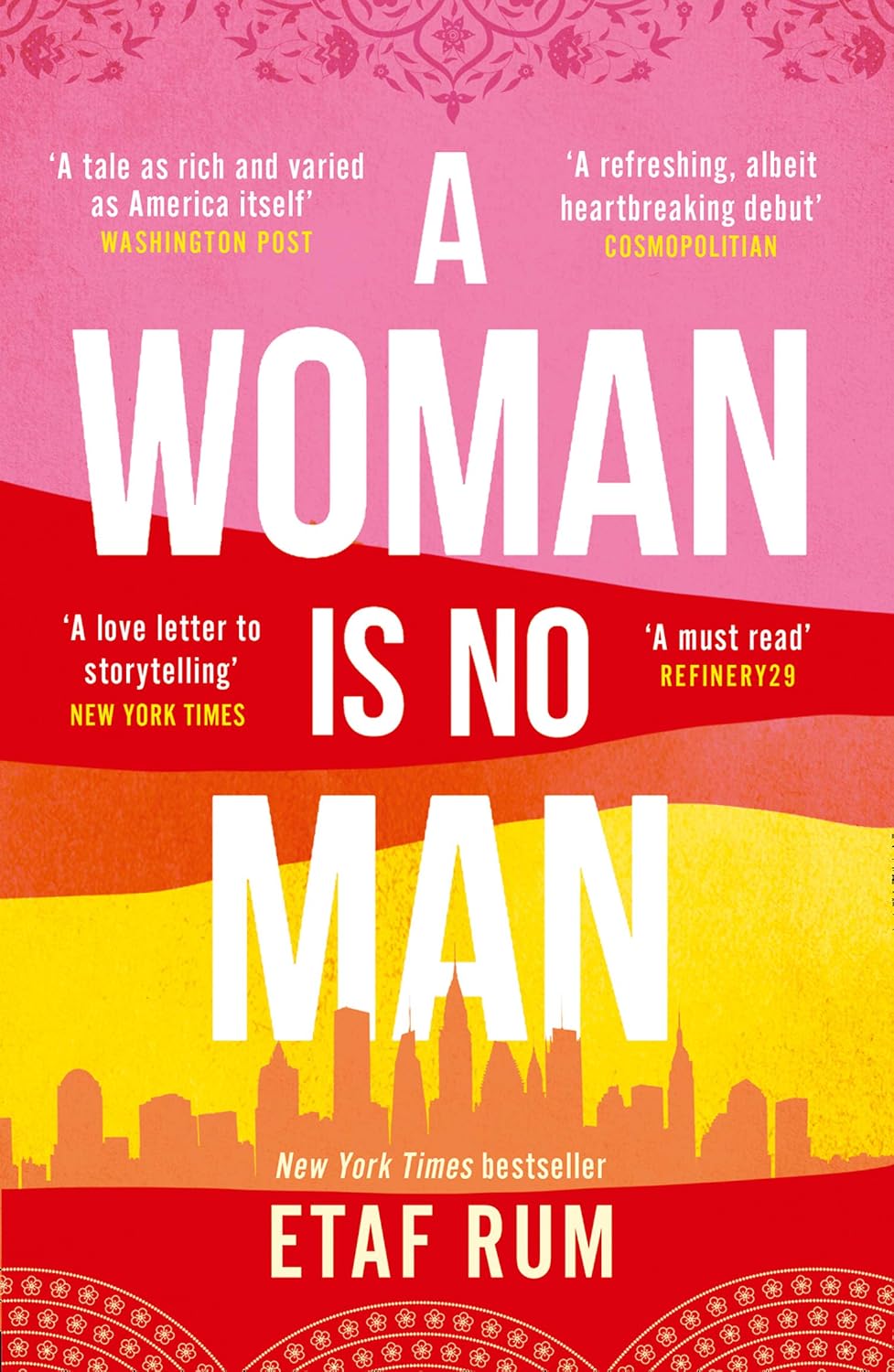
Woman Is No Man
A Woman Is No Man follows three generations of Palestinian women whose lives are shaped by family expectations, cultural traditions, and the struggle for independence. In 1990s Brooklyn, seventeen-year-old Isra marries Adam, a Palestinian American man, and leaves her home in Palestine to begin a new life in the United States. Instead of the freedom she hopes to find, she encounters strict expectations about marriage, motherhood, and obedience. Years later, her daughter Deya grows up under similar pressures, uncertain about her future and the secrets surrounding her mother’s life. As Deya begins to question the stories she has been told, hidden truths emerge that challenge her understanding of family and tradition. Rum explores intergenerational trauma, gender inequality, and the difficult choices women face when personal aspirations conflict with inherited expectations.
Palestine
2019
9
Where Reasons End
Where Reasons End is an intimate, deeply moving novel about a mother’s grief following the death of her teenage son, Nikolai. Unable to accept his absence, the narrator imagines a series of conversations with him in a world suspended between life and death. Through their exchanges, mother and son revisit memories, question language, discuss literature, and reflect on the complexities of their relationship.
Rather than offering simple explanations for an unbearable loss, Yiyun Li explores the limits of understanding and the ways words can both connect people and fail to express what matters most. Their conversations move between tenderness, humour, frustration, and sorrow, revealing the ordinary details that make a relationship unique.
Written in the aftermath of the author’s own loss, the novel blurs the boundaries between fiction and personal experience. It is a profound meditation on motherhood, grief, memory, and the enduring bond between a parent and a child.
China
2019
10
Bangkok Wakes to Rain
Bangkok Wakes to Rain weaves together the lives of people connected to a single house in Bangkok across different periods of Thai history. From a nineteenth-century missionary confronting unfamiliar beliefs to a contemporary musician navigating relationships and personal uncertainty, the novel explores how individual lives are shaped by a city constantly transformed by time, migration, and environmental change. As Bangkok expands and modernizes, recurring floods and rising waters reflect the city’s vulnerability to climate change and its complicated relationship with the natural world. Through interconnected stories that move between past, present, and imagined futures, Pitchaya Sudbanthad examines memory, colonial influence, cultural identity, and the impermanence of human existence. The novel presents Bangkok as a living, evolving character, revealing how personal histories and collective memories remain intertwined with the places people call home.
Thailand
2019
11
She Would Be King
In the nineteenth century, as Liberia emerges as a new nation, three extraordinary individuals from different parts of the African diaspora find their lives intertwined. Gbessa, a young woman from a West African village, is exiled after being accused of witchcraft. Left to die in the wilderness, she survives a deadly snakebite and discovers she possesses an unusual gift: immortality. June Dey, born into slavery on a plantation in Virginia, has extraordinary physical strength that he struggles to control. Norman Aragon, the son of a British coloniser and a Jamaican Maroon woman, can disappear from sight whenever the earth calls him.
Their journeys eventually bring them to Monrovia, where former enslaved people from America are attempting to establish a new society alongside Liberia's indigenous communities. As tensions rise between settlers, local populations, and European powers, the three must decide how to use their extraordinary abilities to protect their new homeland.
Blending magical realism, African folklore, and historical fiction, She Would Be King reimagines the founding of Liberia through stories of displacement, resistance, identity, and the complicated legacies of colonialism.
Liberia
Jamaica
United States
2018
12

At the Breakfast Table
On Büyükada, an island off Istanbul, relatives gather in the summer of 2017 to celebrate the hundredth birthday of Şirin Saka, a celebrated artist whose long life has spanned nearly a century of political and cultural change. What should be a joyful family occasion soon becomes an encounter with the past, as the younger generations begin to question the silences that have shaped their lives.
Şirin’s grandchildren, Nur and Fikret, and her great-granddaughter, Selin, know that something painful lies beneath the family’s carefully maintained image. Hoping to uncover the truth, they invite Burak, a family friend and investigative journalist, to interview Şirin. But the elderly artist has spent decades concealing a history that reaches beyond her personal life into the suppressed memories of the country itself.
Told through four perspectives, At the Breakfast Table explores the inheritance of family secrets, the psychological cost of silence, and the courage required to confront uncomfortable truths. Defne Suman weaves together intimate family drama and Turkey’s complicated history in a novel about memory, identity, and the possibility of breaking free from the past.
Türkiye
2018