Literary Fiction
All countries
Afghanistan
Algeria
Antigua and Barbuda
Argentina
Australia
Austria
Azerbaijan
Bangladesh
Barbados
Belgium
Benin
Bosnia and Herzegovina
Brazil
Bulgaria
Burkina Faso
Burundi
Cabo Verde
Canada
Central African Republic
Chile
China
Colombia
Congo, Democratic Republic
Costa Rica
Côte d’Ivoire (Ivory Coast)
Croatia
Cyprus
Czech Republic
Denmark
Dominica
Dominican Republic
Egypt
El Salvador
Estonia
Ethiopia
France
Germany
Ghana
Greece
Hungary
Iceland
India
Iran
Iraq
Ireland
Italy
Jamaica
Japan
Jordan
Kazakhstan
Kenya
Kuwait
Latvia
Lebanon
Liberia
Libya
Lithuania
Madagascar
Mali
Mauritania
Mauritius
Mexico
Moldova
Morocco
Mozambique
Myanmar
Namibia
Netherlands
New Zealand
Nigeria
North Korea
North Macedonia
Norway
Oman
Pakistan
Palestine
Philippines
Poland
Portugal
Puerto Rico
Russia
Rwanda
Saint Kitts and Nevis
Saudi Arabia
Senegal
Sierra Leone
Singapore
South Korea
Spain
Sri Lanka
Sudan
Sweden
Switzerland
Syria
Taiwan
Tanzania
Thailand
Tunisia
Türkiye
Uganda
United Arab Emirates
United Kingdom
United States
Uzbekistan
Vietnam
Zambia
1
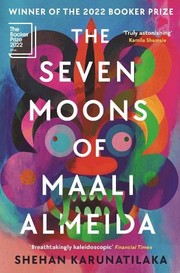
The Seven Moons of Maali Almeida
The Seven Moons of Maali Almeida follows Maali, a war photographer and gambler who awakens after his death in a mysterious afterlife. Set against the backdrop of Sri Lanka’s violent civil conflict in the 1980s, the novel gives Maali seven moons—or seven days—to discover who killed him and to help the people he loves find a collection of photographs that could expose atrocities committed during the war. As he navigates a bureaucratic and chaotic realm of the dead, he encounters other spirits and gradually confronts the dangers he faced while alive. Karunatilaka combines supernatural fiction, dark humour, and political satire to examine violence, corruption, and the struggle to preserve truth in a society marked by fear. The novel explores the responsibilities of witnessing, the power of evidence, and the difficulty of achieving justice when the dead have been denied a voice.
Sri Lanka
2022
2
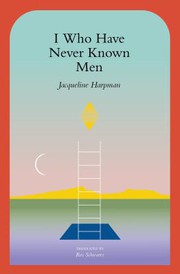
I Who Have Never Known Men
I Who Have Never Known Men follows an unnamed young woman imprisoned underground with thirty-nine other women. Guarded by silent male soldiers, the women live in a confined space, deprived of privacy, freedom, and meaningful knowledge of the outside world. Unlike her fellow prisoners, who remember their lives before captivity, the narrator has no memories of the world beyond the prison and has never experienced ordinary human relationships.
When an unexpected event allows the women to escape, they emerge into an unfamiliar landscape that appears almost entirely devoid of human life. Forced to survive together, they search for answers about their captivity and the fate of humanity, but the world offers few explanations. As time passes, the narrator struggles to understand concepts such as love, sexuality, memory, and death without having experienced them in the ways others have.
Blending dystopian fiction with philosophical reflection, Harpman’s novel explores freedom, loneliness, human nature, and what it means to be human when society and its inherited knowledge have disappeared.
Belgium
2022
3

Boulder
In Boulder, Eva Baltasar tells the story of a solitary woman who works as a cook on a ship and finds comfort in a life defined by independence, physical desire, and freedom from emotional commitments. Her carefully constructed world changes when she meets Samsa, a woman with whom she begins a relationship. When Samsa expresses her desire to become a mother, their partnership enters unfamiliar territory, forcing Boulder to confront the tensions between intimacy and autonomy. Through sparse, intense prose, Baltasar explores queer desire, jealousy, motherhood, and the difficulty of building a shared life without losing oneself. The novel offers an uncompromising portrait of love as both a source of connection and a challenge to personal freedom.
Iceland
Spain
2022
4
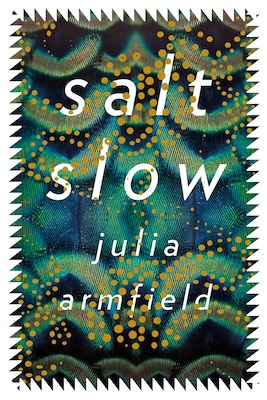
Salt Slow
In her brilliantly inventive and haunting debut collection of stories, Julia Armfield explores bodies and the bodily, mapping the skin and bones of her characters through their experiences of isolation, obsession, love and revenge.
Teenagers develop ungodly appetites, a city becomes insomniac overnight, and bodies are diligently picked apart to make up better ones. The mundane worlds of schools and sleepy sea-side towns are invaded and transformed, creating a landscape which is constantly shifting to hold on to its inhabitants. Blurring the mythic and the gothic with the everyday, salt slow considers characters in motion – turning away, turning back or simply turning into something new entirely.
United Kingdom
2022
5
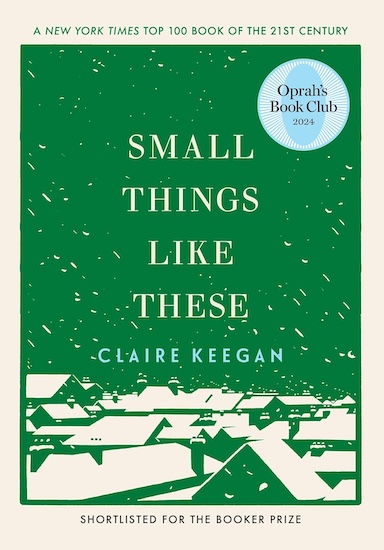
Small Things Like These
It is 1985 in a small Irish town, and coal merchant Bill Furlong is preparing for the busiest weeks of the year. A devoted husband and father of five daughters, he has built a modest but stable life through hard work. Yet as Christmas approaches, a delivery to the local convent reveals something deeply troubling: girls are being confined there under the authority of the Catholic Church, their suffering concealed behind respectable walls.
The discovery forces Bill to confront uncomfortable memories of his own childhood and the kindness that once helped him survive. In a community where the Church holds enormous power and silence protects those in authority, speaking out could jeopardise his livelihood and his family’s security. With remarkable economy and emotional depth, Small Things Like These explores complicity, moral courage, and the quiet choices that define a person’s character. It is a powerful story about the cost of doing what is right when looking away would be easier.
Ireland
2021
6
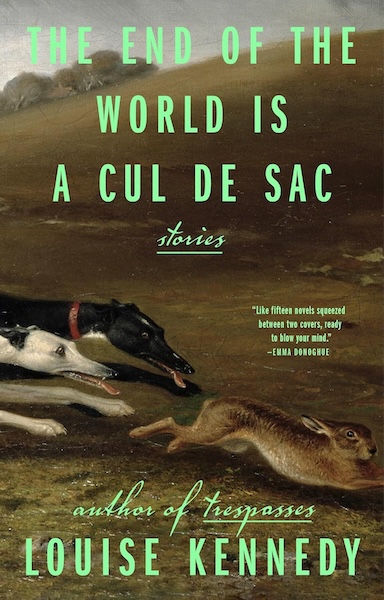
The End of the World Is a Cul de Sac
In this striking collection of fifteen short stories, ordinary lives unravel in unexpected ways. A newly married woman finds herself abandoned in a half-finished housing estate; a mother grows increasingly suspicious of her husband’s relationship with a teenage girl; a woman struggles with guilt after an abortion threatens her marriage. Across these stories, Louise Kennedy’s characters confront betrayal, poverty, violence, loneliness, and the quiet desperation of lives that have not turned out as planned.
Set against the landscapes and social realities of Ireland, the collection reveals how private struggles are shaped by wider forces, from the legacy of the Troubles to restrictive expectations placed on women. Kennedy balances bleak humour with moments of tenderness and beauty, finding humanity in characters who are often flawed, trapped, or complicit in their own unhappiness. The End of the World Is a Cul de Sac is an unflinching portrait of people at breaking points, exploring how cruelty and vulnerability coexist—and how unexpected glimpses of hope can emerge from the most difficult circumstances.
United Kingdom
2021
7
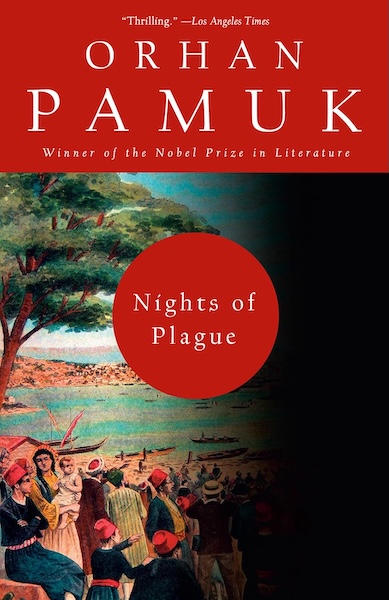
Nights of Plague
In 1901, a deadly plague reaches Mingheria, a fictional island in the eastern Mediterranean and the twenty-ninth province of the declining Ottoman Empire. Home to both Muslim and Greek Orthodox communities, the island is already divided by religious tensions and political rivalries. As the epidemic spreads, the Ottoman authorities send experts to impose quarantine measures, but suspicion, resistance, and competing loyalties threaten to undermine every attempt to contain the disease.
When a mysterious murder complicates the crisis, the island descends into a struggle involving religious leaders, government officials, scientists, and ordinary people desperate to survive. As the Ottoman administration loses control, the epidemic becomes a catalyst for rebellion and the emergence of a new national identity.
Blending historical epic, detective story, and political satire, Nights of Plague explores how fear reshapes societies and how crises expose the fragility of authority. Through an imagined history of an Ottoman island, Pamuk examines nationalism, religious conflict, scientific reasoning, and the human tendency to choose ideology over evidence.
Türkiye
2021
8
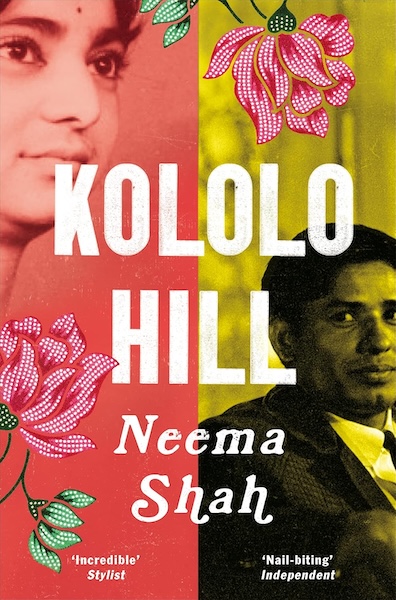
Kololo Hill
In 1972, Ugandan Asians are given just ninety days to leave the country under President Idi Amin’s expulsion order. For Asha and Pran, newly married and working to secure their future, the decree means abandoning the family business and the life they have built. Pran’s mother, Jaya, must also leave the home she has known for decades. As violence escalates in Kampala and people begin disappearing, the family faces an uncertain journey to Britain, where refuge does not necessarily mean belonging.
Arriving in a country that feels unfamiliar, they must rebuild their lives while carrying the emotional weight of everything they have lost. But their struggle is complicated by a devastating secret surrounding their expulsion—one that threatens to fracture the family just when they need one another most.
Moving between the green hills of Kampala and the terraced streets of London, Kololo Hill explores displacement, family loyalty, and the meaning of home. Inspired by the history of Uganda’s Asian community and the author’s own family heritage, this moving novel reveals how political upheaval can reshape lives across generations.
Uganda
United Kingdom
2021
9
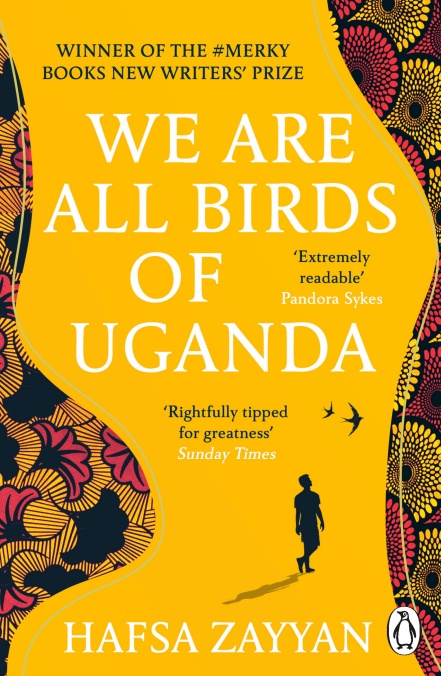
We Are All Birds Of Uganda
In 1960s Uganda, Hasan is struggling to rebuild his life after the death of his wife. Just as he begins to find his footing, political upheaval and rising racial prejudice threaten everything he has worked for. As a member of Uganda’s South Asian community, Hasan faces an uncertain future in a country his family has long called home. The political climate deteriorates further under Idi Amin’s regime, which ultimately forces many South Asians to leave Uganda.
Decades later, in London, Sameer appears to have everything: a successful career as a lawyer and the future he once dreamed of. Yet beneath his achievements lies a persistent sense of emptiness. An unexpected family tragedy draws him back into his family’s history, revealing the sacrifices, losses, and unanswered questions that shaped his identity.
Moving between generations and continents, We Are All Birds of Uganda explores displacement, racial prejudice, inherited trauma, and the complicated meaning of belonging. Through Hasan and Sameer’s intertwined stories, Hafsa Zayyan examines how migration reshapes families and how the past continues to influence those who inherit its consequences.
Uganda
United Kingdom
2021
10
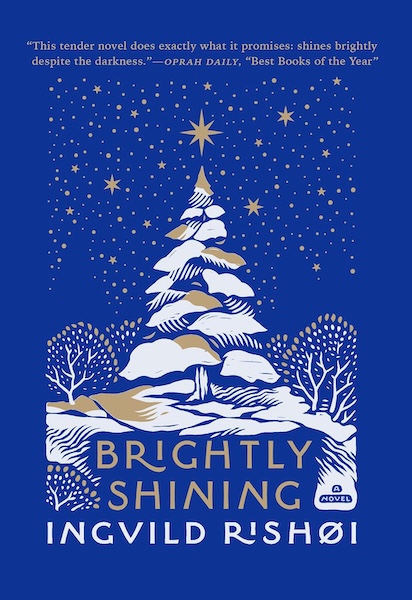
Brightly Shining
In the working-class Oslo neighbourhood of Tøyen, ten-year-old Ronja and her older sister Melissa are trying to hold their family together. Their father, who struggles with alcoholism and cannot keep a job, briefly finds work selling Christmas trees. But when he returns to his old habits, Melissa must take his place at the stall, working long hours before and after school. Ronja joins her, charming customers and selling Christmas wreaths to help keep food on the table.
Told through Ronja’s observant, hopeful eyes, Brightly Shining captures the strange mixture of childhood innocence and adult responsibility. As Christmas approaches, the sisters dream of a warmer, kinder world, finding occasional help from strangers while concealing the reality of their home life. Their love for their father remains tangled with the knowledge that they cannot rely on him.
With tenderness, quiet humour, and touches of magical realism, Ingvild H. Rishøi explores poverty, addiction, sisterhood, and the fragile hope that kindness can offer even in the darkest circumstances.
Norway
2021
11
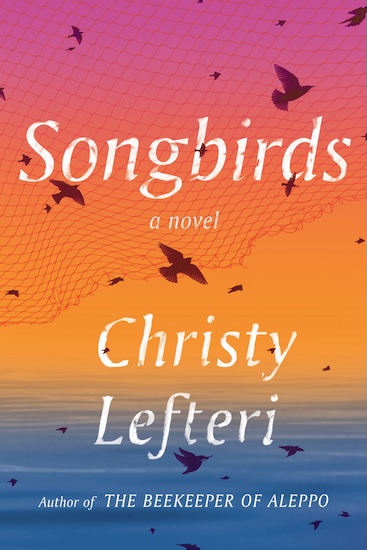
Songbirds
Set in Nicosia, Cyprus, Songbirds explores the lives of migrant domestic workers whose sacrifices and struggles often remain invisible to the society they serve.
Nisha, a young woman from Sri Lanka, has left her little daughter behind with relatives so she can work abroad and send money home. Employed as a nanny and housekeeper by Petra, a wealthy widow, Nisha has become an indispensable part of the household, forming a close bond with Petra’s young daughter, Aliki. Yet while she cares for someone else’s child, she is separated from her own, communicating with her daughter through video calls whenever she can.
Nisha’s secret relationship with Yiannis, a man who makes his living poaching protected songbirds, offers the possibility of a different future. He dreams of marrying her and leaving his dangerous work behind. But when Nisha mysteriously disappears one evening, both Yiannis and Petra are left searching for answers. When the police show little interest in investigating the disappearance of a migrant worker, Petra takes matters into her own hands, gradually uncovering the precarious realities of Nisha’s life and the exploitation faced by other migrant women.
Inspired by the real-life disappearances of migrant women in Cyprus, Lefteri’s novel draws parallels between the songbirds trapped along migration routes and people who leave their homelands in search of a better life, only to find themselves vulnerable to exploitation. Through the intertwined stories of Nisha, Petra, and Yiannis, the novel examines motherhood, social inequality, belonging, and the human cost of migration.
Cyprus
2021
12
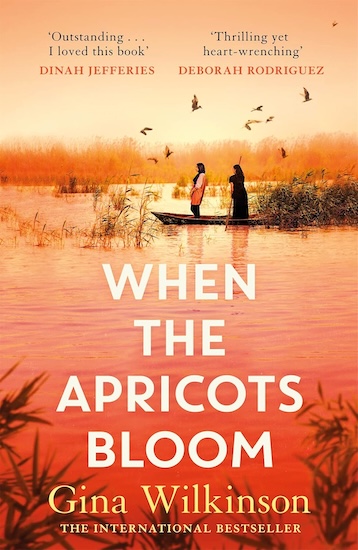
When the Apricots Bloom
Baghdad, 2002. Under Saddam Hussein’s dictatorship, three women find their lives entangled in a dangerous web of secrets, surveillance, and betrayal. Huda, a secretary at the Australian embassy, is ordered by Iraq’s secret police to befriend and spy on Ally Wilson, the wife of a Western diplomat. Refusing could endanger her teenage son, who faces the threat of forced recruitment into a brutal militia. Meanwhile, Rania, Huda’s estranged childhood friend and the daughter of a once-wealthy sheikh, struggles to protect her own daughter as her family’s fortunes collapse.
Ally, too, carries secrets connected to her mother’s past in Iraq, and as the women’s lives intersect, they discover that trust can be both dangerous and necessary. Forced to navigate a society where even friendships can become instruments of control, they must decide how much they are willing to risk to protect their children and reclaim their freedom. Inspired by the author’s experiences reporting from Iraq, When the Apricots Bloom is a suspenseful novel about female friendship, motherhood, survival, and the impossible choices people face under an oppressive regime.
Iraq
2021