Literary Fiction
All countries
Afghanistan
Algeria
Antigua and Barbuda
Argentina
Australia
Austria
Azerbaijan
Bangladesh
Barbados
Belgium
Benin
Bosnia and Herzegovina
Brazil
Bulgaria
Burkina Faso
Burundi
Cabo Verde
Canada
Central African Republic
Chile
China
Colombia
Congo, Democratic Republic
Costa Rica
Côte d’Ivoire (Ivory Coast)
Croatia
Cyprus
Czech Republic
Denmark
Dominica
Dominican Republic
Egypt
El Salvador
Estonia
Ethiopia
France
Germany
Ghana
Greece
Hungary
Iceland
India
Iran
Iraq
Ireland
Italy
Jamaica
Japan
Jordan
Kazakhstan
Kenya
Kuwait
Latvia
Lebanon
Liberia
Libya
Lithuania
Madagascar
Mali
Mauritania
Mauritius
Mexico
Moldova
Morocco
Mozambique
Myanmar
Namibia
Netherlands
New Zealand
Nigeria
North Korea
North Macedonia
Norway
Oman
Pakistan
Palestine
Philippines
Poland
Portugal
Puerto Rico
Russia
Rwanda
Saint Kitts and Nevis
Saudi Arabia
Senegal
Sierra Leone
Singapore
South Korea
Spain
Sri Lanka
Sudan
Sweden
Switzerland
Syria
Taiwan
Tanzania
Thailand
Tunisia
Türkiye
Uganda
United Arab Emirates
United Kingdom
United States
Uzbekistan
Vietnam
Zambia
1
Drive Your Plow Over The Bones Of The Dead
Set in a remote Polish village near the Czech border, Drive Your Plow Over the Bones of the Dead follows Janina Duszejko, an eccentric older woman who lives in isolation, cares for summer houses, studies astrology, and feels a deep connection with animals and the natural world. When several men in the surrounding community die under mysterious circumstances, Janina develops her own theory about the killings, believing that the animals are taking revenge on those who have harmed them. However, the local authorities dismiss her ideas, partly because of her gender, age, and unconventional beliefs. As the investigation unfolds, the novel combines the structure of a murder mystery with philosophical reflections on justice, morality, and humanity’s relationship with other living creatures. Through dark humour and an unsettling narrative, Tokarczuk challenges assumptions about who deserves sympathy and whose suffering matters. The novel questions human dominance over nature and explores the blurred boundaries between justice, vengeance, and madness.
Poland
2020
2

Minor Detail
Minor Detail by Palestinian writer Adania Shibli is a haunting novel that connects a crime committed in the Negev desert in 1949 with a contemporary woman’s search for the truth decades later. The first part recounts the abduction, rape, and murder of a young Bedouin woman by Israeli soldiers shortly after the 1948 war, presenting the events through a detached, almost clinical narrative that emphasizes the brutality of the act and the victim’s anonymity. In the second part, a Palestinian woman in Ramallah becomes obsessed with a seemingly minor detail: the exact date of the crime. Determined to investigate, she travels across checkpoints and restricted territories, confronting the physical and psychological barriers that shape life under occupation. Through spare prose and a carefully controlled structure, Shibli explores violence, historical erasure, memory, and the unequal power to tell stories. The novel asks how forgotten suffering can be recovered and what it means to seek truth in a landscape where history remains deeply contested.
Palestine
2020
3
Lost Children Archive
Lost Children Archive follows a family of four on a road trip from New York to the American Southwest. The parents, both documentarians, are working on separate projects: the father is recording the sounds of disappearing Apache communities, while the mother is researching the stories of migrant children who have crossed the US–Mexico border alone. As they travel through the vast American landscape, their professional interests begin to shape the family’s conversations and expose growing tensions in their marriage.
Through the perspectives of the mother and, later, her young son, the novel explores the distance between adults and children, the limits of storytelling, and the moral responsibility of witnessing other people’s suffering. The family’s journey becomes intertwined with the experiences of two migrant children whose fate remains uncertain. Blending documentary fragments, photographs, maps, and literary references, Valeria Luiselli examines migration, displacement, and the ways families preserve or lose their histories. The novel asks how we can listen to stories of suffering without reducing them to distant headlines.
Mexico
2020
4
A Burning
In A Burning, Megha Majumdar tells the story of three people whose lives become entangled after a terrorist attack on a train in India. Jivan, a young Muslim woman from a poor neighborhood, is arrested after posting a critical comment about the government’s response to the tragedy. As she awaits trial, two people who could help her pursue their own ambitions: Lovely, a hijra and aspiring actress who once received kindness from Jivan, and PT Sir, her former physical education teacher, who becomes involved in politics. As the legal system fails Jivan, the others face choices that reveal the costs of ambition, social conformity, and self-preservation. Through these intersecting lives, Majumdar examines religious discrimination, corruption, class inequality, and the fragility of justice in contemporary India. The novel offers a tense and compelling portrait of how political power and public opinion can determine the fate of vulnerable individuals.
India
2020
5

Madonna in a Fur Coat
Madonna in a Fur Coat tells the story of Raif Efendi, a quiet and seemingly unremarkable man whose inner life is revealed through a diary discovered by a colleague. The diary recounts his time in 1920s Berlin, where he meets Maria Puder, an independent and unconventional artist whose portrait captivates him. As their relationship develops, Raif experiences a profound and transformative love that challenges his understanding of himself and human connection. Through themes of loneliness, vulnerability, and emotional restraint, Sabahattin Ali portrays the tragedy of unexpressed feelings and the distance between a person’s outward appearance and inner world. The novel is a poignant reflection on love, missed opportunities, and the lasting impact of a brief but defining relationship.
Türkiye
Germany
2020
6
Small Things Like These
It is 1985 in a small Irish town, and coal merchant Bill Furlong is preparing for the busiest weeks of the year. A devoted husband and father of five daughters, he has built a modest but stable life through hard work. Yet as Christmas approaches, a delivery to the local convent reveals something deeply troubling: girls are being confined there under the authority of the Catholic Church, their suffering concealed behind respectable walls.
The discovery forces Bill to confront uncomfortable memories of his own childhood and the kindness that once helped him survive. In a community where the Church holds enormous power and silence protects those in authority, speaking out could jeopardise his livelihood and his family’s security. With remarkable economy and emotional depth, Small Things Like These explores complicity, moral courage, and the quiet choices that define a person’s character. It is a powerful story about the cost of doing what is right when looking away would be easier.
Ireland
2021
7
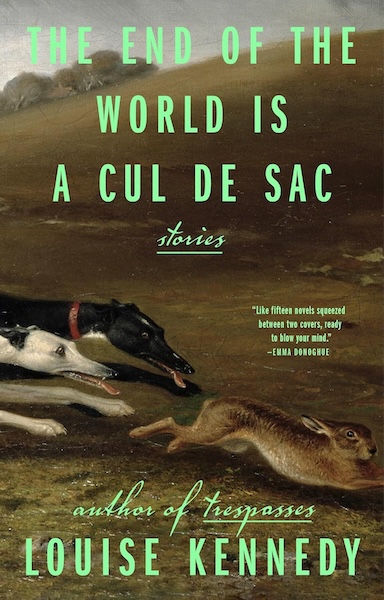
The End of the World Is a Cul de Sac
In this striking collection of fifteen short stories, ordinary lives unravel in unexpected ways. A newly married woman finds herself abandoned in a half-finished housing estate; a mother grows increasingly suspicious of her husband’s relationship with a teenage girl; a woman struggles with guilt after an abortion threatens her marriage. Across these stories, Louise Kennedy’s characters confront betrayal, poverty, violence, loneliness, and the quiet desperation of lives that have not turned out as planned.
Set against the landscapes and social realities of Ireland, the collection reveals how private struggles are shaped by wider forces, from the legacy of the Troubles to restrictive expectations placed on women. Kennedy balances bleak humour with moments of tenderness and beauty, finding humanity in characters who are often flawed, trapped, or complicit in their own unhappiness. The End of the World Is a Cul de Sac is an unflinching portrait of people at breaking points, exploring how cruelty and vulnerability coexist—and how unexpected glimpses of hope can emerge from the most difficult circumstances.
United Kingdom
2021
8
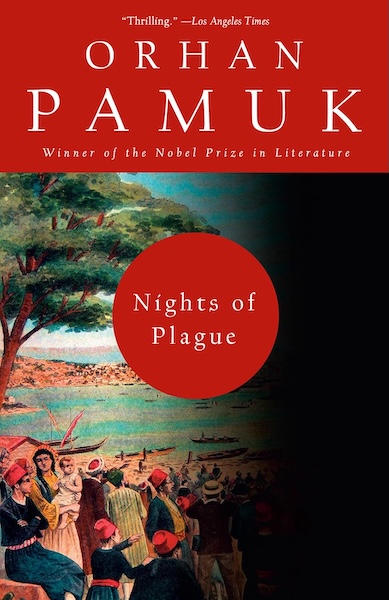
Nights of Plague
In 1901, a deadly plague reaches Mingheria, a fictional island in the eastern Mediterranean and the twenty-ninth province of the declining Ottoman Empire. Home to both Muslim and Greek Orthodox communities, the island is already divided by religious tensions and political rivalries. As the epidemic spreads, the Ottoman authorities send experts to impose quarantine measures, but suspicion, resistance, and competing loyalties threaten to undermine every attempt to contain the disease.
When a mysterious murder complicates the crisis, the island descends into a struggle involving religious leaders, government officials, scientists, and ordinary people desperate to survive. As the Ottoman administration loses control, the epidemic becomes a catalyst for rebellion and the emergence of a new national identity.
Blending historical epic, detective story, and political satire, Nights of Plague explores how fear reshapes societies and how crises expose the fragility of authority. Through an imagined history of an Ottoman island, Pamuk examines nationalism, religious conflict, scientific reasoning, and the human tendency to choose ideology over evidence.
Türkiye
2021
9
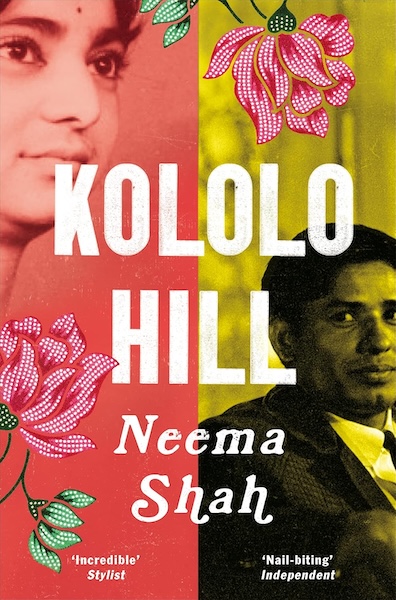
Kololo Hill
In 1972, Ugandan Asians are given just ninety days to leave the country under President Idi Amin’s expulsion order. For Asha and Pran, newly married and working to secure their future, the decree means abandoning the family business and the life they have built. Pran’s mother, Jaya, must also leave the home she has known for decades. As violence escalates in Kampala and people begin disappearing, the family faces an uncertain journey to Britain, where refuge does not necessarily mean belonging.
Arriving in a country that feels unfamiliar, they must rebuild their lives while carrying the emotional weight of everything they have lost. But their struggle is complicated by a devastating secret surrounding their expulsion—one that threatens to fracture the family just when they need one another most.
Moving between the green hills of Kampala and the terraced streets of London, Kololo Hill explores displacement, family loyalty, and the meaning of home. Inspired by the history of Uganda’s Asian community and the author’s own family heritage, this moving novel reveals how political upheaval can reshape lives across generations.
Uganda
United Kingdom
2021
10
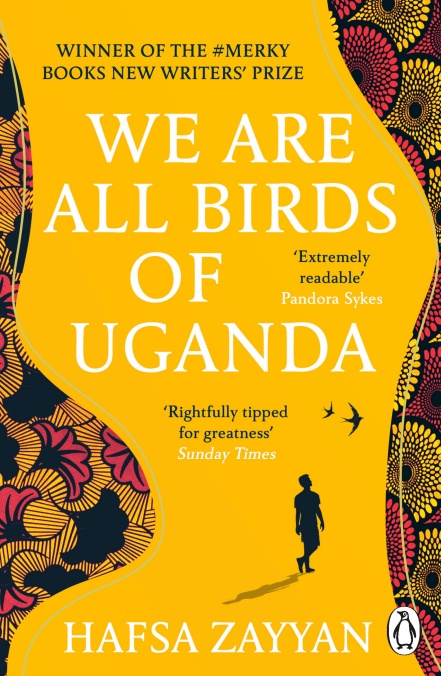
We Are All Birds Of Uganda
In 1960s Uganda, Hasan is struggling to rebuild his life after the death of his wife. Just as he begins to find his footing, political upheaval and rising racial prejudice threaten everything he has worked for. As a member of Uganda’s South Asian community, Hasan faces an uncertain future in a country his family has long called home. The political climate deteriorates further under Idi Amin’s regime, which ultimately forces many South Asians to leave Uganda.
Decades later, in London, Sameer appears to have everything: a successful career as a lawyer and the future he once dreamed of. Yet beneath his achievements lies a persistent sense of emptiness. An unexpected family tragedy draws him back into his family’s history, revealing the sacrifices, losses, and unanswered questions that shaped his identity.
Moving between generations and continents, We Are All Birds of Uganda explores displacement, racial prejudice, inherited trauma, and the complicated meaning of belonging. Through Hasan and Sameer’s intertwined stories, Hafsa Zayyan examines how migration reshapes families and how the past continues to influence those who inherit its consequences.
Uganda
United Kingdom
2021
11
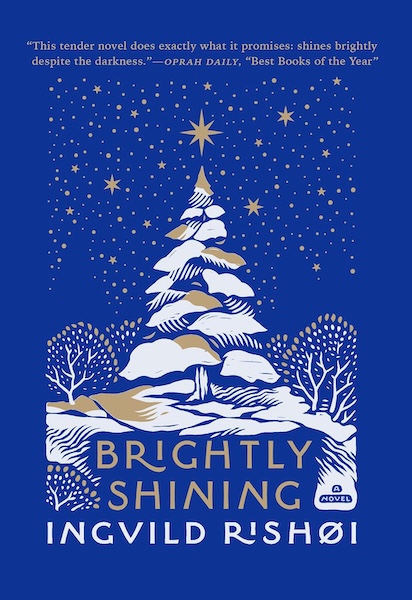
Brightly Shining
In the working-class Oslo neighbourhood of Tøyen, ten-year-old Ronja and her older sister Melissa are trying to hold their family together. Their father, who struggles with alcoholism and cannot keep a job, briefly finds work selling Christmas trees. But when he returns to his old habits, Melissa must take his place at the stall, working long hours before and after school. Ronja joins her, charming customers and selling Christmas wreaths to help keep food on the table.
Told through Ronja’s observant, hopeful eyes, Brightly Shining captures the strange mixture of childhood innocence and adult responsibility. As Christmas approaches, the sisters dream of a warmer, kinder world, finding occasional help from strangers while concealing the reality of their home life. Their love for their father remains tangled with the knowledge that they cannot rely on him.
With tenderness, quiet humour, and touches of magical realism, Ingvild H. Rishøi explores poverty, addiction, sisterhood, and the fragile hope that kindness can offer even in the darkest circumstances.
Norway
2021
12
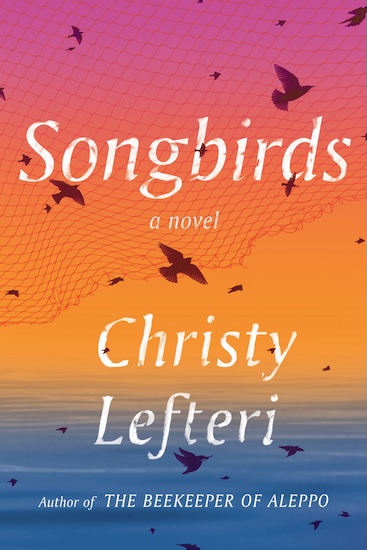
Songbirds
Set in Nicosia, Cyprus, Songbirds explores the lives of migrant domestic workers whose sacrifices and struggles often remain invisible to the society they serve.
Nisha, a young woman from Sri Lanka, has left her little daughter behind with relatives so she can work abroad and send money home. Employed as a nanny and housekeeper by Petra, a wealthy widow, Nisha has become an indispensable part of the household, forming a close bond with Petra’s young daughter, Aliki. Yet while she cares for someone else’s child, she is separated from her own, communicating with her daughter through video calls whenever she can.
Nisha’s secret relationship with Yiannis, a man who makes his living poaching protected songbirds, offers the possibility of a different future. He dreams of marrying her and leaving his dangerous work behind. But when Nisha mysteriously disappears one evening, both Yiannis and Petra are left searching for answers. When the police show little interest in investigating the disappearance of a migrant worker, Petra takes matters into her own hands, gradually uncovering the precarious realities of Nisha’s life and the exploitation faced by other migrant women.
Inspired by the real-life disappearances of migrant women in Cyprus, Lefteri’s novel draws parallels between the songbirds trapped along migration routes and people who leave their homelands in search of a better life, only to find themselves vulnerable to exploitation. Through the intertwined stories of Nisha, Petra, and Yiannis, the novel examines motherhood, social inequality, belonging, and the human cost of migration.
Cyprus
2021