Literary Fiction
All countries
Afghanistan
Algeria
Antigua and Barbuda
Argentina
Australia
Austria
Azerbaijan
Bangladesh
Barbados
Belgium
Benin
Bosnia and Herzegovina
Brazil
Bulgaria
Burkina Faso
Burundi
Cabo Verde
Canada
Central African Republic
Chile
China
Colombia
Congo, Democratic Republic
Costa Rica
Côte d’Ivoire (Ivory Coast)
Croatia
Cyprus
Czech Republic
Denmark
Dominica
Dominican Republic
Egypt
El Salvador
Estonia
Ethiopia
France
Germany
Ghana
Greece
Hungary
Iceland
India
Iran
Iraq
Ireland
Italy
Jamaica
Japan
Jordan
Kazakhstan
Kenya
Kuwait
Latvia
Lebanon
Liberia
Libya
Lithuania
Madagascar
Mali
Mauritania
Mauritius
Mexico
Moldova
Morocco
Mozambique
Myanmar
Namibia
Netherlands
New Zealand
Nigeria
North Korea
North Macedonia
Norway
Oman
Pakistan
Palestine
Philippines
Poland
Portugal
Puerto Rico
Russia
Rwanda
Saint Kitts and Nevis
Saudi Arabia
Senegal
Sierra Leone
Singapore
South Korea
Spain
Sri Lanka
Sudan
Sweden
Switzerland
Syria
Taiwan
Tanzania
Thailand
Tunisia
Türkiye
Uganda
United Arab Emirates
United Kingdom
United States
Uzbekistan
Vietnam
Zambia
1
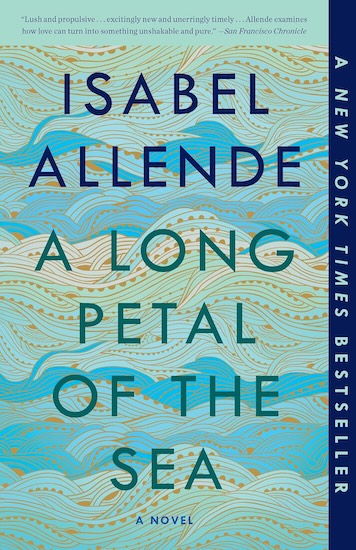
A Long Petal of the Sea
Beginning during the Spanish Civil War, A Long Petal of the Sea follows two people whose lives are transformed by war and exile. Victor Dalmau, a young doctor, becomes caught in the conflict when Franco’s forces defeat the Republican side. Alongside Roser Bruguera, a pregnant widow and gifted pianist, he is forced to flee Spain. To survive, they enter into a marriage neither originally desired and join thousands of Spanish refugees seeking safety abroad.
Their journey takes them aboard the SS Winnipeg, a ship chartered by Chilean poet Pablo Neruda to transport refugees to South America. In Chile, Victor and Roser build a new life while navigating political tensions, cultural differences, and the challenges of starting over in an unfamiliar country. As decades pass, their adopted homeland experiences its own political upheavals, forcing them to confront once again the relationship between belonging, exile, and home.
Spanning generations and continents, Allende’s novel explores how displacement reshapes identity, family, and personal loyalties. Through Victor and Roser’s experiences, she examines the courage required to rebuild a life after losing everything and the enduring hope that one day it may be possible to return home.
Spain
Chile
2019
2
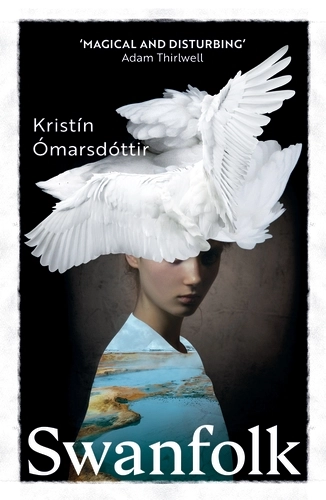
Swanfolk
Set in a strange, unsettling future, Swanfolk follows Elísabet Eva, a young intelligence agent whose life begins to unravel after a traumatic assignment in Paris. Seeking solitude, she takes long walks beside a lake, where she encounters mysterious creatures that are half-woman and half-swan. Fascinated by these beings, she gradually enters their hidden world and becomes entangled in their obsessive, sometimes violent struggle to exist alongside humans. As her involvement deepens, Elísabet begins to question her own perceptions and the reliability of her memories. Blending surrealism, dark fantasy, and psychological fiction, Kristín Ómarsdóttir’s novel explores the fragile boundaries between reality and imagination, belonging and alienation, and the human desire to escape one’s past. Strange, lyrical, and unsettling, Swanfolk uses its mythical creatures to examine the complexities of identity and the difficulty of understanding oneself.
Iceland
2019
3
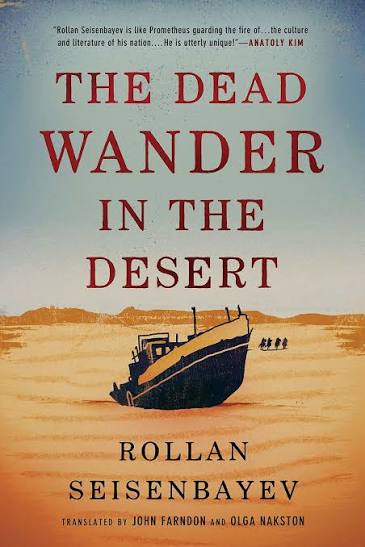
The Dead Wander in the Desert
Set on the vast steppes of Soviet Kazakhstan during the final decades of the USSR, The Dead Wander in the Desert tells the story of a community whose existence is threatened by the ecological destruction of the Aral Sea. Nasyr, an elderly fisherman who becomes a village mullah, watches as the waters that once sustained his people recede, leaving behind a barren landscape and a vanishing way of life. His son, Kakharman, challenges the authorities responsible for diverting the rivers that feed the sea to support ambitious agricultural projects, particularly cotton cultivation. But his struggle against the Soviet bureaucracy seems almost impossible.
Through the lives of a Kazakh family and their neighbors, Seisenbayev explores the devastating consequences of environmental mismanagement, political oppression, and the pursuit of progress at any cost. Blending social history, philosophical reflection, and the rhythms of traditional storytelling, the novel also recalls the wider tragedies endured by the Kazakh people under Soviet rule. Both an elegy for a disappearing world and a warning about humanity’s relationship with nature, it gives a deeply personal dimension to one of the twentieth century’s greatest environmental catastrophes.
Kazakhstan
2019
4

Three Daughters of Eve
Three Daughters of Eve follows Peri, a wealthy Turkish woman whose apparently comfortable life in Istanbul conceals unresolved questions about faith, identity, and personal responsibility. During a dinner party years after her university studies at Oxford, a photograph unexpectedly brings back memories of her time there in the 1990s. As a student, Peri became involved with a charismatic professor who encouraged his pupils to debate religion and belief. Her friendships with two fellow students—one deeply religious and the other firmly atheist—exposed her to conflicting ideas about spirituality, feminism, and freedom. Their relationships eventually culminated in an incident that Peri has struggled to understand ever since. Shafak explores the tension between faith and doubt, the influence of family and culture, and the difficulty of forming an independent worldview in a politically divided society.
Türkiye
2019
5
The Namesake
The Namesake follows the Ganguli family as they move from Calcutta to the United States in search of a new life. Their son, Gogol, grows up caught between his Bengali heritage and the American culture in which he was raised. Named after the Russian writer Nikolai Gogol for personal reasons connected to his father’s past, he comes to resent the unusual name that distinguishes him from his peers. As he grows older, Gogol struggles with romantic relationships, family expectations, and the challenge of defining himself independently of his parents’ experiences. Following the family’s journey across several decades, Lahiri explores migration, cultural adaptation, and the complicated relationship between parents and children. The novel examines how names, memories, and inherited traditions shape identity, revealing that belonging is rarely a simple choice between two cultures.
India
2019
6
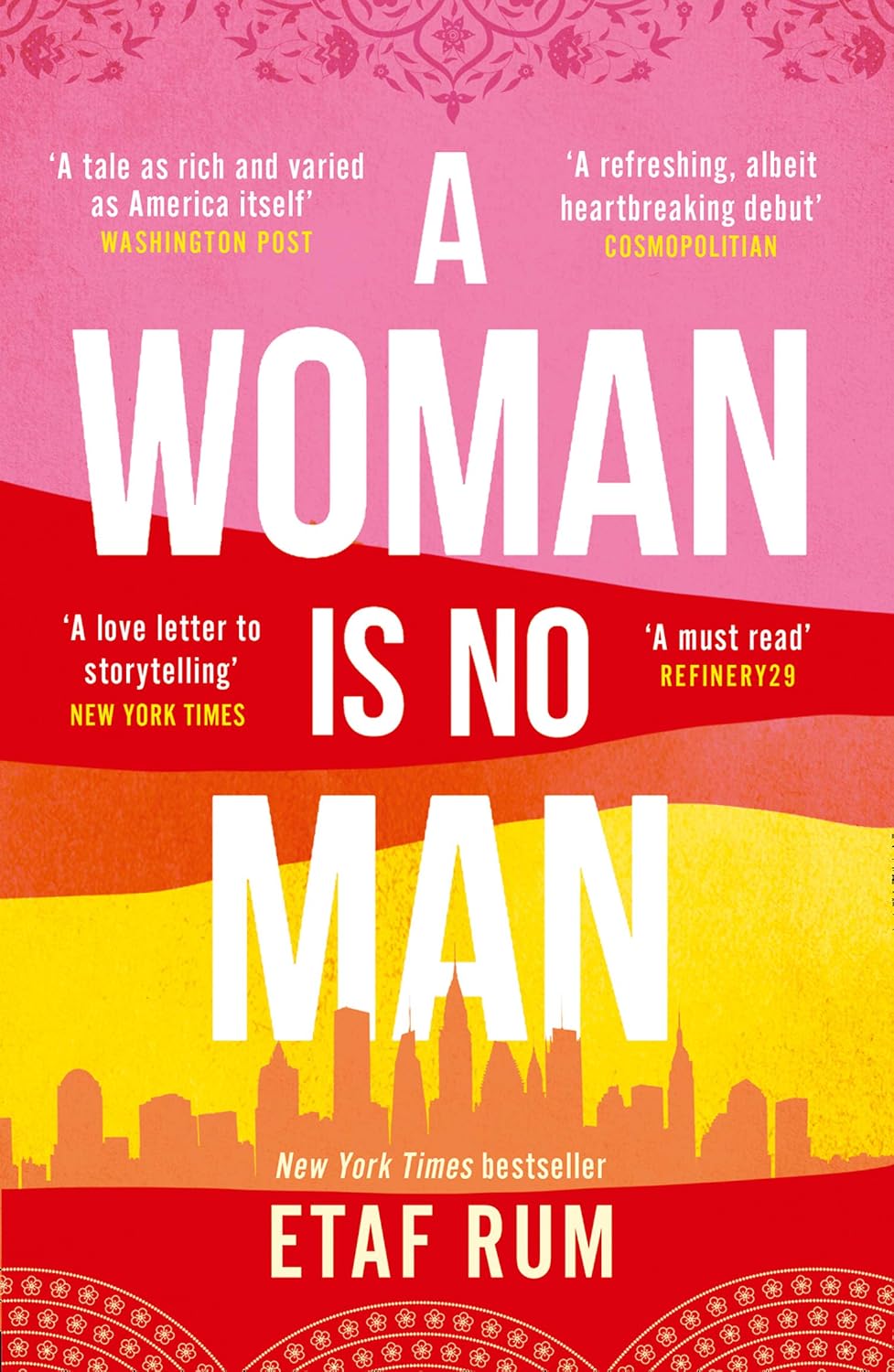
Woman Is No Man
A Woman Is No Man follows three generations of Palestinian women whose lives are shaped by family expectations, cultural traditions, and the struggle for independence. In 1990s Brooklyn, seventeen-year-old Isra marries Adam, a Palestinian American man, and leaves her home in Palestine to begin a new life in the United States. Instead of the freedom she hopes to find, she encounters strict expectations about marriage, motherhood, and obedience. Years later, her daughter Deya grows up under similar pressures, uncertain about her future and the secrets surrounding her mother’s life. As Deya begins to question the stories she has been told, hidden truths emerge that challenge her understanding of family and tradition. Rum explores intergenerational trauma, gender inequality, and the difficult choices women face when personal aspirations conflict with inherited expectations.
Palestine
2019
7
Where Reasons End
Where Reasons End is an intimate, deeply moving novel about a mother’s grief following the death of her teenage son, Nikolai. Unable to accept his absence, the narrator imagines a series of conversations with him in a world suspended between life and death. Through their exchanges, mother and son revisit memories, question language, discuss literature, and reflect on the complexities of their relationship.
Rather than offering simple explanations for an unbearable loss, Yiyun Li explores the limits of understanding and the ways words can both connect people and fail to express what matters most. Their conversations move between tenderness, humour, frustration, and sorrow, revealing the ordinary details that make a relationship unique.
Written in the aftermath of the author’s own loss, the novel blurs the boundaries between fiction and personal experience. It is a profound meditation on motherhood, grief, memory, and the enduring bond between a parent and a child.
China
2019
8
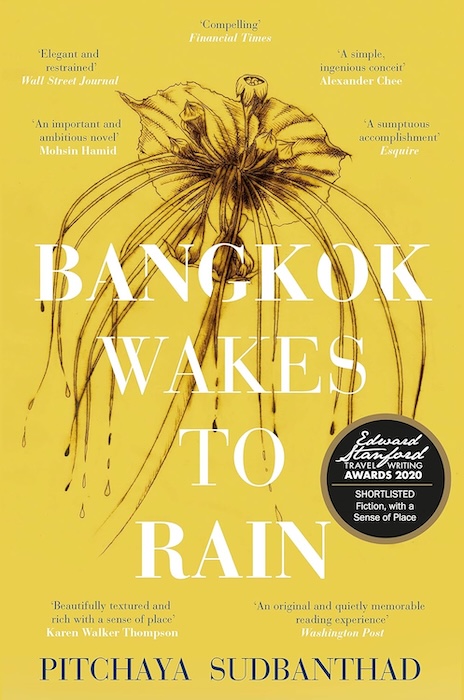
Bangkok Wakes to Rain
Bangkok Wakes to Rain weaves together the lives of people connected to a single house in Bangkok across different periods of Thai history. From a nineteenth-century missionary confronting unfamiliar beliefs to a contemporary musician navigating relationships and personal uncertainty, the novel explores how individual lives are shaped by a city constantly transformed by time, migration, and environmental change. As Bangkok expands and modernizes, recurring floods and rising waters reflect the city’s vulnerability to climate change and its complicated relationship with the natural world. Through interconnected stories that move between past, present, and imagined futures, Pitchaya Sudbanthad examines memory, colonial influence, cultural identity, and the impermanence of human existence. The novel presents Bangkok as a living, evolving character, revealing how personal histories and collective memories remain intertwined with the places people call home.
Thailand
2019
9
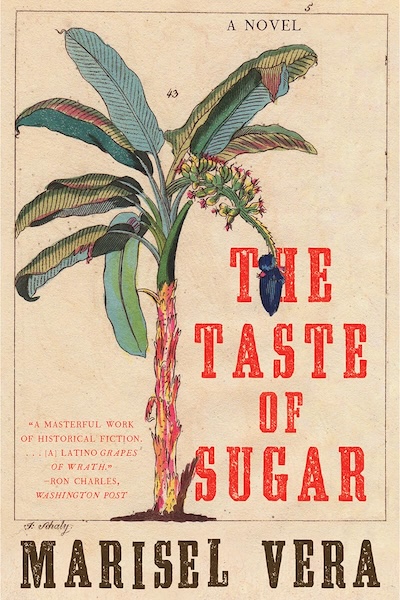
The Taste of Sugar
In late nineteenth-century Puerto Rico, seventeen-year-old Valentina Sánchez dreams of romance and a life beyond the expectations of her family. She marries Vicente Vega, a coffee farmer from the mountainous region of Utuado, hoping their love will bring happiness. But married life proves far more difficult than she imagined. Poverty, family tensions, and the struggle to keep their farm afloat threaten their future, while political upheaval transforms the island around them.
Following the Spanish-American War and the devastating San Ciriaco hurricane of 1899, Puerto Rico comes under American rule, and the Vegas lose their livelihood. Promised prosperity, Vicente and Valentina join thousands of Puerto Ricans who migrate to Hawaii to work on sugar plantations. Instead of the fresh start they hoped for, they encounter harsh working conditions, exploitation, and broken promises. Spanning generations and continents, The Taste of Sugar traces one family’s struggle to survive amid colonial domination and economic injustice. Marisel Vera brings a neglected chapter of Puerto Rican history to life, exploring how love, family, and resilience endure when the promise of a better future comes at an extraordinary cost.
United States
Puerto Rico
2020
10

Still Born
What makes someone a mother—and what happens when motherhood looks nothing like we imagined?
Laura has made a firm decision never to have children, even undergoing sterilisation to protect the life she has chosen. Her friend Alina, meanwhile, finds herself drawn towards motherhood. When Alina’s pregnancy takes an unexpected turn, both women are forced to confront the limits of love, independence, and their ideas about what it means to care for another person.
As their lives become intertwined with the lives of vulnerable children, the two women discover that love can be inseparable from fear, grief, and uncertainty. With remarkable tenderness and honesty, Guadalupe Nettel challenges the idealised image of maternal instinct, exploring the complicated emotions women are rarely encouraged to admit.
Intimate and quietly devastating, Still Born is a moving portrait of friendship, chosen family, and the many forms that caregiving can take. Shortlisted for the 2023 International Booker Prize, it asks whether love means protecting someone from suffering—or learning how to live alongside it.
Mexico
2020
11
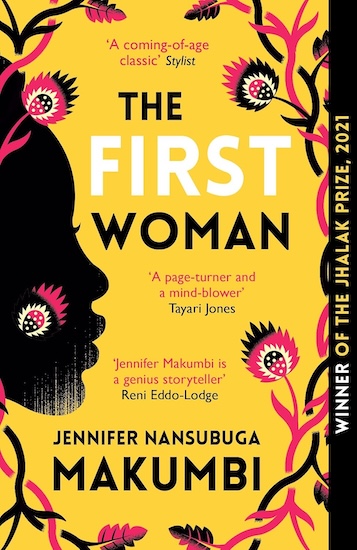
The First Woman
Set in Uganda in the 1970s, during the dictatorship of Idi Amin, The First Woman follows Kirabo, a curious and strong-willed twelve-year-old girl growing up in the rural village of Nattetta. Raised by her grandparents and surrounded by a large extended family, Kirabo enjoys a relatively comfortable childhood, yet she is troubled by one unanswered question: who is her mother, and why did she leave? As she enters adolescence, she also begins to sense a rebellious side of herself that conflicts with the obedient girl her family expects her to be.
Determined to uncover the truth about her origins, Kirabo seeks the help of Nsuuta, an older woman regarded by the village as a witch. Through their conversations, Nsuuta introduces her to Baganda folklore and the legend of the “first woman”—an original, independent female spirit that exists before society imposes its restrictions on women. These stories challenge Kirabo’s understanding of femininity and encourage her to question the traditions that govern her life.
Blending Ugandan mythology, family secrets, and the realities of life under political dictatorship, Makumbi explores motherhood, female sexuality, cultural identity, and the expectations imposed on women across generations. Kirabo’s journey becomes a powerful coming-of-age story about discovering who she is beyond the roles assigned to her. The novel celebrates women’s resilience, ancestral knowledge, and the possibility of redefining traditions to create a more liberated future.
Uganda
2020
12
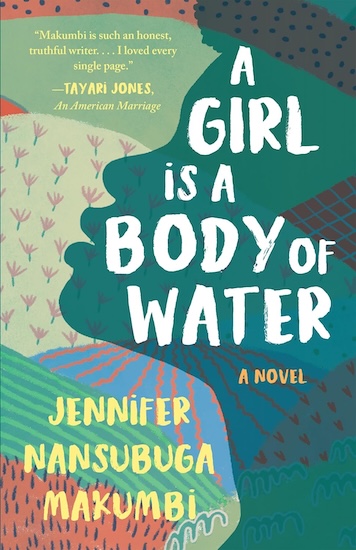
A Girl Is a Body of Water
Set in Uganda during the 1970s, under the rule of Idi Amin, A Girl Is a Body of Water follows Kirabo, a curious and independent twelve-year-old girl growing up in the rural village of Nattetta. Raised by her grandparents and surrounded by a large extended family, she has a comfortable childhood, yet one question haunts her: who is her mother? Although her father occasionally visits from Kampala, nobody in the family is willing to speak openly about the woman who gave birth to her.
Determined to uncover the truth, Kirabo turns to Nsuuta, an older woman whom the village regards as a witch. Through their conversations, Nsuuta introduces her to the stories and spiritual traditions of the Baganda people, helping her understand her own rebellious nature. She teaches Kirabo about the idea of the “first woman”—a powerful, independent female state that existed before society imposed restrictions on women’s freedom. As Kirabo grows older, she must reconcile this sense of inner strength with the expectations placed on girls by family, tradition, and community.
Blending Ugandan folklore, mythology, and the experiences of women across generations, Makumbi explores motherhood, female identity, and the ways patriarchal traditions shape women’s lives. Against the backdrop of a country experiencing political turmoil, Kirabo’s personal journey becomes a broader exploration of how women preserve their voices and independence in a society that often seeks to silence them. The novel celebrates the power of storytelling, ancestral knowledge, and female solidarity in shaping a different future.
Uganda
2020