Literary Fiction
All countries
Afghanistan
Algeria
Antigua and Barbuda
Argentina
Australia
Austria
Azerbaijan
Bangladesh
Barbados
Belgium
Benin
Bosnia and Herzegovina
Brazil
Bulgaria
Burkina Faso
Burundi
Cabo Verde
Canada
Central African Republic
Chile
China
Colombia
Congo, Democratic Republic
Costa Rica
Côte d’Ivoire (Ivory Coast)
Croatia
Cyprus
Czech Republic
Denmark
Dominica
Dominican Republic
Egypt
El Salvador
Estonia
Ethiopia
France
Germany
Ghana
Greece
Hungary
Iceland
India
Iran
Iraq
Ireland
Italy
Jamaica
Japan
Jordan
Kazakhstan
Kenya
Kuwait
Latvia
Lebanon
Liberia
Libya
Lithuania
Madagascar
Mali
Mauritania
Mauritius
Mexico
Moldova
Morocco
Mozambique
Myanmar
Namibia
Netherlands
New Zealand
Nigeria
North Korea
North Macedonia
Norway
Oman
Pakistan
Palestine
Philippines
Poland
Portugal
Puerto Rico
Russia
Rwanda
Saint Kitts and Nevis
Saudi Arabia
Senegal
Sierra Leone
Singapore
South Korea
Spain
Sri Lanka
Sudan
Sweden
Switzerland
Syria
Taiwan
Tanzania
Thailand
Tunisia
Türkiye
Uganda
United Arab Emirates
United Kingdom
United States
Uzbekistan
Vietnam
Zambia
1
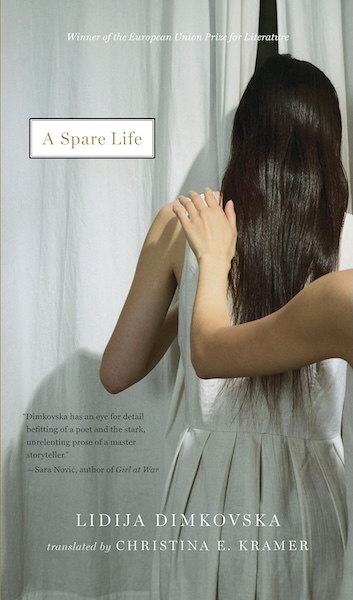
A Spare Life
In 1984, twin sisters Zlata and Srebra are born in Skopje, Macedonia, joined at the head. Growing up physically connected in a society undergoing profound political and social change, they share a body but struggle to establish separate identities, desires, and futures. Their lives are shaped by the devotion and exhaustion of their family, the curiosity and prejudice of strangers, and the everyday difficulties of navigating a world designed for people who can move independently.
Narrated by Zlata, A Spare Life follows the sisters from childhood into adulthood against the backdrop of Yugoslavia’s dissolution and the emergence of an independent Macedonia. As their circumstances change, their longing for privacy and personal freedom becomes increasingly urgent. Combining an intimate family story with a broader portrait of a society in transition, Lidija Dimkovska explores individuality, bodily autonomy, belonging, and the boundaries between dependence and independence. The novel asks what it means to live an authentic life when even the most fundamental choices must be shared.
North Macedonia
2016
2
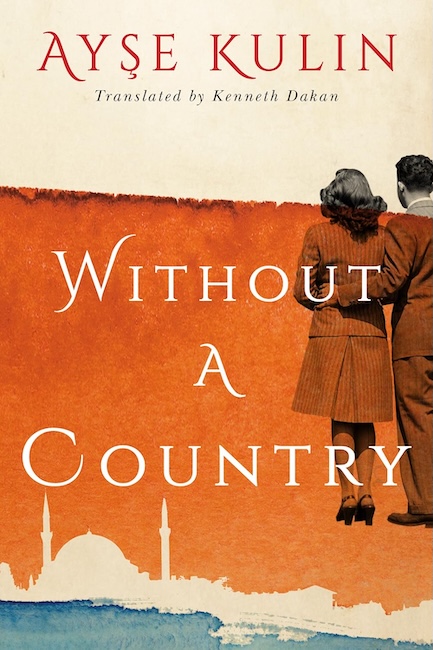
Without a Country
As Hitler’s persecution of Jews intensifies in 1930s Germany, medical professor Gerhard Schliemann and his wife, Elsa, face an impossible choice: remain in the country they call home or flee to protect their family. Their escape leads them to Turkey, where German Jewish academics are offered positions at universities and hospitals as the young republic works to modernise its institutions.
Although the Schliemanns find refuge and the opportunity to rebuild their lives, safety does not guarantee belonging. Across four generations, their descendants navigate political upheaval, military coups, interfaith relationships, and renewed antisemitism. As Turkey itself changes, the family must confront difficult questions about identity, loyalty, and what it means to belong to a country that may never fully accept them.
Spanning nearly a century, Without a Country is a multigenerational saga inspired by the real history of German-speaking Jewish academics who found refuge in Turkey during the Nazi era. Ayşe Kulin explores the complicated relationship between displacement and belonging, showing how the search for a safe home can shape a family’s destiny long after the original refugees are gone.
Türkiye
Germany
2016
3
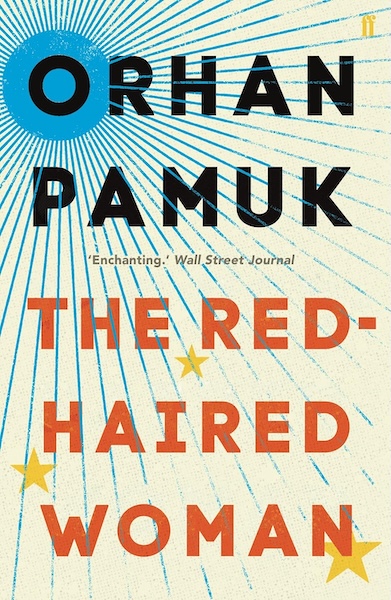
The Red-Haired Woman
In the mid-1980s, teenage Cem leaves Istanbul to work as an apprentice to Mahmut, an experienced well-digger. Together, they travel to a small town outside the city, where they labour to find water in the dry earth. As they work, Mahmut becomes a father figure to Cem, teaching him practical skills and sharing stories that shape the young man’s understanding of the world.
One summer, Cem encounters a mysterious red-haired woman performing with a travelling theatre troupe. Fascinated by her, he becomes entangled in an experience that will haunt him for decades. A terrible incident at the well changes the course of his life, and years later, when Cem has become a successful businessman, the past returns with consequences he could never have anticipated.
Drawing on the ancient myths of Oedipus and Rostam and Sohrab, The Red-Haired Woman explores fathers and sons, guilt, authority, and the forces that shape our destinies. It is a compact, unsettling novel about the stories we inherit and whether we can ever escape them.
Türkiye
2016
4
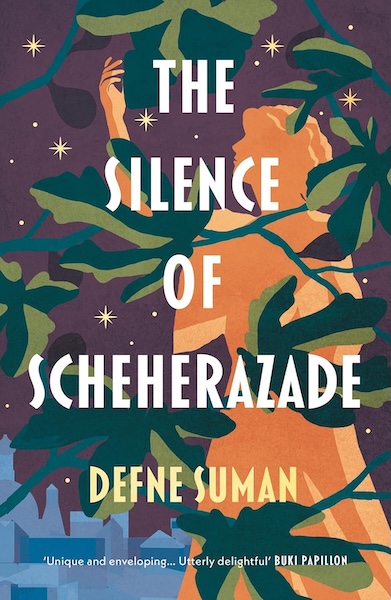
The Silence of Scheherazade
In September 1905, in the cosmopolitan Ottoman port city of Smyrna, a girl named Scheherazade is born as an Indian spy arrives with a secret mission for the British Empire. Their stories unfold alongside those of four families—a Levantine, a Greek, a Turkish, and an Armenian—whose lives are bound together by love, ambition, and the city’s extraordinary cultural diversity.
Over the following seventeen years, the families navigate political upheaval, shifting loyalties, forbidden relationships, and the growing tensions surrounding the decline of the Ottoman Empire. As war transforms the region, the world they know begins to crumble, culminating in the devastating fire that engulfs Smyrna in 1922.
Rich in historical detail and intimate human drama, The Silence of Scheherazade resurrects a lost multicultural world and gives voice to the people caught between competing nationalisms. It is a story of love, displacement, and the silences that history leaves behind.
Türkiye
2016
5
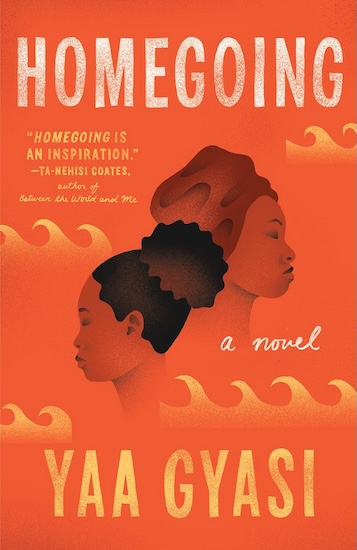
Homegoing
Two half-sisters, Effia and Esi, are born in eighteenth-century Ghana, their lives divided by the forces of slavery and colonialism. Effia marries a British slave trader and lives in comfort above the dungeons of Cape Coast Castle, unaware that her sister Esi is imprisoned below before being sold into slavery in America. From the villages of Ghana to the plantations of the American South and the streets of modern Harlem, their descendants inherit the consequences of choices, violence, and histories they never experienced themselves. Spanning eight generations and three centuries, Homegoing is a powerful exploration of how slavery reshapes families, how trauma travels across generations, and how the past continues to influence the present.
Ghana
2016
6
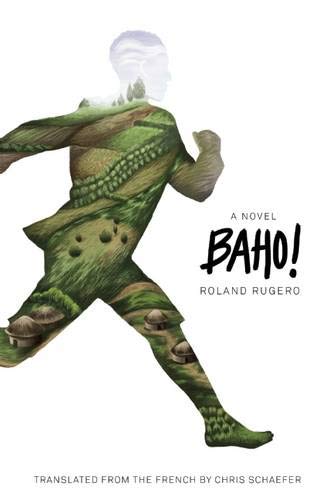
Baho!
Set in a fictional village in Burundi, Baho! follows Nyamuragi, a young boy who cannot speak. When he attempts to ask a young woman for directions to a suitable place to relieve himself, his gestures are misunderstood, and he is accused of intending to sexually assault her. Frightened, he runs away, but his flight is interpreted as proof of guilt. Soon, villagers join the pursuit, and a simple misunderstanding escalates into collective outrage and the threat of mob justice.
Through this tense and darkly satirical story, Roland Rugero examines the dangers of prejudice, social conformity, and the rush to judgment. The novel also explores the consequences of Burundi’s violent past and the challenges of rebuilding trust within a divided society. Incorporating Kirundi proverbs and elements of oral storytelling, Rugero creates a distinctive portrait of Burundian culture while questioning how fear and rumour can distort people’s understanding of truth and justice.
Burundi
2016
7
Stork Mountain
Stork Mountain follows a young Bulgarian-American man who returns to his ancestral village in Bulgaria after the disappearance of his grandfather, a former communist official. Hoping to uncover the truth about his family’s past, he becomes immersed in the history and traditions of a rural community near the Turkish border, where generations have lived through political upheaval, shifting national identities, and religious tensions.
As he investigates his grandfather’s life, the narrator encounters stories of forbidden love, ancient rituals, and the complicated legacy of Bulgaria’s communist era. The village’s inhabitants preserve memories and customs that seem increasingly distant from the modern world, while the narrator struggles to reconcile his American upbringing with the homeland he has inherited through family history. Miroslav Penkov blends folklore, historical fiction, and contemporary storytelling to explore belonging, migration, and the ways personal identity is shaped by collective memory. The novel reveals how the past continues to influence the present, even when its stories have been forgotten, distorted, or deliberately concealed.
Bulgaria
2016
8
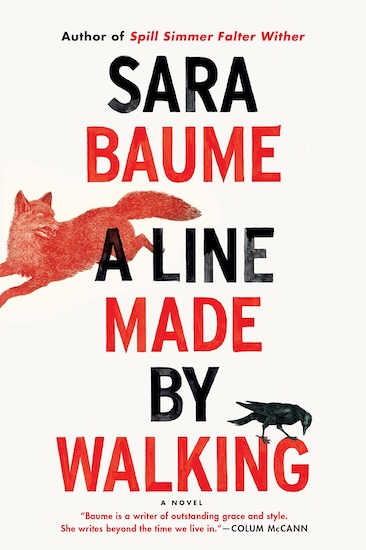
A Line Made By Walking
In her twenties and struggling to find her place in the world, Frankie retreats from urban life to her late grandmother’s empty house in the Irish countryside. An aspiring artist, she feels increasingly disconnected from her ambitions, her relationships, and herself. Surrounded by fields, abandoned objects, and the quiet presence of wild animals, she begins photographing dead creatures she encounters along her walks, turning these unsettling discoveries into an attempt to make sense of life and death.
As Frankie observes the landscape and revisits memories of her past, the ordinary details of rural existence become a way to examine grief, anxiety, and the uncertainty of adulthood. A Line Made by Walking is a contemplative novel about the fragile process of recovery and the difficulty of finding meaning when familiar ideas about success and happiness no longer seem convincing. With her characteristic attention to nature and overlooked details, Baume explores the uneasy relationship between artistic ambition, emotional vulnerability, and the desire to begin again.
Ireland
2017
9
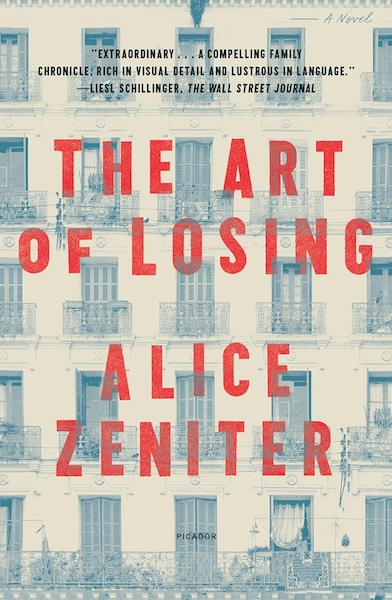
Art of Losing
Some families inherit houses, photographs, and heirlooms. Others inherit silences.
When Naïma, a young French woman of Algerian descent, begins exploring her family history, she discovers how little she knows about the country her grandparents left behind. Her grandfather, Ali, once owned land in Algeria but fled to France after the Algerian War of Independence. Her father, Hamid, grew up determined to become French, leaving painful memories and unanswered questions buried in the past.
Spanning three generations and seven decades, The Art of Losing follows a family shaped by colonialism, displacement, and the struggle to belong. As Naïma begins uncovering the truth about her ancestors, she must confront a history that is both deeply personal and politically complicated. What does it mean to inherit a past you never experienced? And can you claim an identity when the stories that might explain it have been lost?
Moving between Algeria and France, Alice Zeniter explores the invisible burdens passed from parents to children: the languages forgotten, the memories suppressed, and the connections that survive despite distance. Winner of the 2022 International Dublin Literary Award, this sweeping family saga is a powerful meditation on exile, belonging, and the stories we need to understand ourselves.
Algeria
France
2017
10
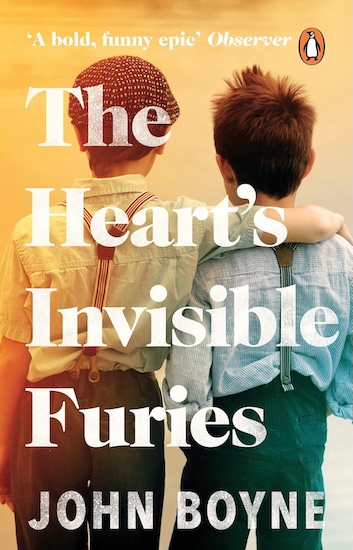
The Heart’s Invisible Furies
Spanning seven decades of Irish history, The Heart’s Invisible Furies follows Cyril Avery, a boy born in 1940s Ireland to an unmarried teenage mother who is publicly shamed by her community and forced to leave her home. Adopted by a wealthy couple in Dublin, Cyril grows up in a household where he is constantly reminded that he is not their biological son. Feeling like an outsider, he embarks on a lifelong search for love, acceptance, and a place where he truly belongs.
As Cyril moves through adulthood, his experiences unfold against the backdrop of a changing Ireland. Growing up in a deeply conservative Catholic society, he struggles to understand and accept his sexuality in a country where homosexuality is criminalised and social prejudice shapes countless lives. His journey takes him beyond Ireland, through relationships, personal losses, and difficult discoveries, before eventually bringing him back to his homeland.
Combining dark humour with moments of profound tenderness, Boyne explores the consequences of religious intolerance, social exclusion, and the silence surrounding sexuality. Through Cyril’s personal experiences, the novel also traces Ireland’s transformation from a society dominated by the Catholic Church to one increasingly willing to confront its past. Ultimately, it is a story about identity, belonging, friendship, and the possibility of finding love and reconciliation after a lifetime of struggle.
Ireland
2017
11
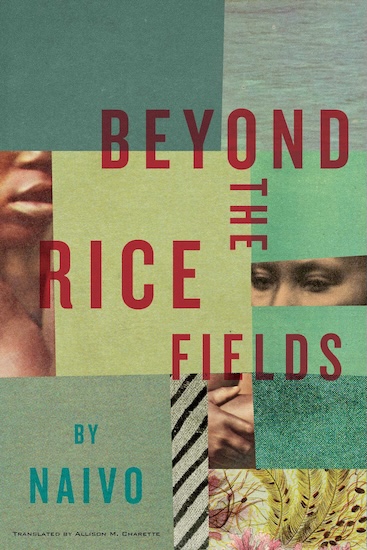
Beyond the Rice Fields
Nineteenth-century Madagascar is a kingdom on the brink of profound transformation. Tsito, a young boy enslaved after the destruction of his village, is taken to live in Sahasoa, where he develops a close bond with Fara, the daughter of his new master. As they grow older, their lives diverge: Tsito dreams of freedom, while Fara struggles with her family’s secrets and the restrictions placed upon her future. Their world is transformed by the arrival of British Christian missionaries and French industrialists, whose influence intensifies existing political and cultural tensions. As religious persecution and brutal royal purges spread across the kingdom, Tsito and Fara find themselves caught in a violent struggle over faith, power, and belonging. Through their intertwined stories, Naivo explores the legacy of slavery, the collision between Malagasy traditions and European influence, and the devastating consequences of political and religious intolerance.
Madagascar
2017
12
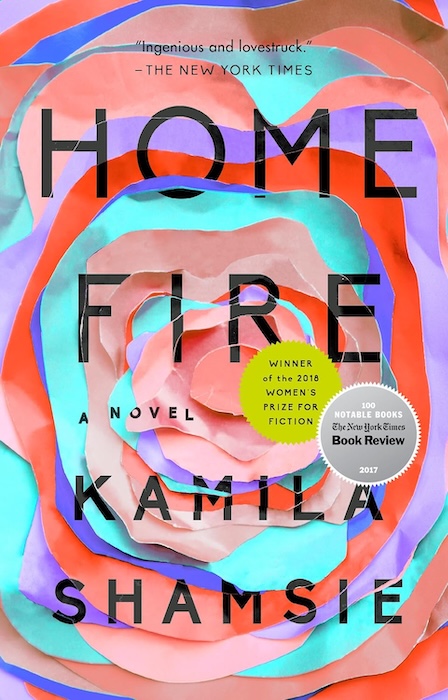
f
Home Fire is a contemporary reimagining of Sophocles’ ancient Greek tragedy Antigone, exploring family loyalty, political power, and the struggles of British Muslims to reconcile cultural identity with national belonging.
The novel follows Isma Pasha, who has spent years caring for her younger twin siblings, Aneeka and Parvaiz, after their mother’s death. When Isma finally leaves London to pursue her studies in the United States, she remains deeply concerned about her siblings. Parvaiz, haunted by the legacy of his deceased jihadist father, travels to Syria to join ISIS, only to discover that he has made a devastating mistake. Desperate to bring her brother home, Aneeka becomes involved with Eamonn Lone, the son of a powerful British politician whose hard-line policies threaten her family’s future.
As personal relationships become entangled with national security and political ambition, Shamsie examines the painful consequences of divided loyalties. The novel explores how governments define belonging, whose grief is considered legitimate, and what people are willing to sacrifice for those they love. Home Fire won the 2018 Women’s Prize for Fiction.
United Kingdom
2017