Literary Fiction
All countries
Afghanistan
Algeria
Antigua and Barbuda
Argentina
Australia
Austria
Azerbaijan
Bangladesh
Barbados
Belgium
Benin
Bosnia and Herzegovina
Brazil
Bulgaria
Burkina Faso
Burundi
Cabo Verde
Canada
Central African Republic
Chile
China
Colombia
Congo, Democratic Republic
Costa Rica
Côte d’Ivoire (Ivory Coast)
Croatia
Cyprus
Czech Republic
Denmark
Dominica
Dominican Republic
Egypt
El Salvador
Estonia
Ethiopia
France
Germany
Ghana
Greece
Hungary
Iceland
India
Iran
Iraq
Ireland
Italy
Jamaica
Japan
Jordan
Kazakhstan
Kenya
Kuwait
Latvia
Lebanon
Liberia
Libya
Lithuania
Madagascar
Mali
Mauritania
Mauritius
Mexico
Moldova
Morocco
Mozambique
Myanmar
Namibia
Netherlands
New Zealand
Nigeria
North Korea
North Macedonia
Norway
Oman
Pakistan
Palestine
Philippines
Poland
Portugal
Puerto Rico
Russia
Rwanda
Saint Kitts and Nevis
Saudi Arabia
Senegal
Sierra Leone
Singapore
South Korea
Spain
Sri Lanka
Sudan
Sweden
Switzerland
Syria
Taiwan
Tanzania
Thailand
Tunisia
Türkiye
Uganda
United Arab Emirates
United Kingdom
United States
Uzbekistan
Vietnam
Zambia
1
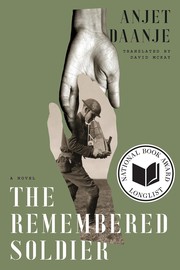
The Remembered Soldier
In The Remembered Soldier, a young woman named Noon Merckem encounters a man suffering from amnesia who may be her husband, a soldier who disappeared during the First World War. Although he remembers nothing of his former life, Noon attempts to help him recover his identity and rebuild their relationship. As the story unfolds, conflicting memories and unanswered questions emerge, revealing the uncertainty surrounding his past and the devastating consequences of war. Anjet Daanje explores the fragile relationship between memory, identity, and truth, examining how love can endure when the past becomes inaccessible. Set against the aftermath of the First World War, this haunting novel reflects on trauma, loss, and the stories people construct to make sense of their lives.
Netherlands
2025
2
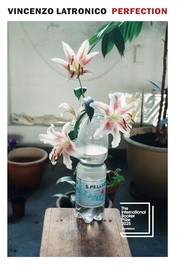
Perfection
In Perfection, Anna and Tom are a young creative couple living in Berlin, where they enjoy a carefully curated lifestyle of remote work, minimalist interiors, cultural experiences, and seemingly effortless happiness. Surrounded by the aesthetics of contemporary urban life, they appear to have achieved the freedom and fulfillment they desire. Yet beneath their polished routines lies a growing sense of emptiness and dissatisfaction. Through precise, detached prose, Vincenzo Latronico examines the contradictions of digital nomadism, gentrification, consumer culture, and the pursuit of an ideal life shaped by social media. The novel offers a sharp portrait of a generation caught between the desire for authenticity and the pressure to make every aspect of life look perfect.
Italy
2025
3
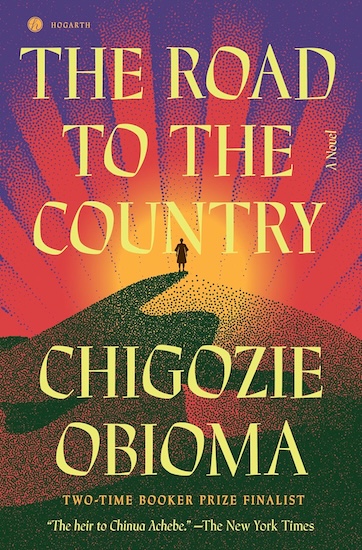
The Road to the Country
Nigeria, 1967. When Kunle Aromire discovers that his younger brother, Tunde, has disappeared into the breakaway territory of Biafra during the Nigerian Civil War, he sets out on a desperate mission to find him. Haunted by guilt over a childhood accident that left Tunde disabled, Kunle feels compelled to bring his brother home. But his search takes an unexpected turn when he crosses into Biafran territory and is forcibly conscripted into its army.
Thrown into a conflict he barely understands, Kunle must navigate the brutal realities of warfare while forming unlikely friendships with fellow soldiers. He also encounters Agnes, a courageous woman whose presence challenges his understanding of love, sacrifice, and duty. Alongside the horrors of battle, mystical prophecies shape Kunle’s journey, blurring the boundaries between fate and free will.
Blending historical realism with Igbo folklore and spirituality, The Road to the Country explores brotherhood, guilt, and the devastating human cost of civil war. Through one young man’s search for redemption, Obioma illuminates a pivotal and painful chapter of Nigerian history, asking how people preserve their humanity when their country is torn apart.
Nigeria
2024
4
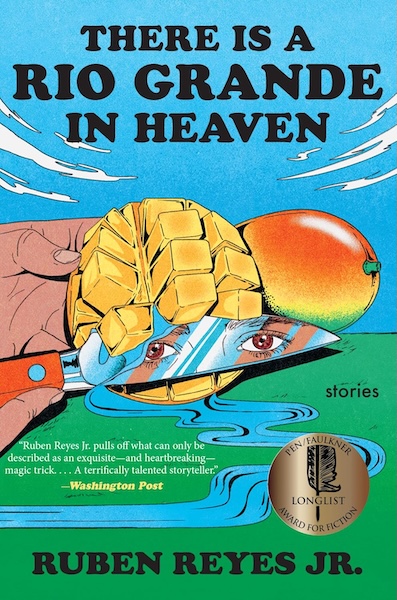
There Is a Rio Grande in Heaven
What happens when your life becomes unrecognisable overnight? In this imaginative debut collection, Ruben Reyes Jr. blends speculative fiction, magical realism, and dark humour to explore the experiences of Salvadoran immigrants and their descendants. An ordinary man wakes up to discover he has become a famous reggaetón star. An elderly grandmother gradually transforms into a marionette puppet. A researcher uncovers a disturbing programme that turns the bodies of undocumented migrants into artificial labourers.
Moving between alternate histories, dystopian futures, and surreal versions of everyday life, these stories explore the forces that shape Central American identity. Family ties stretch across borders, technology offers unsettling solutions to human problems, and bureaucratic systems reduce lives to statistics. Beneath the collection’s strange and often absurd scenarios lies a serious examination of migration, colonial legacies, capitalism, and the struggle to be heard in a world that marginalises certain voices. Both inventive and deeply human, There Is a Rio Grande in Heaven challenges readers to reconsider whose stories are told—and what it costs to build a new life far from home.
El Salvador
United States
2024
5
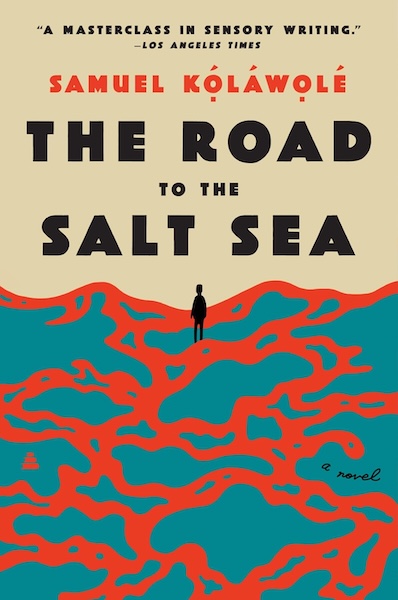
The Road to the Salt Sea
Able God is a bright young Nigerian man with an engineering degree, a love of chess, and hopes for a better future. But instead of building the life he imagined, he works long hours delivering room service at a luxury hotel, serving wealthy guests while struggling to make ends meet. When an encounter with a powerful and dangerous hotel guest turns violent, Able God finds himself caught in a situation that leaves him with few options. Fearing the consequences, he flees Nigeria and joins a group of migrants travelling across the Sahara toward Europe.
Led by a charismatic religious figure, the travellers embark on a perilous journey through Niger and Libya, hoping to reach a place where they can begin again. Instead, they encounter human traffickers, starvation, exploitation, and violence. As survival becomes his only priority, Able God is forced to question his beliefs about morality, faith, and the possibility of a better life. In The Road to the Salt Sea, Samuel Kolawole offers a powerful portrait of migration, exposing the human cost of inequality and the desperate choices made by those seeking safety and opportunity beyond their homeland.
Libya
Nigeria
Italy
2024
6
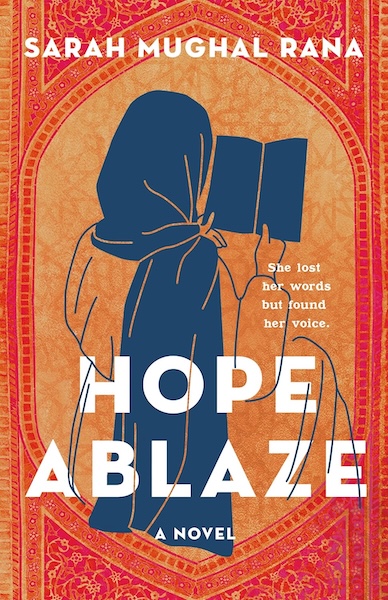
Hope Ablaze
What happens when speaking the truth becomes dangerous—and silence begins to feel like a betrayal of everything you believe in?
Eighteen-year-old Nida Siddiqui is a Pakistani American Muslim whose greatest passion is poetry. Yet she keeps her writing private, afraid of exposing too much of herself to a world that often misunderstands her faith and identity. Her uncle, Mamou Abdul-Hafeedh, is a celebrated poet who has been imprisoned on terrorism charges, leaving Nida to wrestle with his legacy and the risks of speaking out.
When Nida is mistreated by law enforcement at a political rally, she channels her anger into a powerful poem. Unexpectedly, it goes viral, thrusting her into a public controversy she never wanted. As accusations mount and her family faces renewed scrutiny, Nida must confront the tension between protecting herself and using her voice to challenge injustice.
Blending prose, poetry, and elements of magical realism, Hope Ablaze explores Islamophobia, family loyalty, faith, and the courage to speak when the world would rather you remain silent. It is a moving coming-of-age story about discovering that finding your voice can be both frightening and liberating.
United States
2024
7
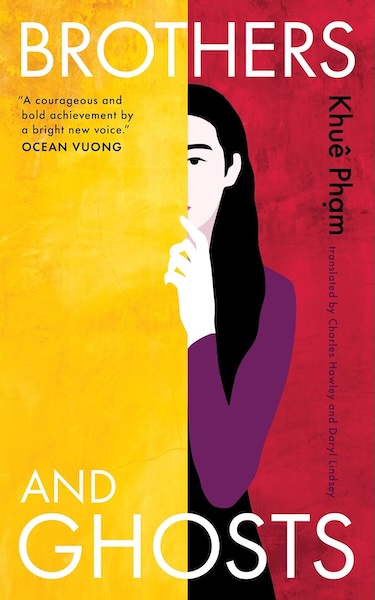
Brothers and Ghosts
Some families carry their history in photographs and stories. Others bury it in silence, leaving the next generation to piece together the fragments.
Kiều, a Vietnamese-German journalist living in Berlin, calls herself Kim because it is easier for Europeans to pronounce. She has spent years distancing herself from her Vietnamese heritage, content to live without asking too many questions about her family’s past. But when an unexpected message arrives from her estranged uncle in California announcing that her grandmother is dying, the carefully maintained distance begins to collapse.
Travelling to America with her parents, Kiều encounters a family divided by the Vietnam War. Her father supported the communist revolution, while his brother sided with the Americans. Decades of silence have left their competing memories unresolved, and the family reunion brings buried conflicts, painful loyalties, and forgotten stories back to the surface.
Moving between generations and continents, Brothers and Ghosts explores how war shapes families long after the fighting ends. Khuê Phạm examines the complicated inheritance of migration: the languages lost, identities reshaped, and histories passed down incompletely. It is a moving story about belonging, memory, and the courage to ask questions that previous generations could not bear to answer.
Vietnam
Germany
United States
2024
8
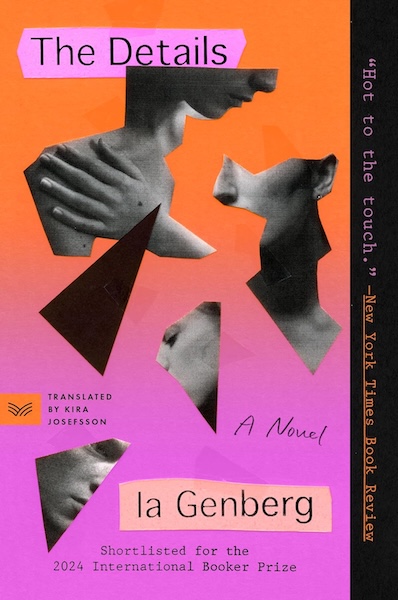
The Details
A high fever sends an unnamed woman drifting through memories of the people who have shaped her life. When she opens an old book and discovers a message from Johanna, her former lover, the past begins to unfold through four intimate portraits of love, friendship, loss, and secrets.
There is Johanna, now a famous television presenter; Niki, a friend who vanished without a trace; Alejandro, a passionate lover whose dreams collide with reality; and Birgitte, a troubled woman whose hidden pain remains difficult to understand. Each person returns with all the contradictions that made them unforgettable—and all the questions the narrator never managed to answer.
In The Details, Ia Genberg explores how other people become part of our identity, leaving traces long after they have disappeared from our lives. Intimate, perceptive, and quietly moving, this slim novel asks a profound question: Do we ever truly know another person, or do we simply carry our own version of them? Winner of Sweden’s August Prize in 2022, the novel was shortlisted for the 2024 International Booker Prize.
Sweden
2024
9
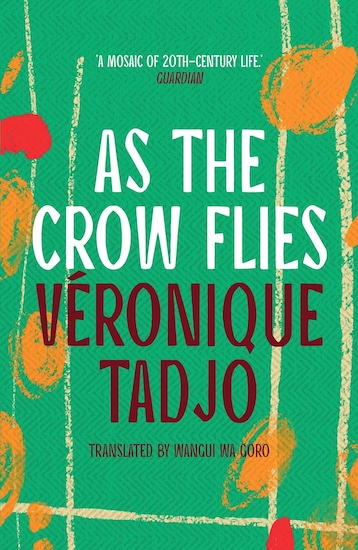
As The Crow Flies
In As the Crow Flies, Véronique Tadjo creates a lyrical, fragmented portrait of human life through a series of interconnected stories, reflections, and poetic vignettes. Rather than following a single plot, the book moves between different voices and experiences, exploring how people meet, fall in love, suffer, separate, and continue searching for meaning. Its characters are often anonymous, representing lives that might otherwise go unnoticed.
Through intimate observations, allegories, everyday encounters, and references to ancestral myths, Tadjo reflects on desire, loneliness, loss, and the fragile connections that bind people together. The narrative moves freely across emotional and geographical boundaries, suggesting that individual lives are never entirely separate but continually intersect and influence one another.
Blending prose and poetry, the book challenges conventional storytelling, embracing the uncertainty and complexity of human experience. Its central message is that life rarely follows a neat, predictable path: relationships change, people drift apart, and destinies remain unresolved. Like a crow flying across an open landscape, the narrative follows the unpredictable routes through which love and human connection unfold.
Côte d’Ivoire (Ivory Coast)
2024
10
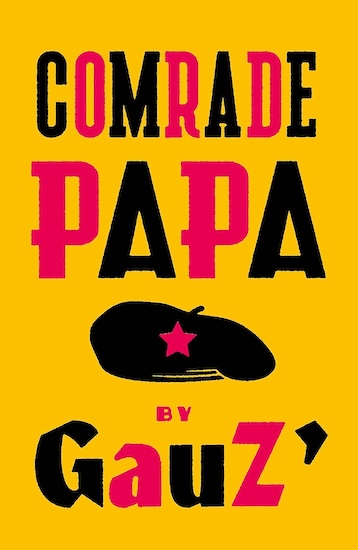
Comrade Papa
In Comrade Papa, Ivorian writer Gauz’ weaves together two stories separated by a century to examine colonialism, political ideology, and the complicated connections between Africa and Europe.
In 1880, Maxime Dabilly, a young Frenchman grieving the deaths of his parents, leaves France in search of adventure and joins a colonial expedition into Côte d’Ivoire. As he travels deeper into African territory, he becomes involved in the establishment of French trading routes and encounters the people whose lives and lands are about to be transformed by European expansion.
Nearly a century later, Anouman, a Black boy growing up in Amsterdam in a family of committed communists, is raised by a father who teaches him to oppose capitalism and imperialism. When family circumstances bring him to Côte d’Ivoire to live with his grandmother, he begins discovering his African heritage and unexpected connections to the past.
Through these parallel coming-of-age stories, Gauz’ uses irony, humour, and contrasting perspectives to challenge conventional narratives of colonial history. The novel explores how ideology shapes identity, how colonial power affects generations, and how personal histories can reveal the enduring consequences of imperialism.
Côte d’Ivoire (Ivory Coast)
2024
11
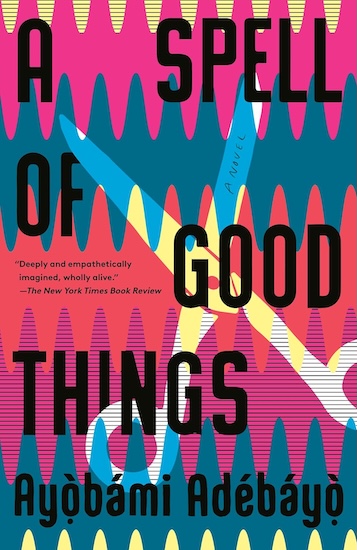
A Spell of Good Things
Set in contemporary Nigeria, A Spell of Good Things follows two young people from vastly different social backgrounds whose lives become entangled amid growing political tensions, family pressures, and personal struggles.
Ẹniọlá is a sixteen-year-old boy whose family has fallen into poverty after his father loses his job as a teacher. Once accustomed to a more comfortable life, he now struggles to pay his school fees and preserve his dignity. He runs errands, works for a local tailor, and occasionally begs on the streets, all while holding on to his dreams of a better future.
Wúràọlá, meanwhile, comes from a wealthy and influential family. A talented young doctor in her first year of practice, she is exhausted by the demands of her profession and trapped in an increasingly troubling relationship with Kúnlé, the son of a powerful politician. Although her privileged background offers financial security, it cannot protect her from the pressures and dangers of her personal life.
When a local politician takes an interest in Ẹniọlá and violence erupts during a family celebration, the lives of the two young people become unexpectedly connected. Their stories unfold against a backdrop of political corruption, social inequality, and a society approaching a moment of crisis.
Through these intersecting narratives, Adébáyọ̀ examines the relationship between wealth and power, the vulnerability of women, and the ways social class shapes people’s opportunities and choices. The novel reveals how the struggles of seemingly different individuals are connected by the structures surrounding them, offering a nuanced portrait of contemporary Nigerian society.
Nigeria
2024
12
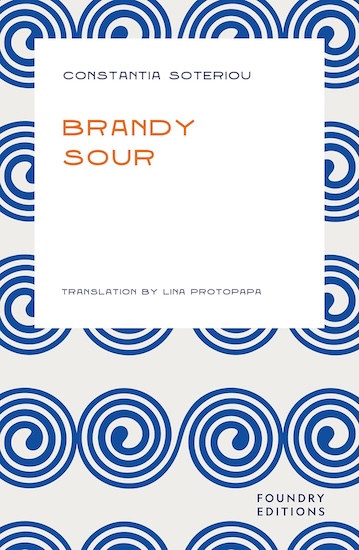
Brandy Sour
Set in Cyprus during the twentieth century, Brandy Sour explores the island’s turbulent history through the lives of people connected to the iconic Ledra Palace Hotel in Nicosia. Built in the 1950s as a symbol of a modern, independent Cyprus, the hotel becomes a meeting place for people whose personal stories reflect the island’s political upheavals, cultural divisions, and uncertain future.
Through a series of interconnected vignettes, Soteriou introduces a diverse cast of characters, including King Farouk of Egypt, a hotel porter who secretly cultivates roses from his village, a United Nations officer struggling with the heat and political deception, and a housekeeper who carries holy water wherever she goes. Each character has a distinct relationship with the hotel and the world beyond its walls, revealing how history shapes even the most ordinary aspects of daily life.
Food, drinks, memories, and personal rituals become powerful symbols of cultural identity and belonging. As political tensions deepen between Greek Cypriots and Turkish Cypriots, the hotel stands as a witness to the hopes, disappointments, and divisions that have shaped the island.
Written in a fragmented, evocative style, Brandy Sour transforms the history of Cyprus into an intimate portrait of ordinary people caught in extraordinary circumstances. The novel explores how collective memory is preserved through individual lives, and how a country’s past continues to influence its present. The book won Cyprus’s National Book Prize in 2023.
Cyprus
2024