Literary Fiction
All countries
Afghanistan
Algeria
Antigua and Barbuda
Argentina
Australia
Austria
Azerbaijan
Bangladesh
Barbados
Belgium
Benin
Bosnia and Herzegovina
Brazil
Bulgaria
Burkina Faso
Burundi
Cabo Verde
Canada
Central African Republic
Chile
China
Colombia
Congo, Democratic Republic
Costa Rica
Côte d’Ivoire (Ivory Coast)
Croatia
Cyprus
Czech Republic
Denmark
Dominica
Dominican Republic
Egypt
El Salvador
Estonia
Ethiopia
France
Germany
Ghana
Greece
Hungary
Iceland
India
Iran
Iraq
Ireland
Italy
Jamaica
Japan
Jordan
Kazakhstan
Kenya
Kuwait
Latvia
Lebanon
Libya
Lithuania
Madagascar
Mexico
Moldova
Morocco
Myanmar
Netherlands
New Zealand
Nigeria
North Korea
North Macedonia
Norway
Oman
Pakistan
Palestine
Philippines
Poland
Portugal
Puerto Rico
Russia
Rwanda
Saint Kitts and Nevis
Saudi Arabia
Senegal
Singapore
South Korea
Spain
Sri Lanka
Sudan
Sweden
Switzerland
Syria
Taiwan
Tanzania
Thailand
Türkiye
Uganda
United Arab Emirates
United Kingdom
United States
Uzbekistan
Vietnam
Zambia
1
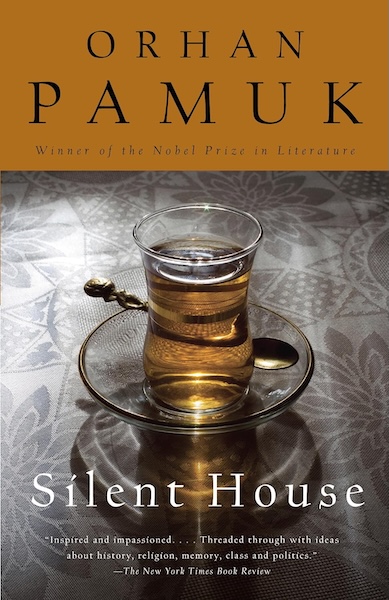
Silent House
Every summer, three siblings travel to a coastal town near Istanbul to visit their elderly grandmother, Fatma, who lives in a house filled with memories of a vanished world. Their grandfather, a doctor and idealist, built the house decades earlier, but his ambitions and radical ideas left painful marks on the family.
During their visit, the siblings reveal contrasting visions of Turkey’s future. Faruk, a disillusioned historian, struggles with his sense of purpose; Nilgün, a politically engaged young woman, dreams of a more egalitarian society; and Metin longs for wealth and the opportunities he associates with the West. Meanwhile, Fatma’s memories return to a past shaped by resentment, regret, and family secrets.
Set against the political polarisation of late-1970s Turkey, Silent House examines the tensions between generations, social classes, and competing ideologies. Through the voices of its deeply different characters, Pamuk reveals how a family’s private conflicts can mirror the divisions of an entire nation.
Türkiye
1983
2
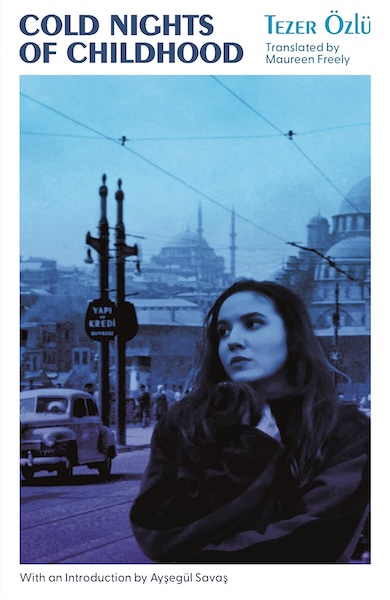
Cold Nights of Childhood
Growing up in 1950s Turkey, a young woman feels increasingly alienated by the conventional world surrounding her. In a society shaped by patriarchal expectations, nationalism, and rigid ideas of respectability, she longs for freedom, sensuality, and a life beyond the boundaries imposed on her. Childhood memories of family life and school follow her into adulthood, becoming inseparable from her search for independence.
As she moves between Istanbul, Berlin, and Paris, she pursues love and escape, yet finds herself struggling with depression and repeated stays in psychiatric institutions. There, she encounters treatments that threaten to suppress the very individuality she is fighting to preserve. Through fragmented memories, intimate reflections, and an unconventional narrative, she confronts the painful distance between the life society expects her to live and the one she desperately wants.
Part autobiographical novel and part intimate psychological portrait, Cold Nights of Childhood is a fearless exploration of female desire, alienation, and resistance. Tezer Özlü transforms personal suffering into a powerful meditation on what it means to remain true to oneself in a world determined to define who one should be.
Türkiye
1980
3
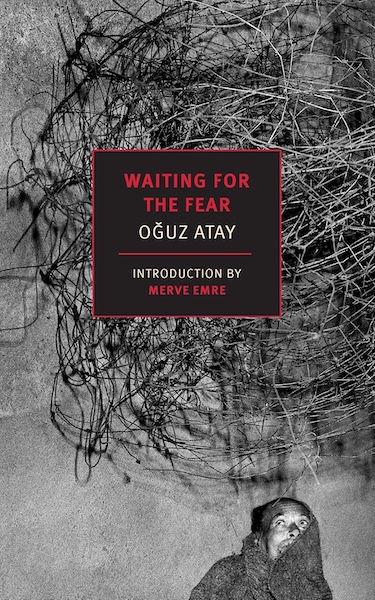
Waiting for the Fear
What happens when an ordinary letter makes you question everything you thought you knew? In the title story of Waiting for the Fear, an isolated man receives a mysterious message written in a language he cannot understand. As he struggles to decipher its meaning, suspicion gradually takes over his life, transforming his home into a place of dread and his everyday existence into an increasingly surreal nightmare.
Across eight stories, Oğuz Atay introduces a cast of outsiders, misfits, and troubled souls struggling to connect with a society that seems determined to misunderstand them. A woman confronts unsettling memories after discovering her former lover’s body; lonely storytellers sell invented tales to passengers at a remote railway station; other characters find themselves trapped between their private fantasies and an indifferent world.
Blending dark humour, psychological unease, absurdity, and experimental storytelling, Waiting for the Fear explores the fragile boundary between reality and imagination. Atay’s characters are haunted not only by external threats but also by their own thoughts, revealing the loneliness of people who can no longer trust the world—or themselves.
Türkiye
1975