Literary Fiction
All countries
Afghanistan
Algeria
Antigua and Barbuda
Argentina
Australia
Austria
Azerbaijan
Bangladesh
Barbados
Belgium
Benin
Bosnia and Herzegovina
Brazil
Bulgaria
Burkina Faso
Burundi
Cabo Verde
Canada
Central African Republic
Chile
China
Colombia
Congo, Democratic Republic
Costa Rica
Côte d’Ivoire (Ivory Coast)
Croatia
Cyprus
Czech Republic
Denmark
Dominica
Dominican Republic
Egypt
El Salvador
Estonia
Ethiopia
France
Germany
Ghana
Greece
Hungary
Iceland
India
Iran
Iraq
Ireland
Italy
Jamaica
Japan
Jordan
Kazakhstan
Kenya
Kuwait
Latvia
Lebanon
Libya
Lithuania
Madagascar
Mexico
Moldova
Morocco
Myanmar
Netherlands
New Zealand
Nigeria
North Korea
North Macedonia
Norway
Oman
Pakistan
Palestine
Philippines
Poland
Portugal
Puerto Rico
Russia
Rwanda
Saint Kitts and Nevis
Saudi Arabia
Senegal
Singapore
South Korea
Spain
Sri Lanka
Sudan
Sweden
Switzerland
Syria
Taiwan
Tanzania
Thailand
Türkiye
Uganda
United Arab Emirates
United Kingdom
United States
Uzbekistan
Vietnam
Zambia
1
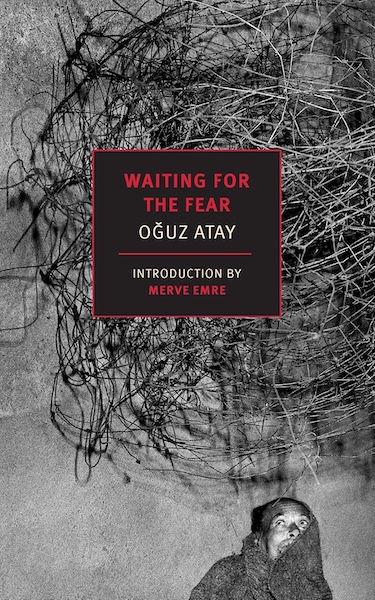
Waiting for the Fear
What happens when an ordinary letter makes you question everything you thought you knew? In the title story of Waiting for the Fear, an isolated man receives a mysterious message written in a language he cannot understand. As he struggles to decipher its meaning, suspicion gradually takes over his life, transforming his home into a place of dread and his everyday existence into an increasingly surreal nightmare.
Across eight stories, Oğuz Atay introduces a cast of outsiders, misfits, and troubled souls struggling to connect with a society that seems determined to misunderstand them. A woman confronts unsettling memories after discovering her former lover’s body; lonely storytellers sell invented tales to passengers at a remote railway station; other characters find themselves trapped between their private fantasies and an indifferent world.
Blending dark humour, psychological unease, absurdity, and experimental storytelling, Waiting for the Fear explores the fragile boundary between reality and imagination. Atay’s characters are haunted not only by external threats but also by their own thoughts, revealing the loneliness of people who can no longer trust the world—or themselves.
Türkiye
1975
2
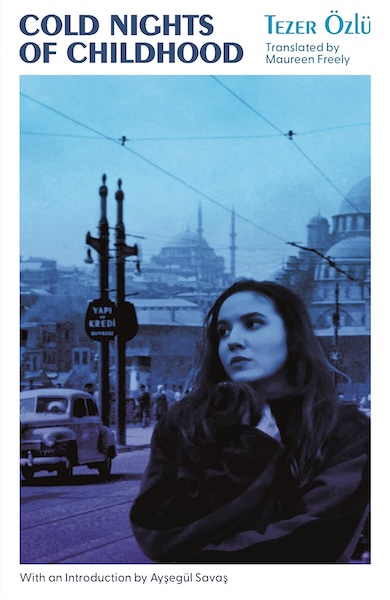
Cold Nights of Childhood
Growing up in 1950s Turkey, a young woman feels increasingly alienated by the conventional world surrounding her. In a society shaped by patriarchal expectations, nationalism, and rigid ideas of respectability, she longs for freedom, sensuality, and a life beyond the boundaries imposed on her. Childhood memories of family life and school follow her into adulthood, becoming inseparable from her search for independence.
As she moves between Istanbul, Berlin, and Paris, she pursues love and escape, yet finds herself struggling with depression and repeated stays in psychiatric institutions. There, she encounters treatments that threaten to suppress the very individuality she is fighting to preserve. Through fragmented memories, intimate reflections, and an unconventional narrative, she confronts the painful distance between the life society expects her to live and the one she desperately wants.
Part autobiographical novel and part intimate psychological portrait, Cold Nights of Childhood is a fearless exploration of female desire, alienation, and resistance. Tezer Özlü transforms personal suffering into a powerful meditation on what it means to remain true to oneself in a world determined to define who one should be.
Türkiye
1980
3
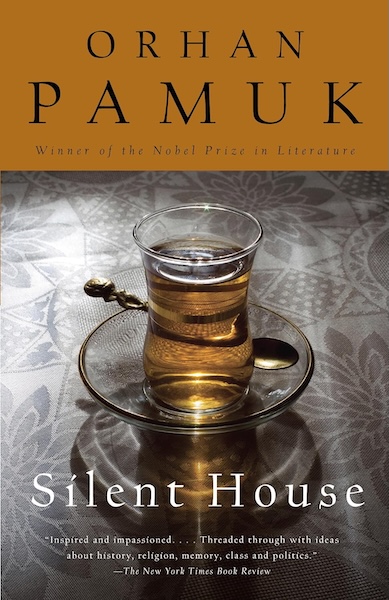
Silent House
Every summer, three siblings travel to a coastal town near Istanbul to visit their elderly grandmother, Fatma, who lives in a house filled with memories of a vanished world. Their grandfather, a doctor and idealist, built the house decades earlier, but his ambitions and radical ideas left painful marks on the family.
During their visit, the siblings reveal contrasting visions of Turkey’s future. Faruk, a disillusioned historian, struggles with his sense of purpose; Nilgün, a politically engaged young woman, dreams of a more egalitarian society; and Metin longs for wealth and the opportunities he associates with the West. Meanwhile, Fatma’s memories return to a past shaped by resentment, regret, and family secrets.
Set against the political polarisation of late-1970s Turkey, Silent House examines the tensions between generations, social classes, and competing ideologies. Through the voices of its deeply different characters, Pamuk reveals how a family’s private conflicts can mirror the divisions of an entire nation.
Türkiye
1983
4
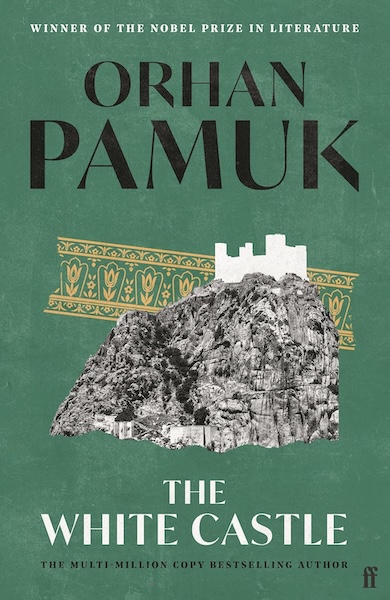
The White Castle
In the seventeenth century, a young Italian scholar travelling from Venice is captured by pirates and taken to Constantinople, where he becomes a slave. His new master, Hoja, is an Ottoman scholar fascinated by Western science and technology. But their relationship becomes increasingly strange when they discover that they look almost exactly alike.
As the Italian teaches Hoja everything he knows about astronomy, medicine, and engineering, their intellectual partnership develops into a psychological struggle. Each man becomes obsessed with understanding the other, probing his memories, fears, and deepest secrets. Gradually, the boundaries between master and slave begin to blur, raising an unsettling question: if two people know everything about each other, can they exchange identities?
Set against the grandeur and brutality of the Ottoman Empire, The White Castle is a philosophical tale about selfhood, cultural differences, and the fragile boundaries separating East from West.
Türkiye
1985
5
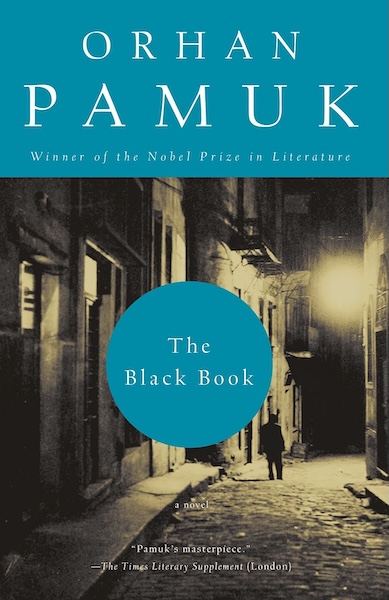
The Black Book
On a snowy day in Istanbul, lawyer Galip discovers that his wife, Rüya, has disappeared. Unable to understand why she has left, he begins searching the city’s crowded streets, old neighbourhoods, and hidden corners for clues. His investigation becomes even more mysterious when he discovers that Rüya’s half-brother, Celâl, a famous newspaper columnist, has vanished too.
As Galip follows the traces they have left behind, he becomes immersed in Celâl’s newspaper columns, which explore Istanbul’s history, its forgotten stories, and the secrets concealed beneath everyday life. The search gradually transforms into something more profound: a journey through the city’s collective memory and Galip’s own uncertain identity.
Blending mystery, philosophical reflection, and a vivid portrait of Istanbul, The Black Book explores the desire to become someone else and the difficulty of knowing who we really are. Pamuk transforms the city into a labyrinth of stories in which the search for a missing person becomes a search for the self.
Türkiye
1990
6
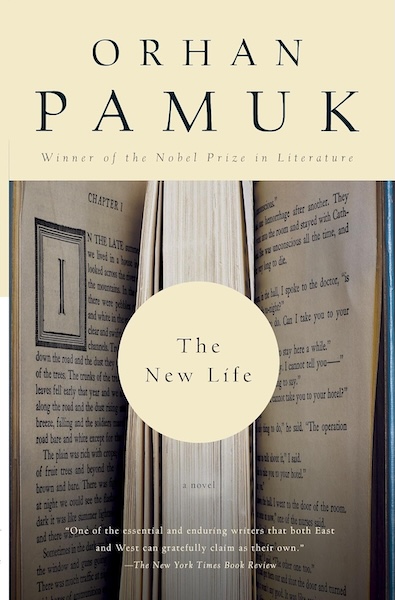
The New Life
“One day I read a book, and my whole life changed.”
With this extraordinary declaration, university student Osman begins a journey that will pull him away from everything familiar. After reading a mysterious book, he becomes convinced that its pages contain the promise of another existence—a hidden world waiting just beyond the boundaries of ordinary life. Captivated by its message, Osman abandons his studies and sets out to discover the transformation it promises.
He is joined in his search by Canan, a fellow student who has also been profoundly affected by the book. Their journey takes them across Turkey on endless bus rides through provincial towns and anonymous highways, where strange encounters and sudden accidents blur the line between reality and illusion. As Osman searches for the book’s secrets, his quest becomes increasingly entangled with love, obsession, and the possibility that his old identity is disappearing.
Part philosophical mystery and part surreal road novel, The New Life explores the power of literature to transform—and sometimes consume—the lives of its readers. Pamuk questions whether we can truly escape our former selves or whether the search for a new life is itself another form of illusion.
Türkiye
1994
7
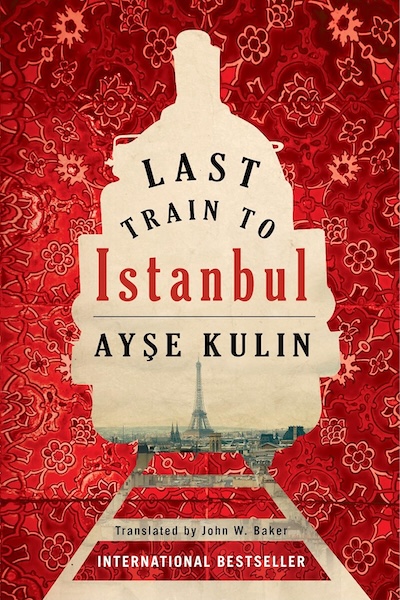
Last Train to Istanbul
As the Second World War threatens to engulf Europe, Selva, the daughter of a prominent Ottoman family, falls in love with Rafael Alfandari, a young Jewish man. Their relationship defies the expectations of both families, forcing them to leave Turkey and begin a new life together in France. But when the Nazis occupy the country, their happiness is overshadowed by the growing danger facing Jewish communities across Europe.
As persecution intensifies, Selva and Rafael find themselves trapped in a hostile world where their love and their young family may not be enough to keep them safe. Meanwhile, Turkish diplomats work behind the scenes to rescue Jewish people stranded in occupied Europe, arranging a perilous journey towards freedom. With time running out, the fate of Selva and Rafael becomes intertwined with the courage of those willing to risk their lives to save strangers.
Moving between Ankara, Istanbul, Paris, and other wartime cities, Last Train to Istanbul combines an intimate family story with a little-known chapter of Holocaust history. Inspired by accounts of Turkish diplomats who helped rescue Jews during the war, the novel explores love across cultural boundaries, moral courage, and the extraordinary acts of humanity that can emerge in the darkest times.
Türkiye
France
2002
8
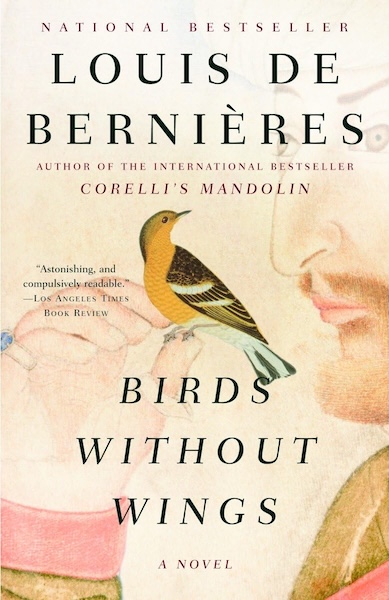
Birds Without Wings
In the small Anatolian village of Eskibahçe, Muslims and Christians have lived side by side for generations, sharing a language, traditions, friendships, and everyday life. At the heart of this close-knit community is the tender love between Philothei, a beautiful Greek Christian girl, and Ibrahim, a Muslim goatherd who has loved her since childhood. Their future seems possible—until the forces of history begin to tear their world apart.
As the Ottoman Empire collapses and modern Turkey emerges, the villagers are swept into the First World War, the rise of nationalism, and the brutal Greek-Turkish conflict. Through the voices of ordinary people, de Bernières creates an expansive portrait of a society destroyed by religious divisions, political ambition, and forced displacement. Both heartbreaking and darkly humorous, Birds Without Wings explores how people who once lived as neighbours can become enemies—and how love and humanity endure even amid extraordinary cruelty.
Türkiye
2004
9
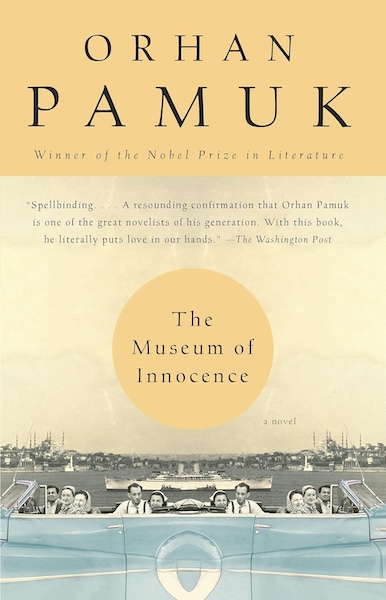
The Museum of Innocence
Istanbul, 1975. Kemal, the privileged son of a wealthy family, is preparing to marry Sibel, a woman who belongs to his own sophisticated social circle. But a chance encounter with Füsun, a beautiful young shop assistant and distant relative, sets his carefully ordered life on an unexpected course. Their passionate affair soon becomes complicated by social conventions, class divisions, and the expectations placed on women in a rapidly modernising Turkey.
When Füsun disappears from his life, Kemal begins collecting objects connected to her: earrings, hair clips, cigarette butts, and countless other seemingly insignificant things. Each item becomes a vessel for memory, allowing him to preserve moments that time would otherwise erase. Over the years, his collection grows into an extraordinary personal museum, reflecting both his devotion and his inability to let go.
Spanning decades of Istanbul’s social and cultural transformation, The Museum of Innocence is a richly layered exploration of love, obsession, memory, and longing. Nobel Prize-winning author Orhan Pamuk transforms ordinary objects into fragments of a vanished world, asking whether preserving the past can bring happiness—or merely keep us imprisoned within it.
Türkiye
2008
10
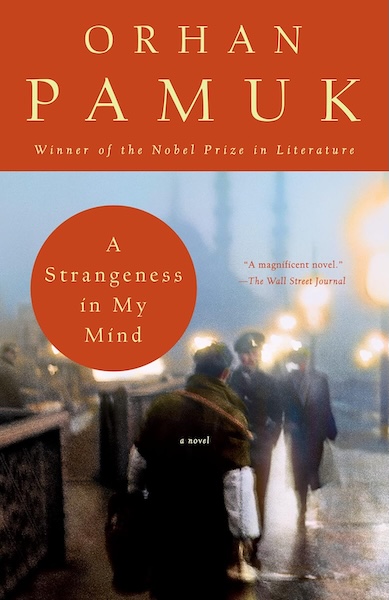
A Strangeness in My Mind
In 1969, twelve-year-old Mevlut leaves his village in central Anatolia and arrives in Istanbul, a city expanding so rapidly that familiar streets and entire neighbourhoods seem to disappear almost overnight. Hoping to build a better life, he works alongside his father selling boza, a traditional fermented drink, on the city’s streets. Over the years, he takes on different jobs, falls in love, marries, and raises a family while watching Istanbul transform around him.
Mevlut is neither a great success nor a complete failure. While others grow wealthy from the city’s rapid development, he remains an outsider in a place he has called home for decades. Even as his life changes, he continues to wonder about the peculiar feeling inside him—a sense that the world he inhabits never quite matches the world he imagines.
Spanning more than forty years, A Strangeness in My Mind is a sweeping portrait of urban migration, ordinary working lives, and the transformation of modern Istanbul. Through Mevlut’s quiet resilience, Pamuk explores love, social mobility, and the search for belonging in a city that is always becoming something new.
Türkiye
2014
11
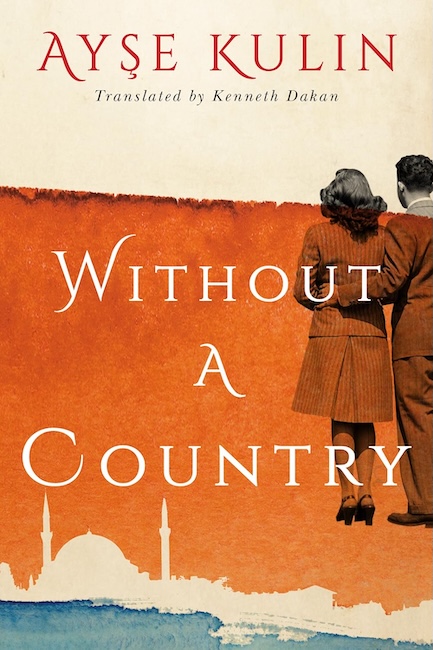
Without a Country
As Hitler’s persecution of Jews intensifies in 1930s Germany, medical professor Gerhard Schliemann and his wife, Elsa, face an impossible choice: remain in the country they call home or flee to protect their family. Their escape leads them to Turkey, where German Jewish academics are offered positions at universities and hospitals as the young republic works to modernise its institutions.
Although the Schliemanns find refuge and the opportunity to rebuild their lives, safety does not guarantee belonging. Across four generations, their descendants navigate political upheaval, military coups, interfaith relationships, and renewed antisemitism. As Turkey itself changes, the family must confront difficult questions about identity, loyalty, and what it means to belong to a country that may never fully accept them.
Spanning nearly a century, Without a Country is a multigenerational saga inspired by the real history of German-speaking Jewish academics who found refuge in Turkey during the Nazi era. Ayşe Kulin explores the complicated relationship between displacement and belonging, showing how the search for a safe home can shape a family’s destiny long after the original refugees are gone.
Türkiye
Germany
2016
12
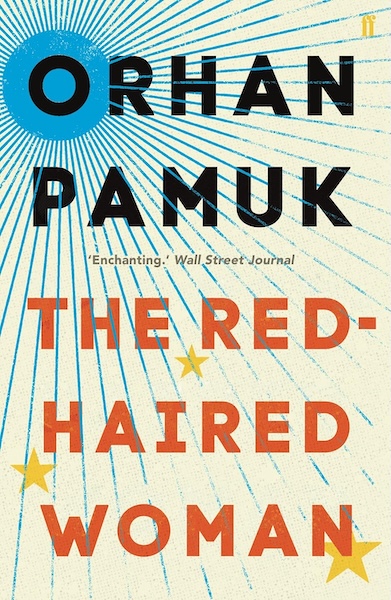
The Red-Haired Woman
In the mid-1980s, teenage Cem leaves Istanbul to work as an apprentice to Mahmut, an experienced well-digger. Together, they travel to a small town outside the city, where they labour to find water in the dry earth. As they work, Mahmut becomes a father figure to Cem, teaching him practical skills and sharing stories that shape the young man’s understanding of the world.
One summer, Cem encounters a mysterious red-haired woman performing with a travelling theatre troupe. Fascinated by her, he becomes entangled in an experience that will haunt him for decades. A terrible incident at the well changes the course of his life, and years later, when Cem has become a successful businessman, the past returns with consequences he could never have anticipated.
Drawing on the ancient myths of Oedipus and Rostam and Sohrab, The Red-Haired Woman explores fathers and sons, guilt, authority, and the forces that shape our destinies. It is a compact, unsettling novel about the stories we inherit and whether we can ever escape them.
Türkiye
2016